Best Sleeping Positions for Lower Back Pain: What Actually Helps (and What Makes It Worse)
Lower back pain doesn't stop when you lie down - for many people, it gets worse. The position you sleep in every night directly affects how your hips sit, how your spine loads, and whether your lower back gets to recover or stays compressed for eight hours. Choosing the right sleeping position is one of the simplest, highest-leverage changes you can make for lasting back pain relief.
Sleeping position affects lower back pain by determining whether the spine maintains a neutral curve or is forced into sustained misalignment throughout the night.
TL;DR
- 🛏️ Your sleep position can relieve - or significantly worsen - lower back pain
- 🦴 Back sleeping with a pillow under the knees is the most spine-friendly position
- 🚫 The fetal position worsens tight hip flexors and anterior pelvic tilt overnight
- 🔄 Side sleeping is acceptable with a pillow between the knees for alignment
- ⚠️ Stomach sleeping is the worst position for lower back pain - avoid it
- 🧘 A pre-sleep hip stretch routine accelerates overnight recovery
- 📱 Personalizing your daytime posture correction speeds up what sleep alone can't fix
What Is Sleep Posture and Why Does It Matter for Lower Back Pain?
You spend roughly a third of your life asleep. In that time, your spine is either recovering - or being loaded in a position that extends the same postural problems you experienced during the day.
Sleep posture refers to the position your body holds during sleep and how that position affects spinal alignment, hip position, and muscular recovery overnight.
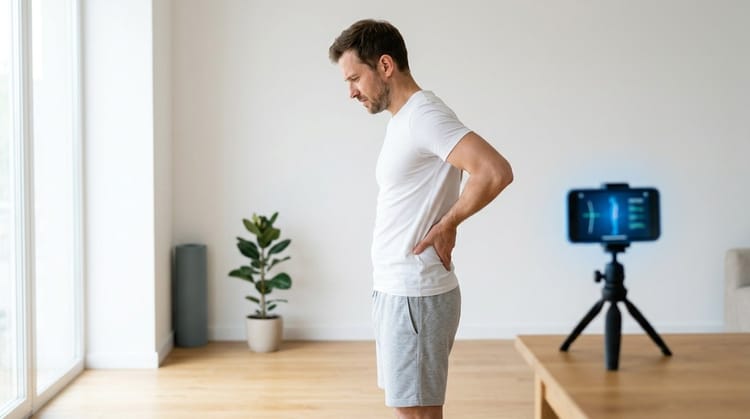
Most people don't choose their sleep position consciously. They default to whatever feels comfortable. But comfort and spinal health are not always the same thing - especially when tight hips are already pulling your pelvis out of neutral alignment before you even get into bed.
Physiotherapists often note that patients who address their daytime posture but ignore their sleep position make slower progress - because 7-8 hours of poor alignment partially undoes what daytime correction builds.
If you're already working on the daytime side of the equation, the guide on why lower back pain keeps coming back explains the full cycle that sleep posture feeds into.
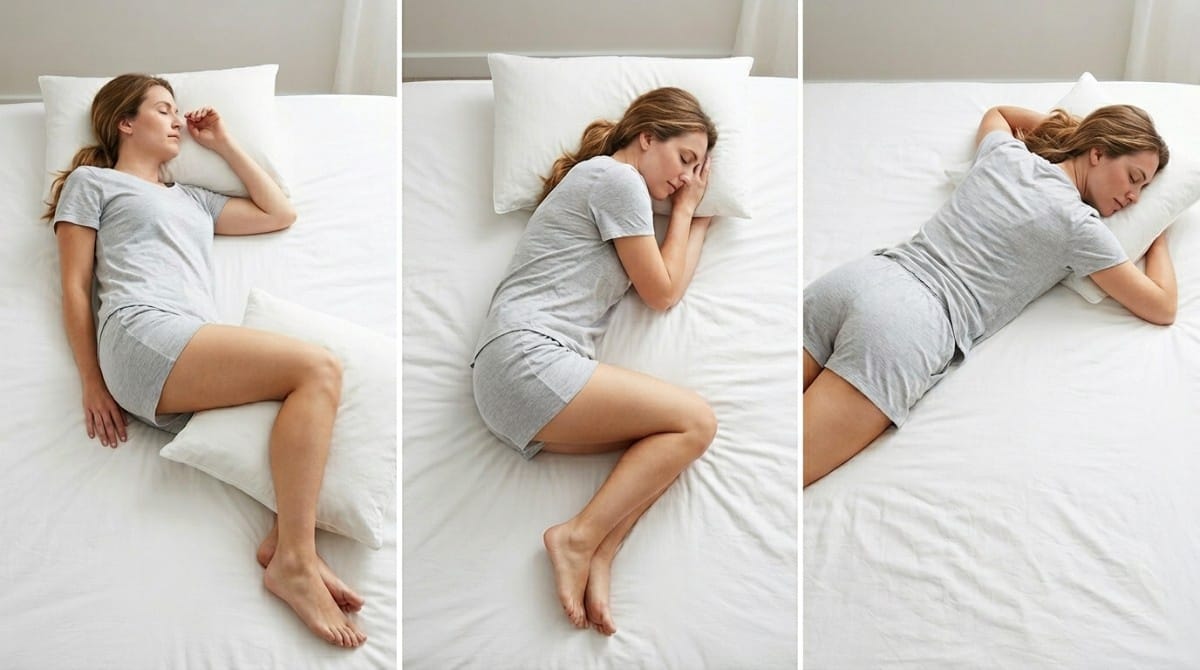
Why Do Sleeping Positions Affect Lower Back Pain?
The lower back is sensitive to sustained load. During the day, you move - which distributes pressure across the spine. During sleep, your body holds one position for hours without adjustment.
When that position is misaligned, several things happen:
- Lumbar muscles stay contracted - instead of relaxing and recovering overnight
- Hip flexors remain shortened - particularly in the fetal position, where the hips stay in flexion all night
- Spinal discs stay compressed - positions that increase lumbar arch or flexion prevent overnight disc rehydration
- The pelvis tilts and stays tilted - reinforcing the anterior pelvic tilt pattern that drives lower back pain during the day
This is why many people wake up with lower back stiffness even after a full night's sleep. The body didn't recover - it held a problematic posture for 7-8 hours.
Posture specialists note that the fetal sleeping position is particularly problematic for people with tight hip flexors, because it keeps the hip flexors in a shortened state all night - exactly the opposite of what recovery requires.
Key Insight: If you sleep in the fetal position nightly and have tight hips and lower back pain, your sleep is actively reinforcing the postural pattern causing your pain. The most impactful change you can make isn't a stretch - it's shifting your sleep position.
The 4 Main Sleeping Positions: Ranked for Lower Back Pain
🥇 1. Back Sleeping with a Pillow Under the Knees - Best
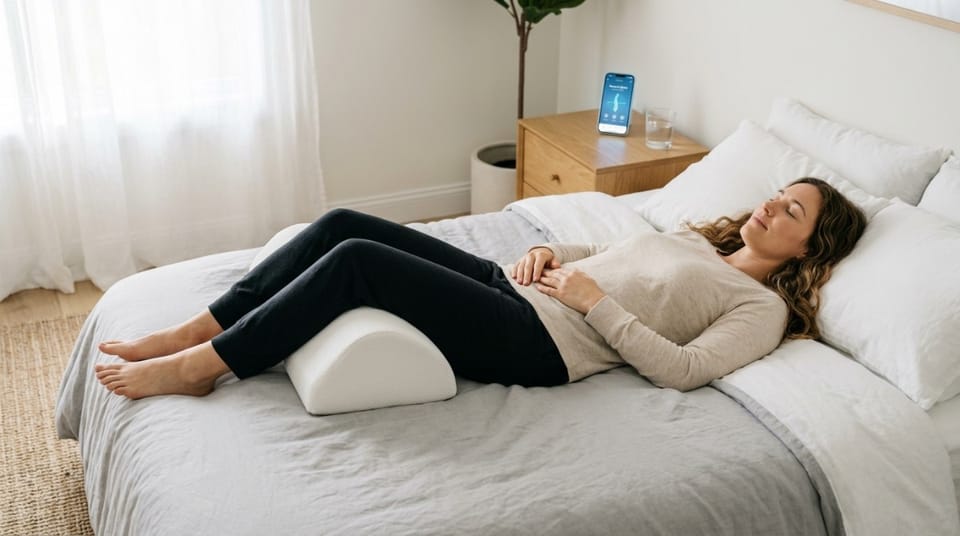
This is the gold standard position for lower back pain relief.
Why it works:
- Keeps the spine in a near-neutral curve
- Distributes body weight evenly across the widest surface area
- Reduces pressure on lumbar discs and facet joints
- A pillow under the knees slightly flexes the hips, releasing hip flexor tension without holding them in full flexion
How to do it:
- Lie flat on your back on a supportive mattress
- Place a firm pillow - or a folded blanket - under both knees
- Keep arms relaxed at your sides or on your stomach
- Ensure your pillow supports the natural curve of your neck - not forcing it up or flattening it
Who it's best for: Anyone with lower back pain, anterior pelvic tilt, tight hip flexors, or lumbar disc issues.
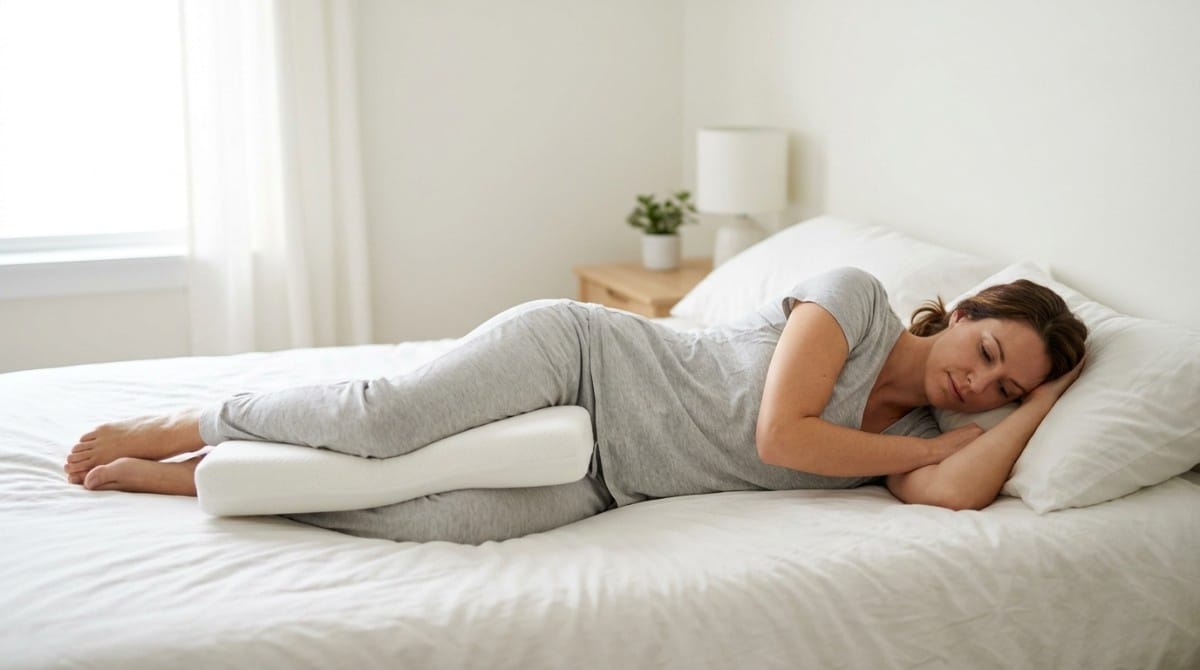
🥈 2. Side Sleeping with a Pillow Between the Knees - Good
Side sleeping is the most common position - and it's acceptable for lower back pain with the right modification.
Why it works (with modification):
- Without a pillow between the knees, the top leg drops and rotates the pelvis, straining the lower back
- A pillow between the knees keeps the hips, pelvis, and spine stacked in neutral alignment
- Reduces rotational stress on the lumbar vertebrae
How to do it:
- Lie on your side - either side is fine, though some prefer the side opposite their pain
- Place a firm pillow between your knees and ankles
- Keep your spine long - avoid curling into the fetal position
- Use a pillow that keeps your head neutral - not tilted up or drooping down
Who it's best for: People who can't sleep on their back, pregnant individuals, people with hip pain on one side.
⚠️ 3. Fetal Position - Poor Choice for Tight Hips
The fetal position is one of the most common sleep positions - and one of the most problematic for people with tight hip flexors and lower back pain.
Why it causes problems:
- Keeps the hips in sustained flexion for 7-8 hours
- Directly shortens the hip flexors overnight - the same muscles driving your anterior pelvic tilt
- Rounds the lower back into flexion, compressing the posterior disc space
- Often creates asymmetrical pelvic load when people curl to one side
The result: You wake up with stiff hips, a tight lower back, and a pelvis that's already tilted before the day begins.
If you can't break the fetal position habit:
- Use a body pillow in front of you - it gives you something to rest your arm and top knee on without curling fully
- Try to keep the spine straighter even while on your side - reduce the curl as much as possible
- Transition gradually toward true side sleeping with a knee pillow over 1-2 weeks
🚫 4. Stomach Sleeping - Worst Position for Lower Back Pain
Stomach sleeping is consistently identified by physiotherapists as the most damaging sleep position for the lower back.
Why it causes problems:
- Forces the lumbar spine into hyperextension for the entire night
- Compresses the lumbar facet joints and discs under prolonged extension load
- Requires the neck to rotate to one side - creating cervical strain alongside lumbar strain
- Flattens the natural lumbar curve, altering the disc pressure distribution
The hard truth: If you're a stomach sleeper with lower back pain, your sleep position is almost certainly making it worse. The lumbar compression alone is significant. Add tight hip flexors and anterior pelvic tilt, and you're loading an already-stressed system for 7-8 hours straight.
Transition strategy:
- Place a thin pillow under your pelvis - it reduces the lumbar hyperextension slightly as a first step
- Work toward side sleeping by using a body pillow to prevent rolling onto your stomach
- Most people can transition within 2-4 weeks with conscious effort
Sleeping Position Comparison Table
How to Tell If Your Sleep Position Is Causing Your Back Pain
Answer these questions honestly:
- Do you wake up with lower back stiffness that eases within 30-60 minutes of moving around?
- Is your back pain worse in the morning than it is by evening?
- Do you consistently sleep in the fetal position or on your stomach?
- Does your lower back feel better after a night where you happened to sleep differently?
If you answered yes to two or more: your sleep position is likely a significant contributor to your lower back pain - not just a side factor. The patterns you're experiencing during sleep connect directly to the hip tightness and anterior pelvic tilt patterns described in our article on tight hips and lower back pain.
Step-by-Step Recovery Framework: Optimizing Sleep for Lower Back Pain
Changing your sleep position is most effective when combined with a pre-sleep and morning routine.
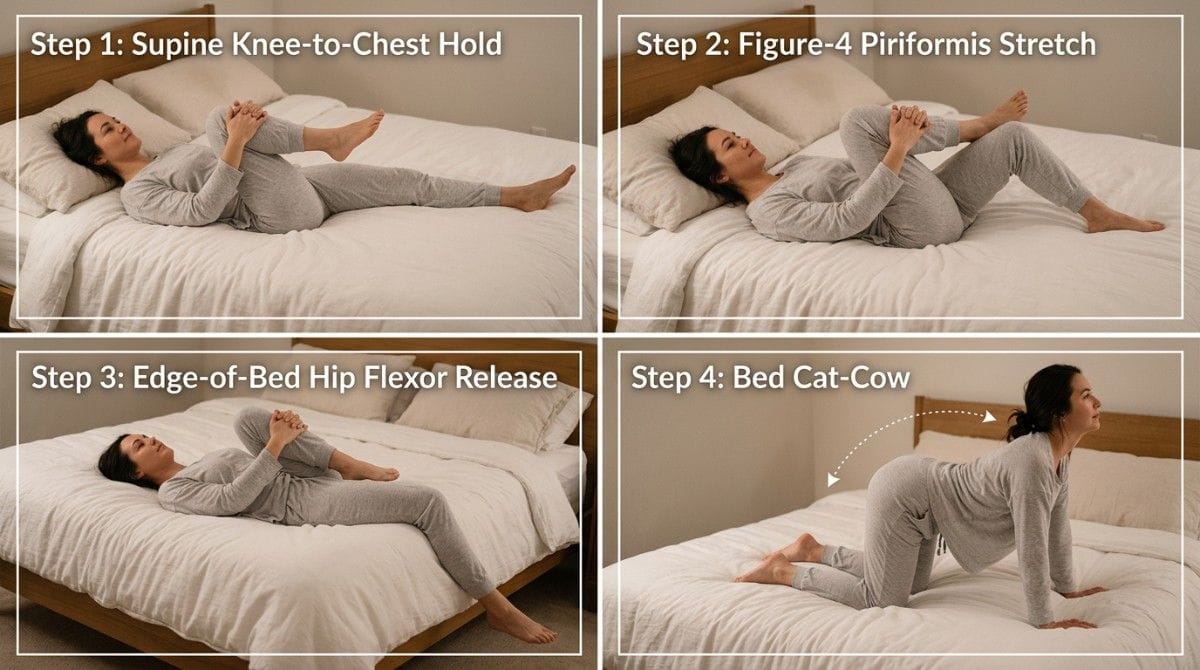
Pre-Sleep Hip Release Routine (10 minutes)
Do these on your bed or a mat before sleep:
- Supine knee-to-chest - Lie on your back, pull both knees gently to your chest. Hold 30 seconds. Releases lumbar tension accumulated during the day.
- Figure-4 piriformis stretch - Cross one ankle over the opposite knee, gently pull both legs toward you. Hold 30-45 seconds per side. Releases the deep hip rotators that often tighten during sitting.
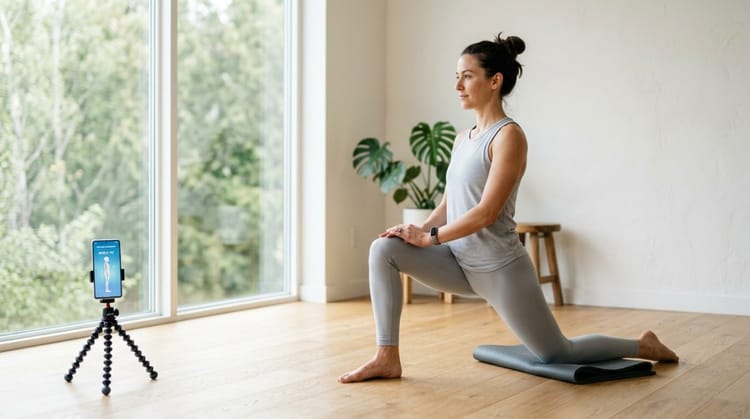
- Supine hip flexor release - Lie near the edge of the bed, lower one leg off the side while holding the other knee to your chest. Gently lengthens the hip flexor in a completely passive position. Hold 30 seconds per side.
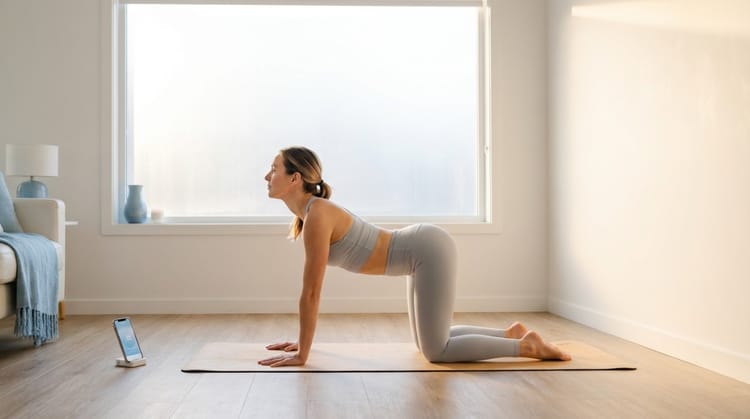
- Cat-cow on all fours - 10 slow cycles. Mobilizes the lumbar spine before sleep, reducing morning stiffness.
Morning Activation (5 minutes - before standing)
Do these in bed immediately after waking:
- Gentle knee-to-chest - 30 seconds both sides
- Glute bridge - 10-15 reps on the bed or floor. Reactivates the posterior chain before you load the spine vertically.
- Side-lying clamshell - 10 reps per side. Warms up the hip abductors and glutes before walking.
Physiotherapists often recommend this pre-loading sequence as a way to prepare the spine for the demands of standing and sitting - rather than immediately transitioning from horizontal to full load. For a more complete morning approach, the posture exercises for desk workers routine integrates naturally with this framework.
Research & Expert Insight
The relationship between sleep position and lower back pain is well-established in both clinical practice and musculoskeletal research.
Key evidence points:
- Disc rehydration: Research in spinal biomechanics confirms that intervertebral discs recover fluid overnight - but only when the spine is in a position that allows adequate decompression. Positions that maintain lumbar compression or flexion impair this process.
- Hip flexor length during sleep: Studies in postural rehabilitation show that the fetal position - with sustained hip flexion - maintains the iliopsoas in a shortened state, directly reinforcing the anterior pelvic tilt pattern in habitual side sleepers.
- Morning stiffness patterns: Clinical observations in musculoskeletal physiotherapy link morning lumbar stiffness to sleep position far more frequently than patients expect - it is often the first intervention point in back pain programs.
- Pillow placement: Posture specialists confirm that a pillow under the knees in back sleeping reduces lumbar disc pressure measurably compared to lying flat without support.
The consistent clinical recommendation: address sleep position as part of any lower back pain recovery plan - not as an afterthought.
What Happens If You Keep Sleeping in the Wrong Position?
Poor sleep posture compounds over time. The effects are gradual - which is why most people don't connect the pattern.
- 🌅 Chronic morning stiffness - the body normalizes as a "slow starter" when it doesn't have to be
- 🔄 Reinforced anterior pelvic tilt - fetal sleeping cements the hip-flexor shortening that drives daytime LBP
- 😴 Disrupted sleep quality - pain during the night fragments sleep cycles, reducing recovery quality
- 🦵 Secondary hip and knee tension - poor spinal alignment during sleep creates compensatory tightness across the lower body
- 📉 Slower rehabilitation progress - people following daytime correction programs plateau when sleep posture undermines nightly recovery
The good news: sleep position is one of the easiest variables to change. Unlike building strength or retraining posture - which takes weeks - position changes can produce noticeable morning improvement within days.
When This Approach Doesn't Work
Optimizing sleep position helps the majority of people with lower back pain - but not everyone.
Consider professional assessment if:
- Morning back pain is severe, not just stiff - or is accompanied by leg pain, numbness, or tingling
- Pain doesn't improve at all regardless of sleep position
- You wake from sleep due to pain - not just stiffness upon rising
- You have a known disc herniation, spinal stenosis, or inflammatory condition like ankylosing spondylitis
- Sleep-related back pain has persisted for more than 6-8 weeks without any improvement
These presentations may require imaging, clinical assessment, or condition-specific management beyond sleep position adjustment.
Why Most Sleep Advice for Back Pain Fails
Most articles on sleeping positions for lower back pain give you a list of positions and stop there. That's incomplete.
Sleep position is one lever - but it operates inside a system. If your hip flexors are chronically tight from 8 hours of daily sitting, no sleep position will fully counteract that. If your glutes are inhibited and your pelvis is already tilted when you get into bed, even the best sleep position is managing a problem rather than solving it.
The real fix is layered:
- Correct the daytime posture pattern that creates the tension
- Use the right sleep position to stop reinforcing it overnight
- Add the pre-sleep routine to release accumulated tension before it sets in
- Use the morning routine to reactivate before loading the spine
Generic sleep advice skips steps 1, 3, and 4. That's why people follow it and see limited results.
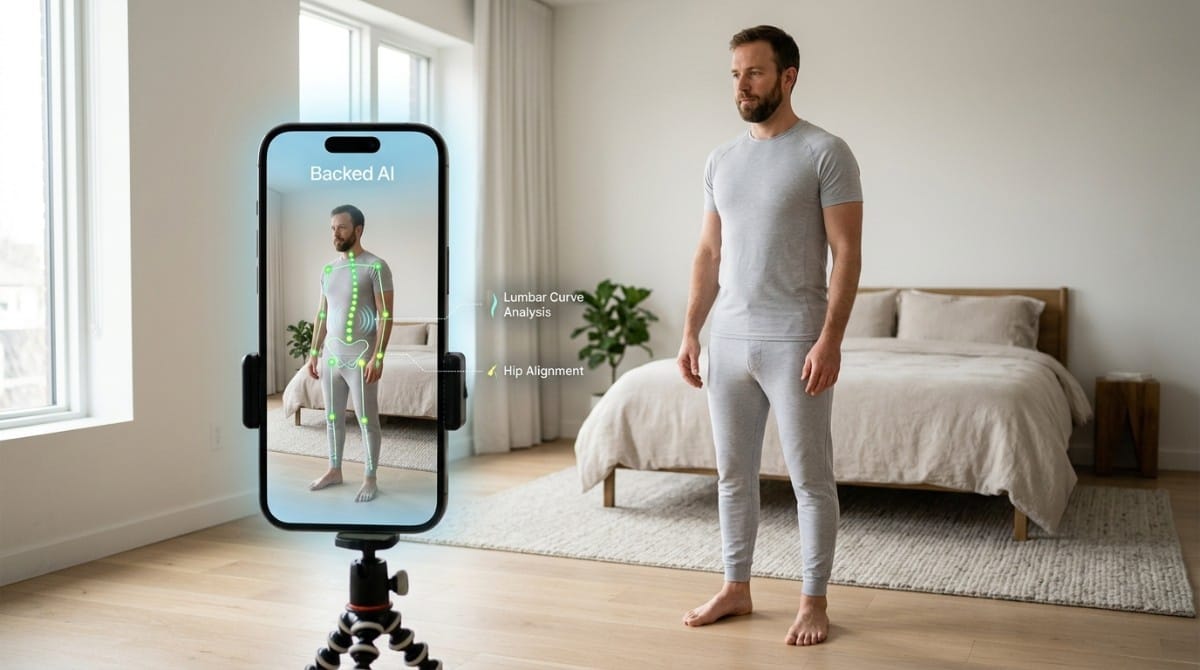
💙 Fix the Root Cause, Not Just the Symptom
Switching to back sleeping with a knee pillow is an excellent first step. But if tight hip flexors and anterior pelvic tilt are driving your lower back pain during the day, sleep position management alone won't fully resolve it.
Backed AI identifies your specific postural imbalances - including whether hip flexor tightness, anterior pelvic tilt, or lumbar compensation are present in your body - through a simple camera scan. From there, it builds a personalized corrective program targeting the exact pattern disrupting both your day and your sleep.
What changes with a personalized approach:
- 📸 AI posture scan - identifies whether your lower back pain is hip-driven, lumbar-driven, or a combination
- 🎯 Personalized correction program - sequenced exercises targeting your specific imbalances, not a generic list
- 📈 Progress tracking - see measurable posture improvement over weeks, which builds the consistency most people lack
Sleep is where your body recovers. Make sure your posture isn't undoing that recovery before morning.
Download Backed AI and start correcting your posture today.
Final Takeaway
The best sleeping position for lower back pain is back sleeping with a firm pillow under the knees - it keeps the spine neutral, releases hip flexor tension passively, and allows the lumbar discs to decompress overnight. Side sleeping with a pillow between the knees is a solid alternative. The fetal position worsens tight hip flexors. Stomach sleeping is the worst option for lumbar health.
But sleep position is one part of a larger system. Pair it with a pre-sleep hip release routine, a morning activation sequence, and a daytime posture correction plan - and the combination produces recovery that neither piece achieves alone.
For readers also dealing with the hip tightness driving this pattern, the tight hip flexors and lower back pain guide covers the full daytime correction framework.
FAQ
Q1: What is the best sleeping position for lower back pain? Back sleeping with a firm pillow placed under both knees is the most effective position for lower back pain. It keeps the spine in a neutral curve, distributes body weight evenly, and passively reduces hip flexor tension - allowing the lumbar spine to decompress overnight.
Q2: Is side sleeping bad for lower back pain? Side sleeping is acceptable when done correctly. Place a firm pillow between your knees and ankles to keep the hips, pelvis, and spine stacked in neutral alignment. Without the pillow, the top leg drops and creates rotational stress on the lumbar vertebrae.
Q3: Why does my lower back hurt more in the morning? Morning lower back pain that eases after moving typically indicates that your sleep position is loading the lumbar spine or keeping the hip flexors shortened overnight. The fetal position and stomach sleeping are the most common culprits.
Q4: Is it bad to sleep in the fetal position if I have back pain? Yes - especially if you also have tight hip flexors. The fetal position keeps the hips in sustained flexion all night, which shortens the hip flexors and reinforces anterior pelvic tilt. This directly worsens the postural pattern that causes lower back pain.
Q5: What stretches should I do before bed for lower back pain? The most effective pre-sleep sequence includes the supine knee-to-chest hold, figure-4 piriformis stretch, supine hip flexor release, and cat-cow mobilization. This routine releases accumulated hip and lumbar tension before sleep, reducing morning stiffness.