Tight Hips and Lower Back Pain: The Connection Most People Miss
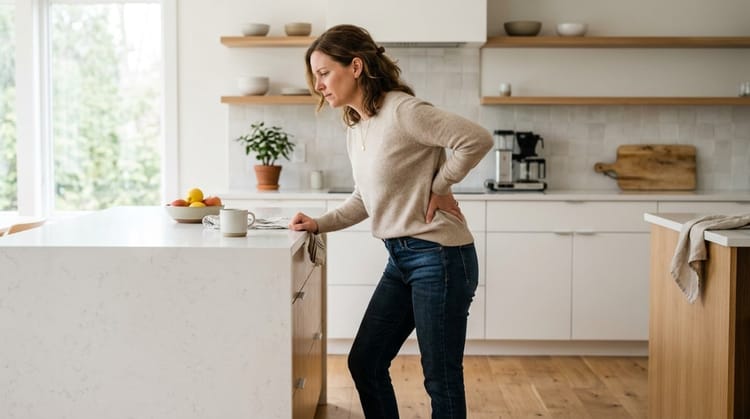
If your lower back aches and you can't figure out why, your hips might be the real problem. Tight hips are one of the most common - and most overlooked - contributors to chronic lower back pain, and treating the back alone rarely solves it. Understanding how these two areas connect is the first step toward lasting relief.
Tight hips and lower back pain are directly linked: when the muscles around the hip joint become shortened or restricted, they alter pelvic alignment and place excess stress on the lumbar spine.
TL;DR
- 🔗 Tight hips pull the pelvis out of neutral alignment, stressing the lower back
- 💥 Anterior pelvic tilt is the key mechanism connecting hip tightness to lumbar pain
- 🪑 Prolonged sitting is the primary driver for most adults
- 🧘 Stretching the hip flexors and piriformis provides relief - but isn't a full fix
- 🏋️ Strengthening the glutes and core breaks the cycle permanently
- ⚠️ Ignoring tight hips can lead to sciatica, knee pain, and chronic LBP
- 📱 Personalized posture programs outperform generic stretch routines
What Is the Hip-Lower Back Connection?
Most people treat lower back pain where they feel it. That logic makes sense - but it's often wrong.
The hips and lower back share overlapping muscles, joints, and movement patterns. They don't operate independently. When one area is restricted, the other compensates. This compensation is what creates pain.
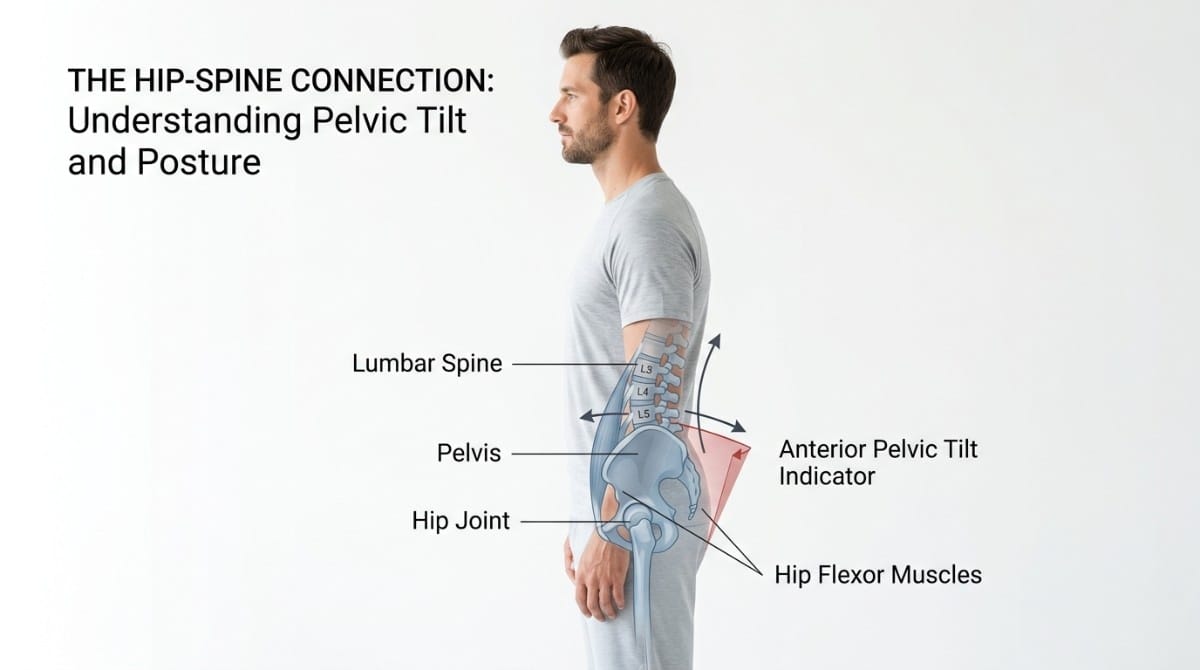
The hip joint connects the pelvis to the thigh. The lumbar spine sits directly above the pelvis. So when your hips are tight, the pelvis shifts out of neutral position - and the lower back absorbs the consequence.
Posture specialists refer to this as the lumbopelvic rhythm - the coordinated relationship between your lumbar spine and pelvis during movement. When tight hips disrupt this rhythm, lower back pain follows.
For a deeper understanding of why lower back pain tends to persist, the guide on why back pain keeps coming back breaks down the cycle clearly.
Why Do Tight Hips Cause Lower Back Pain?
This is the question most people with back pain never think to ask.
When the muscles around your hips - particularly the hip flexors at the front - become shortened from prolonged sitting, they begin pulling the front of your pelvis downward and forward. This creates what's called anterior pelvic tilt.
Here's the chain reaction that follows:
- Pelvis tips forward - the front drops, the back rises
- Lumbar spine over-arches - forced into excessive extension to compensate
- Lower back muscles tighten - working overtime to stabilize an unstable pelvis
- Glutes shut down - the body's natural lumbar support system goes offline
- Lower back pain develops - from compression, overwork, and muscular imbalance
This is why people with sedentary jobs often experience lower back pain that has no obvious cause. The cause isn't the back - it's the hips.
Key Insight: Tight hips don't just affect hip mobility. They tilt the pelvis, over-arch the lower back, and deactivate the glutes. The result is lower back pain that won't resolve until the hip pattern is corrected.
Which Hip Muscles Cause Lower Back Pain?
Not all tight hip muscles create the same problem. Here's a breakdown of the main contributors:
Understanding which muscle is tight helps you target the right stretch - instead of using a one-size-fits-all approach that produces inconsistent results.
How to Tell If Your Hips Are Contributing to Your Back Pain
You don't need a clinical assessment to identify the pattern. These signs point clearly to a hip-driven lower back problem:
Postural signs:
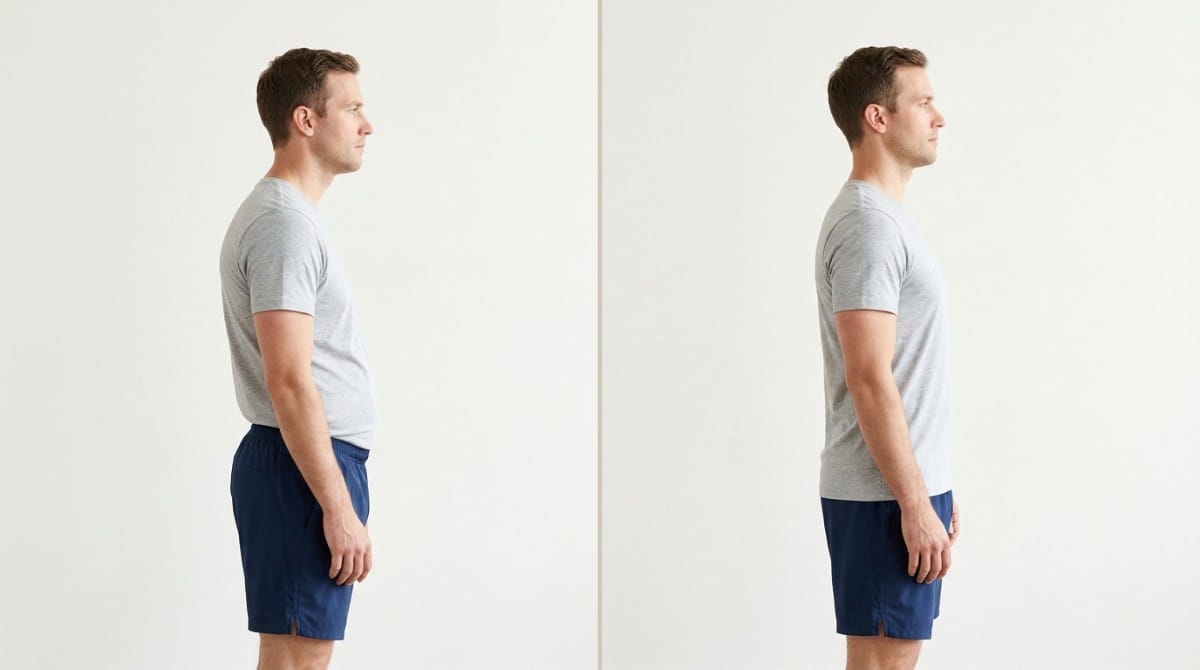
- Pelvis visibly tilted forward when you stand
- Lower back arch that's more pronounced than neutral
- Stomach that pushes forward even when you're trying to stand straight
Pain pattern signs:
- Lower back pain that's worse after sitting for long periods
- Relief when lying on your back with knees bent
- Pain that improves temporarily with movement but returns when you sit again
- Discomfort or stiffness at the front of the hips after waking up
Movement signs:
- Difficulty fully extending the hip when walking or lunging
- Lower back rounds or arches excessively during squats
- One leg feels "shorter" or your stride feels uneven
If several of these match your experience, your hips are likely a primary driver of your lower back pain. This is also closely connected to the patterns discussed in our article on types of bad posture and what your body is telling you.
Best Exercises for Tight Hips and Lower Back Pain (Quick List)
These exercises address both sides of the problem - releasing the hip restriction and restoring lumbar support. 🧘
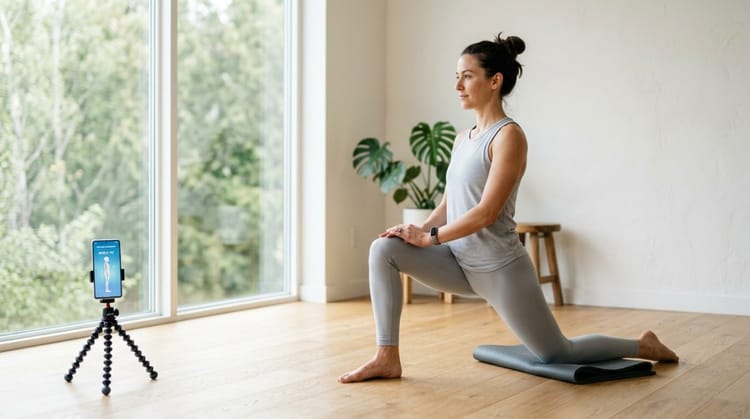
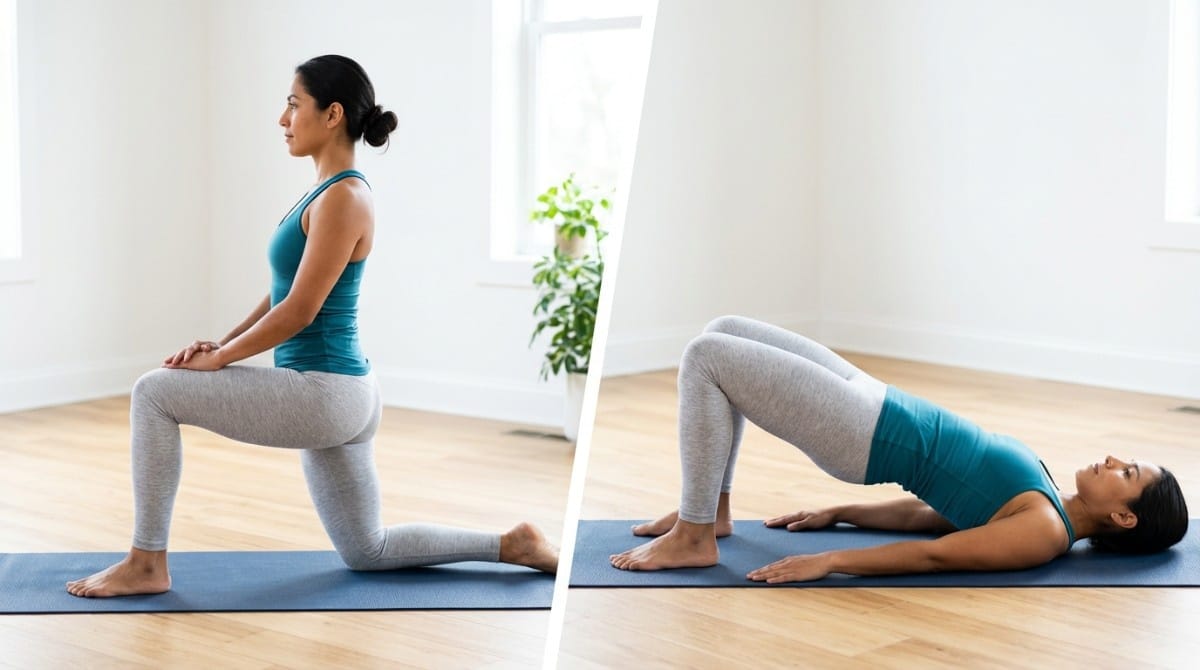
- Kneeling Hip Flexor Stretch - Targets the iliopsoas directly. Kneel on one knee, drive the hip forward with a tall spine, tuck the pelvis slightly. Hold 30-45 seconds per side. The single most effective move for hip flexor release.
- Piriformis Stretch (Figure-4) - Lie on your back, cross one ankle over the opposite knee, pull both legs toward your chest. Relieves deep hip tension and reduces sciatic irritation. Hold 30-45 seconds per side.
- Glute Bridge - Lie on your back, feet flat, drive the hips toward the ceiling. This reactivates the glutes and restores lumbar support. 3 sets of 12-15 reps.
- Dead Bug - Lie on your back, arms extended toward the ceiling, lower opposite arm and leg simultaneously. Builds deep core stability without loading the lower back. 3 sets of 8-10 reps per side.
- 90/90 Hip Stretch - Sit with both knees bent at 90 degrees in a split position. Excellent for internal and external hip rotation. Hold 60 seconds per side.
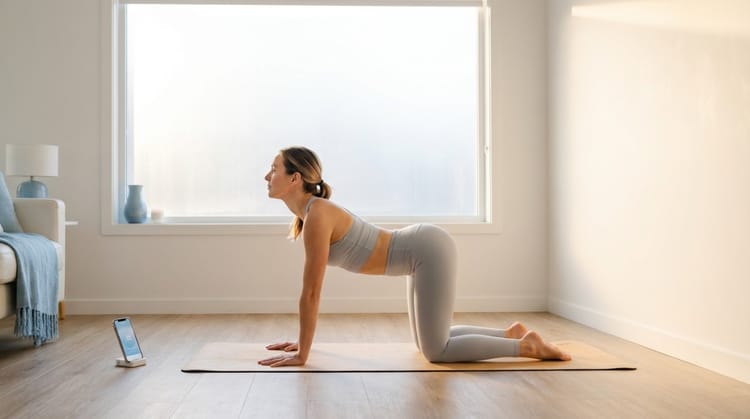
- Cat-Cow Mobilization - On hands and knees, alternate between arching and rounding the back. Restores lumbopelvic movement and reduces lumbar stiffness. 10-15 slow repetitions.
- Standing Hip Hinge - Push hips back, maintain a flat back, return to standing. Trains proper posterior chain mechanics and reinforces neutral pelvis. 3 sets of 10.
Step-by-Step Recovery Framework: Breaking the Hip-LBP Cycle
This framework moves from immediate relief to long-term correction. Follow the sequence - skipping phases reduces effectiveness.
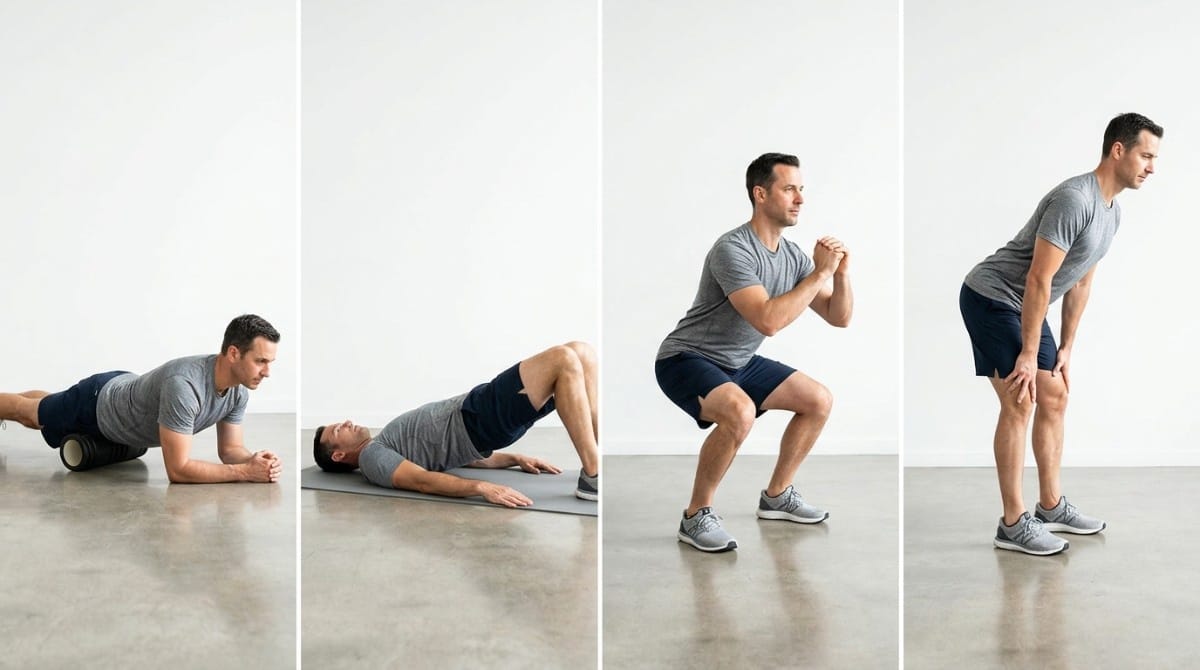
Phase 1 - Release (Days 1-4) Foam roll the hip flexors, TFL, and piriformis. Follow with the kneeling stretch and figure-4. Goal: reduce the tension pulling the pelvis out of neutral. Do not skip this - it primes the muscle tissue for the next phase.
Phase 2 - Activate (Days 5-9) Add glute bridges and dead bugs. Tight hips consistently come with inhibited glutes. Reactivating them is non-negotiable. Without this step, the pelvis will return to its tilted position within days. The bodyweight back exercise guide has excellent activation progressions for this phase.
Phase 3 - Stabilize (Days 10-14) Introduce hip hinges, controlled squats, and single-leg balance work. This locks mobility gains into functional strength. The goal is a pelvis that holds neutral position without you thinking about it.
Phase 4 - Maintain (Ongoing) A daily 10-minute sequence: hip flexor stretch, glute bridge, cat-cow, and one stabilization move. Movement breaks every hour if you sit for work. This is what separates people who fix the problem from people who manage it forever.
Research & Expert Insight
The hip-lower back relationship is well-documented in musculoskeletal research and clinical practice.
Physiotherapists often recommend assessing hip mobility before treating lower back pain, because addressing the lumbar spine in isolation frequently produces incomplete recovery.
Key evidence points:
- Lumbopelvic coupling: Studies in spine biomechanics consistently show that hip joint restriction changes lumbar load distribution during walking, sitting, and bending
- Anterior pelvic tilt prevalence: Research in sedentary populations identifies anterior pelvic tilt as highly prevalent in adults who sit more than 6 hours daily - a direct consequence of hip flexor shortening
- Glute inhibition cycle: Posture specialists confirm that tight hip flexors neurologically inhibit the glutes via reciprocal inhibition, creating a self-reinforcing cycle of hip tightness and lumbar instability
- Combined interventions: Rehab research consistently shows that hip mobility work combined with posterior chain strengthening reduces lower back pain recurrence more effectively than back-focused treatment alone
The clinical takeaway is consistent: treat the hips to fix the back.
What Happens If You Ignore the Hip-LBP Connection?
Treating only the lower back while ignoring the hips is a common mistake - and it explains why so many people experience recurring back pain despite treatment.
Left unaddressed, the hip-lower back cycle escalates:
- 🔙 Chronic lower back pain - persistent lumbar compression becomes a daily baseline
- 🦵 Sciatic nerve irritation - piriformis tightness or lumbar compression begins affecting the sciatic nerve, causing leg pain and numbness
- 🚶 Altered gait - compensatory walking patterns develop, increasing knee and ankle load
- 🍑 Progressive glute weakness - long-term inhibition leads to real muscle atrophy
- 🧍 Postural collapse - the anterior tilt deepens over time, affecting appearance, confidence, and movement capacity
This is why physiotherapists and sports rehab specialists treat tight hips as a systemic issue - not just a flexibility problem. If you're also experiencing lower back pain when standing for long periods, the guide on standing lower back pain covers the compensatory patterns in detail.
When This Approach Doesn't Work
Hip stretching and glute activation work for the majority of people with tight hips and lower back pain - but not everyone.
Seek professional assessment if:
- Pain is sharp, shooting, or travels down one leg past the knee (may indicate disc herniation or true sciatica)
- Lower back pain is accompanied by bladder or bowel changes (seek immediate care)
- You've had a recent fall, injury, or trauma involving the hip or spine
- Consistent stretching for 4+ weeks produces no improvement
- Pain is worse in the morning and improves throughout the day (may suggest an inflammatory condition)
- You have a known history of hip labral tears, FAI, or spinal stenosis
Generic stretching is not appropriate for structural hip or spine pathology. Clinical assessment comes first in those cases.
Lifestyle Habits That Drive - and Relieve - the Cycle
Daily habits that make tight hips and LBP worse:
- Sitting for 60+ consecutive minutes without movement breaks
- Crossing legs while seated (creates pelvic asymmetry)
- Sleeping in the fetal position nightly (keeps hips in flexion for hours)
- Wearing high heels regularly (accelerates anterior tilt)
- Skipping warm-ups before exercise
Daily habits that accelerate recovery:
- Standing or walking for 5 minutes every hour
- Using a lumbar support cushion to maintain neutral pelvis while seated
- Sleeping on your back with a pillow under your knees
- Starting mornings with a 5-minute hip opener sequence
- Setting posture reminders throughout the workday
Small daily adjustments compound dramatically over weeks. The stretching sessions matter - but your 8 hours of daily sitting shapes the baseline your body returns to.
For desk workers specifically, a structured daily posture routine for desk workers can address both the sitting posture and the hip tension pattern simultaneously.
Why Most Exercise Plans Fail
Most people search for "tight hips lower back pain exercises," follow a YouTube routine for a week, feel slightly better, and stop. The pain returns. The cycle repeats.
Here's why generic plans underdeliver:
- No diagnostic step - they don't identify which hip muscle is actually tight or which posture pattern is driving the pain
- Stretch-only approach - stretching without glute activation restores range of motion without stability, so the pelvis drifts back into tilt
- No progression - the same stretches at the same intensity plateau after week one
- No form feedback - incorrect stretch form can reinforce the very compensation pattern you're trying to correct
- No personalization - a desk worker's hip pattern is different from a runner's or a senior's
💙 A Smarter Way to Break the Hip-LBP Cycle
Generic stretches give you a starting point. They rarely give you a lasting solution.
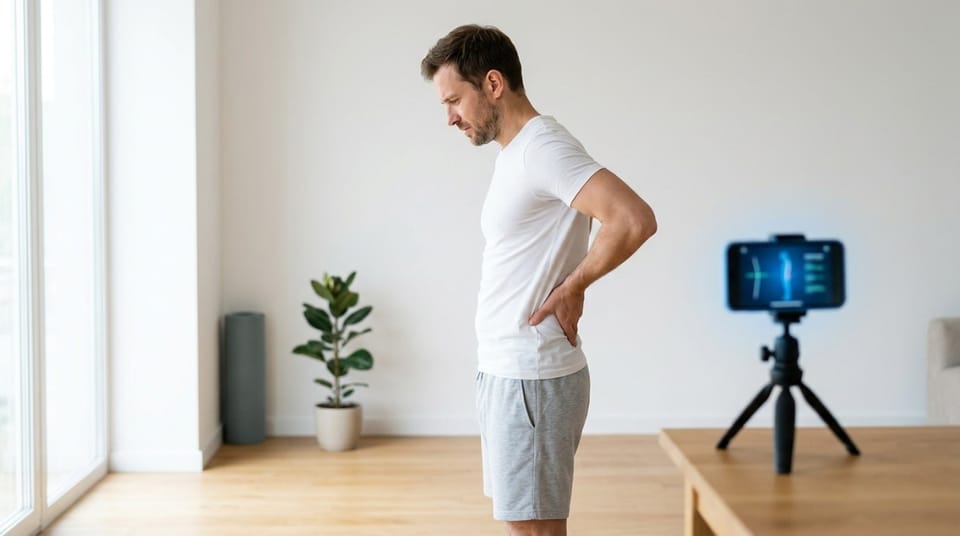
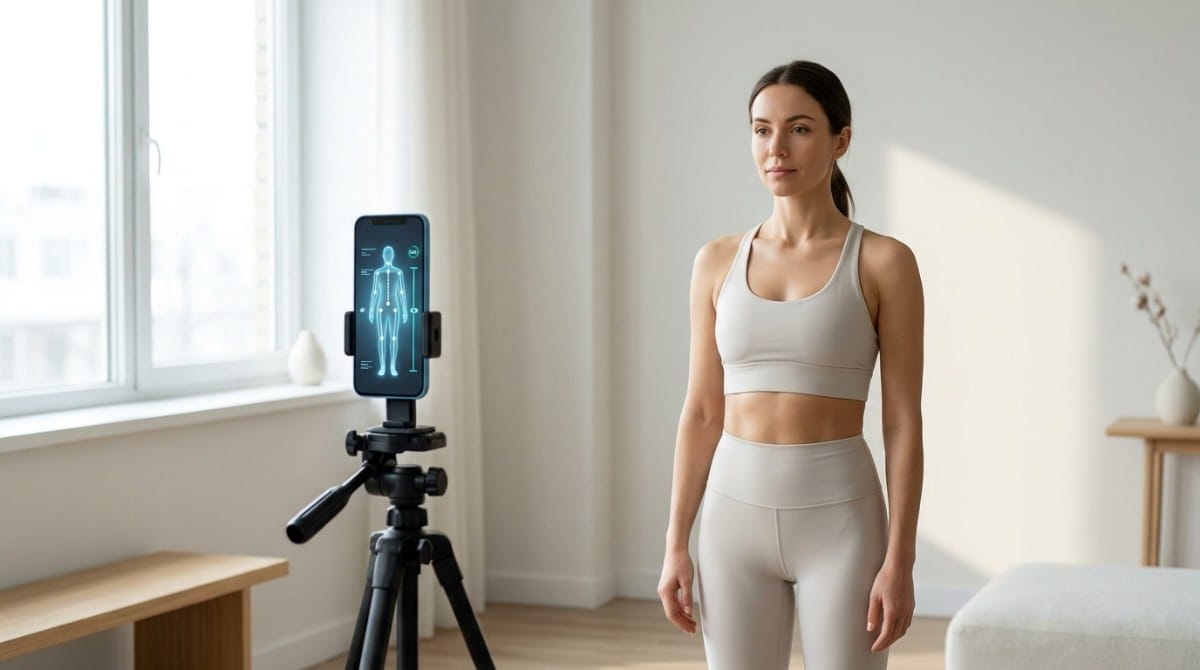
Backed AI uses your phone's camera to analyze your actual posture - identifying whether anterior pelvic tilt, hip flexor tightness, or lumbar compensation is present in your specific body. From that scan, it builds a personalized corrective program targeting your exact imbalances.
Instead of guessing which exercises apply to you, Backed AI tells you precisely what your body needs - and adjusts the program as your alignment improves.
What makes it different from a stretch list:
- 📸 AI posture scan - identifies the specific hip and lumbar patterns driving your back pain
- 🎯 Personalized exercise sequence - built around your imbalances, not a generic template
- 📈 Progress tracking - you can see your posture improving over weeks, which builds the consistency most people lack
If you've been treating your lower back without addressing your hips, you've been solving the wrong problem.
Download Backed AI and start correcting your posture today.
Final Takeaway
Tight hips and lower back pain are not separate problems - they're two symptoms of the same postural imbalance. When the hip flexors shorten, the pelvis tilts forward, the lower back over-arches, and the glutes go offline. That cycle produces the lower back pain that millions of people experience every day without understanding why.
The solution is three-pronged: release the tight hip muscles, reactivate the glutes and core, and build the daily habits that prevent the pattern from returning. Stretching alone isn't enough. Treating only the back isn't enough. The hip-spine connection has to be addressed together.
Start with the kneeling hip flexor stretch and glute bridge daily. Break up your sitting every hour. And if you want a program built around your actual body instead of a generic routine, Backed AI removes the guesswork entirely.
FAQ
Q1: Can tight hips cause lower back pain? Yes. Tight hip flexors pull the pelvis into anterior tilt, which over-arches the lower back and overloads the lumbar muscles and discs. This is one of the most common causes of chronic lower back pain in people who sit for extended periods.
Q2: How do I know if my lower back pain is caused by tight hips? Key signs include lower back pain that worsens after prolonged sitting, relief when lying with knees bent, a visible forward pelvic tilt when standing, and difficulty fully extending the hip when walking or lunging.
Q3: What is the best stretch for tight hips and lower back pain? The kneeling hip flexor stretch targets the iliopsoas - the deepest hip flexor and the primary driver of anterior pelvic tilt. Pair it with the figure-4 piriformis stretch and glute bridges for a complete approach.
Q4: How long does it take to relieve lower back pain caused by tight hips? Most people notice reduced lower back pain within 1-2 weeks of daily hip stretching and glute activation. Full postural correction - including pelvic stability - typically takes 4-8 weeks with a consistent structured program.
Q5: Should I stretch or strengthen to fix tight hips and back pain? Both are necessary. Stretching releases the hip restriction that's tilting the pelvis. Strengthening the glutes and core prevents the pelvis from returning to the tilted position. Stretching alone produces temporary relief; strengthening makes it permanent.