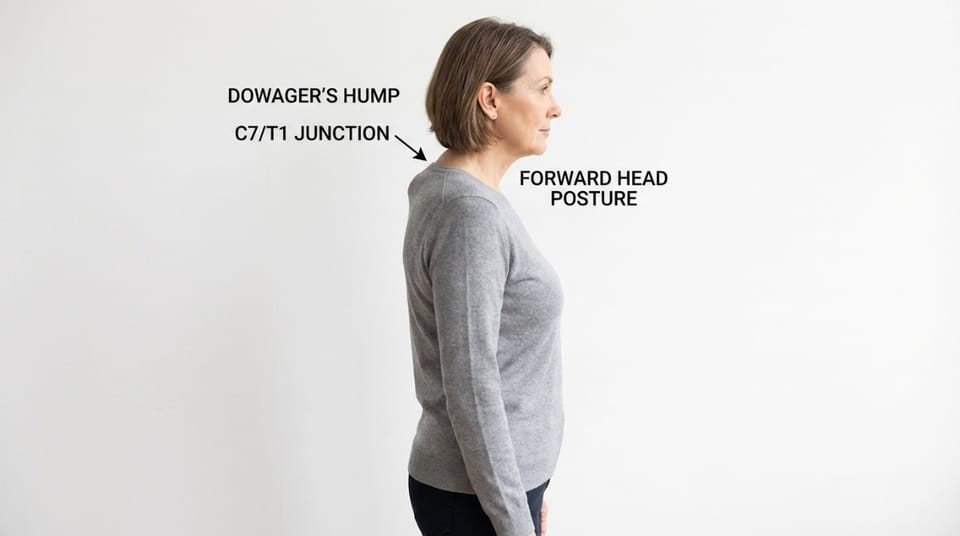
A dowager's hump is a visible rounded protrusion at the junction of the neck and upper back, caused by a combination of postural misalignment, spinal compression, and soft tissue changes at the cervicothoracic junction.
Hip flexor pain when sitting is discomfort or tightness in the muscles at the front of the hip that occurs when these muscles become shortened, overloaded, or inflamed from sustained seated positions.
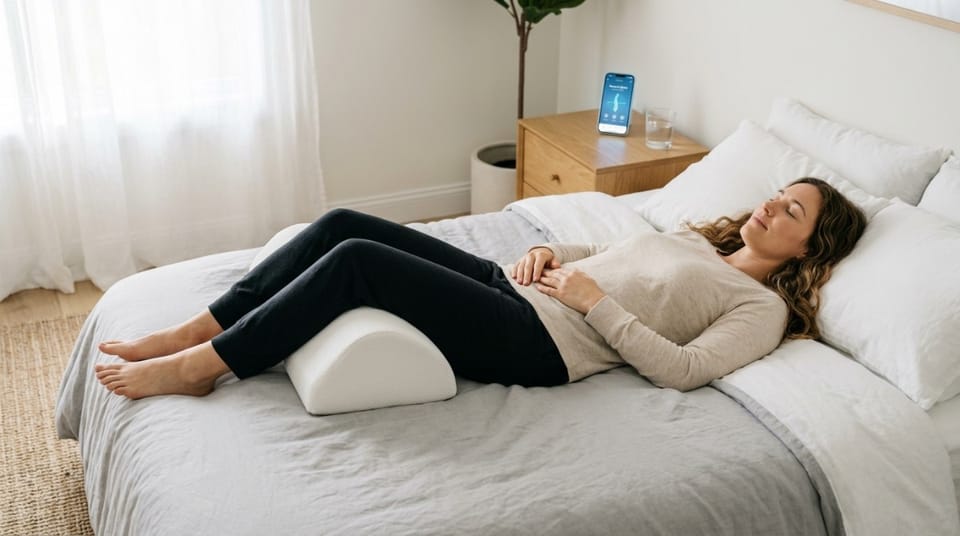
Sleeping position affects lower back pain by determining whether the spine maintains a neutral curve or is forced into sustained misalignment throughout the night.
Tight hips and lower back pain are directly linked: when the muscles around the hip joint become shortened or restricted, they alter pelvic alignment and place excess stress on the lumbar spine.
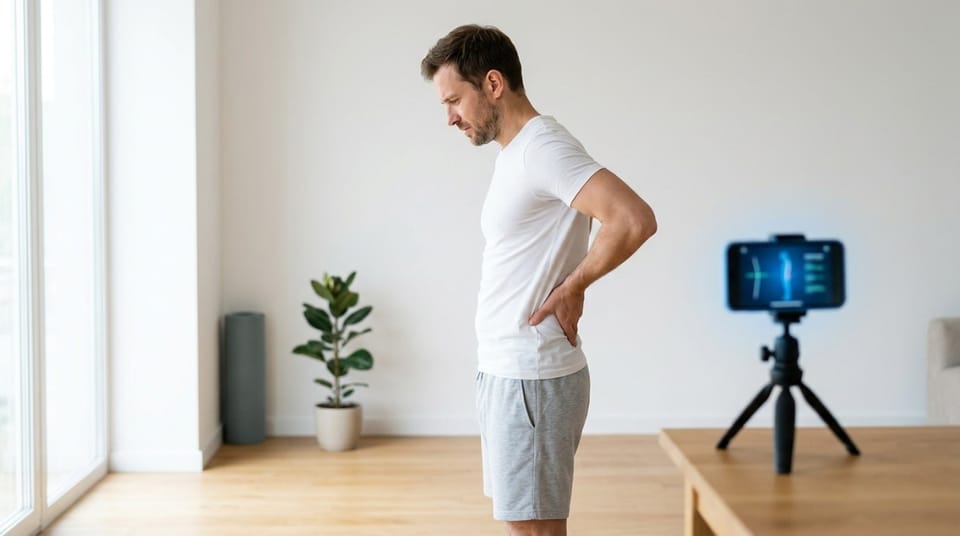
Lower back tightness is a musculoskeletal condition where the muscles surrounding the lumbar spine become overactivated, shortened, or fatigued - typically due to sustained poor posture or movement imbalances.