
Can You Get Sciatica From Sitting Too Much? What's Really Happening

Yes, sitting too much can trigger sciatica or make existing sciatica worse. 🪑 Long hours in a chair compress the sciatic nerve, tighten the muscles around it, and reduce blood flow to the area, which is why so many desk workers, drivers, and students feel pain shooting from the buttock down the leg.
The good news: most sitting-related sciatica is mechanical, not damage, and it usually responds well to movement, posture changes, and targeted relief.
TL;DR
- 🔁 Sitting too long is a common trigger for sciatica and a major reason it flares.
- 🦵 Sciatica is leg-dominant: pain, tingling, or numbness travels from the buttock down the leg.
- 🪑 Pressure on the sciatic nerve rises sharply when you sit, especially while slouched.
- 💪 The piriformis muscle sits right over the nerve and often tightens from sitting.
- ⏱️ Movement breaks every 30 to 45 minutes matter more than any single stretch.
- 📈 Most cases improve in 4 to 8 weeks with consistent, structured correction.
What Is Sciatica From Sitting?
Sciatica from sitting is irritation or compression of the sciatic nerve caused by prolonged seated pressure, tight hip muscles, and reduced movement, producing pain that radiates from the lower back or buttock down one leg.
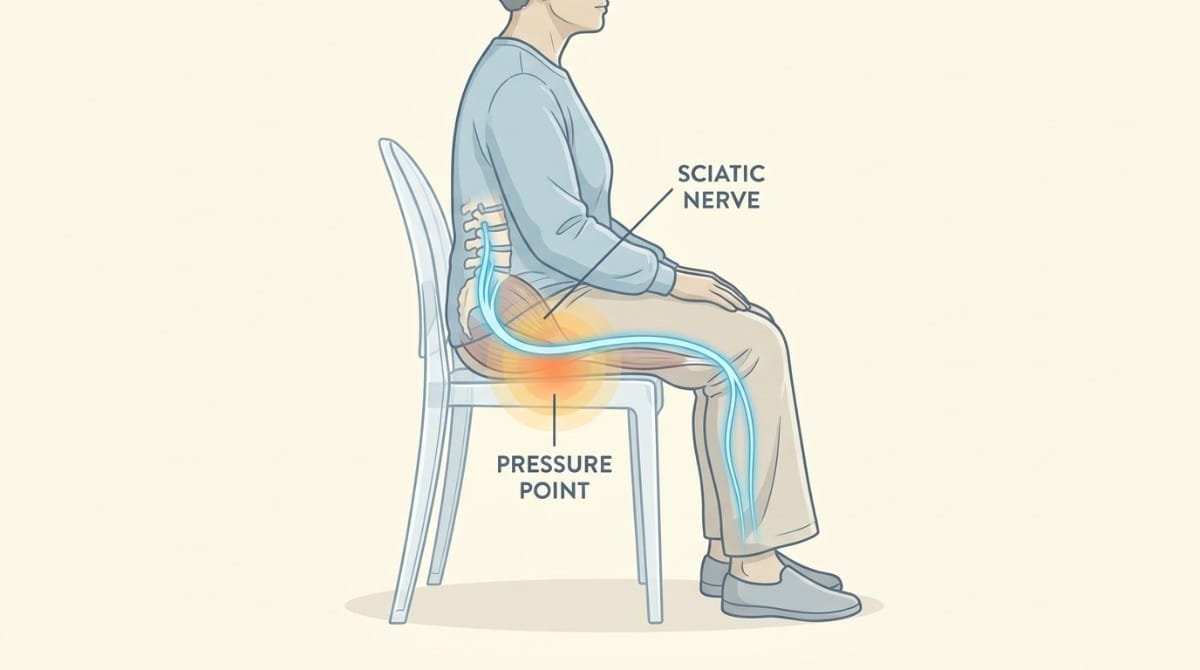
The sciatic nerve is the longest nerve in your body. It runs from your lower back, through the buttock, and down the back of each leg. When it gets irritated, the pain rarely stays in one spot. It travels.
That radiating, leg-dominant pattern is what separates sciatica from ordinary lower back ache. If your discomfort sits only in your back and stays there, that is closer to general lower back pain from sitting. If it shoots down the leg, you are likely dealing with the sciatic nerve.
Why Does Sitting Too Much Cause Sciatica?
Three things happen when you stay seated for hours. Together, they set the stage for sciatic nerve irritation.
1. Direct pressure on the nerve. Sitting puts your full upper-body weight onto your buttocks and the structures underneath, including the sciatic nerve. Slouching makes this worse by rolling the pelvis backward.
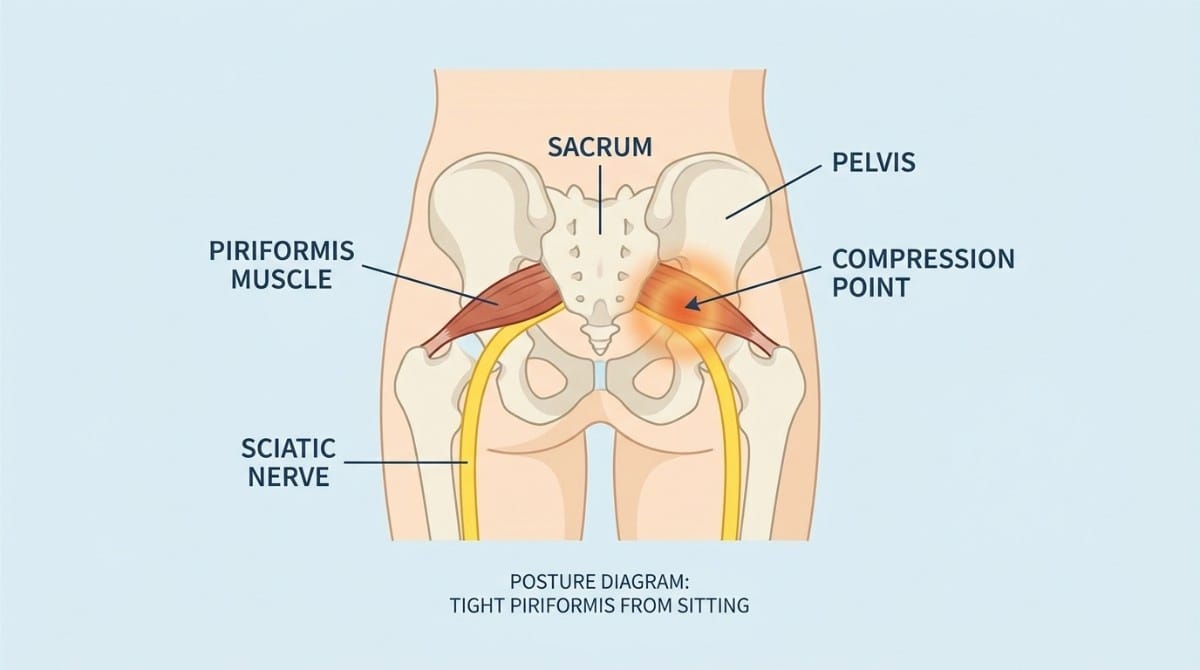
2. The piriformis tightens. The piriformis is a small muscle deep in the buttock, and the sciatic nerve runs directly beneath (or through) it. Sitting shortens and tightens this muscle, which can press on the nerve. This is the same hip pattern explained in the tight hips and lower back pain connection.
3. Blood flow drops. Staying still reduces circulation to the nerve and surrounding tissue. Less blood flow means more irritation and slower recovery.
🔑 Key Insight: Sitting does not "injure" the sciatic nerve in most cases. It sustains a position that compresses and starves it. Change the position often enough, and the irritation usually settles.
How Long Is Too Long to Sit With Sciatica?
There is no exact minute limit, but the pattern is consistent: the longer you sit unbroken, the more the nerve gets compressed.
A practical rule from posture specialists is to move every 30 to 45 minutes. Even a 60-second stand-and-walk resets pressure on the buttock and restores circulation.
Here is how common sitting habits affect the sciatic nerve:
If you spend most of your day seated, the front of your hip may ache too. That related pattern is broken down in hip flexor pain when sitting.
Set a recurring timer right now. Every time it goes off, stand, walk 10 steps, and gently squeeze your glutes. Backed AI can send these movement nudges for you so you never have to remember.
What Happens If You Keep Sitting With Sciatica?
Ignoring sitting-related sciatica rarely makes it disappear. More often, the pattern locks in.
- Pain that flared occasionally becomes a daily presence.
- The piriformis and hip flexors stay short and tight.
- Glute muscles weaken from underuse, so the area gets less support.
- Tingling or numbness down the leg can become more frequent.
The longer the cycle runs, the more consistency it takes to reverse. That is why acting early is the easiest fix.
Best Exercises for Sitting-Related Sciatica (Quick List)
These movements target the nerve, the piriformis, and the muscles that support the area. Start gently and stop if pain sharply increases.
- Figure-4 piriformis stretch. Cross one ankle over the opposite knee and gently lean forward. Releases the muscle pressing on the nerve. Hold 30 seconds per side.
- Seated nerve glide. Sit tall, slowly straighten one leg and flex the foot, then lower. Gently mobilizes the sciatic nerve. 10 slow reps per side.
- Glute bridge. Lie on your back, feet flat, lift hips. Reactivates glutes that switch off from sitting. 2 sets of 12.
- Knee-to-chest stretch. Pull one knee gently toward your chest while lying down. Eases lower back and buttock tension. Hold 30 seconds.
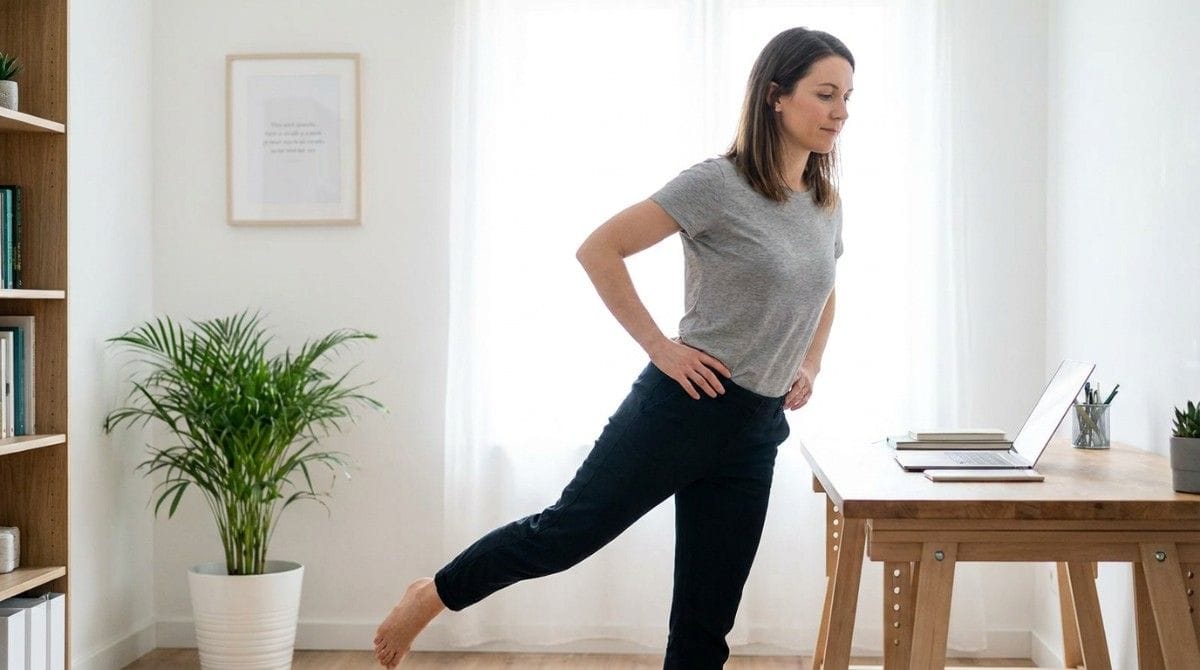
- Standing hip flexor stretch. A quick mid-workday release for the front of the hip. 30 seconds per side.
Physiotherapists often recommend pairing nerve mobility work with glute activation, because releasing the muscle without strengthening the support tends to bring the pain back.

Step-by-Step Recovery Framework
Posture specialists suggest a release, activate, integrate sequence. Follow the order for best results.
Phase 1 – Release (Days 1 to 4). Foam roll the glutes and piriformis. Add the figure-4 stretch and knee-to-chest daily. Goal: reduce direct pressure on the nerve.
Phase 2 – Activate (Week 2). Add glute bridges and gentle nerve glides. Goal: rebuild support so the nerve stops getting overloaded.
Phase 3 – Integrate (Weeks 3 to 8). Layer corrective habits onto your day. Pair this with a structured reset like the 15-minute posture routine for desk workers so the seated pattern stops rebuilding each morning.
Symptoms that flare overnight also respond to small changes covered in the best sleeping positions for lower back pain.
When This Approach Doesn't Work
Movement and stretching help the majority of sitting-related sciatica. But some cases need a professional. See a doctor if:
- Pain is severe, constant, or worsening despite movement.
- You have numbness, weakness, or "foot drop" in the leg.
- You lose bladder or bowel control (seek urgent care).
- Symptoms started after a fall or sudden injury.
- There is no improvement after 6 to 8 weeks of consistent effort.
These signs can point to a structural cause such as a herniated disc or stenosis, which needs imaging and clinical guidance, not exercise alone.
Research & Expert Insight
Research in musculoskeletal rehab points to a few consistent findings about seated sciatica.
- Seated pressure is real. Studies measuring spinal and buttock loading show sitting concentrates pressure on the structures around the sciatic nerve, especially when slouched.
- The piriformis matters. Posture specialists consistently identify a tight piriformis as a common, non-structural driver of sciatic-type pain in people who sit a lot.
- Movement beats equipment. Occupational health research shows frequent movement breaks reduce reported nerve and back symptoms more than ergonomic gear alone.
The pattern is clear. The nerve responds to pressure, the muscles respond to position, and both respond to movement.
Final Takeaway
So, can you get sciatica from sitting too much? Yes, and you can usually fix it the same way it started, by changing the position. Sitting compresses the sciatic nerve, tightens the piriformis, and cuts circulation. Reverse that with movement breaks, targeted release, glute activation, and smarter sitting, and most people feel meaningful relief inside a few weeks.
The hard part is not the exercises. It is knowing which ones your body needs and staying consistent while you sit all week.
Why Most Sciatica Routines Fail
Most people search "sciatica stretches," try a few, feel better for a day, then the pain returns. Here is why generic routines fall short:
- No personalization. Your sciatica may come from a tight piriformis, a posture pattern, or weak glutes. A generic list treats everyone the same.
- No form feedback. A figure-4 stretch done wrong can miss the nerve entirely or aggravate it.
- No progression. The same stretch at the same intensity stops working after week one.
- No consistency system. Sitting repeats 8 hours a day, 5 days a week. Random stretching cannot keep up.
A Smarter Way to Correct It
Backed AI is built for exactly this gap. Instead of guessing, you get a plan shaped around your actual body.
- 📸 AI posture scan identifies your specific imbalance pattern using your phone camera.
- 🎯 Personalized program targets your piriformis, hips, and glutes, not a one-size-fits-all list.
- 🔔 Habit reminders nudge you to move before the nerve gets overloaded again.
The longer the seated pattern locks in, the more consistency correction takes. Starting now is the easiest version of this fix.
Download Backed AI and start correcting your posture today. 💙
FAQ
Can sitting too long cause sciatica? Yes. Prolonged sitting compresses the sciatic nerve, tightens the piriformis muscle over it, and reduces blood flow, which can trigger sciatic pain that radiates down the leg.
Can sitting too long make sciatica worse? Yes. If you already have sciatica, long unbroken sitting increases pressure on the nerve and tends to intensify or prolong flare-ups.
How should I sit to avoid sciatica? Sit with hips slightly higher than knees, feet flat, lower back supported, and weight even on both sides. Avoid soft chairs, leg crossing, and sitting on a wallet.
How long does sitting-related sciatica take to improve? Most people notice relief within 1 to 2 weeks of consistent movement and stretching, with fuller correction usually taking 4 to 8 weeks.
When should I see a doctor for sciatica from sitting? Seek care if you have leg weakness, numbness, foot drop, bladder or bowel changes, or no improvement after 6 to 8 weeks of consistent effort.