Can Sitting Too Long Make Sciatica Worse? How to Sit Without Flaring It
Yes, sitting too long can make sciatica worse. 🪑 Each unbroken hour adds pressure on the sciatic nerve, tightens the muscles around it, and slows the blood flow it needs to calm down. That is why a flare often feels sharpest after a long drive, a deep-work block, or a marathon meeting.
The fix is not to never sit. It is to sit in a way that takes pressure off the nerve and to break up the time you spend down.
TL;DR
- 🔁 Long, unbroken sitting is one of the most common sciatica aggravators.
- 🦵 The pain is leg-dominant: it travels from the buttock down the leg.
- 🪑 Slouching, soft couches, and sitting on a wallet all raise nerve pressure.
- ⚖️ Sit with weight even, hips above knees, and lean off the painful side.
- ⏱️ Move every 20 to 30 minutes during a flare, not 45.
- 💪 Better sitting plus glute support calms most cases in a few weeks.
What Does Sitting Do to Sciatica?
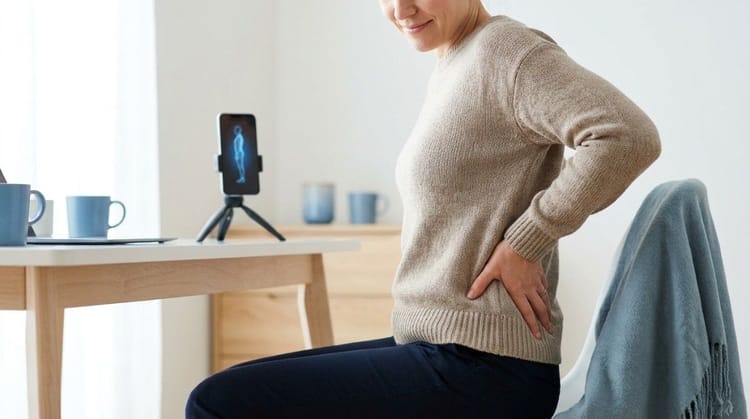
Sciatica is irritation of the sciatic nerve that sends pain, tingling, or numbness from the lower back or buttock down one leg, and sitting makes it worse by compressing the nerve and the muscles around it.
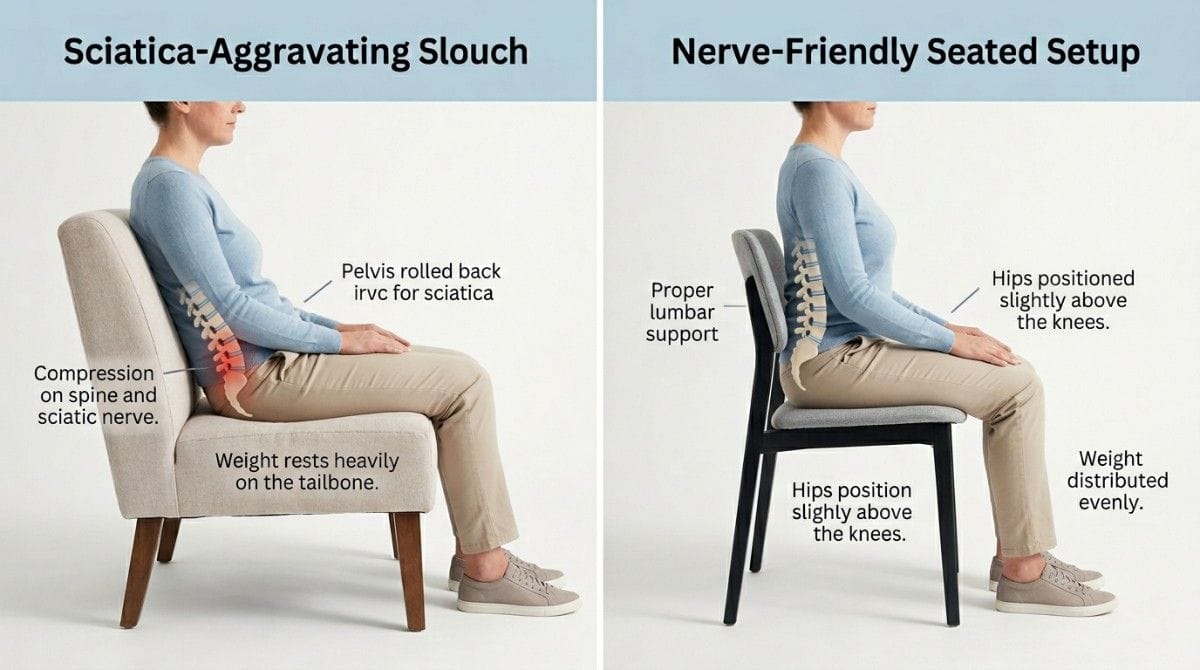
When you sit, your body weight presses down through the buttocks, right onto the path of the sciatic nerve. Slouching tilts the pelvis back and loads the nerve even more.
If you are not sure whether your sitting is the actual cause, the full mechanism is broken down in whether you can get sciatica from sitting too much. This guide picks up where that leaves off: how to sit once you already have it.
Why Does Sitting Make Sciatica Worse?
Three forces stack up the longer you stay seated.
1. Sustained pressure. Sitting concentrates your weight onto the buttock, directly over the nerve. Time makes it cumulative.
2. A tightening piriformis. The piriformis is a deep buttock muscle that sits right over the sciatic nerve. Sitting shortens it, and a tight piriformis squeezes the nerve. This is part of the hip pattern covered in the tight hips and lower back pain connection.
3. Switched-off glutes. Sitting all day makes the glutes go quiet. Weak glutes mean less support around the hip and more strain on the nerve.
🔑 Key Insight: A flare is rarely about one bad moment. It is about a position held too long. Change the position and the cadence, and the nerve usually settles.
💡 Quick win: During a flare, set a 25-minute timer. Each time it rings, stand, walk 20 steps, and gently squeeze your glutes. Backed AI can send these nudges so you never have to track it yourself.
How Should You Sit With Sciatica?
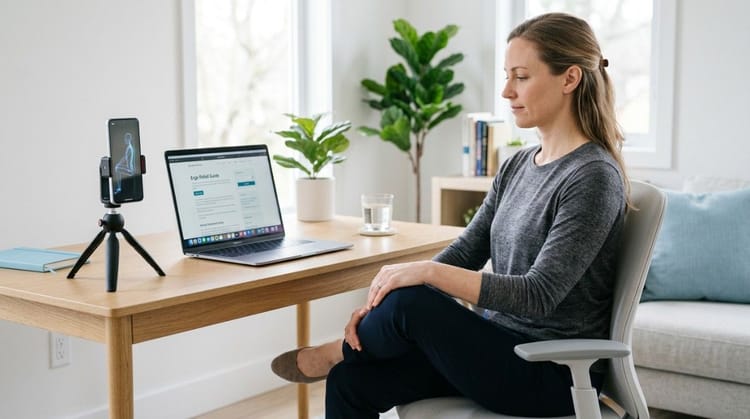
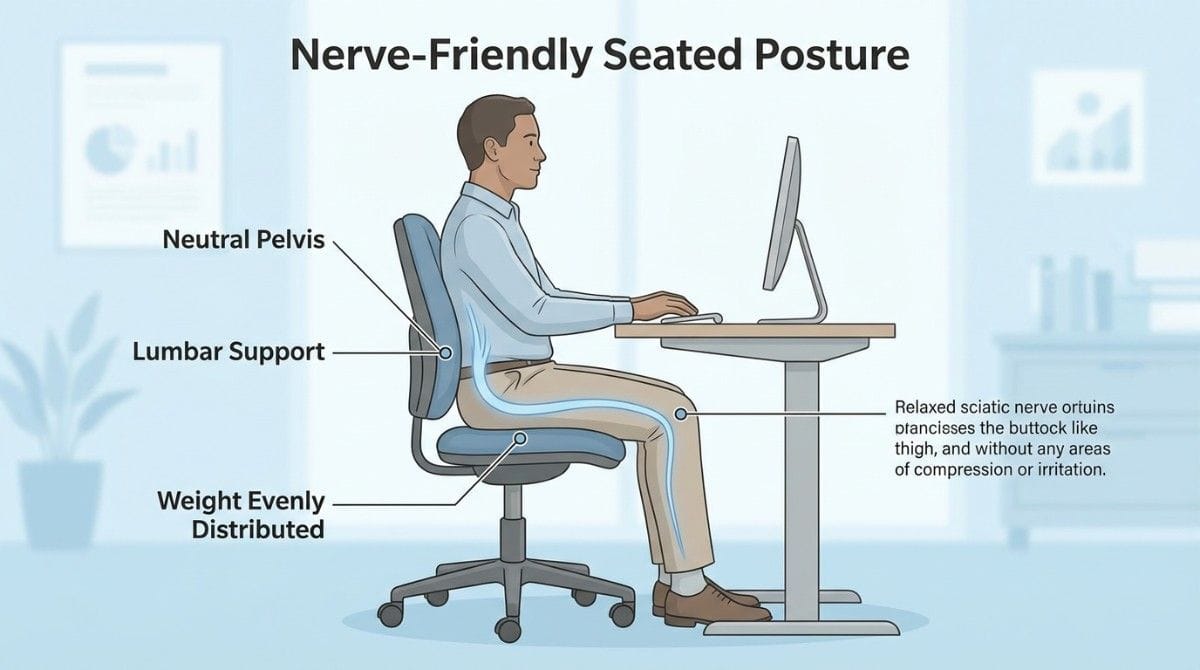
This is the part most people get wrong. The goal is simple: get weight off the nerve and keep the pelvis neutral.
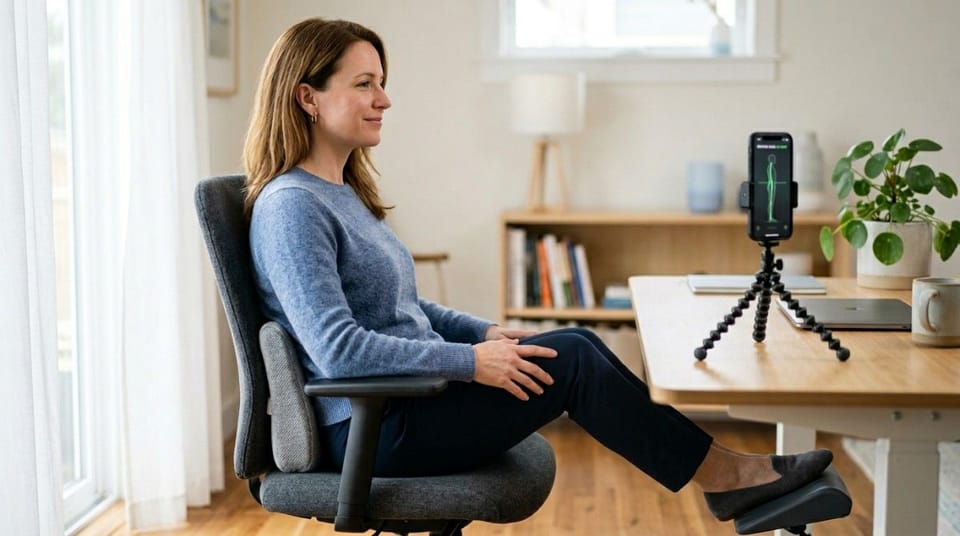
- Hips slightly above knees. Raise your seat or add a wedge cushion so your thighs slope gently down.
- Even weight, both sides. Do not perch on one cheek or tuck a foot under you.
- Lean off the painful side. A small shift of weight onto the non-painful side eases direct nerve pressure.
- Support your lower back. A lumbar cushion keeps the pelvis from rolling backward.
- Feet flat, knees apart. This keeps the hips open and the piriformis less compressed.
For the general neutral-spine version of this setup, the diagrams in the best sitting position for lower back pain are a useful companion.
What Sitting Habits Make Sciatica Worse?
Some everyday habits quietly keep the nerve irritated. Here is what to watch and what to do instead.
The duration question matters too. For how unbroken sitting time adds up over a day, see how long you can sit before it damages your back.
Best Seated Relief Moves for Sciatica (Quick List)
You can do these at your desk without changing clothes. Start gently and stop if pain sharply increases.
- Seated figure-4. Cross one ankle over the opposite knee, sit tall, lean forward slightly. Releases the piriformis pressing on the nerve. Hold 30 seconds per side.
- Seated nerve glide. Sit tall, slowly straighten one leg and flex the foot, then lower. Gently mobilizes the sciatic nerve. 10 slow reps per side.
- Seated pelvic tilt. Roll the pelvis gently forward and back. Restores neutral position and unloads the nerve. 10 slow reps.
- Standing glute squeeze. Stand, squeeze both glutes for 5 seconds, release. Reactivates the muscles that support the hip. 8 reps.
- Standing hip flexor stretch. Step one foot back and gently press the hip forward. Eases the front-of-hip tightness that pulls the pelvis. 30 seconds per side.
Physiotherapists often recommend pairing nerve mobility with glute activation, because releasing the muscle without rebuilding support tends to let the pain return.
Step-by-Step: Set Up a Sciatica-Friendly Sitting Day
Posture specialists suggest building the day around movement, not willpower. Follow this simple structure.
Morning – Set the base. Adjust your seat so hips sit above knees and add lumbar support before you start work.
Every 20 to 30 minutes – Reset. Stand, walk a short loop, do one seated relief move. During a flare, shorten the interval.
Midday – Reactivate. Pair your setup with a glute-focused reset like the moves in glute activation exercises after sitting all day, so the hip stops leaning on the nerve.
Evening – Decompress. Avoid finishing the day collapsed on a soft couch. Choose a supported seat or lie down with knees bent.
Done consistently, this layered approach usually brings noticeable relief inside 1 to 2 weeks, with fuller calm over 4 to 8 weeks.
💡 If guessing which moves your body needs feels like the hard part, Backed AI scans your posture and builds the sequence around your actual pattern, so you are not following a generic list.
When Better Sitting Isn't Enough
Smarter sitting helps most sitting-related sciatica. But some cases need a professional. See a doctor if:
- Pain is severe, constant, or steadily worsening.
- You have leg weakness, numbness, or "foot drop."
- You lose bladder or bowel control (seek urgent care).
- Symptoms began after a fall or sudden injury.
- There is no improvement after 6 to 8 weeks of consistent effort.
These signs can point to a structural cause such as a herniated disc or stenosis, which needs imaging and clinical care, not seating tweaks alone.
Research & Expert Insight
Research in musculoskeletal rehab points to a few consistent themes for seated sciatica.
- Position drives pressure. Studies on seated loading show slouched positions concentrate more pressure around the structures near the sciatic nerve than upright, supported sitting.
- Movement beats equipment. Occupational health research shows frequent movement breaks reduce reported nerve and back symptoms more than ergonomic gear used alone.
- Glutes matter. Posture specialists consistently link sitting-related glute inhibition with higher strain on the hip and lower back.
The takeaway is steady: the nerve responds to pressure, the muscles respond to position, and both respond to movement.
Final Takeaway
So, can sitting too long make sciatica worse? Yes, and the same lever fixes it. Long, slouched, unbroken sitting compresses the sciatic nerve, tightens the piriformis, and switches off the glutes. Reverse that with a nerve-friendly setup, even weight, frequent movement, and glute support, and most people feel real relief within a few weeks.
The exercises are the easy part. The win is in how you sit and how often you move all week.
Why Most Sciatica Sitting Fixes Fail
People try a cushion, feel better for a day, then the flare comes back. Here is why generic advice falls short:
- No personalization. Your flare may come from a tight piriformis, weak glutes, or a posture pattern. A generic tip treats everyone the same.
- No form feedback. A seated figure-4 done wrong can miss the nerve or aggravate it.
- No progression. The same setup with no movement plan stops helping after week one.
- No consistency system. Sitting repeats 8 hours a day. Random tweaks cannot keep up.
A Smarter Way to Sit and Recover
Backed AI is built for this exact gap. Instead of guessing, you get a plan shaped around your body.
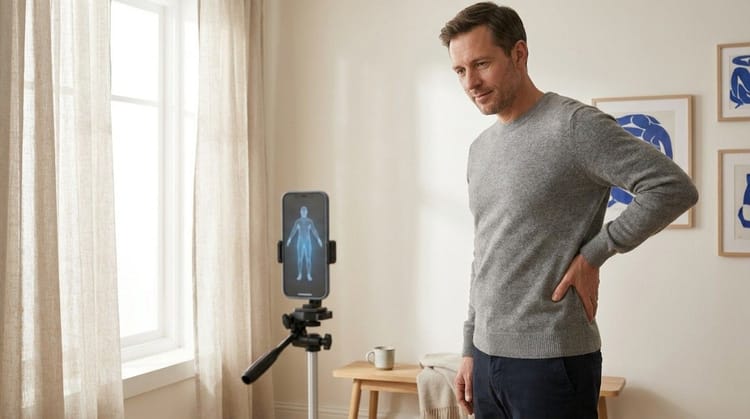
- 📸 AI posture scan spots your specific imbalance using your phone camera.
- 🎯 Personalized program targets your piriformis, hips, and glutes, not a one-size-fits-all list.
- 🔔 Habit reminders nudge you to move before the nerve gets overloaded again.
The longer a flare pattern locks in, the more consistency it takes to undo. Starting now is the easiest version of the fix.
Download Backed AI and start correcting your posture today. 💙
FAQ
Can sitting too long make sciatica worse? Yes. Long, unbroken sitting increases pressure on the sciatic nerve, tightens the piriformis muscle over it, and reduces support from the glutes, which tends to intensify and prolong a flare.
How should I sit to avoid flaring sciatica? Sit with hips slightly above knees, weight even on both sides, lower back supported, and feet flat. Lean gently off the painful side and avoid soft, deep couches.
How often should I move with sciatica? During a flare, stand and walk every 20 to 30 minutes. The short break resets pressure on the nerve and restores circulation.
Does sitting on a wallet make sciatica worse? Yes. A wallet or phone in a back pocket tilts the pelvis and puts uneven pressure on the sciatic nerve. Empty your back pockets before sitting.
How long until better sitting eases sciatica? Most people notice relief within 1 to 2 weeks of a nerve-friendly setup plus movement, with fuller improvement usually over 4 to 8 weeks.