
How Long Can You Sit Before It Damages Your Back? (The Honest Answer)
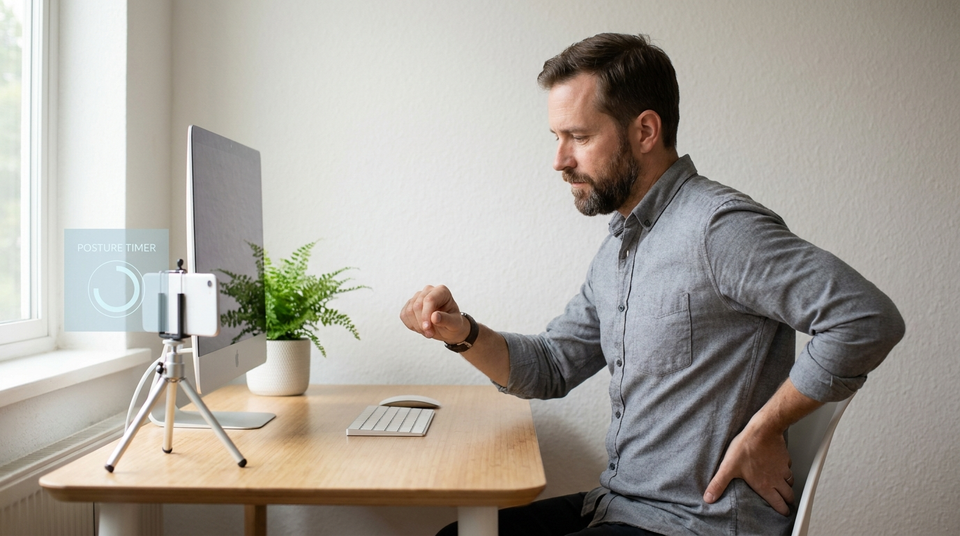
There is no single magic number, but the research points to a clear pattern. Disc pressure starts climbing within minutes, tissue stiffness begins around the 30-minute mark, and sitting more than 6 to 8 hours a day without movement breaks is consistently linked to back problems. The damage rarely comes from one long sit. It builds from accumulated hours without movement.
Prolonged sitting damage is the gradual breakdown of spinal disc health, muscle balance, and posture that occurs when the body stays seated for extended periods without regular movement breaks.
TL;DR
- Lumbar disc pressure rises within the first few minutes of sitting.
- Tissue adaptation – shortening and stiffness – begins around 30 minutes.
- Sitting 6+ hours daily without breaks is the high-risk threshold.
- Early "damage" is usually reversible. Years of it gets harder to undo.
- Movement frequency matters more than total sitting time.
- A 30 to 45 minute break rhythm protects your spine.
What Counts as "Too Much" Sitting?
There is no universal line, but research gives useful markers. According to the CDC, around 25 percent of adults sit more than 8 hours a day. That is firmly in the high-risk zone for back problems.
The issue is not just total hours. It is unbroken hours. Sitting for 8 hours with movement breaks every 30 minutes is far safer than sitting for 4 hours straight.
The mechanism behind seated back pain is explained fully in our guide on lower back pain from sitting, which breaks down exactly what the position does to your spine.
How Long Can You Sit Before Damage Starts?
The honest answer: damage is a spectrum, not a switch. Here is what the timeline actually looks like.
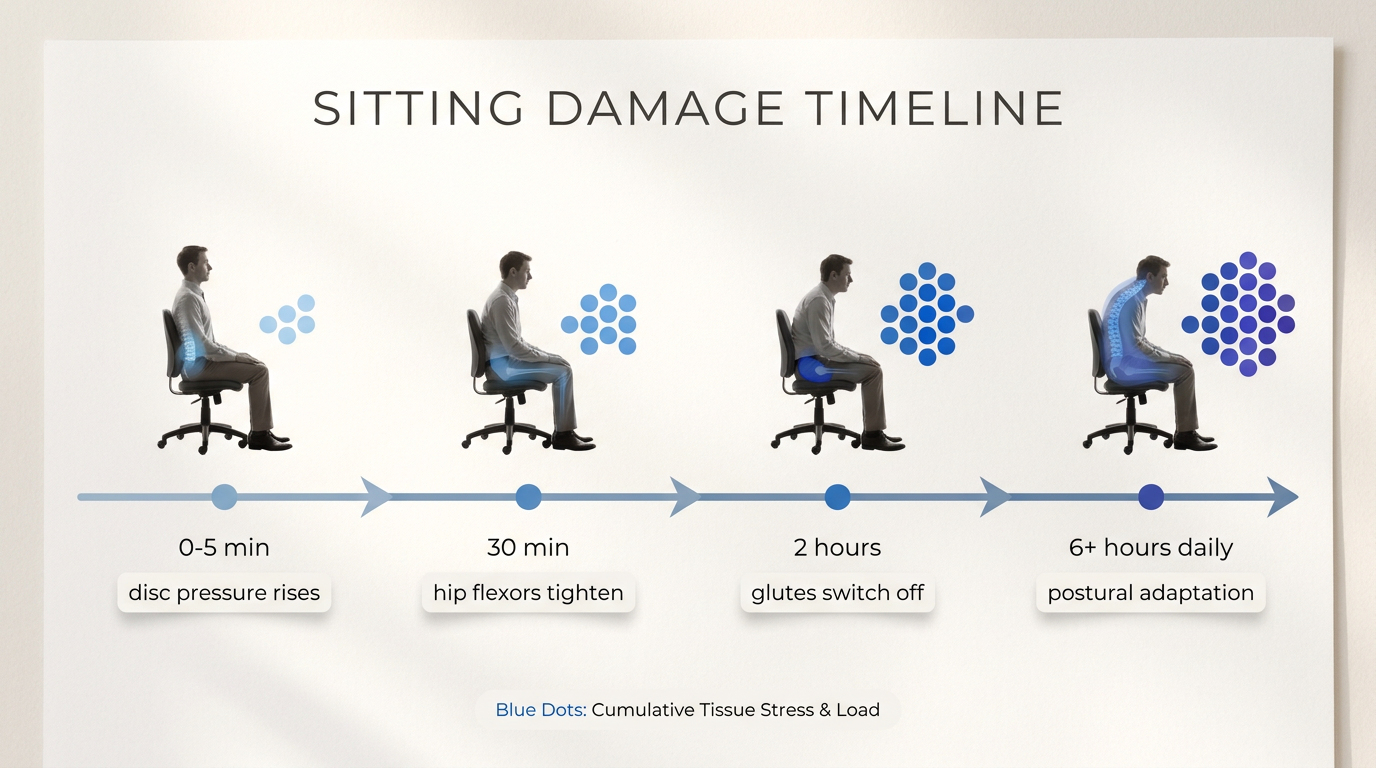
The First 5 Minutes
Lumbar disc pressure rises by roughly 40 to 90 percent compared to standing. This alone is not damage, but it begins the load.
Around 30 Minutes
Hip flexors start to shorten in the seated position. Circulation to the discs slows. This is why posture specialists suggest movement breaks at this mark.
After 2 Hours
The glutes become inhibited. Posterior chain support drops. The lower back begins compensating, which is the early version of the pattern in our breakdown of hip flexor pain when sitting.
6+ Hours Daily, Long-Term
This is where real structural adaptation occurs: anterior pelvic tilt, disc degeneration risk, and chronic muscle imbalance.
💡 Key Insight: "Damage" from sitting is almost never a single event. It is the slow accumulation of small adaptations. The good news: caught early, most of it is reversible. The bad news: ignored for years, it becomes much harder to undo.
What Happens to Your Back the Longer You Sit?
| Sitting Duration | What's Happening | Reversible? |
|---|---|---|
| 0-5 minutes | Disc pressure rises | Instantly |
| 30 minutes | Hip flexors begin shortening, circulation slows | Easily |
| 1-2 hours | Glutes inhibit, lower back compensates | With movement + exercise |
| 4+ hours unbroken | Muscle fatigue, postural drift, stiffness | With consistent correction |
| 6-8+ hours daily, for years | Structural adaptation, disc and posture decline | Slower, needs sustained work |
The table makes the point clear: the longer the exposure, the harder the recovery. Time is the variable you control most easily through movement breaks.
Why Does Sitting Damage Build Up Over Time?
Three accumulating mechanisms drive the long-term effect.
1. Disc Nourishment Drops
Spinal discs absorb nutrients through movement, like a sponge. Sustained sitting deprives them. Over years, this contributes to disc degeneration.
2. Muscle Adaptation Becomes Permanent
Muscles adapt to the positions they hold most. Hold a shortened, seated position for thousands of hours, and the body treats that as the new normal.
3. Posture Pattern Locks In
What starts as a temporary slouch becomes a structural pattern – anterior pelvic tilt, flat back, or rounded posture. This is the cycle explained in our guide to why back pain keeps coming back.
If you sit for hours daily and worry about long-term damage, the most important factor is not how you feel today – it is whether your posture pattern is already drifting. An AI posture scan can flag early adaptation before it becomes structural. That is what Backed AI was built for.
How To Sit Longer Without Damaging Your Back (Quick List)
- Break every 30 to 45 minutes. Even 60 seconds of standing resets disc pressure.
- Use the 20-8-2 rhythm. Per 30 minutes: 20 sit, 8 stand, 2 move.
- Sit with hips above knees. Use a wedge or raise your seat to reduce hip flexion.
- Add lumbar support. Maintain the natural inward curve of your lower back.
- Do a daily reset routine. Hip flexor release plus glute activation counters the seated pattern.
- Rotate positions. Alternating sit and stand beats either extreme, as covered in our comparison of sitting vs standing for lower back pain.
- Walk after long sits. A short walk restores circulation and hip extension.
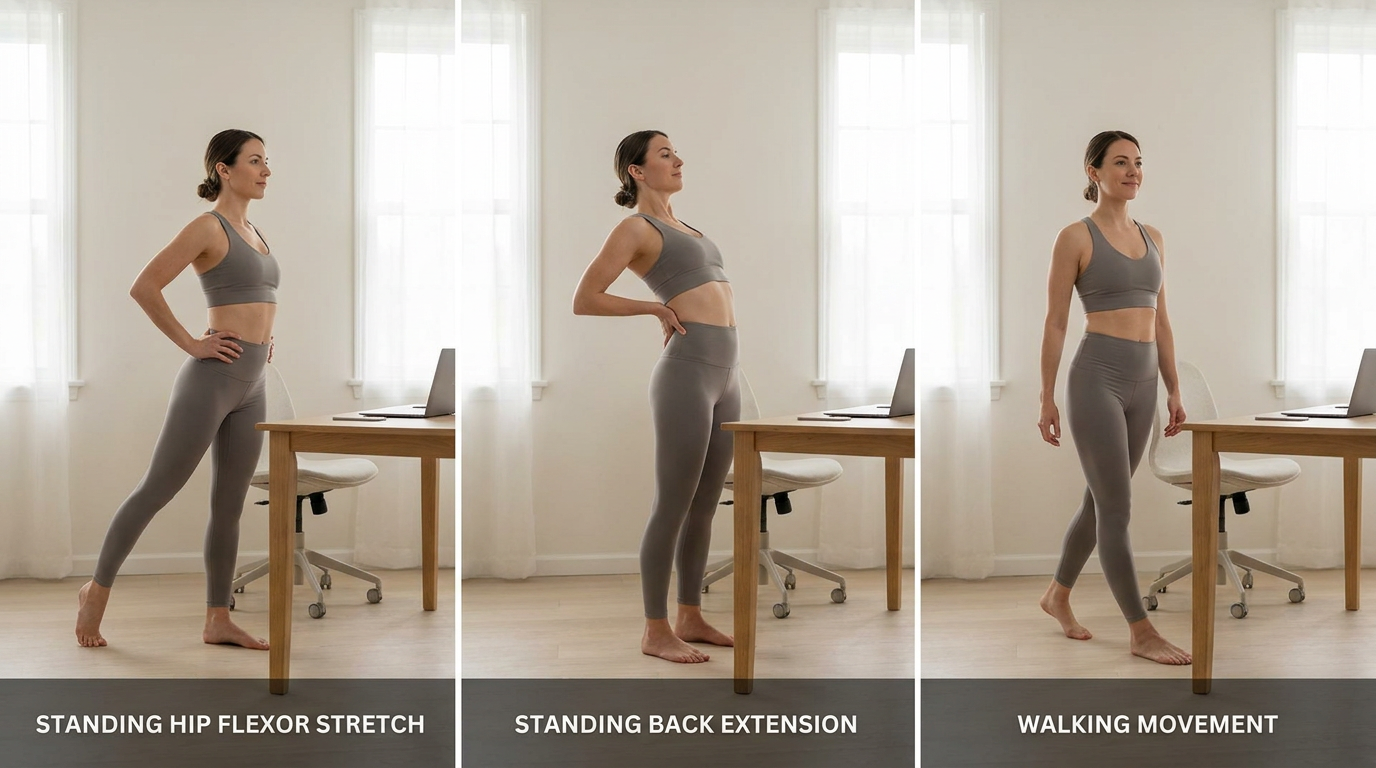
The Daily Anti-Sitting Framework (Step-by-Step)
| Phase | Action | Timing |
|---|---|---|
| Phase 1 | Set a 30-45 min movement timer | Start of workday |
| Phase 2 | Stand and reset (stretch, walk) at each alert | Throughout the day |
| Phase 3 | Midday mobility (hip flexors, glutes) | Lunch break |
| Phase 4 | Evening corrective routine (10-15 min) | After work |
The goal is not to sit less in a way that is unrealistic. It is to interrupt sitting often enough that no single bout causes adaptation. For people whose pain already keeps returning, the long-term habit plan in our guide on stopping lower back pain from coming back builds on this framework.
Research & Expert Insight
Research in ergonomics and musculoskeletal rehab is consistent on three points.
Disc pressure: Nachemson's intradiscal pressure studies confirm seated load exceeds standing, and slouched sitting loads the discs most of all.
Sedentary risk: Occupational health research links sitting more than 6 hours daily with measurably higher rates of lower back pain, especially without movement breaks.
Breaks beat equipment: Trials show frequent movement breaks reduce reported back pain more reliably than ergonomic furniture alone. Movement is the active ingredient.
The takeaway: there is no safe number of hours in a chair without movement. The safe variable is how often you interrupt it.
When This Approach Doesn't Work
Movement breaks and corrective exercise protect most people. But seek medical evaluation if you experience:
- Pain radiating below the knee (possible sciatica or disc involvement)
- Numbness, tingling, or weakness in the legs
- Loss of bladder or bowel control (emergency)
- Pain unaffected by any change in position or movement
- Persistent night pain that disturbs sleep
- Pain following a fall, accident, or trauma
These signs may point to a structural cause that needs imaging and specialist care.
Final Takeaway
So how long can you sit before it damages your back? Long enough that the answer is not about a number, but about a rhythm. Disc pressure rises in minutes. Tissue stiffens in half an hour. Real adaptation builds over hours and years.
The fix is not to fear sitting. It is to interrupt it often, support it well, and counter it daily. Most early sitting-related changes reverse with consistent movement and targeted exercise within 4 to 8 weeks.
The hardest part is consistency – remembering to break, knowing what to do, and tracking whether your posture is actually improving. That is exactly where personalization makes the difference.
Why Most "Move More" Advice Fails
Everyone knows they should sit less and move more. Almost nobody does it consistently. Here is why:
- No reminders. Good intentions disappear by mid-morning deadlines.
- No feedback. People cannot see whether their posture is drifting until pain appears.
- No structure. "Just stretch" is not a plan. It is a vague hope.
- No personalization. Generic advice ignores your specific imbalance pattern.
The reason two people who sit the same hours have completely different back outcomes is rarely the chair. It is what they do in the gaps – and whether they do it consistently.
Backed AI: Built for People Who Sit All Day
Backed AI is an AI posture correction app designed for exactly this problem. It scans your posture from your phone camera, flags early adaptation before it becomes structural, and builds a daily routine that adapts as your body changes.
What you get:
- 🎯 AI posture analysis that detects pelvic tilt, hip flexor tightness, and postural drift early – before damage locks in.
- 🔔 Smart movement reminders that prompt the right break at the right time, turning intention into habit.
- 📱 Personalized daily routines that target the muscles your sitting pattern weakens, not a generic list.
If you sit more than four hours a day, the clock is already running. The earlier you intervene, the easier correction is.
Download Backed AI and start correcting your posture today.
FAQ
Q1: How long can you sit before it damages your back?
There is no exact number, but damage risk rises after about 30 minutes of unbroken sitting and accumulates with 6 or more hours daily without movement breaks. The total hours matter less than how often you interrupt them.
Q2: Is sitting for 8 hours a day bad for your back?
Sitting 8 hours a day is in the high-risk zone, but the harm depends on movement. Eight hours with regular breaks every 30 to 45 minutes is far safer than four hours sitting straight.
Q3: Can sitting too long cause permanent back damage?
Early effects like stiffness and tight hip flexors are reversible. Years of unbroken sitting can lead to slower-to-reverse changes such as anterior pelvic tilt and disc degeneration. Earlier intervention means easier recovery.
Q4: How often should I get up from sitting?
Posture specialists suggest standing or moving every 30 to 45 minutes. Even a 60-second break resets disc pressure and restores circulation to the spine.
Q5: Does sitting damage reverse if I start moving more?
In most early cases, yes. Consistent movement breaks plus corrective exercise for the hip flexors, glutes, and core can reverse sitting-related changes within 4 to 8 weeks.