
Foam Roller Stretches for Neck Hump: The 7-Minute Reset That Loosens What Years Built 💙

A foam roller is the closest thing to physiotherapy you can keep under your couch. Used correctly, it directly mobilizes the stiff thoracic spine sitting underneath a neck hump, releases the tight chest pulling your shoulders forward, and resets your alignment in under 10 minutes a day.
This guide walks you through the exact foam roller sequence, how to position the roller safely, and why this tool produces faster results than most other home methods.
🧠 TL;DR
- A foam roller targets the thoracic spine, the most under-trained area in neck hump recovery.
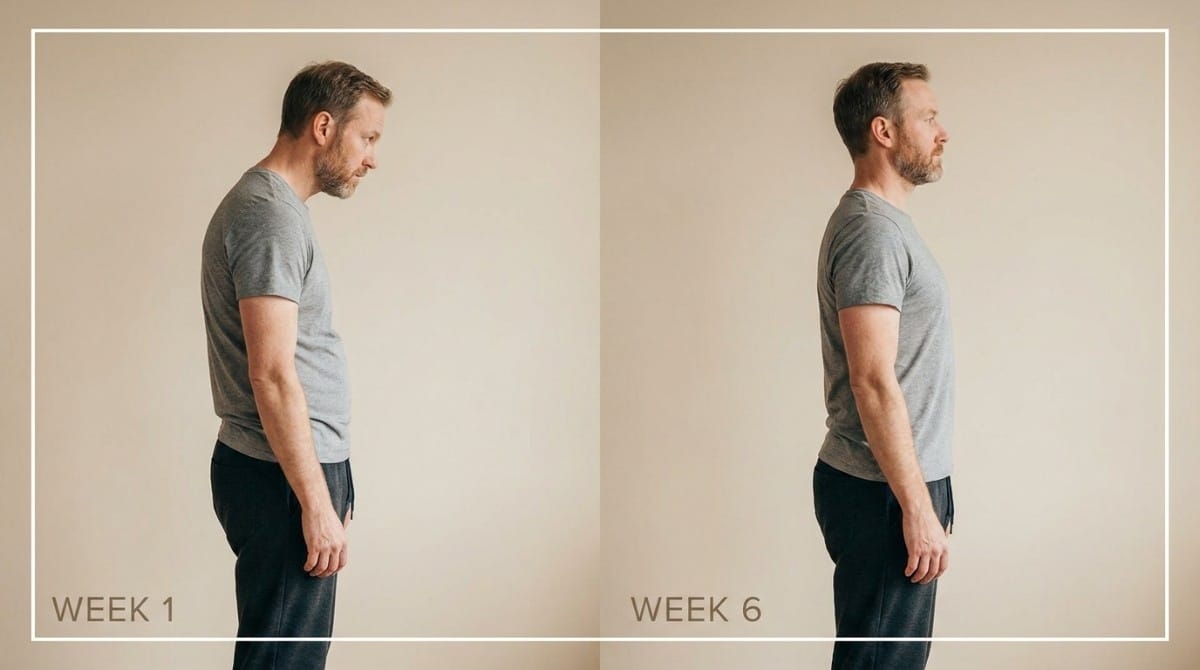
- A 7-minute daily routine is enough to produce visible posture change in 4–6 weeks.
- The roller works by mobilizing stiff vertebrae that traditional stretches cannot reach.
- Use a medium-density 36-inch foam roller for thoracic work, never a hard one near the neck.
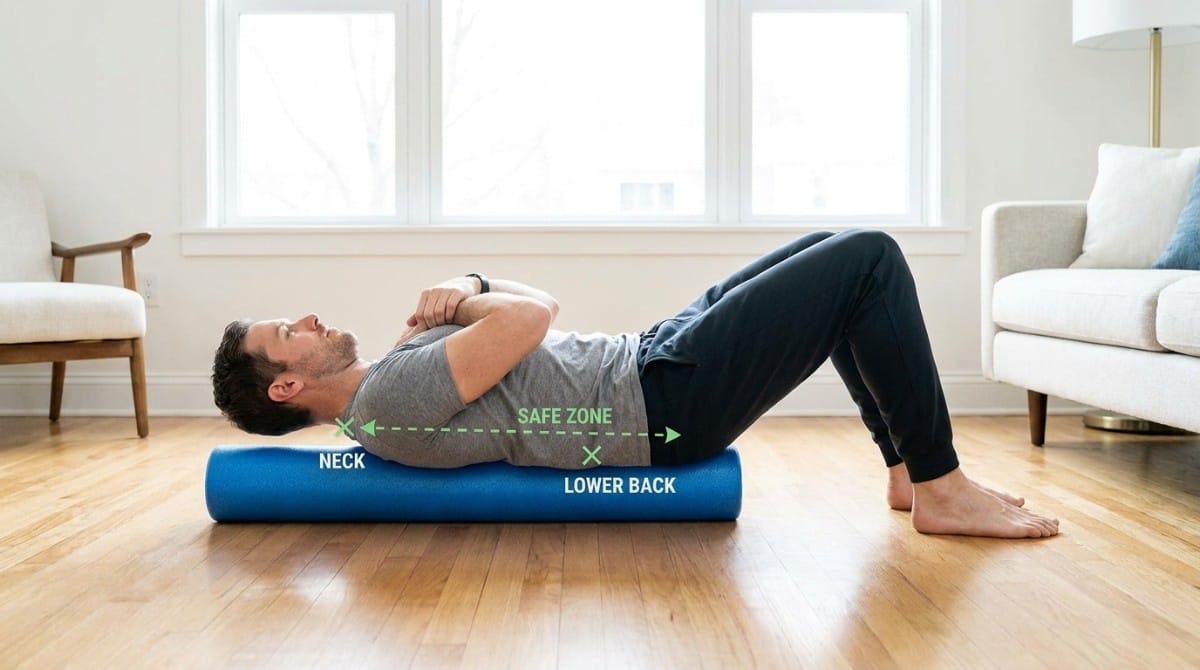
- Avoid rolling directly on the neck, lower back, or any bony prominence.
- Pair with chin tucks and chest stretches for a complete reset.
- Skip if you have osteoporosis, recent fractures, or sharp pain during use.
What Is Foam Rolling for Neck Hump?
Foam rolling for neck hump is a self-mobilization technique that uses a cylindrical foam roller to release tight thoracic spine joints, lengthen shortened chest muscles, and reset upper-back alignment, the three drivers most directly responsible for a forward-curving neck hump.
Unlike static stretching, foam rolling produces both joint mobilization and soft-tissue release in a single movement. That dual effect is why physiotherapists often use foam rollers as a first-line tool for postural correction. The Backed AI complete neck hump recovery guide covers the full picture; this article goes deep on the foam roller piece specifically.
Why a Foam Roller Works So Well for Neck Hump
A foam roller does three things stretching alone cannot:
- Joint-level mobilization. It segmentally extends the thoracic vertebrae that have become stiff from years of forward sitting.
- Passive release under bodyweight. The roller delivers steady, weighted input that softens deep fascia.
- Resets the chain. A mobile thoracic spine immediately reduces compensation by the neck, which is what created the hump in the first place.
Posture specialists suggest that the thoracic spine is the most under-trained area in adults with neck hump, and the foam roller is the simplest, fastest way to address it at home.
💡 Key Insight: You cannot fix a neck hump by working on the neck alone. The hump is the symptom; the locked thoracic spine is the cause. Mobilize the cause and the symptom softens.
How to Choose the Right Foam Roller
A few quick rules to avoid bad equipment:
Start with a standard medium-density 36-inch roller. It is the safest balance of mobility and comfort.
Best Foam Roller Stretches for Neck Hump (Quick List) 🧘
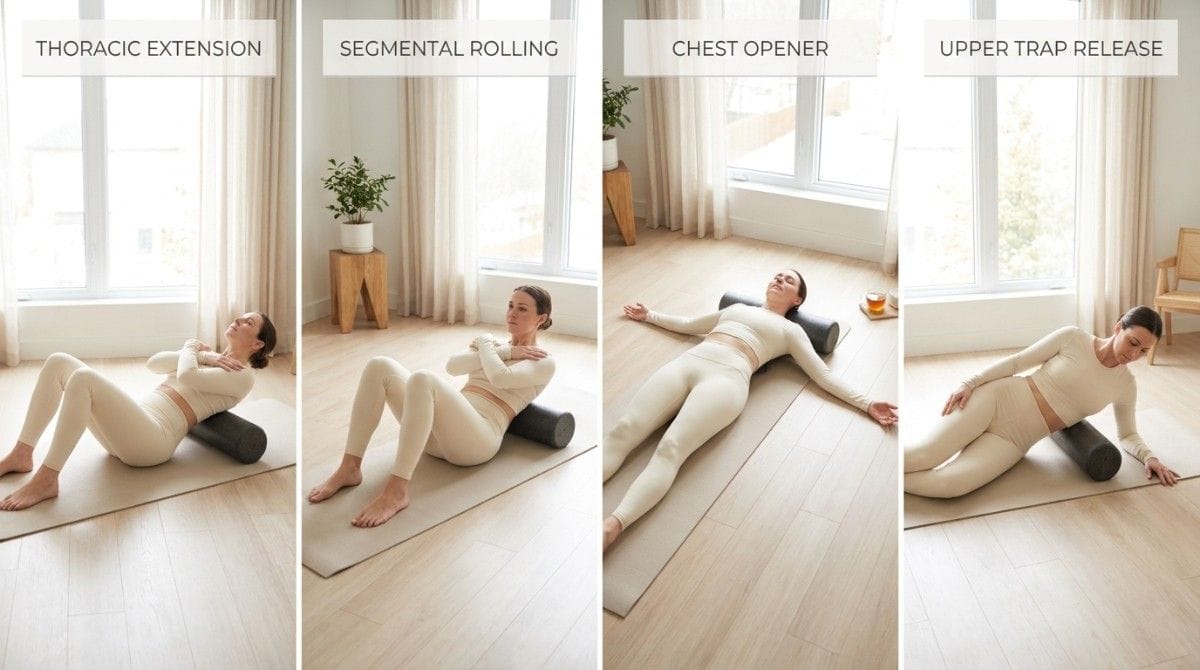
A focused 5-move sequence that addresses every driver of the hump:
- Thoracic extension over the roller – Roll placed horizontally at bra-strap height; gentle backward arch. The single most valuable move.
- Segmental thoracic rolling – Slow inch-by-inch movement of the roller along the upper back to mobilize each vertebra.
- Chest opener stretch on the roller (length-wise) – Lie along the roller; arms out wide for a deep pec stretch.
- Upper trap release – Roller placed beneath the upper trap area near the shoulder, gentle pressure with controlled breath.
- Lat release – Roll under the side body, just below the armpit, to release tightness pulling the shoulder forward.
Total time: about 7 minutes. Done daily, this is enough mobility input to reverse the postural drivers of neck hump.
How To Build the 7-Minute Routine (Step-by-Step Recovery Framework)
A practical phasing structure that builds tolerance and depth:
If the foam roller feels intense in week 1, place a folded towel over it. The pressure should challenge you, not hurt you. Pair the routine with the daily neck hump and dowager's hump stretch sequence on alternating days for the strongest combination.
Common Foam Roller Mistakes That Slow Progress 🚫
- Rolling directly on the neck. Never. The cervical spine is too vulnerable.
- Going too fast. The point is mobilization, not massage. Slow down.
- Holding breath. Long exhales soften tissue. Tense breathing tightens it.
- Rolling on the lower back. The lumbar spine should bear no roller pressure.
- Skipping the chest stretch. Rolling without opening the front of the chest is half the work.
- Forcing range of motion. Let gravity do the work over time, not force.
Why Does Foam Rolling Help More Than Stretching Alone?
Stretching pulls on muscles. Foam rolling does that, plus it mobilizes the joints underneath the muscles. For a neck hump driven by a stiff thoracic spine, joint mobilization is what unlocks lasting change. The relationship between a tight chest, rounded shoulders, and forward head posture is well documented; the rounded shoulders and forward head posture guide breaks down why these patterns appear together and reinforce each other.
What Happens If You Skip the Roller?
Stretching alone can address the soft-tissue side, but the underlying thoracic stiffness often remains. That is why many people see initial improvement, then plateau. The hump softens, then stops softening. Adding the foam roller breaks the plateau because it directly inputs mobility into the joints stretching cannot reach.
When This Approach Doesn't Work
Foam rolling is highly effective for postural neck humps in healthy adults. Skip it or modify with caution if:
- You have osteoporosis or known low bone density
- You have had a recent spinal fracture or surgery
- You feel sharp pain, dizziness, or numbness during rolling
- The hump is from a hormonal or fat-deposit cause
- You are pregnant (consult your clinician first)
For older adults or those with bone-density concerns, gentle seated stretches are safer than floor-based foam rolling.
Research & Expert Insight 🔬
Research in musculoskeletal rehab shows that thoracic mobility work, especially when combined with chest stretching and deep neck flexor activation, produces measurable improvements in cervical alignment. Physiotherapists often recommend foam roller thoracic extension as a daily home tool because it delivers consistent joint-level input that static stretching cannot match. The pattern across studies is consistent: short, frequent mobility sessions beat long, occasional ones.
Lifestyle Habits That Multiply Foam Roller Results
Daily roller work plus a few simple habits compound faster:
- Open your chest before rolling with a 30-second doorway stretch.
- Keep your monitor at eye level during work.
- Sleep with one supportive pillow, not two stacked.
- Do 30 chin tucks distributed across the day.
- Walk daily; movement keeps the thoracic spine from re-locking.
If you want to add a complementary daily chest practice, the 10-minute chest opener routine pairs perfectly with foam rolling on alternating days.
For personalized guidance, Backed AI scans your posture using your phone camera and builds a routine tuned to whether your hump is driven more by chest tightness, thoracic stiffness, or weak postural muscles, removing the trial-and-error that slows most home recoveries.
Final Takeaway
A foam roller is one of the highest-leverage tools you can use to address a neck hump at home. Seven minutes a day, 5 days a week, focused on the thoracic spine and chest, addresses the joint and soft-tissue drivers that build the hump in the first place. Pair it with chin tucks, posture awareness, and lifestyle adjustments, and you should see meaningful change within 4–6 weeks.
The roller does not fix a neck hump on its own. But it unlocks the part of the body that stretching cannot reach, and that is what makes the rest of your work pay off.
Why Most Foam Roller Plans Fail
Most people buy a foam roller, watch a YouTube video, and stop using it within two weeks. The reasons repeat:
- No personalization. A generic routine ignores whether your hump is mostly chest, thoracic, or trap-driven.
- No form feedback. You can roll the wrong area for months without realizing it.
- No progression. Week 1 intensity stops producing change by week 4.
- No habit support. Without reminders, the roller becomes furniture.
A Smarter Way to Fix Your Neck Hump
Backed AI was built to close that gap. It scans your posture using your phone camera, identifies which driver of neck hump is dominant in your body, and builds a routine that combines foam rolling, mobility, and strengthening tuned to your specific imbalance.
What you get:
- 📱 Personalized routines based on your actual posture scan, not a generic template
- 🎯 AI form guidance so each foam roller move targets the right tissue
- 📈 Progress tracking that shows visible alignment changes over weeks of consistent practice
It is a quiet daily system that turns a foam roller from a forgotten tool into a compounding posture upgrade.
👉 Download Backed AI and start fixing your neck hump today.
FAQ
Q1. Can foam rolling really reduce a neck hump? Yes, when the hump is postural. A foam roller mobilizes the stiff thoracic spine and tight chest that drive the forward-curving pattern. Daily rolling, paired with chin tucks and posture awareness, produces visible change in 4–6 weeks for most people.
Q2. How long should I foam roll each day? Aim for 7 minutes a day, 5 days a week. Short, frequent sessions outperform long, occasional ones. Beginners should start with 2–3 minutes and build up.
Q3. Is it safe to foam roll on the neck itself? No. Never roll directly on the cervical spine. The neck is too vulnerable. Foam rolling for neck hump targets the upper back, chest, and traps, not the neck.
Q4. What kind of foam roller is best for a neck hump? A standard medium-density 36-inch foam roller is the best all-rounder. Avoid hard or aggressively textured rollers early in recovery.
Q5. Can foam rolling make a neck hump worse? Used incorrectly (too hard, on the neck, on bony spine, with poor form), it can irritate tissue. Used correctly, on the upper back and chest, it consistently helps.