
Stretches to Fix Neck Hump and Dowager's Hump: The Daily Reset Routine That Actually Works 💙

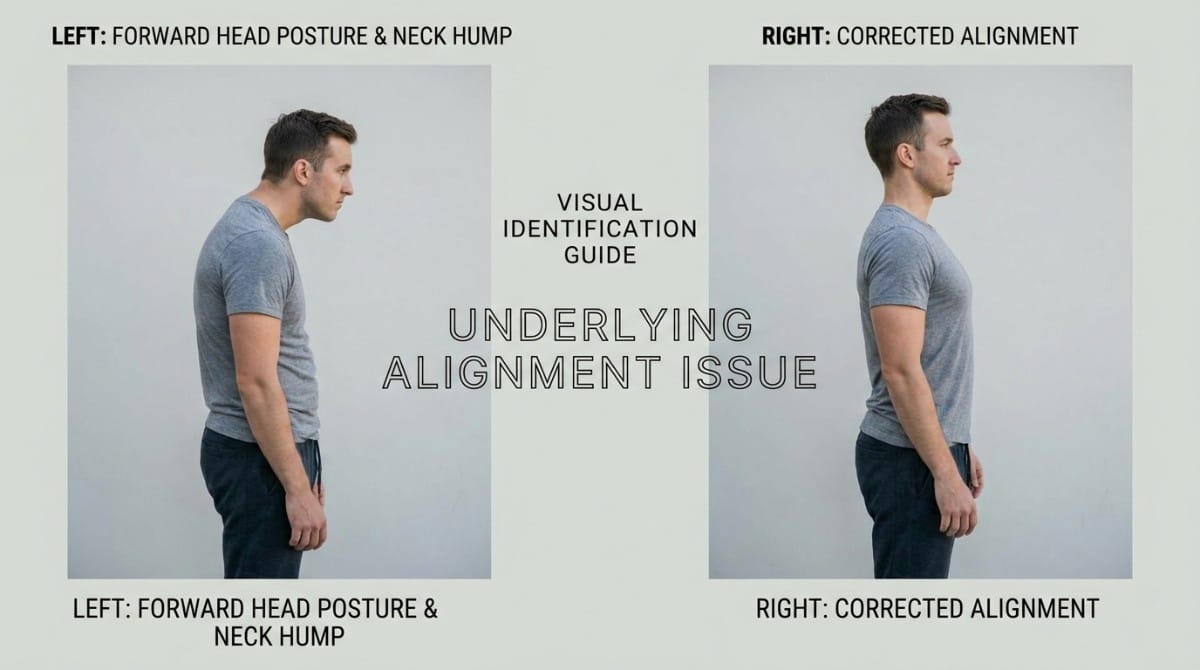
Neck hump (often called dowager's hump or buffalo hump) is a forward rounding at the base of the neck caused by tight chest muscles, weak upper back, and a head that drifts in front of the shoulders. The fastest way to start reversing it is a short, daily stretching routine that mobilizes the upper back, releases the chest, and resets the cervical spine.
This guide walks you through the exact stretches, how to do them, and how long it takes to see change.
🧠 TL;DR
- Neck hump forms from prolonged forward head posture, tight chest, and stiff thoracic spine.
- Stretching alone helps, but works fastest when paired with simple strengthening.
- Aim for 8–12 minutes of stretching, 5–6 days a week.
- Focus on chest openers, thoracic extension, chin tucks, and upper trap release.
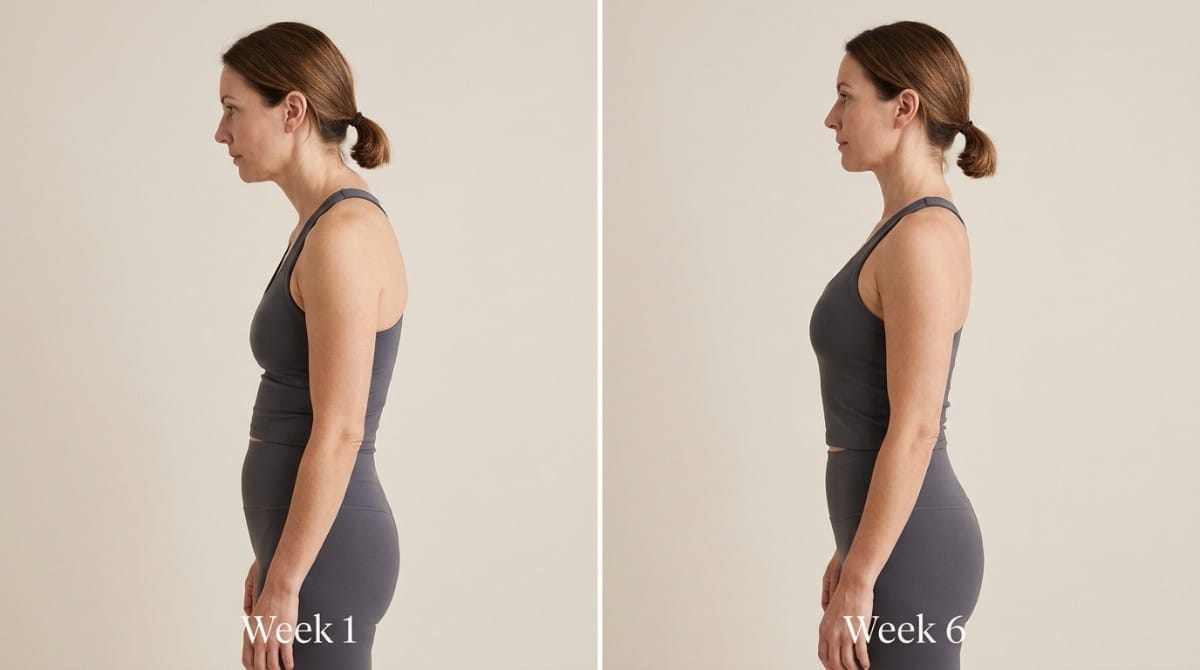
- Visible improvement usually starts in 3–6 weeks of consistent practice.
- Avoid forceful neck bending, jerking movements, or "popping" your neck.
- Pair with posture awareness during the day for compounding results.
What Is a Neck Hump (and How Stretching Helps)?
A neck hump is a visible thickening or rounding at the base of the neck caused by chronic forward head posture, thoracic kyphosis, and soft-tissue adaptation around C7-T1.
It is not always a fat deposit. In most adults, especially desk workers, it is a postural pattern: tight pecs pull the shoulders forward, the upper back rounds, the head juts ahead, and the area at the base of the neck stays compressed for hours every day.
Stretching works because it directly targets the three drivers of that pattern: a stiff thoracic spine, shortened chest muscles, and overworked neck extensors. If you want the deeper background on causes and warning signs, the Backed AI guide on what a dowager's hump actually is covers it well.
Why Does a Neck Hump Form in the First Place?
Three things stack on top of each other:
- Forward head posture loads the upper cervical spine with extra weight (every inch forward adds roughly 10 lbs of strain).
- Tight chest and short pecs pull the shoulders into internal rotation, rounding the upper back.
- A locked thoracic spine stops the mid-back from extending, so the neck compensates.
Posture specialists suggest that without daily mobility input, that pattern hardens into the visible hump. Stretching reverses each layer in order.
How to Stretch Safely (Before You Start)
A few rules to keep your routine effective and pain-free:
- Move slowly. No jerking, no bouncing.
- Hold each stretch 20–30 seconds.
- Breathe long and slow through the nose.
- Stop if you feel sharp pain, dizziness, or numbness in the arms.
- Warm up first with 30 seconds of gentle shoulder rolls.
💡 Key Insight: A neck hump is not just a "neck problem." It is a chain reaction starting in the mid-back. Stretch the thoracic spine first, and the neck releases more easily.
Best Stretches for Neck Hump (Quick List) 🧘
A focused 8-stretch sequence that hits every contributor to neck hump and dowager's hump:
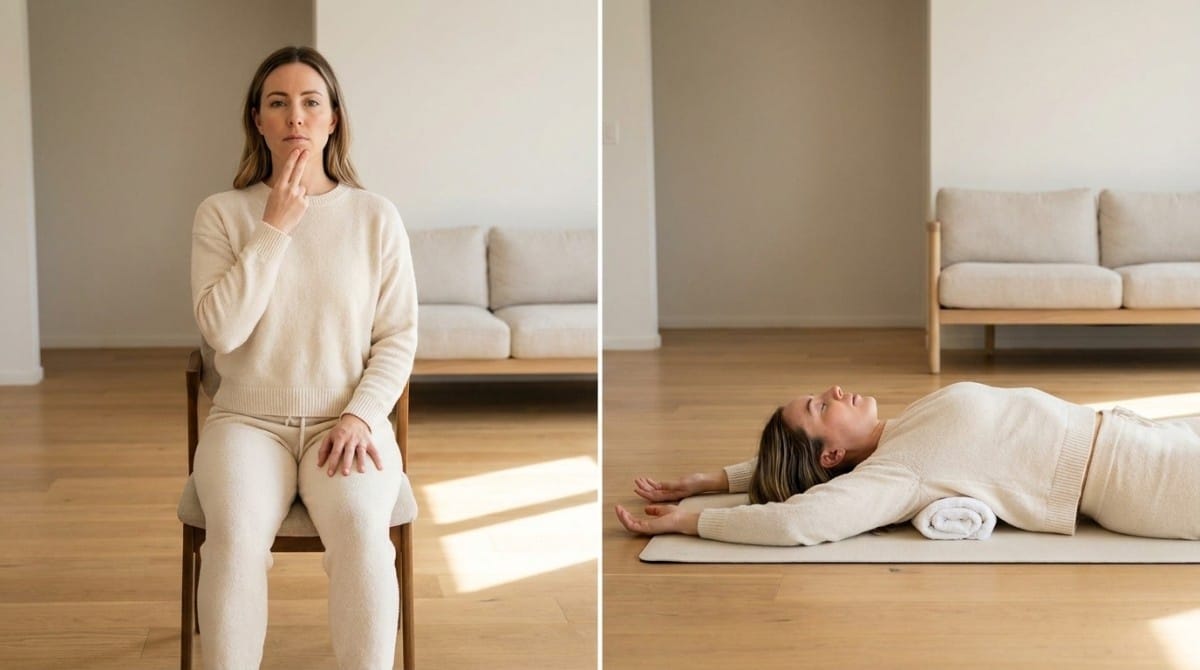
- Chin tucks – Retract the chin straight back without tilting. Resets cervical alignment.
- Doorway chest stretch – Opens tight pecs that pull the shoulders forward.
- Thoracic extension over a rolled towel – Restores mid-back mobility under the hump.
- Upper trapezius stretch – Releases the side neck tension that worsens the bulge.
- Levator scapulae stretch – Targets the deeper neck-into-shoulder tightness.
- Cat-cow – Mobilizes the entire spine and decompresses the upper back.
- Wall angels – Combines stretch and reactivation of the postural muscles. The full breakdown of this move is covered in this wall angels routine for posture correction.
- Suboccipital release – Softens the small muscles at the base of the skull that lock the head forward.
How To Build Your Daily Routine (Step-by-Step Recovery Framework)
A simple progression that works for almost anyone:
The core idea: start gently, build mobility, then layer in light strengthening so the new posture sticks. The full strengthening side of this is detailed in the complete neck hump recovery guide.
Common Stretching Mistakes That Slow Progress 🚫
- Yanking the head sideways. Use gravity, not force.
- Skipping the chest stretch. Without releasing the pecs, the shoulders snap forward again.
- Holding for 5 seconds. That is not long enough. Aim for 20–30.
- Stretching only when sore. Daily input is what changes tissue.
- Ignoring the thoracic spine. This is the most under-trained area in posture work.
What Happens If You Don't Stretch Regularly?
The hump deepens. Tissues adapt to the position they spend the most time in, and a forward-loaded neck under a stiff thoracic spine will keep building soft-tissue thickness and visible curvature. Beyond appearance, you may also notice tension headaches, jaw stiffness, and reduced shoulder range of motion. People dealing with the closely-linked pattern of rounded shoulders combined with forward head posture often see both problems progress in parallel.
When This Approach Doesn't Work
Stretching is highly effective for postural neck humps. It will not fully resolve cases where the hump is caused by:
- A true fat deposit from hormonal conditions (Cushing's, certain medications)
- Severe structural kyphosis or vertebral compression fractures
- Advanced osteoporosis with spinal changes
- A bony spinal abnormality
If you have sudden pain, numbness, weakness in the arms, or a hump that appeared rapidly without lifestyle change, see a clinician first. Stretching helps the postural majority, not the structural minority.
Research & Expert Insight 🔬
Research in musculoskeletal rehab shows that combined thoracic mobility, chest stretching, and deep neck flexor activation produces the most consistent improvements in forward head posture and upper cervical alignment. Physiotherapists often recommend chin tucks and doorway pec stretches as the two highest-value daily moves for neck hump reduction. The pattern across studies is consistent: short, frequent doses beat long, occasional sessions.
Lifestyle Integration: Make the Stretches Stick
Stretches alone work. Stretches plus lifestyle cues work faster:
- Raise your monitor to eye level.
- Set a posture reminder every 45 minutes.
- Sleep with one supportive pillow, not two stacked ones.
- Walk daily. Movement complements stretching.
- Strengthen the upper back twice a week.
If you want personalized cueing without guesswork, the Backed AI app uses your phone camera to scan your posture and build a routine tuned to your specific imbalance, which removes the trial-and-error problem most people get stuck on.
Final Takeaway
Neck hump and dowager's hump respond well to consistent daily stretching focused on the thoracic spine, chest, and deep neck muscles. The pattern that built the hump took years; the pattern that reverses it only needs 8–12 minutes a day, done well. Start with the foundational four (chin tuck, doorway stretch, thoracic extension, upper trap), progress through the framework, and pair it with daily posture awareness. Within 4–6 weeks, most people see and feel a clear difference.
Why Most Stretching Plans Fail
Most people start a YouTube routine, do it for two weeks, and quietly stop. The reasons are predictable:
- No personalization. A generic routine ignores your specific imbalance.
- No form feedback. You can repeat the same compensation pattern for months without knowing.
- No progression. The routine that fits week 1 is too easy by week 4.
- No consistency system. Without reminders and tracking, life wins.
A Smarter Way to Fix Your Neck Hump
Backed AI was built for exactly this problem. It scans your posture using your phone camera, identifies whether your neck hump is driven more by tight chest, weak upper back, or thoracic stiffness, and builds a corrective stretch and mobility plan tailored to that profile.
What you get:
- 📱 Personalized routines based on your actual posture scan, not a generic template
- 🎯 AI form guidance so each stretch actually targets the right tissue
- 📈 Progress tracking that shows visible alignment changes over weeks
It is a quiet daily system that turns stretching from a chore into a habit, and from a habit into a result.
👉 Download Backed AI and start fixing your neck hump today.
FAQ
Q1. Can stretches really fix a neck hump?
Yes, when the hump is postural. Daily stretching of the chest, thoracic spine, and deep neck muscles reverses the soft-tissue pattern that creates a neck hump. Structural or fat-based humps need medical evaluation.
Q2. How long does it take to see results from stretching?
Most people notice less stiffness in 1–2 weeks and visible posture improvement in 4–6 weeks of consistent daily stretching paired with light strengthening.
Q3. What is the single best stretch for dowager's hump?
Thoracic extension over a small rolled towel placed at bra-strap height. It directly mobilizes the stiff mid-back that forces the neck to bulge forward.
Q4. How often should I stretch to fix a neck hump?
Aim for 8–12 minutes of focused stretching, 5–6 days per week. Short, frequent sessions outperform long, occasional ones.
Q5. Can I stretch a neck hump while lying in bed?
Yes. Chin tucks, gentle neck rotations, and a towel-supported thoracic extension can all be done from bed, making them ideal for morning or pre-sleep routines.