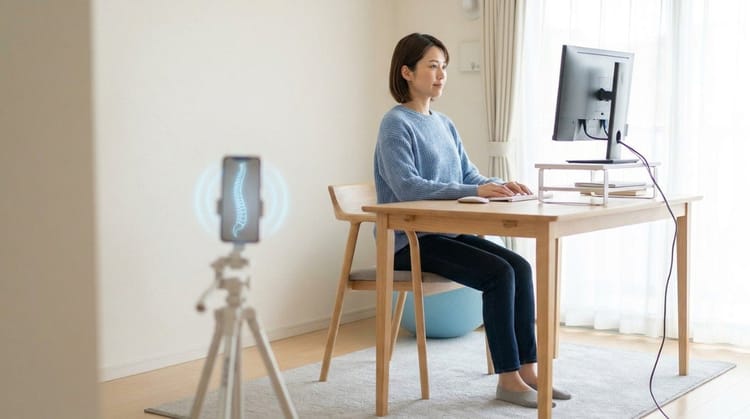
How Long Does Posture Correction Take? The Real Timeline
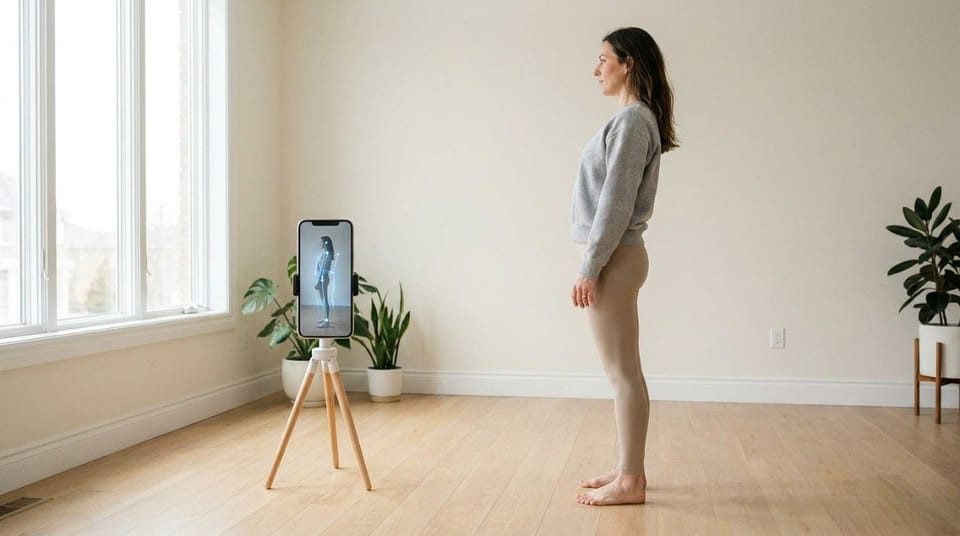
Posture correction usually takes 4 to 12 weeks to show clear, visible change. Full correction of long-standing patterns can take 3 to 6 months. Your exact timeline depends on how severe the issue is, your age, your daily habits, and how consistent you are.
Posture correction is the gradual process of retraining muscles, joints, and movement habits to restore your spine's natural alignment, and it typically takes weeks to months depending on severity and consistency.
TL;DR
- Early awareness and reduced tension show in 2 to 4 weeks 🙂
- Visible posture change usually appears in 4 to 12 weeks
- Long-held patterns can take 3 to 6 months to fully correct
- Consistency matters more than how hard the exercises are
- Mild posture issues correct faster than structural or long-standing ones
- A personalized plan corrects posture faster than generic routines
Most people want a single number. The honest answer is a range. Below is exactly how that range breaks down, stage by stage and posture type by posture type.
What Is Posture Correction (and Why Time Matters)?
Posture correction is not a quick fix. It is the slow retraining of muscles that have adapted to hours of sitting, screen use, and one-sided habits.
Your body learns the position you hold most. Sit hunched for years and your muscles shorten and weaken to match. Posture correction reverses that, and reversing takes time.
This is why the right mix of movement matters as much as effort. You can see the full plan in our guide to the right mix of corrective posture exercises, which pairs well with this timeline.
Posture correction follows two clocks at once. One is muscular (strength and flexibility), the other is neurological (your brain relearning alignment). Both need weeks of repetition, which is why patience beats intensity.
Why Does Posture Correction Take So Long?
Posture is a habit stored in muscle and movement memory. Changing it means changing both.
Four things drive how long posture correction takes:
- Severity. Mild slouching corrects faster than a deeply set hunchback or forward head posture.
- Age and flexibility. Younger, more flexible bodies adapt quicker, though steady progress is possible at any age.
- Daily habits. Long hours of sitting or constant phone use slow progress. Ergonomic breaks speed it up.
- Consistency. Daily 10-minute practice beats one long session per week.
These factors explain why two people with the same posture problem can have very different timelines.
How Long Does Posture Correction Take by Stage?
Here is the realistic progression most people follow with consistent, daily effort.
| Stage | Timeline | What you notice |
|---|---|---|
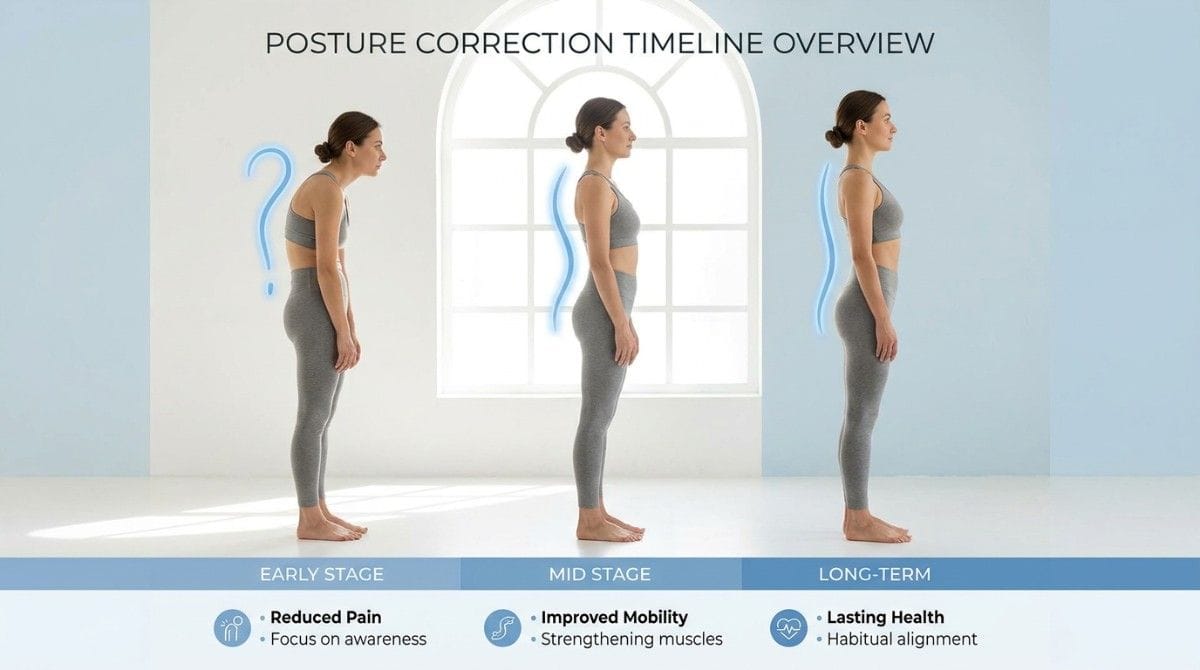
| Early | 2 to 4 weeks | Less tension, better awareness, you catch yourself slouching |
| Mid | 1 to 3 months | Visible change, easier to sit and stand tall, muscle memory forming |
| Long-term | 3 to 6+ months | Upright alignment feels natural, posture holds without effort |
The early stage is mostly about awareness. The mid stage is where visible change appears. The long-term stage is where new posture becomes automatic.

How Long to Fix Each Type of Bad Posture?
Different posture patterns correct at different speeds. Understanding how each posture type develops helps you set a realistic timeline.
| Posture type | Typical timeline | Notes |
|---|---|---|
| Forward head posture | 6 to 12 weeks | Responds well to neck and upper-back work |
| Rounded shoulders | 8 to 16 weeks | Needs chest release plus mid-back strength |
| Anterior pelvic tilt | 12 to 24 weeks | Tight hips and weak core slow it down |
| Hunchback (kyphosis) | 3 to 6+ months | Long-held curves take the most time |
These are guidelines, not guarantees. Severity and consistency move every number up or down.
What Speeds Up Posture Correction (Quick List)
You cannot rush biology, but you can avoid slowing yourself down. These habits consistently shorten the timeline.
- Practice daily, not occasionally. Short daily sessions build muscle memory faster than long weekly ones.
- Fix your desk setup. A monitor at eye level removes the pull that creates forward head posture all day.
- Take movement breaks. Standing and resetting every hour stops you undoing your progress.
- Strengthen, do not just stretch. Strength holds your new alignment in place. See the strengthening results you can expect from consistent practice.
- Track your progress. Feedback keeps you consistent, which is the single biggest timeline factor.
If you want a faster, more accurate path, a personalized plan removes the guesswork. Backed AI scans your posture and tells you exactly what to work on.
Step-by-Step Timeline Framework (What to Expect Each Phase)
This framework tracks what to expect at each phase, not which exercises to do.
Phase 1 – Weeks 1 to 4: Awareness You start noticing your posture during the day. Tension eases. Change is felt more than seen.
Phase 2 – Weeks 4 to 12: Visible Change Standing tall gets easier. Others may notice. This is the stage most people quit too early, right before results show.
Phase 3 – Months 3 to 6: Automatic Alignment Good posture stops feeling like effort. Your body defaults to upright. This is full posture correction.

What Happens If You Stop Too Early?
Stopping during the visible-change phase is the most common mistake. Muscles that have not fully relearned alignment drift back to old patterns within weeks.
Posture correction is cumulative. Pause too soon and you lose much of the progress you built. This is why consistency, not intensity, defines how long posture correction really takes.
When Posture Correction Takes Longer (or Won't Work)
Exercise and habit change correct most posture problems. But not all. Consider professional guidance if:
- Pain is sharp, radiating, or worsens with movement
- You have a diagnosed structural condition such as scoliosis or a disc issue
- You feel numbness, tingling, or weakness in the arms or legs
- You have trained consistently for 8 weeks with zero improvement
Posture specialists suggest these signs point to causes that need clinical assessment, not just exercise.
Research and Expert Insight
Posture correction is well supported in rehab science.
- Research in musculoskeletal rehab shows meaningful postural change can begin within 4 to 8 weeks of consistent, targeted exercise.
- Posture specialists suggest motor learning, the process of retraining movement, takes 4 to 12 weeks before new alignment feels automatic.
- Physiotherapists often recommend pairing mobility with strengthening, since stretching alone leads to slow, incomplete results.
The pattern is clear. Consistency over weeks, not effort in a single session, is what shortens the timeline.
Why Most Exercise Plans Fail
Most people do not fail posture correction because they lack effort. They fail for four reasons:
- Inconsistency. Without reminders or accountability, most people stop within 2 weeks.
- Wrong exercises. Forward head posture needs different work than anterior pelvic tilt.
- No progression. Generic lists do not move you from beginner to corrected.
- No form feedback. Wrong form can reinforce the very imbalance you are fixing.
These gaps stretch your timeline from weeks into never.
The Smarter Way to Correct Your Posture 📱
Backed AI is built around the problems generic routines cannot solve.
- 🔍 AI posture scan – Point your phone camera at yourself. Backed AI finds your specific imbalance.
- 📋 Personalized program – You get a routine built for your posture, not a one-size-fits-all list.
- 📈 Smart progress tracking – See what is working and stay consistent, the biggest timeline factor of all.
Generic plans treat every body the same. Backed AI treats yours as the only one that matters. The faster you start, the sooner your timeline begins.
Download Backed AI and start correcting your posture today. → backedapp.com
You can also try the Posture Doctor AI posture check to see where your alignment stands right now.
Final Takeaway
Posture correction takes 4 to 12 weeks for visible change and 3 to 6 months for full, lasting results. The timeline depends on severity, age, habits, and above all consistency. Mild issues move fast. Long-held patterns take patience. The people who succeed are not the most intense. They are the most consistent. Start today, stay steady, and your timeline starts now.
FAQ
Q1: How long does posture correction take? Most people see visible change in 4 to 12 weeks and full correction of long-standing posture in 3 to 6 months, depending on severity and consistency.
Q2: Can you correct posture permanently? Yes. Once new alignment becomes automatic, usually after 3 to 6 months of consistent practice, good posture holds without conscious effort.
Q3: How long does it take to fix forward head posture? Forward head posture typically improves within 6 to 12 weeks of consistent neck and upper-back work, though severity affects the timeline.
Q4: Does posture correction work faster with an app? A personalized plan corrects posture faster than generic routines because it targets your exact imbalance and keeps you consistent, the biggest timeline factor.
Q5: Why is my posture not improving after weeks? Common causes are inconsistency, the wrong exercises for your imbalance, or poor form. If you have trained consistently for 8 weeks with no change, seek a professional assessment.