Kyphosis Brace vs Exercises vs AI Posture Apps: What Actually Corrects It?
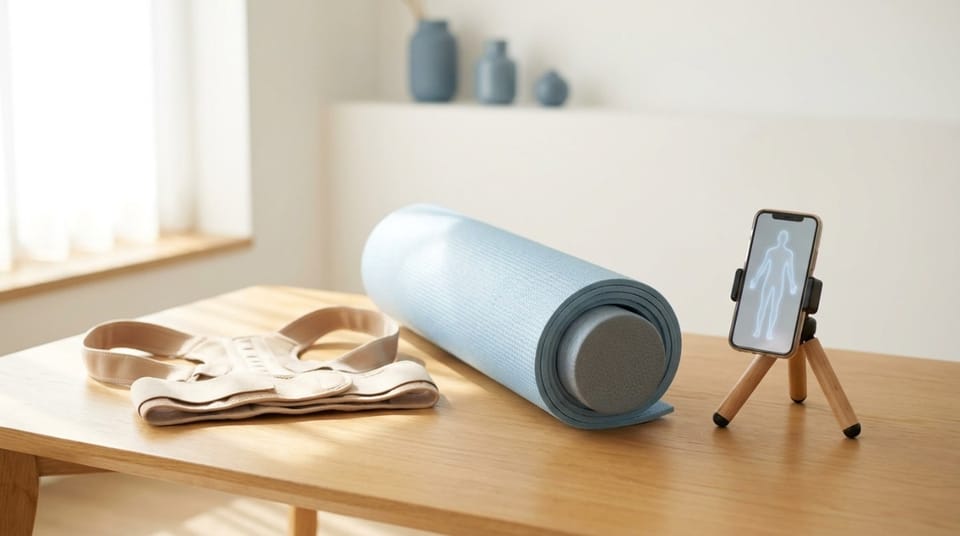
A brace offers immediate, temporary support but doesn't build the strength needed to hold a corrected posture on its own. Exercises address the actual muscle imbalance behind postural kyphosis, but only work if they're done consistently and with correct form. AI posture apps combine the exercise approach with personalization, form feedback, and tracking, which is usually what determines whether a routine actually sticks. None of the three is a scam or a waste of money, they solve different parts of the same problem.
TL;DR
- A posture brace provides passive support while worn but doesn't strengthen the muscles that hold correction long-term. 🎽
- Exercise routines address the real cause of postural kyphosis, tight chest and weak upper back, but need consistency and correct form to work.
- AI posture apps guide the exercise approach with camera-based feedback and tracking, which helps solve the consistency and form problems that cause most routines to fail.
- Braces work best for occasional reminders or short-term relief, not as a standalone fix.
- Structural kyphosis, from Scheuermann's disease or osteoporosis, needs medical guidance regardless of which tool you choose.
- The strongest results usually come from combining light brace use for awareness with a guided exercise routine, not picking just one.
Quick Recap: What You're Actually Correcting
Before comparing tools, it helps to know what you're working with. What kyphosis actually is covers the difference between postural and structural kyphosis, which matters here: a brace or app can help postural kyphosis, but neither replaces medical care for a structural curve.
The Three Approaches to Correcting Kyphosis
A posture brace is a wearable device that physically pulls the shoulders back and supports a more upright spine position while it's on. It works through external support, not muscle change.
An exercise routine targets the actual imbalance behind postural kyphosis, tight chest and hip flexors paired with a weak mid-back, through mobility and strengthening work. The full kyphosis exercise routine breaks this down phase by phase.
An AI posture app uses your phone's camera to scan your posture, then builds and adjusts an exercise plan around what it actually finds, correcting for form drift along the way.
Kyphosis Brace vs Exercises vs AI Posture App: Side-by-Side Comparison
| Posture Brace | Exercise Routine | AI Posture App | |
|---|---|---|---|
| What it does | Physically holds shoulders back while worn | Targets the muscle imbalance behind the curve | Personalizes and guides the exercise approach with camera feedback |
| Best for | Short-term relief, occasional reminders | Postural kyphosis, with consistent effort | People who want personalization, feedback, and built-in consistency |
| Time to see change | Immediate while worn, reverses once removed | 6 to 12 weeks of consistent practice | Similar timeline, often faster due to corrected form |
| Effort required | Low, but only works while worn | Moderate, requires daily practice without feedback | Moderate, guided step by step |
| Long-term effectiveness | Weak on its own, no muscle strengthening | Strong, if done consistently and correctly | Strong, combines exercise with tracking and correction |
| Typical cost | $20 to $80 one-time | Free to low-cost | Subscription-based |
| Main limitation | Doesn't build strength, some risk of muscle reliance | Needs motivation and correct form without feedback | Requires a phone and a few minutes of daily check-in |
Why Don't Braces Fix Kyphosis Long-Term?
A brace works by holding your body in a position your muscles haven't learned to hold on their own. The moment it comes off, the support goes with it, and the underlying tight-front, weak-back pattern is still there. Some research on posture correction has raised a fair concern here too: with heavy or prolonged use, a brace can actually let postural muscles do less work over time, which works against the goal rather than toward it. That doesn't make braces useless, it just means they're a support tool, not a correction tool.
A Quick Example: Two People, Two Right Answers
Consider two people with similar postural kyphosis. One travels constantly, struggles to build any daily routine, and wants something simple to grab before a long flight. A brace worn for an hour here and there, paired with occasional stretching, might genuinely be the right fit for their lifestyle, even knowing its limits. The other sits at a desk five days a week, has tried stretching videos before but always drifts back to old habits within a month, and wants to actually see whether something is working. For them, an AI posture app's structure and feedback solves the exact problem that derailed their past attempts. Neither person is doing it wrong. The right tool depends on what actually breaks down a routine for that specific person, not on which option sounds most advanced.
How To Choose Between These Three Options
- If your kyphosis is mild and you mostly need a reminder to stand tall, a brace used for short daily periods can help build awareness.
- If you're self-motivated and confident in your exercise form, a structured routine on its own can work well, especially if you check form against a mirror or video regularly.
- If you've tried exercises before and struggled with consistency, form, or knowing whether it's working, an AI posture app addresses the three things that usually derail a self-directed routine: personalization, feedback, and tracking.
- If your curve didn't flatten during a flexibility self-test, none of these three tools should be your first step. See a doctor before choosing between them.
What Happens If You Rely on a Brace Alone?
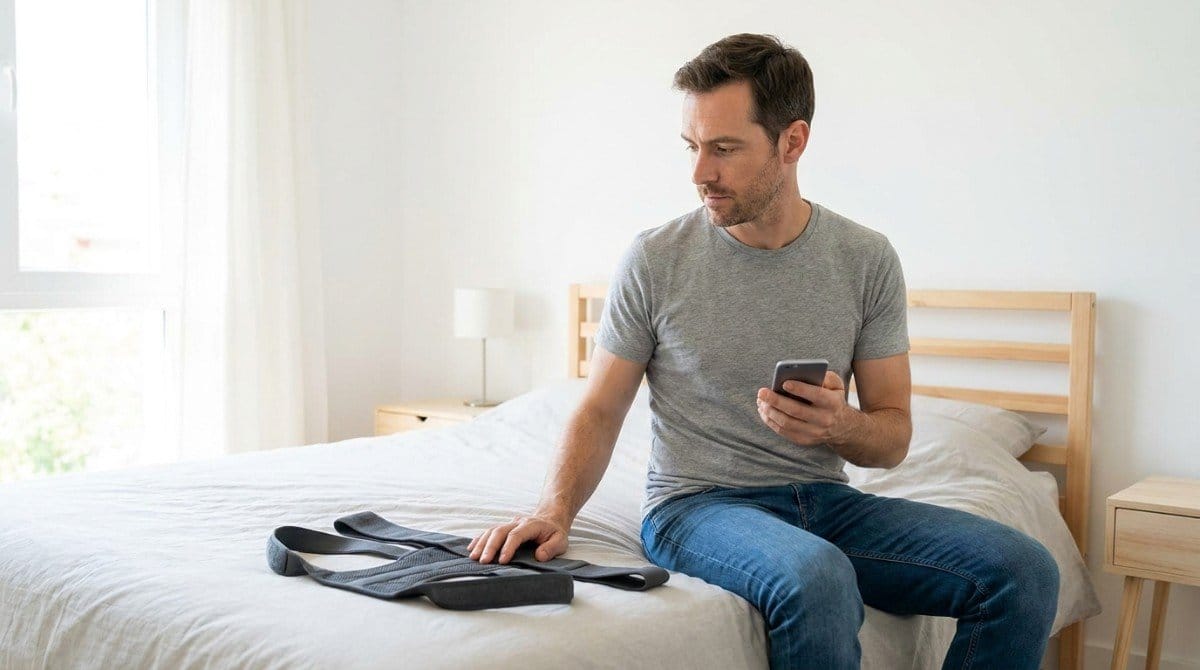
Using a brace as your only strategy tends to produce a familiar pattern: posture looks better while it's worn, then reverts within minutes of taking it off, sometimes feeling worse as muscles that leaned on the brace adjust back. Over months, this can create a cycle where the brace feels necessary rather than helpful. This is why most posture specialists frame bracing as a short-term aid alongside active correction work, not a replacement for it.
When This Approach Doesn't Work
None of these three tools, brace, exercise, or app, are appropriate as a standalone fix for structural kyphosis from Scheuermann's disease, a vertebral compression fracture, or significant osteoporosis. In those cases, a doctor or spine specialist needs to be involved first, and any brace, exercise plan, or app should be used only as part of a plan they've approved. Stop and seek medical care if you notice sharp pain, numbness, tingling, or breathing changes, regardless of which correction method you're using.
Research & Expert Insight
Physiotherapists often describe bracing as training wheels rather than a cure, useful for building awareness but not a substitute for strengthening. Posture specialists suggest that whichever tool someone chooses, the deciding factor in outcomes is usually consistency over 6 to 12 weeks, not the specific tool itself. Research in musculoskeletal rehab has raised particular concern about long-term or excessive brace reliance reducing active muscle engagement, which is why most guidance favors exercise as the foundation, with a brace or app layered on top rather than replacing it.
Final Takeaway
A brace, an exercise routine, and an AI posture app aren't competing solutions, they sit at different points on the same spectrum from passive support to active, guided correction. For most people with postural kyphosis, an exercise-based approach does the actual work, and the tool that helps you stay consistent with it, whether that's an occasional brace or guided app feedback, is the one worth adding. How long posture correction actually takes is a useful next read for setting realistic expectations either way.

Why Picking a Tool Doesn't Guarantee It Works
Buying a brace or bookmarking an exercise list feels like progress, but the tool itself rarely determines the outcome. Braces get worn for a week, then forgotten in a drawer. Exercise routines get followed with form nobody's checking, so the wrong muscles end up doing the work. Progress goes untracked, so it's hard to tell whether six weeks of effort actually changed anything. And without any structure pulling you back day after day, most self-directed routines quietly stop before the curve has time to respond.
A Guided Middle Ground
Backed AI is built around the part that trips up most people: staying consistent with correct form long enough to see change. It scans your posture through your phone camera, builds a plan around your specific kyphosis pattern, and adjusts as your mobility and strength improve.
- 🎯 Personalized, not generic. Your plan reflects your actual curve, not a standard exercise list or one-size brace.
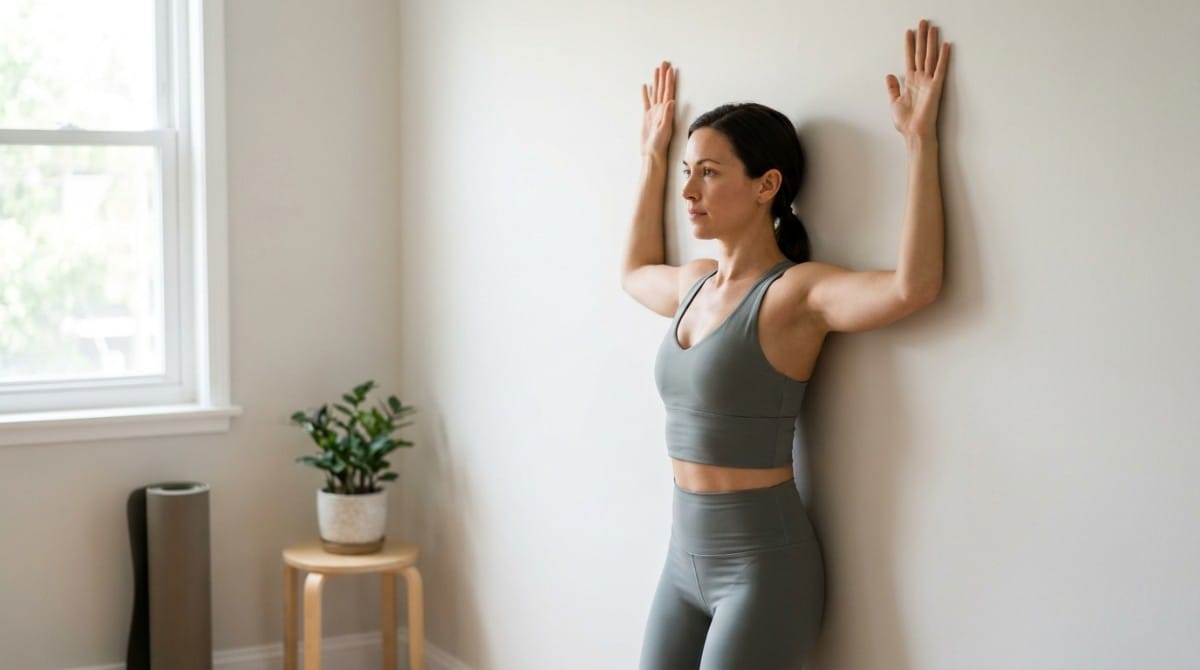
- 📊 Form feedback without a brace. Camera-based checks catch drift in exercises like wall angels or thoracic extensions, the same problem a brace tries to solve externally, addressed from the inside instead.
- 🔔 Consistency built in. Daily reminders and progress tracking carry you through the weeks where most brace-only or unguided routines quietly stop.
The tool matters less than whether you actually stick with it. Backed AI is built to solve that part specifically.
Download Backed AI and start correcting your posture today.
FAQ
Does a posture brace actually fix kyphosis? Not on its own. A brace provides temporary external support while worn, but it doesn't strengthen the muscles needed to hold a corrected position without it. It works best alongside an active exercise routine, not instead of one.
Are AI posture apps better than exercises alone? They're not a replacement for exercise, they're a way to do the exercise approach more consistently and with better form. The underlying corrective movements are similar either way.
Can I use a brace and an AI posture app together? Yes. A brace for short, occasional periods can support awareness while an app-guided exercise routine does the active strengthening work. Most posture specialists see this as complementary rather than redundant.
Is a kyphosis brace safe to wear all day? Wearing a brace for extended periods isn't generally recommended, since it can reduce how much your own postural muscles engage over time. Shorter, targeted use tends to work better than all-day wear.
Which option works fastest for kyphosis? A brace changes your appearance immediately while worn, but that effect disappears once it's off. Exercise-based approaches, with or without app guidance, typically show real, lasting change within 6 to 12 weeks.