
What Is Kyphosis (Hunchback Posture)? Causes, Signs, and When It's Serious

Kyphosis is an excessive forward curve in the upper spine that gives the back a rounded, hunched look. Most cases start as postural kyphosis, a correctable pattern caused by slouching and weak upper-back muscles, though some come from real structural changes in the spine. Mild to moderate kyphosis usually responds well to targeted exercise, while severe or worsening curves need a medical check.
TL;DR
- Kyphosis is a forward curve of the upper spine that goes past the normal 20 to 45 degree range. 📐
- The most common form, postural kyphosis, comes from habits like desk slouching and weak back muscles.
- Structural kyphosis, like Scheuermann's disease, involves the vertebrae actually changing shape, usually starting in the teen years.
- Warning signs include a visible upper-back hump, rounded shoulders, forward head posture, and stiffness that doesn't ease up.
- Postural kyphosis usually improves with consistent thoracic mobility and strengthening work.
- See a doctor if your curve doesn't straighten when you stand tall, or if you notice numbness, tingling, or breathing changes.
What Is Kyphosis (Hunchback Posture)?
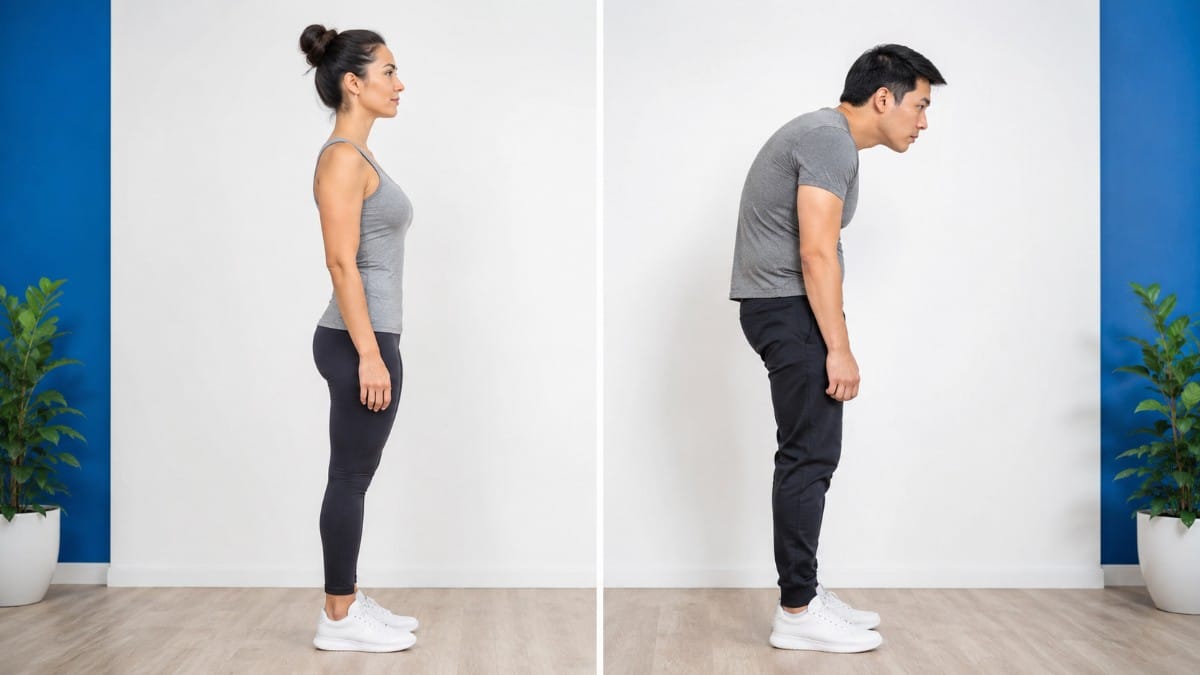
Kyphosis takes its name from the Greek word for "hump," and it describes one specific thing: too much forward curve in the upper back. A healthy thoracic spine (the mid-back, roughly between the shoulder blades) naturally curves forward a little, usually between 20 and 45 degrees. That curve helps you absorb shock and balance the weight of your head and ribcage.
Kyphosis is a musculoskeletal condition in which the upper spine curves forward beyond the normal range, creating a rounded or hunched appearance in the upper back.
Doctors typically use the term hyperkyphosis once that curve passes about 50 degrees. Older, non-medical names like "hunchback" or "dowager's hump" describe the same visible pattern, but they're considered outdated today.
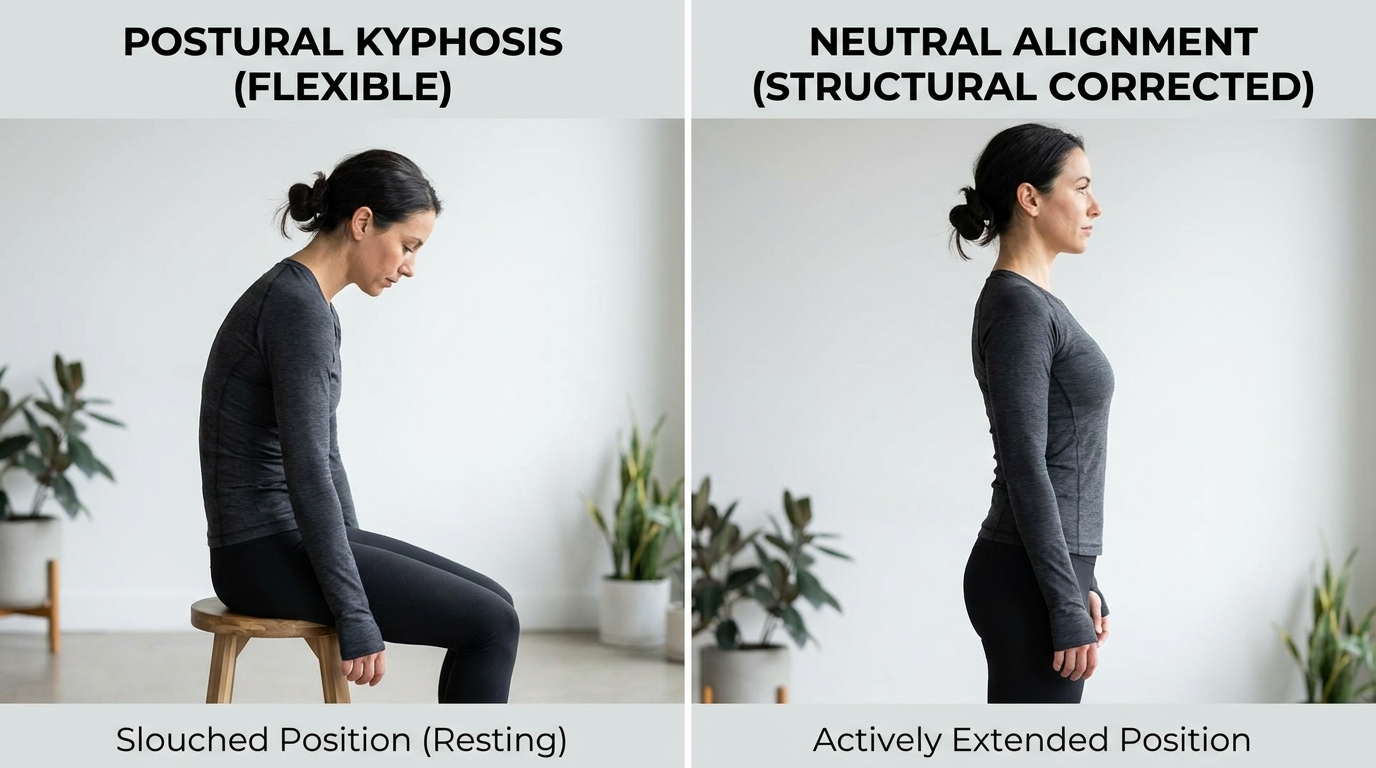
💡 Key Insight: Not all rounded backs are the same condition. A curve that flattens out when you consciously stand tall is almost always postural, and it responds well to exercise. A curve that stays rounded even when you actively try to correct it is more likely structural, and it needs a different approach.
Why Does Kyphosis Happen?
Kyphosis has more than one cause, and the cause determines how well it responds to exercise. Postural kyphosis, the most common type, develops slowly from slouched sitting, weak upper-back muscles, and tight chest muscles that pull the shoulders forward. Structural kyphosis, like Scheuermann's disease, happens when the vertebrae themselves grow into a wedge shape during adolescence. Age-related kyphosis often follows osteoporosis or compression fractures, which is why older adults sometimes benefit from gentler, joint-friendly thoracic mobility routines built around their bone health.
| Type | Typical Age | Main Cause | Responds to Exercise? |
|---|---|---|---|
| Postural kyphosis | Teens to adults | Slouching, weak upper-back muscles, tight chest muscles | Yes, usually |
| Scheuermann's kyphosis | Adolescence | Wedge-shaped vertebrae during growth | Partially, needs monitoring |
| Age-related kyphosis | 60+ | Osteoporosis, compression fractures, disc thinning | Limited, often needs medical care |
| Congenital kyphosis | Birth / early childhood | Spine doesn't form correctly before birth | No, needs specialist care |
How To Tell If Your Kyphosis Is Postural or Structural
A simple self-check can point you in the right direction. Lie face down and prop yourself up on your elbows, letting your upper back extend. If your curve visibly flattens, it's likely postural. If it stays rounded no matter how hard you try to straighten it, it's more likely structural. This is the same logic behind a quick at-home thoracic mobility check, which walks through a few more positions to confirm what's limiting your range.
What Are the Signs of Kyphosis?
- A visible rounding or hump across the upper back
- Rounded shoulders that curl forward, even at rest
- Forward head posture, where the head sits ahead of the shoulders
- Uneven shoulder blade height
- Stiffness or fatigue in the upper back after long periods of sitting
- Tight chest and hip flexor muscles
- In advanced cases, mild breathing difficulty from a compressed ribcage
Best Exercises for Kyphosis (Quick List)
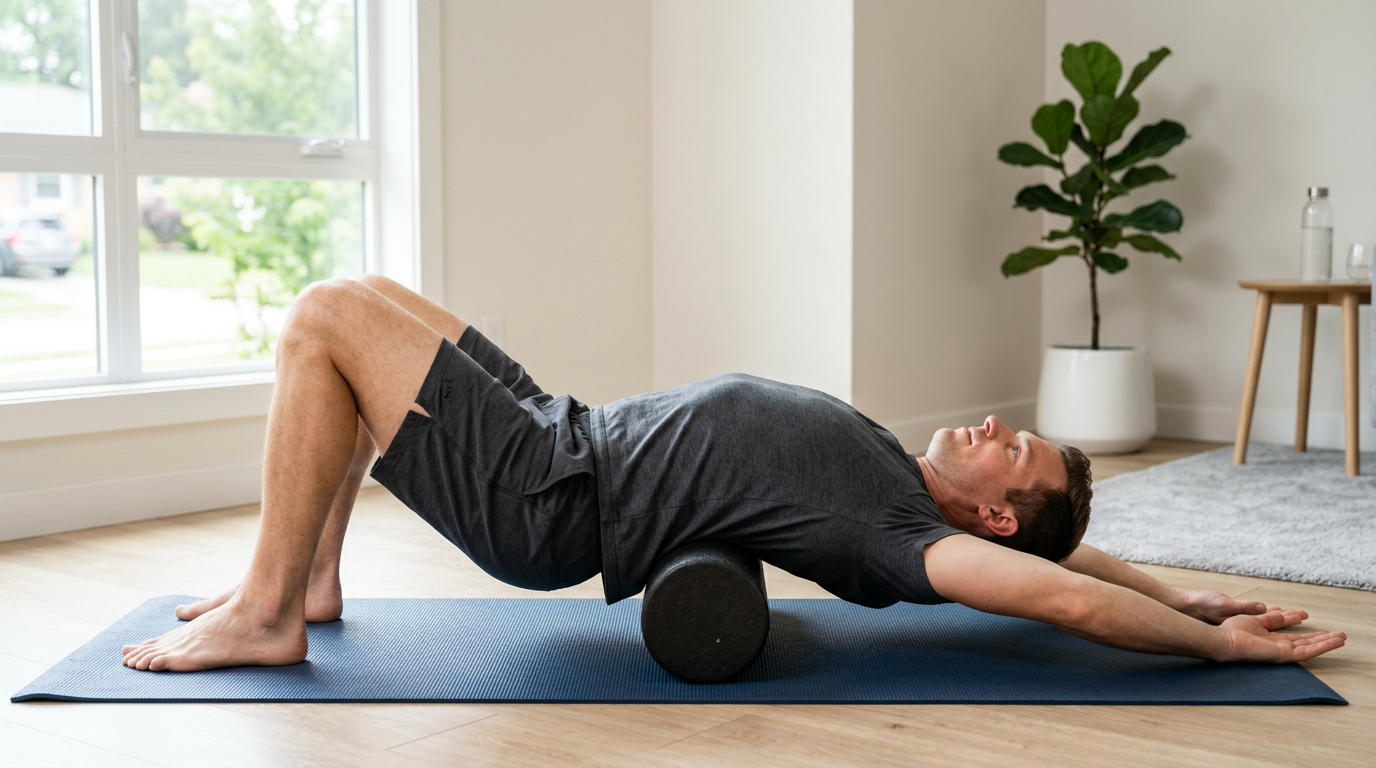
- Thoracic extension over a foam roller. Lie back over a foam roller placed under your shoulder blades and let your upper spine extend gently. This directly counters the forward curve.
- Wall angels. Stand against a wall and slide your arms up and down like a snow angel, keeping your lower back, shoulders, and head in contact with the wall.
- Cat-cow flow. Move slowly between spinal flexion and extension on hands and knees to build mobility through the whole thoracic spine.
- Chin tucks. Draw your head straight back, not down, to retrain the neck-to-shoulder alignment that usually rounds forward alongside kyphosis.
- Prone Y-raises. Lying face down, lift your arms into a Y shape to strengthen the lower trapezius muscles that hold the shoulders back.
For a longer, more complete routine, 8 of the best thoracic mobility exercises breaks each movement down step by step. Some people find it easier to stay consistent with these moves when an app like Backed AI checks their form through the phone camera, since kyphosis exercises are easy to do with the wrong range of motion without realizing it.
What Happens If Kyphosis Is Left Untreated?
Left alone, postural kyphosis tends to get more fixed over time. Muscles adapt to the rounded position, making it harder to reverse the longer it's ignored. Chronic stiffness and tension often follow, along with a worsening forward head posture that can contribute to tension-type headaches, similar to the pattern covered in the neck-tension connection behind posture headaches. In more severe or structural cases, an increased curve can restrict breathing or digestion, and the visible change in posture can affect confidence too.
Research & Expert Insight
Physiotherapists often recommend addressing kyphosis early, since flexible postural curves are far easier to influence than curves that have become fixed over years. Posture specialists suggest pairing mobility work with strengthening, rather than stretching alone, because a rounded upper back is usually both tight in the front and weak in the back at the same time. Research in musculoskeletal rehab shows that consistency, not intensity, tends to predict who actually corrects their alignment.
Step-by-Step Recovery Framework
- Assess. Use the self-test above, or a professional evaluation, to confirm whether your kyphosis is postural or structural.
- Mobilize. Loosen tight chest, hip flexor, and thoracic tissue daily with short, targeted stretches.
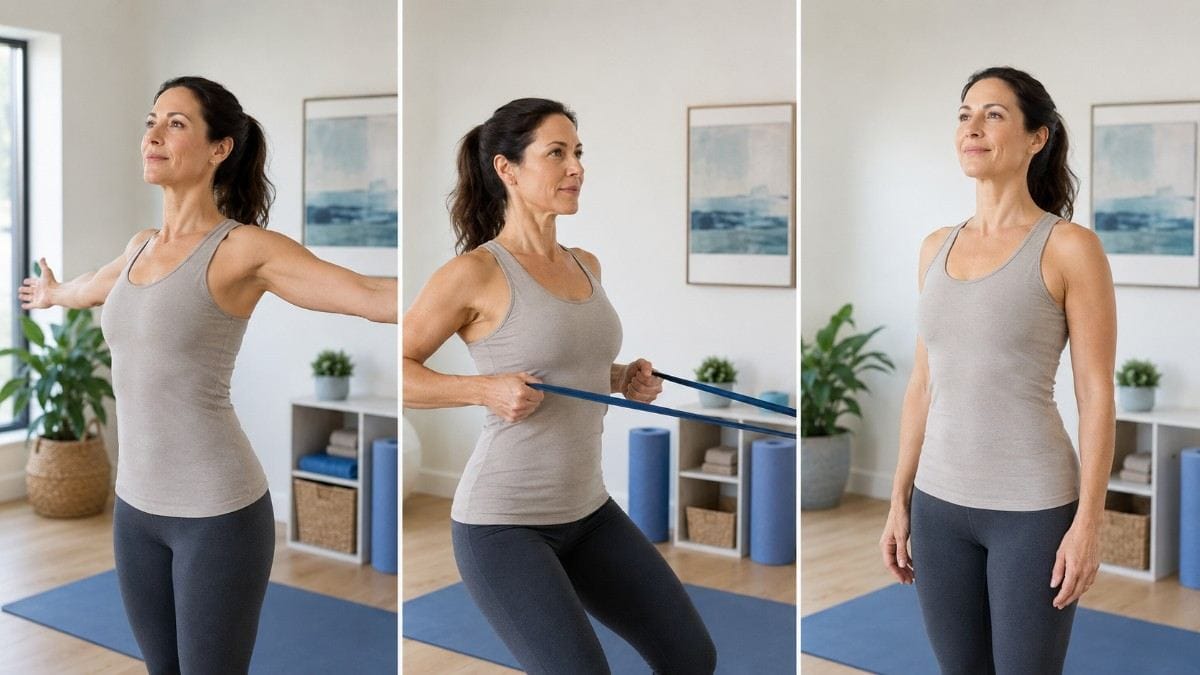
- Strengthen. Build the mid-back and scapular muscles that hold the corrected position once you have it.
- Reinforce. Build a daily posture-check habit. Consistent, guided reminders, like the daily nudges built into Backed AI, tend to outperform occasional effort.
- Track. Measure progress with photos or scans over weeks, not days. For a realistic sense of pacing, how long posture correction actually takes is worth a read before you set expectations.
When This Approach Doesn't Work
Exercise alone can't reshape wedged vertebrae from Scheuermann's disease, rebuild bone density lost to osteoporosis, or correct a congenital curve. If your kyphosis didn't flatten during the self-test, or if you notice pain radiating into your arms or legs, numbness, tingling, or increasing difficulty breathing, it's time to see a doctor or spine specialist rather than pushing harder on exercises. Bracing, and in rare severe cases, surgery, may be part of the picture for structural kyphosis.
Final Takeaway
Kyphosis is common, and most cases, especially postural ones, are genuinely correctable with consistent, targeted work. The key is knowing which type you're dealing with before you commit to a routine. Start with the self-test, build a short daily mobility and strengthening habit, and get a medical opinion if your curve doesn't respond the way postural kyphosis should.

Why Most Exercise Plans Fail
Most people who try to fix a rounded upper back on their own hit the same wall. Generic YouTube routines aren't built for their specific curve, so effort goes into the wrong movements. Form breaks down without anyone watching, so the exercises stop doing what they're supposed to do. Progress plateaus because the routine never adjusts as the spine improves. And without daily reminders, consistency quietly fades after the first couple of weeks, long before the curve has time to change.
A Smarter Way to Correct Kyphosis
Backed AI takes the guesswork out of posture correction. Instead of following a one-size-fits-all video, it scans your posture through your phone camera and builds a program around your actual curve, not a generic template.
- 🎯 Personalized, not generic. Your routine adjusts to your specific kyphosis pattern instead of a standard exercise list.
- 📈 Built-in progression. As your thoracic mobility improves, the program evolves with you instead of staying static.
- 🔔 Consistency support. Daily reminders and progress tracking help the habit stick past the first two weeks, which is usually where generic plans fall apart.
Postural kyphosis responds best when it's caught early and worked on consistently. Every week spent guessing at form is a week your muscles spend adapting to the rounded position instead of the corrected one.
Why Most Exercise Plans Fail Most people who try to fix a rounded upper back on their own hit the same wall. Generic YouTube routines aren't built for their specific curve, so effort goes into the wrong movements. Form breaks down without anyone watching, so the exercises stop doing what they're supposed to do. Progress plateaus because the routine never adjusts as the spine improves. And without daily reminders, consistency quietly fades after the first couple of weeks, long before the curve has time to change.
A Smarter Way to Correct Kyphosis Backed AI takes the guesswork out of posture correction. Instead of following a one-size-fits-all video, it scans your posture through your phone camera and builds a program around your actual curve, not a generic template.
- 🎯 Personalized, not generic. Your routine adjusts to your specific kyphosis pattern instead of a standard exercise list.
- 📈 Built-in progression. As your thoracic mobility improves, the program evolves with you instead of staying static.
- 🔔 Consistency support. Daily reminders and progress tracking help the habit stick past the first two weeks, which is usually where generic plans fall apart.
Postural kyphosis responds best when it's caught early and worked on consistently. Every week spent guessing at form is a week your muscles spend adapting to the rounded position instead of the corrected one.
Download Backed AI and start correcting your posture today.
FAQ
Is kyphosis the same thing as bad posture? Not exactly. Bad posture is a habit, while kyphosis is the structural or postural outcome when that habit, or another cause, pushes the spine's curve past a normal range. Most postural kyphosis starts as a habit and can be corrected before it becomes fixed.
Can kyphosis be reversed without surgery? Postural kyphosis often improves significantly with consistent thoracic mobility and strengthening work, no surgery needed. Structural types, like Scheuermann's disease or age-related kyphosis, usually need medical guidance alongside exercise, and severe cases may require bracing or surgery.
What's the difference between kyphosis and a dowager's hump? A dowager's hump is an older, non-medical term for a specific pattern of kyphosis in older adults, often linked to osteoporosis and vertebral compression fractures. All dowager's humps are a form of kyphosis, but not all kyphosis is a dowager's hump.
Is kyphosis painful? Mild kyphosis often causes stiffness or fatigue rather than sharp pain. Discomfort tends to increase as the curve grows, since surrounding muscles work harder to hold the head and shoulders upright.
At what age does kyphosis usually start? Postural kyphosis can start at any age, especially with prolonged desk work. Scheuermann's kyphosis typically appears during the teenage growth spurt, and age-related kyphosis becomes more common after 60.