
Can Bad Posture Cause Headaches? The Neck-Tension Connection 💙

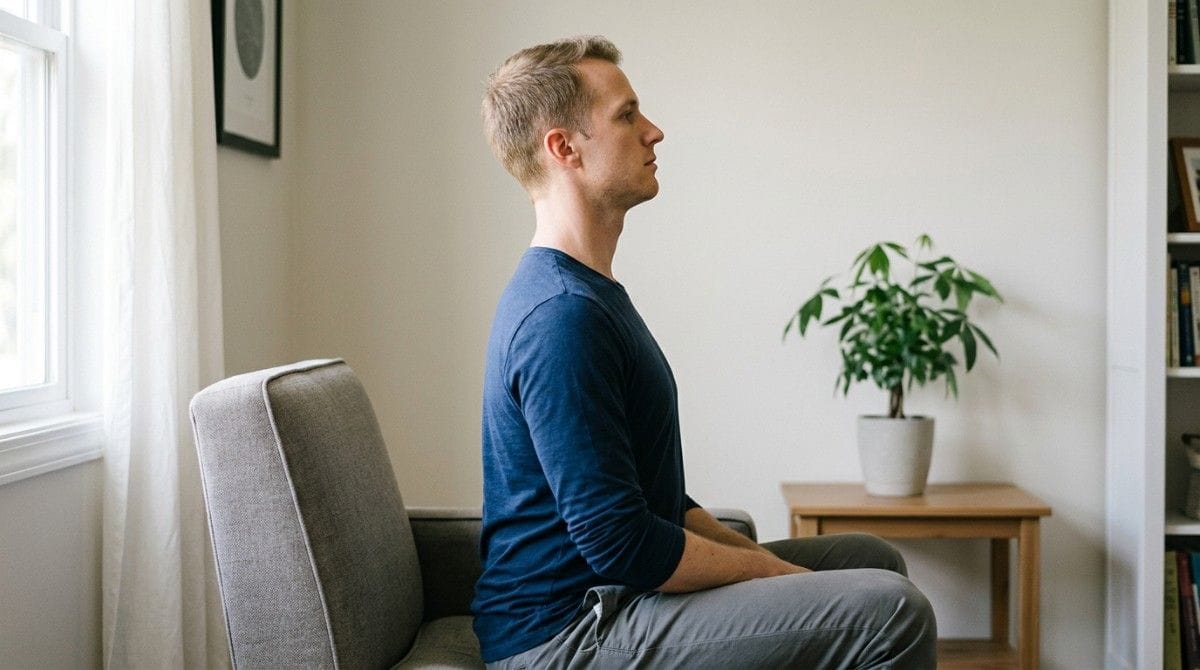
Yes, bad posture can cause headaches. When your head drifts forward of your shoulders for hours at a time, the muscles at the base of your skull and upper neck have to work much harder just to hold your head up. That ongoing strain often refers pain straight into your head, which is why so many desk workers deal with a dull ache that shows up by early afternoon and won't fully go away.
TL;DR
- 🧠 Forward head posture forces your neck muscles to work overtime, and that overwork can trigger headaches.
- 📍 Posture headaches usually start at the base of the skull and spread toward the temples or forehead.
- 🪑 Long stretches at a desk or on a phone are the most common trigger.
- 🔁 In most cases, this is a mechanical problem, not a sign of anything serious.
- 🧘 Targeted neck and upper back work can ease the tension within days to a few weeks.
- 🚩 A sudden, severe, or unusual headache needs a doctor, not just posture fixes.
- 📱 Catching the small habits that keep recreating the tension matters more than any single stretch.
What Is a Posture Headache?
A posture headache, often called a cervicogenic headache, is head pain caused by muscle tension and joint strain in the neck, most often from forward head posture and rounded shoulders.
It isn't a separate disease. It's a referred pain pattern. The nerves that carry sensation from your upper neck share a pathway with the nerves that carry sensation from your head, so when your neck muscles are overworked, your brain can register that tension as head pain instead of neck pain.
This is one of the reasons a forward head posture exercise routine so often shows up as the fix for headaches that seem to have nothing to do with the neck at all.
💡 Key Insight: For every inch your head shifts forward of your shoulders, your neck muscles have to work several times harder just to keep your head upright. That extra load, held for hours a day, is often the real source of a "stress headache" that never quite lifts.

Why Does Bad Posture Cause Headaches?
Bad posture creates headaches through ongoing muscle overload, not sudden injury. A few things happen at once:
- The suboccipital muscles tighten. These small muscles at the base of your skull work constantly to keep your head level when it drifts forward, and tight suboccipitals are one of the most common headache triggers.
- The upper trapezius and levator scapulae get stuck in a shortened position. This pulls on the base of the skull and upper neck with every head movement.
- Nerve pathways get irritated. The occipital nerves run through this tight muscle tissue, and irritation there can send pain forward into the scalp, temples, or behind the eyes.
This pattern often overlaps with tech neck, which is functionally the same problem as forward head posture just triggered by phone use instead of a desk monitor. The muscle mechanics behind the headache are identical either way.
How Can You Tell If Your Headache Is From Bad Posture?
A posture headache usually has a recognizable pattern. Look for:
- Pain that starts at the base of the skull and spreads upward or forward.
- A tight, band-like pressure rather than throbbing.
- One-sided tightness that matches how you sit or hold your phone.
- Symptoms that build through the day and ease after you move or stretch.
- A tender, ropy feeling when you press the muscles at the top of your neck.
If pressing on your neck reproduces the headache, that's a strong sign posture is involved.

| Headache Type | Common Location | Typical Trigger | Feels Like |
|---|---|---|---|
| Posture (cervicogenic) | Base of skull, one side, spreading forward | Prolonged sitting, forward head posture | Tight band, dull ache |
| Tension-type | Both sides, forehead and temples | Stress, screen time, dehydration | Pressure, "tight cap" feeling |
| Migraine | One side, often behind the eye | Hormonal, sensory, genetic triggers | Throbbing, worsens with light and sound |
| Cluster | Around one eye | Unknown, cyclical pattern | Intense, burning, one-sided |
What Happens If You Ignore a Posture Headache?
Left alone, a posture headache rarely stays a once-in-a-while problem. The forward head position that causes it tends to get worse without correction, because the same desk setup and phone habits keep reinforcing it every day. Over time, this can mean:
- Headaches that show up more often and last longer.
- Neck and shoulder stiffness that spreads into the upper back.
- Reduced neck mobility, which makes the tension harder to release on your own.
- Poor sleep, since neck tension often carries into the night.
None of this is permanent. It's a pattern that responds well to consistent correction, which is exactly where most people get stuck.
Best Exercises for Posture Headaches (Quick List)
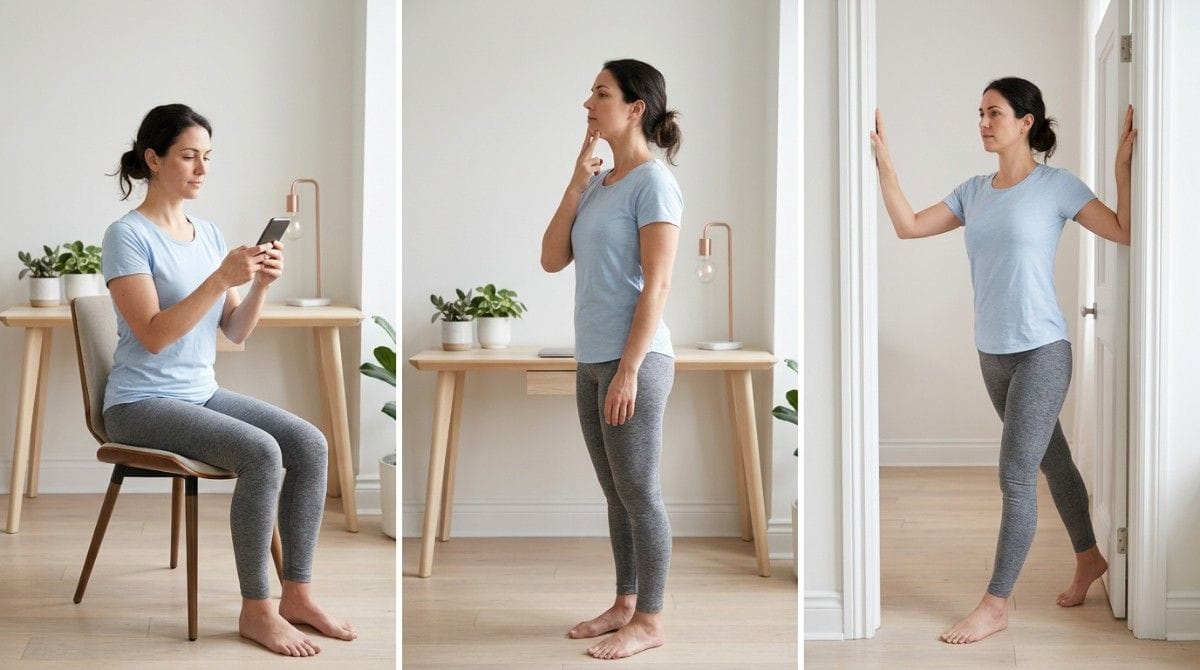
- Chin tucks – Gently draw your chin straight back, like making a double chin, and hold for 5 seconds. This directly counters forward head posture.
- Upper trapezius stretch – Tilt your head toward one shoulder and hold 20 to 30 seconds each side to release the muscle most linked to tension headaches.
- Suboccipital release – Place your fingers at the base of your skull and apply gentle pressure for 60 seconds to ease the muscles closest to the headache source.
- Doorway chest stretch – Open the chest to counter the rounded shoulders that pull your head forward in the first place.
- Scapular squeeze – Draw your shoulder blades together and hold for 5 seconds to build the postural strength that chin tucks alone can't provide.
- Thoracic extension over a chair back – Gently arch your upper back to restore mid-back mobility, which takes pressure off the neck.
For a fuller daily sequence, this 7-step neck posture routine builds on these same moves.
Step-by-Step Recovery Framework
- Identify your triggers. Notice when the tightness starts, usually screen time, phone scrolling, or driving.
- Reset daily. Run through the exercises above once in the morning and once by mid-afternoon, before tension builds.
- Adjust your setup. Raise your monitor to eye level and bring your phone up to face height instead of tilting your head down to it.
- Track what's working. Small, consistent corrections compound. Most people notice fewer headaches within two to three weeks of daily practice.
💡 Keeping track of these small daily corrections is often the hardest part to stick with on your own. This is where Backed AI can help, more on that below.
When This Approach Doesn't Work
Posture correction helps most tension and cervicogenic headaches, but it isn't the right first step for every headache. See a doctor rather than relying on posture fixes if you have:
- A sudden, severe headache unlike any you've had before.
- A headache with fever, stiff neck, confusion, or a rash.
- A headache that started after a fall or head injury.
- Vision changes, slurred speech, or numbness alongside the headache.
- A headache that wakes you from sleep or keeps getting worse over several weeks despite consistent posture work.
These are signs to rule out something beyond muscle tension, and no exercise routine should replace that check.
Research & Expert Insight
Physiotherapists often recommend addressing forward head posture directly rather than only treating the headache symptom, since the underlying mechanical load tends to recreate the pain if it's left alone. Posture specialists suggest that consistent, short daily corrections outperform occasional long stretching sessions for this specific type of tension. Research in musculoskeletal rehab shows that cervicogenic headache patterns respond well to a combination of mobility work and postural strengthening, which is why the recovery framework above pairs both rather than relying on stretching alone.
Bad posture headaches share a lot in common with other posture-driven symptoms that seem unrelated at first. Bad posture can trigger chest pain through similar mechanics, which is worth knowing if you're dealing with more than one symptom at once.
Why Most Exercise Plans Fail
Most people don't fail because the exercises are wrong. They fail because of four predictable gaps:
- Inconsistency. A stretch done once a week won't outpace hours of daily forward head posture.
- Wrong form. Chin tucks done with the neck bending instead of gliding back barely help.
- No progression. The same five stretches forever eventually stop building real postural strength.
- No personalization. A generic routine doesn't account for your specific desk setup, your worst habits, or which muscles are actually tightest.
This is often why posture correction doesn't stick even when someone is genuinely trying.
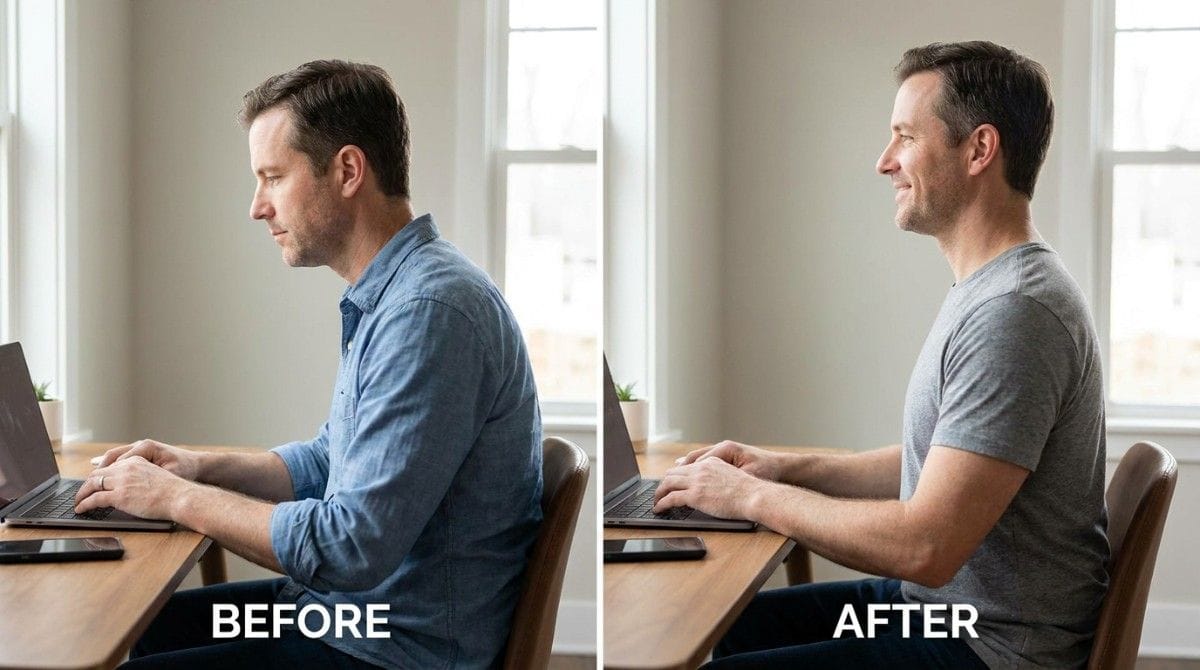
Generic exercise lists work for a while, then stall. Without feedback on your actual form, it's easy to keep repeating the same forward head position all day and undo whatever a five-minute stretch just fixed.
Backed AI takes a different approach:
- Personalized correction, not a one-size-fits-all list. Backed AI's camera-based posture analysis identifies your specific imbalance, whether that's forward head posture, rounded shoulders, or both, and builds a program around it.
- Real progress tracking. Instead of guessing whether your posture is improving, you get visible tracking over time, so you know the exercises above are actually working.
- Consistent daily reminders. The habit gap, not the exercise knowledge gap, is usually what stops people from getting relief. Backed AI's reminders close that gap.
If posture headaches keep coming back no matter how many stretches you try, the missing piece is usually consistency and personalization, not a new exercise.
Download Backed AI and start correcting your posture today.
Final Takeaway
Bad posture can absolutely cause headaches, and the mechanism is straightforward: forward head posture overloads the muscles at the base of your skull, and that tension refers pain into your head. Most posture headaches respond well to a short, consistent routine of chin tucks, stretches, and desk adjustments within a few weeks. Watch for red-flag symptoms that need a doctor rather than a stretch, and if consistency is the sticking point, personalized tracking through something like Backed AI can help the habit actually hold.
FAQ
Can bad posture really cause headaches? Yes. Forward head posture and rounded shoulders overload the muscles at the base of the skull, and that tension commonly refers pain into the head.
What type of headache does bad posture cause? Posture usually causes a cervicogenic or tension-type headache, felt as a tight band starting at the base of the skull and spreading toward the temples or forehead.
How long does it take for a posture headache to go away? Many people notice fewer headaches within two to three weeks of daily neck and upper back exercises, though full postural change can take longer.
Can neck exercises stop posture headaches? Chin tucks, trapezius stretches, and thoracic mobility work target the exact muscles that trigger posture headaches, and consistent daily practice is usually more effective than occasional stretching.
When should I see a doctor about a posture headache? See a doctor if the headache is sudden and severe, comes with fever or vision changes, follows a head injury, or keeps worsening despite consistent posture correction.