How to Improve Neck Posture: The 7-Step Daily Routine That Actually Works
To improve neck posture, you need to release tight front-neck and chest muscles, mobilize a stiff upper back, and strengthen the deep neck flexors that keep your head stacked over your shoulders. Most people see meaningful change within 4 to 8 weeks of consistent 10 to 15-minute daily practice. The fix is structural, not cosmetic.
TL;DR
- Bad neck posture is usually forward head posture caused by screens and weak supporting muscles 📱
- The fix follows a 3-part formula: release, realign, strengthen
- Chin tucks, wall angels, and chest openers are non-negotiable daily moves
- Ergonomic setup matters as much as exercise
- Most people see visible improvement in 4 to 8 weeks
- Generic YouTube routines fail because they ignore personalization
- AI posture tracking accelerates results by catching mistakes early
What Is Neck Posture?
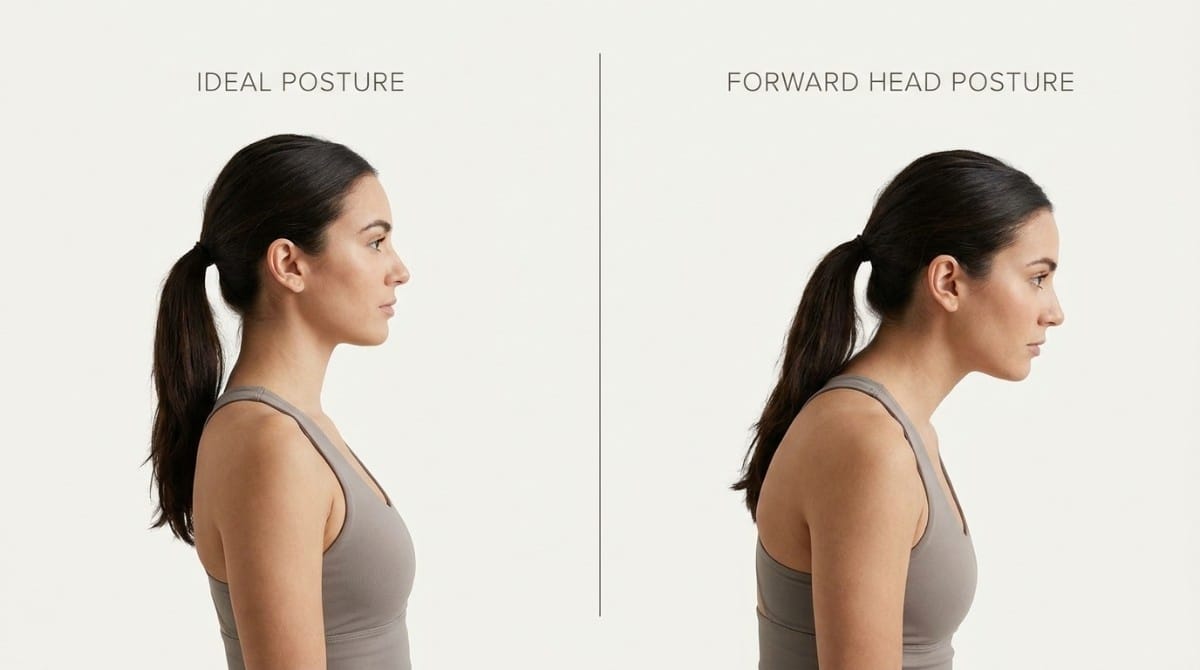
Good neck posture is a position where your ears stack vertically over your shoulders, allowing the cervical spine to maintain its natural curve without overworking the surrounding muscles.
When your head shifts forward, the neck muscles fight gravity to hold up roughly 10 to 12 pounds of head weight. For every inch of forward drift, the effective load on the neck multiplies. This pattern, often called forward head posture, is the most common driver of poor neck posture in modern adults.
Why Does Neck Posture Get Worse?
Posture specialists suggest the average adult tilts their head forward 45 to 60 degrees while texting. That alone explains a lot. But the deeper drivers are:
- Screen height that pulls eyes downward for hours each day 💻
- Weak deep neck flexors that fail to stabilize the head
- Tight pectorals and front-neck muscles that pull the head forward
- Stiff thoracic spine that prevents the upper back from extending
- Pillow choice and sleep posture that reinforce the slump overnight
If you spend most of the day at a desk, you're starting from a disadvantage. Many of the same patterns also drive desk-worker back pain, which is why it helps to view lower back pain in desk workers as part of the same chain reaction.
How To Improve Neck Posture (7-Step Framework)
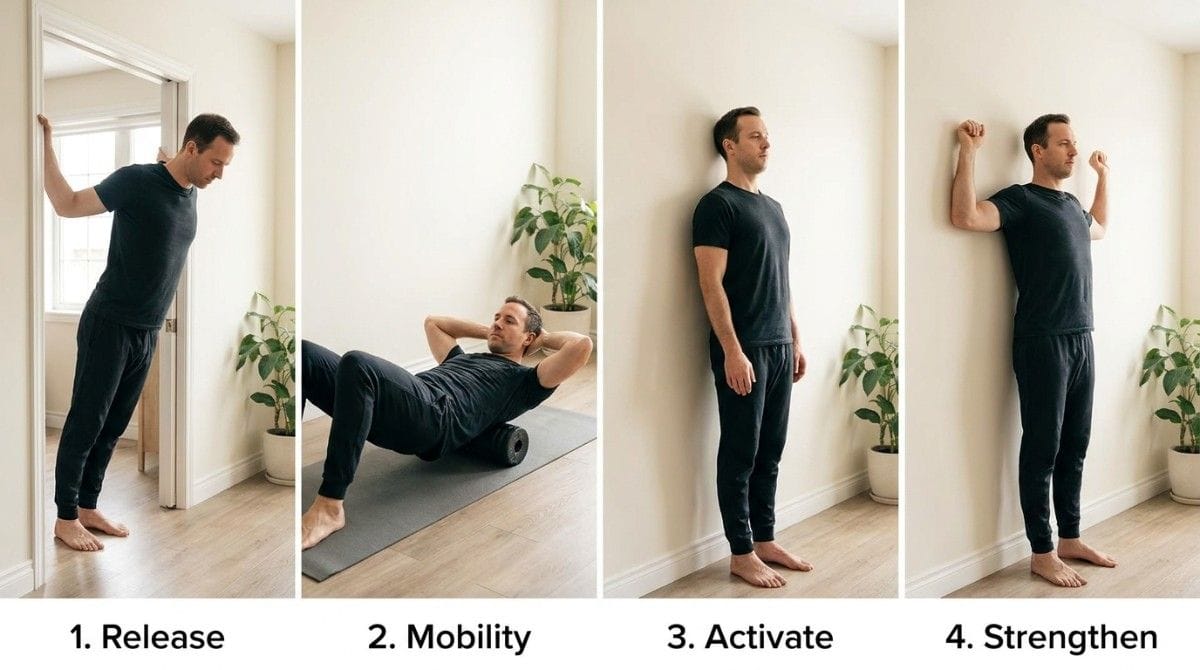
Step 1: Release the Tight Front
Stretch your chest and the front of your neck first. Tight pecs pull the shoulders forward, which drags the head with them. Use a doorway chest stretch for 30 seconds each side.
Step 2: Mobilize the Upper Back
A stiff thoracic spine forces the neck to compensate. Foam roll your upper back for 2 to 3 minutes daily.
Step 3: Activate the Deep Neck Flexors
These small muscles do the real work of keeping the head stacked. Chin tucks are the go-to drill.
Step 4: Strengthen the Mid-Back
Wall angels and prone Y raises retrain the muscles that pull your shoulders back, indirectly resetting the neck. The wall angels reset routine is one of the most effective single moves you can do.
Step 5: Fix Your Workstation
Raise your screen so the top is at eye level. Pull your keyboard close. Sit fully back in the chair.
Step 6: Adjust Your Sleep Setup
A pillow that's too high pushes your chin to your chest all night. Choose one that keeps the neck aligned with the spine. The pillow setup guide for posture breaks down what to look for.
Step 7: Track Progress
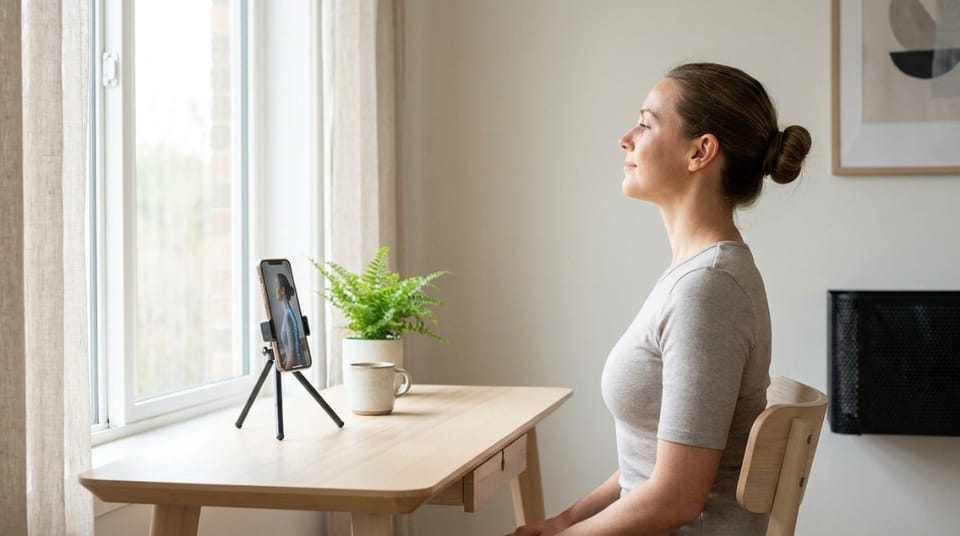
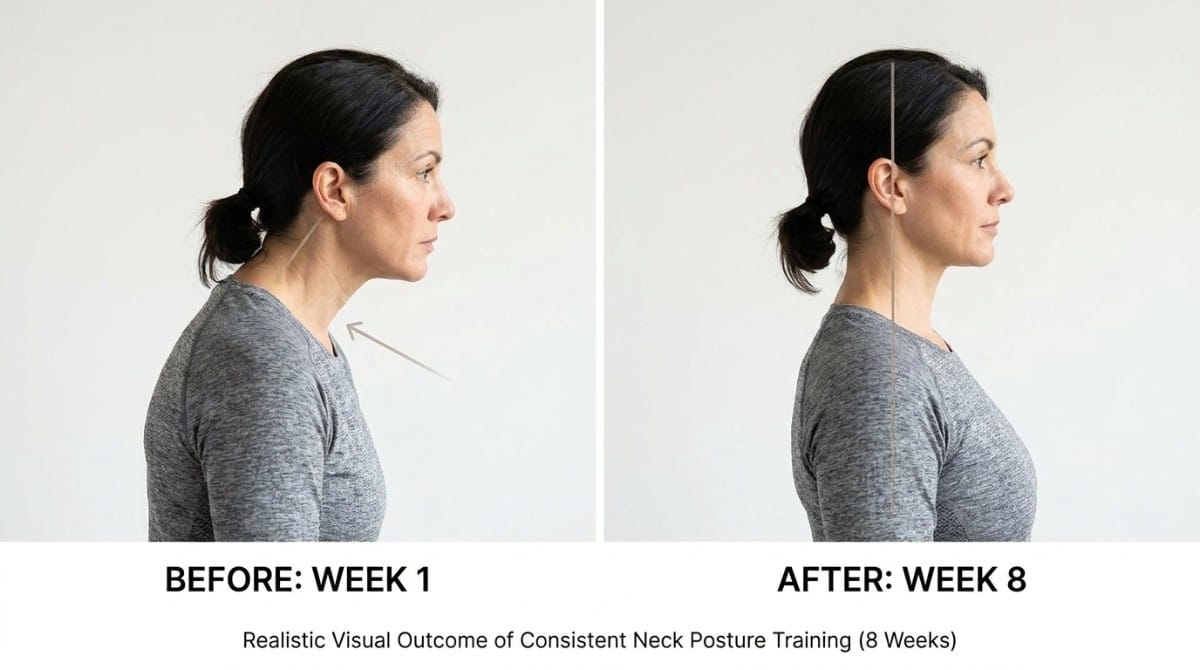
You can't fix what you don't measure. Side-profile photos every 2 weeks reveal small wins your eyes miss day to day.
Best Exercises to Improve Neck Posture (Quick List)
- Chin Tucks - Draw your chin straight back, hold 5 seconds, 10 reps. The single most effective drill for retraining head position.
- Wall Angels - Slide arms slowly up and down a wall, keeping contact. Resets shoulder and upper-back alignment.
- Doorway Chest Stretch - 30 seconds each side. Releases the muscles that pull your head forward.
- Prone Y Raises - Lie face down, lift arms in a Y. Strengthens lower traps that support the neck.
- Thoracic Foam Rolling - Roll the upper back for 2 minutes. Restores the spinal extension you lose at a desk.
- Scapular Squeezes - Pull shoulder blades together for 5 seconds. Builds endurance in postural muscles.
- Side Neck Stretch - Gently tilt ear toward shoulder, hold 30 seconds. Releases tense upper traps.
For deeper neck-specific work, the forward head posture corrective routine layers seamlessly on top of these basics.
How Long Does It Take to Improve Neck Posture?
Most people feel tension reduction in 1 to 2 weeks. Visible posture changes appear in 4 to 6 weeks. Structural retraining takes 8 to 12 weeks of consistent daily practice. Skipping days resets the timeline.
💡 Key Insight: Posture isn't held in place by willpower. It's held in place by muscle endurance. That's why short daily sessions outperform long weekly ones every time.
What Happens If You Ignore Bad Neck Posture?
Untreated forward head posture compounds. Over months and years it can lead to chronic neck pain, tension headaches, restricted breathing, visible upper-back rounding, and a developing neck hump. The good news is the early stages are highly reversible.
If you're already noticing a visible bump at the base of your neck, the neck hump recovery guide explains the full corrective path.
When This Approach Doesn't Work
This routine works for the vast majority of posture-driven neck issues. It's not the right starting point for:
- Acute neck injuries from a recent accident
- Diagnosed cervical disc herniation without clinical clearance
- Severe scoliosis or congenital spinal conditions
- Post-surgical recovery without your physician's approval
In those cases, see a physician or licensed physiotherapist first.
Research & Expert Insight
Research in musculoskeletal rehab consistently shows that combining mobility work with deep-neck-flexor strengthening produces better outcomes than stretching alone. Physiotherapists often recommend a release-then-strengthen sequence because relaxed muscles respond better to retraining. The deep cervical flexors, in particular, are highly trainable in adults of any age when chin tucks are programmed correctly.
Step-by-Step Recovery Framework
| Week | Focus | Daily Time | What to Expect |
|---|---|---|---|
| 1-2 | Release + mobility | 8-10 min | Less stiffness, mild relief |
| 3-4 | Add activation work | 10-12 min | Easier to "find" upright posture |
| 5-6 | Build strength | 12-15 min | Visible profile change in photos |
| 7-8 | Integrate + refine | 10-12 min | Posture starts feeling automatic |
| 9+ | Maintenance | 8-10 min | Long-term hold |
Final Takeaway
Improving neck posture is less about doing more and more about doing the right things consistently. A 10-minute daily routine of release, mobility, and activation will outperform a 60-minute weekend session every time. The body remodels around what you do daily, not occasionally.
Why Most Neck Posture Plans Fail
Most people don't fail because the exercises are wrong. They fail because:
- They guess at form and reinforce the wrong patterns
- They follow a one-size-fits-all YouTube video that doesn't match their specific imbalances
- They have no way to measure progress, so motivation fades by week 3
- They skip the crucial activation phase and jump straight to strengthening
That's the gap Backed AI was built to close.
How Backed AI Fixes Neck Posture Faster
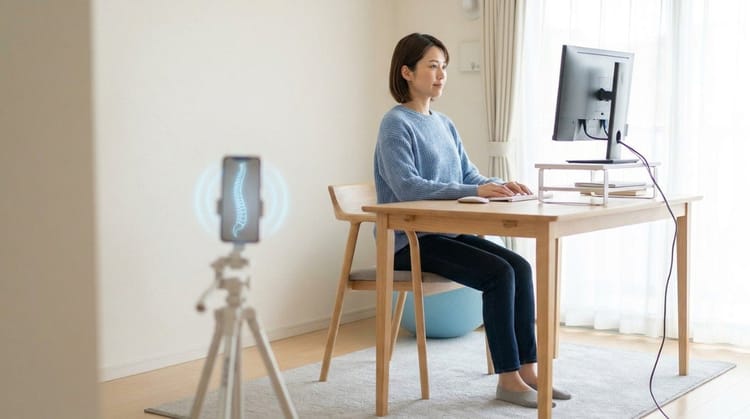
Backed AI uses your phone camera to scan your posture, identify your specific neck and shoulder imbalances, and build a personalized daily routine that adapts as you improve. No more guessing. No more generic plans.
✅ AI posture analysis that pinpoints exactly how far forward your head sits ✅ Personalized exercise programs that target your specific weak points, not someone else's ✅ Smart progress tracking with visual side-profile comparisons every 2 weeks
The result is faster, more visible neck posture correction without the inconsistency that wrecks most home routines.
If you've already tried generic chin tucks and stretches and feel stuck, Download Backed AI and start correcting your posture today. 💙
FAQ
Q1: How long does it take to improve neck posture?
Most people feel tension relief in 1 to 2 weeks. Visible posture improvement typically appears in 4 to 6 weeks of daily 10 to 15-minute practice. Lasting structural change takes 8 to 12 weeks.
Q2: Can you fix neck posture at any age?
Yes. The deep neck flexors and postural muscles remain trainable well into older age. Older adults often see slower but still meaningful changes within 8 to 12 weeks.
Q3: What is the single best exercise for neck posture?
The chin tuck. It directly retrains the deep neck flexors that keep the head stacked over the shoulders. Aim for 10 reps of 5-second holds, 3 times daily.
Q4: Does sleeping position affect neck posture?
Yes, significantly. A pillow that's too high pushes the chin toward the chest all night, reinforcing forward head posture. Choose a pillow that keeps the neck aligned with the rest of the spine.
Q5: Will a posture brace fix neck posture permanently?
No. Braces offer short-term reminders but cannot strengthen the muscles needed for lasting change. Without exercise, posture reverts within days of stopping the brace.