
Stretches for Dowager's Hump You Can Do in Bed: A Gentle Morning & Night Routine That Resets Your Posture

If getting on the floor feels like too much, or your hump is at its stiffest first thing in the morning, the bed is one of the best places to stretch. A few simple lying-down moves can soften the chest, mobilize the upper back, and reset your alignment, all before your feet even touch the floor.
This guide gives you a complete bed-based stretch routine for dowager's hump, a morning version, an evening version, and the modifications that make it safe for every body.
🧠 TL;DR
- Dowager's hump often feels worst first thing in the morning due to overnight static positioning.
- Bed-based stretches gently mobilize the chest, upper back, and neck without leaving the mattress.
- A 5–8 minute routine in bed twice a day (morning + night) is enough to produce visible change.
- Lying-down stretching is ideal for low-mobility days, mornings, or pre-sleep wind-down.
- Use a small rolled towel or thin pillow as your only "equipment."
- Avoid forceful neck movement, deep arching, or anything that causes sharp pain.
- Pair with one supportive pillow and a side or back sleeping position.
Why Stretch in Bed for Dowager's Hump?
Bed-based stretching for dowager's hump is a low-mobility, lying-down routine that uses the mattress as a stable surface to gently open the chest, mobilize the thoracic spine, and reset cervical alignment, especially useful for morning stiffness or evening wind-down.
It works because the position itself takes pressure off the spine. You are not fighting gravity to hold yourself up. Your body can release tension instead of bracing against it. The Backed AI complete neck hump recovery guide covers the full picture; this article goes deep on the bed-based variation.
Why Does a Dowager's Hump Feel Worse in the Morning?
Three things stack overnight:
- Static positioning. The body holds a single shape for 6–8 hours, which stiffens fascia and joints.
- Pillow height. Two stacked pillows create six hours of forward neck flexion.
- Reduced fluid movement. Joints and discs need motion to lubricate; sleep is mostly stillness.
Posture specialists suggest that the first 5 minutes of gentle movement in the morning can dramatically reduce stiffness for the rest of the day. Doing it in bed, before the day's distractions begin, is the highest-compliance window most people have.
💡 Key Insight: The hump is at its stiffest within 30 minutes of waking. That same window is also when stretching produces the biggest immediate relief. Use the timing to your advantage.
How to Set Up Your Bed for Stretching
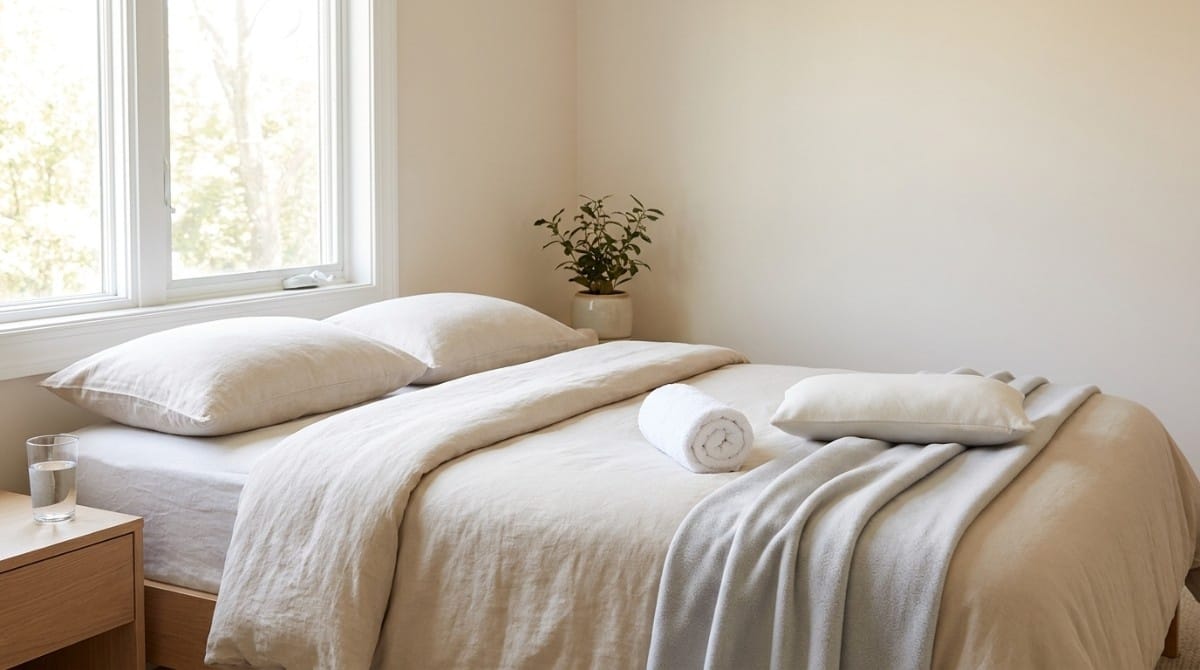
A 30-second checklist before you start:
- ✅ Firm enough mattress (very soft mattresses reduce effectiveness)
- ✅ One supportive pillow for the head, not two stacked
- ✅ A small rolled hand towel or thin pillow for thoracic support
- ✅ Loose comfortable clothing
- ✅ Room to extend arms overhead without hitting walls or headboard
- ❌ No deep arching off the mattress in early weeks
- ❌ No forceful neck rotation
If you have known osteoporosis, recent neck surgery, or any spinal condition, clear the routine with your clinician first.
Best In-Bed Stretches for Dowager's Hump (Quick List) 🛏️
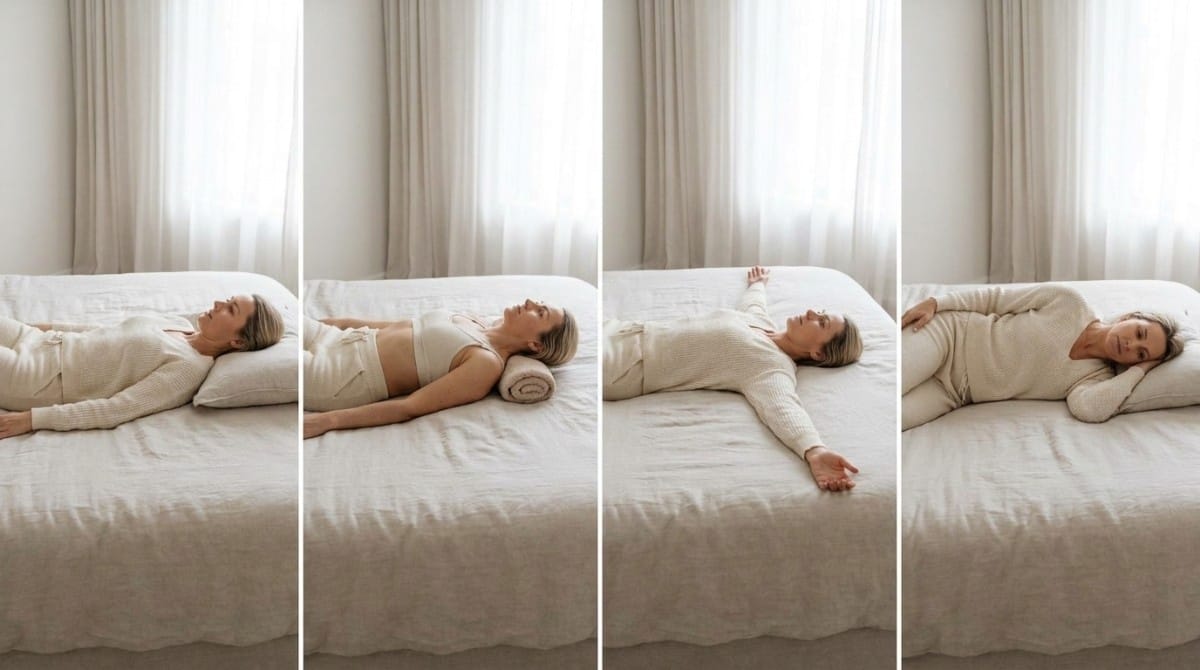
A focused 6-move sequence designed for the mattress:
- Supine chin tucks – Lie on your back; gently slide the chin straight back toward the pillow. Resets cervical alignment.
- Towel-supported thoracic extension – Place a small rolled towel horizontally under the upper back at bra-strap height; arms relaxed.
- Supine T-position chest opener – Arms out to the sides on the mattress; gentle stretch across the front of the chest.
- Side-lying upper trap stretch – Lie on one side; gently let the head drop toward the lower shoulder.
- Knee-hug with deep breathing – Pull both knees gently toward the chest; long slow exhales open the upper back.
- Supine shoulder blade squeeze – Lie flat; gently pull shoulder blades down and together. Reactivates postural muscles.
Total time: about 5–8 minutes. Done twice a day (morning + night), this is enough mobility input to soften the postural drivers of dowager's hump.
The Morning Routine (5 Minutes Before Getting Up)
Use this sequence within the first 30 minutes of waking:
This is the highest-leverage 5 minutes you can spend on your hump. It is also the easiest habit to keep, because you are already in bed.
The Night Routine (5 Minutes Before Sleep)
Slightly slower, more passive, designed to wind down:
The night version is calming. Many users report falling asleep faster after a few weeks of practice.
How To Build Your Daily Routine (Step-by-Step Recovery Framework)
A simple progression that works for almost anyone:
Pair this with the complete daily stretching routine for neck hump on alternating days for the strongest combination, especially once you build tolerance.
Common Bed-Stretch Mistakes That Slow Progress 🚫
- Using two stacked pillows. It cancels out your work.
- Doing it under the duvet. Restricted movement reduces effectiveness.
- Forcing the chin too far back. It is a slide, not a press.
- Skipping the breathing. Long exhales soften tissue. Holding breath tightens it.
- Putting the rolled towel under the lower back. It belongs at bra-strap height, mid-thoracic.
- Doing the night routine on a phone scroll. The whole point is to disconnect.
Why Does Bed Stretching Work So Well for Mobility-Limited Adults?
For people with knee, hip, or balance issues, getting on the floor is a barrier. The mattress eliminates that barrier entirely. Posture specialists often recommend lying-down routines for adults who avoid floor exercises because the position itself reduces fall risk and joint loading. The pattern of dowager's hump combined with rounded shoulders, covered in the rounded shoulders and forward head posture guide, responds well to passive lying-down release because gravity acts as a gentle stretching partner.
What Happens If You Skip the Morning or Evening Routine?
You can still see results, but more slowly. The two-a-day rhythm works because:
- Morning input breaks overnight stiffness.
- Evening input prevents day-built tension from carrying into sleep.
Skipping one side of the routine is fine occasionally. Skipping both for several days lets the pattern reassert itself. The same long-term cycle issue described in how to stop pain coming back through long-term habits applies here, applied to the cervical spine.
When This Approach Doesn't Work
Bed-based stretching is highly effective for postural dowager's hump and morning stiffness. It is not enough on its own when:
- The hump is from a hormonal fat deposit (Cushing's, certain medications)
- Severe osteoporosis has caused vertebral compression
- You have had recent neck or upper back surgery
- The hump appeared rapidly with no postural change
- You experience numbness, sharp pain, or dizziness during stretching
In those cases, see a clinician before continuing. For everyone else, the bed routine is one of the most accessible ways to address dowager's hump.
Research & Expert Insight 🔬
Research in musculoskeletal rehab shows that gentle morning mobility work reduces day-long stiffness and improves cervical alignment scores when practiced consistently. Physiotherapists often recommend lying-down stretching protocols for older adults and people with mobility limitations because the supine position reduces compensatory tension and allows passive release. The pattern across studies is consistent: short, frequent, low-effort sessions outperform infrequent intensive ones.
Lifestyle Habits That Multiply Bed-Stretching Results
A few simple habits that compound your daily routine:
- Use one supportive pillow, not two stacked.
- Sleep on your back or side, not face-down.
- Stretch your chest with a doorway opener once during the day.
- Walk daily, even a short walk after dinner helps the spine.
- Keep your monitor at eye level during work hours.
If you want personalized cueing without guessing what your specific imbalance needs, Backed AI scans your posture using your phone camera and builds a routine tuned to whether your hump is driven more by chest tightness, thoracic stiffness, or weak postural muscles. It also adapts as you progress.
Final Takeaway
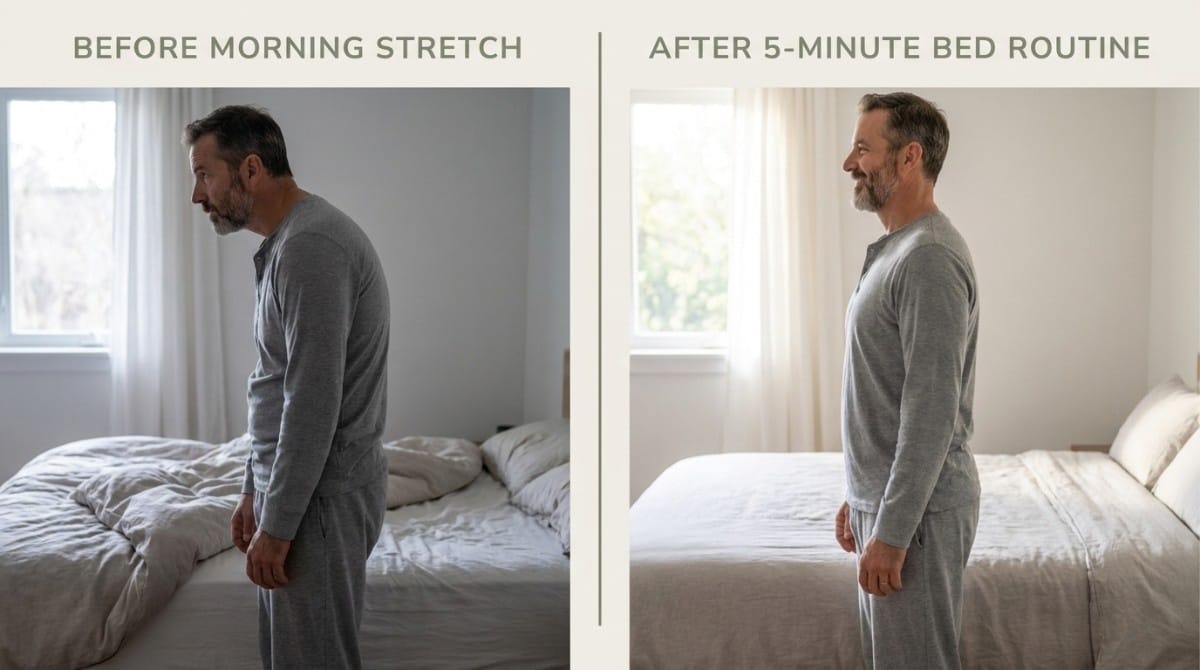
A dowager's hump responds well to gentle, consistent stretching, and the bed is one of the highest-compliance places to do it. Five to eight minutes in the morning, five minutes at night, focused on the chest, thoracic spine, and cervical alignment, addresses the postural drivers of the hump without ever leaving the mattress.
The hump took years to build. The routine to soften it only needs your first and last 8 minutes of the day, in the most comfortable place you already spend a third of your life. That is a fair trade.
Why Most In-Bed Routines Quietly Disappear
Most people start a bed-based routine with good intentions and let it slide within two weeks. The reasons repeat:
- No personalization. A generic in-bed routine doesn't know whether your hump is mostly chest tightness or thoracic stiffness.
- No form feedback. Lying down hides compensation patterns from view.
- No progression. Week 1 stretches stop producing change by week 4.
- No habit anchor. Without a reminder, the routine fades into the background.
A Smarter Way to Stretch in Bed
Backed AI was built for exactly this kind of daily, low-effort, high-frequency posture work. It scans your posture using your phone camera, identifies which drivers of dowager's hump are dominant in your body, and builds a gentle bed-friendly routine you can complete without leaving the mattress.
What you get:
- 📱 Personalized morning and night routines based on your actual posture scan
- 🎯 AI form guidance so each lying-down stretch hits the right tissue
- 📈 Progress tracking that shows visible alignment changes over weeks of consistent practice
It is the lowest-friction way to turn the bed itself into a posture-correction tool.
👉 Download Backed AI and start fixing your dowager's hump in bed today.
FAQ
Q1. Can stretching in bed really help reduce a dowager's hump?
Yes, when the hump is postural. Bed-based stretches gently mobilize the chest, thoracic spine, and cervical alignment, which are the main drivers of the forward curvature. Done daily, they produce visible change in 4–8 weeks.
Q2. What is the best time of day to do bed-based stretches?
Within the first 30 minutes of waking, when stiffness is highest, and the last 5 minutes before sleep, when day-built tension is highest. Both windows produce strong returns.
Q3. Do I need any equipment for in-bed stretching?
No, just a small rolled hand towel or thin pillow for thoracic support. One supportive head pillow is also recommended.
Q4. Are bed stretches safe for older adults with dowager's hump?
For most older adults, yes. The lying-down position reduces fall risk and joint loading. People with osteoporosis, recent surgery, or balance issues should clear the routine with a clinician first.
Q5. How is this different from regular dowager's hump stretches?
Regular routines are usually done seated or standing. Bed-based routines are done lying down, making them more accessible for mornings, evenings, and people with limited mobility, while still hitting the same postural drivers.