
What Is a Spinal Fusion? What to Expect Before, During, and After Surgery
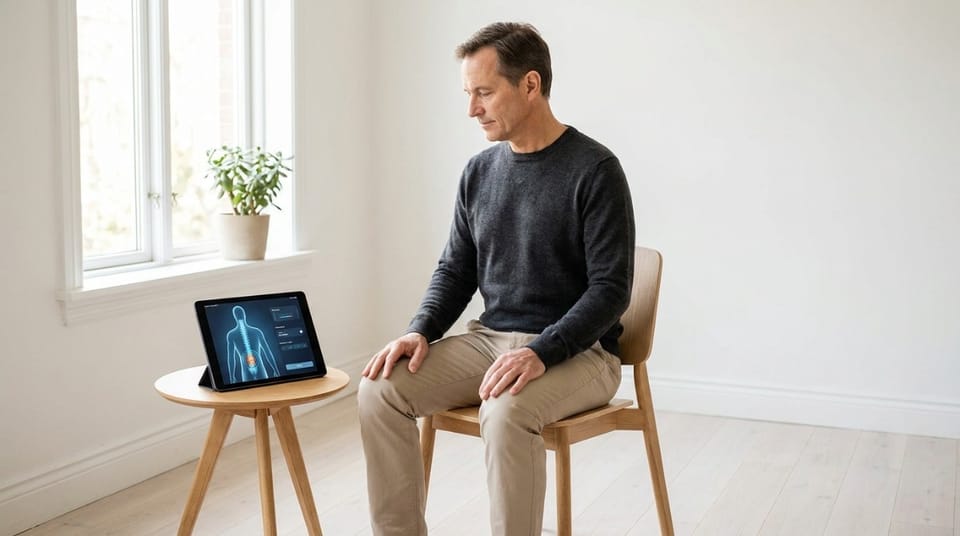
Spinal fusion is one of the most common spine surgeries performed worldwide - but most people scheduled for it have more questions than answers.
Spinal fusion is a surgical procedure that permanently joins two or more vertebrae in the spine, eliminating painful movement between unstable or damaged segments.
Understanding what the surgery actually does - and what recovery genuinely involves - makes a significant difference in how well you prepare and how quickly you rebuild.
⚠️ This article provides general educational information about spinal fusion. It is not a substitute for personalised advice from your surgeon or medical team.
TL;DR
- 🦴 Spinal fusion joins vertebrae together to stop painful, unstable movement
- 🔧 It's used for conditions including herniated discs, scoliosis, spinal stenosis, and fractures
- 🏥 Surgery itself takes 2-6 hours depending on the number of levels fused
- 📅 Full bone fusion takes 3-12 months - recovery is gradual and phased
- 🚶 Walking starts within 24-48 hours; structured exercise begins around week 6
- 💪 Long-term outcomes depend heavily on consistent rehabilitation and core rebuilding
- 📱 Later-stage recovery tools like Backed AI can help rebuild posture and movement habits
What Is a Spinal Fusion?
Your spine is made up of 33 vertebrae stacked on top of one another, separated by discs that act as shock absorbers. When one or more of those segments becomes damaged, unstable, or degenerated, movement at that segment can cause significant pain.
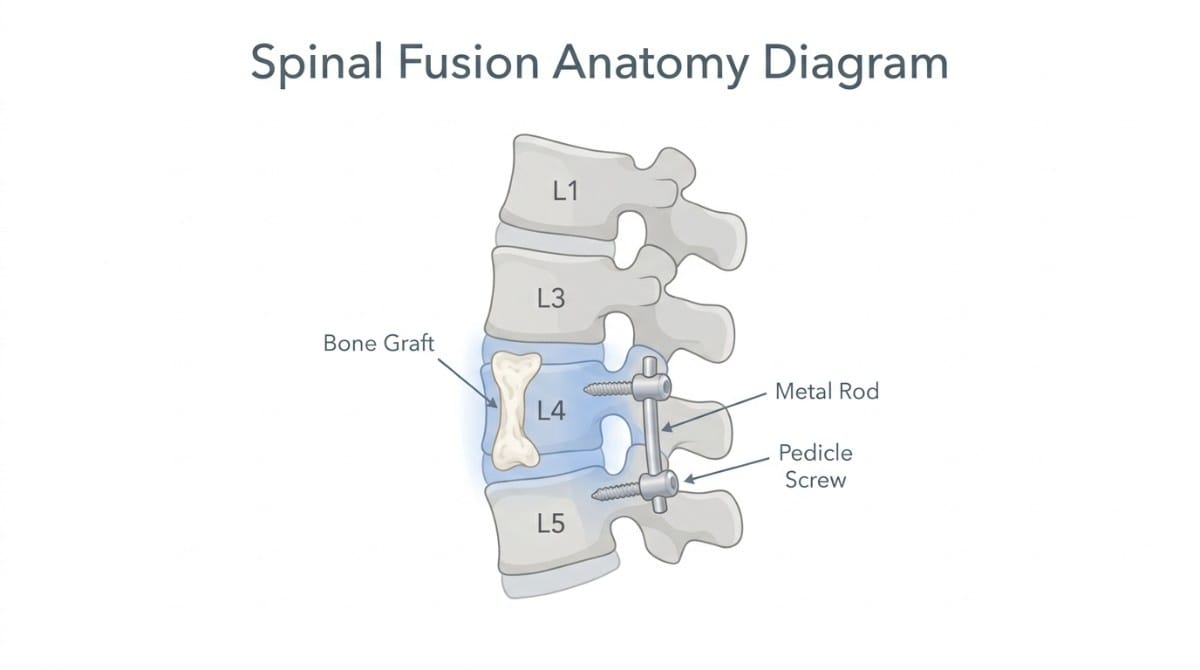
Spinal fusion surgery solves this by permanently connecting those vertebrae together using:
- Bone graft material (from your own body, a donor, or synthetic material)
- Metal hardware - rods, screws, or plates - to hold the segments in place while the bone fuses
- Sometimes, a cage or spacer inserted between the vertebrae to restore disc height
Once fused, those vertebrae become a single, solid unit. The segment no longer moves - which eliminates the pain caused by that specific movement.
Why Is Spinal Fusion Performed?
Surgeons recommend spinal fusion when conservative treatments - physiotherapy, injections, medication - have not resolved the underlying problem.
Common conditions treated with spinal fusion:
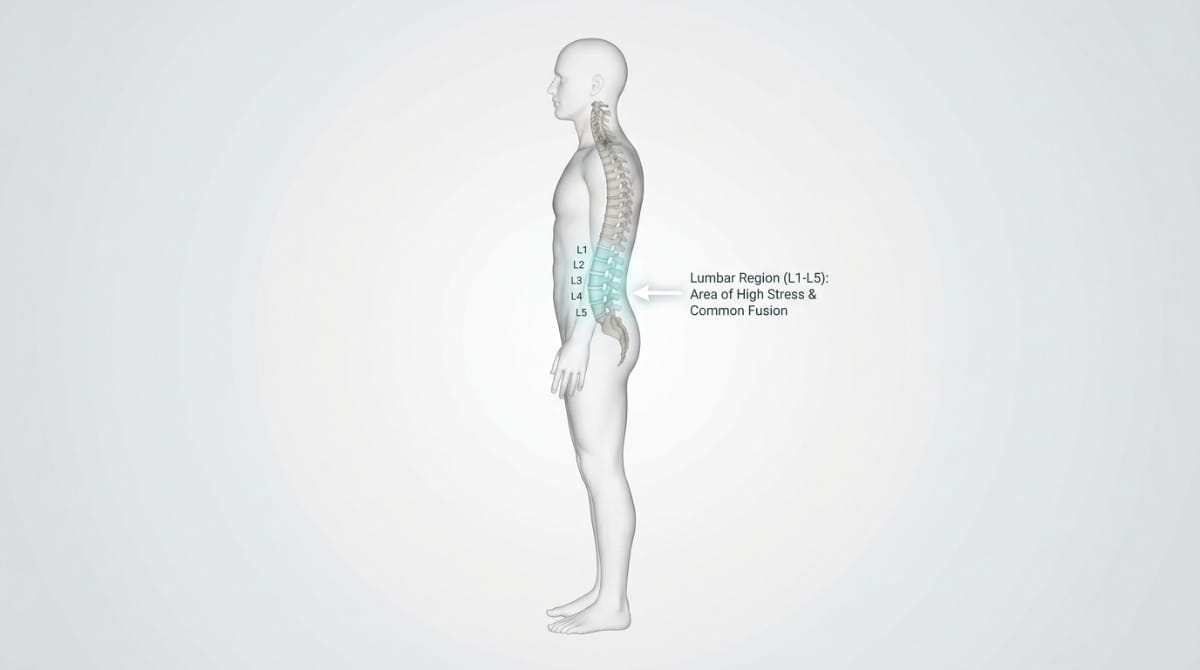
The most common type is a lumbar spinal fusion - involving the lower back (L1-L5 region). This is the area under the highest mechanical load in the body and the most frequent source of chronic back pain.
If you've been experiencing recurring lower back pain leading up to a fusion recommendation, understanding why lower back pain keeps coming back can help you understand the pattern your surgeon is trying to interrupt.
What Happens During Spinal Fusion Surgery?
Surgery typically takes 2-6 hours, depending on how many levels are being fused and the surgical approach used.
The three main surgical approaches:
1. Posterior approach - Surgeon enters from the back. The most common approach for lumbar fusions.
2. Anterior approach - Surgeon enters from the front (abdomen). Used when accessing the front of the disc space is necessary.
3. Lateral approach - Surgeon enters from the side. Often used for minimally invasive fusions.
After positioning, the surgeon:
- Removes the damaged disc or compressing tissue
- Places bone graft material in the disc space or along the vertebrae
- Inserts rods and screws to hold the segments stable
- Closes the incision in layers
You will be under general anaesthesia. Most people spend 2-4 days in hospital after surgery.
What Happens Immediately After Surgery?
The first 24-72 hours focus entirely on pain management and early movement.
What to expect:
- Significant soreness at the incision site and surrounding muscles
- Some leg pain or numbness - nerve irritation from the surgery is common and usually temporary
- A catheter may be in place initially
- You will be encouraged to sit up and stand within hours of waking
Physiotherapists often recommend beginning short, supervised walks within 24-48 hours. This is not about fitness - it's about circulation, preventing blood clots, and beginning the neurological rebuilding process.
💡 Key Insight: The muscles surrounding your spine are directly disrupted during surgery - even in minimally invasive procedures. They do not automatically recover. Deliberate, progressive rehabilitation is what rebuilds the support structure your fused spine depends on.
How Long Does Spinal Fusion Recovery Take?
This is the question most patients ask first - and the honest answer is that it depends on several factors.
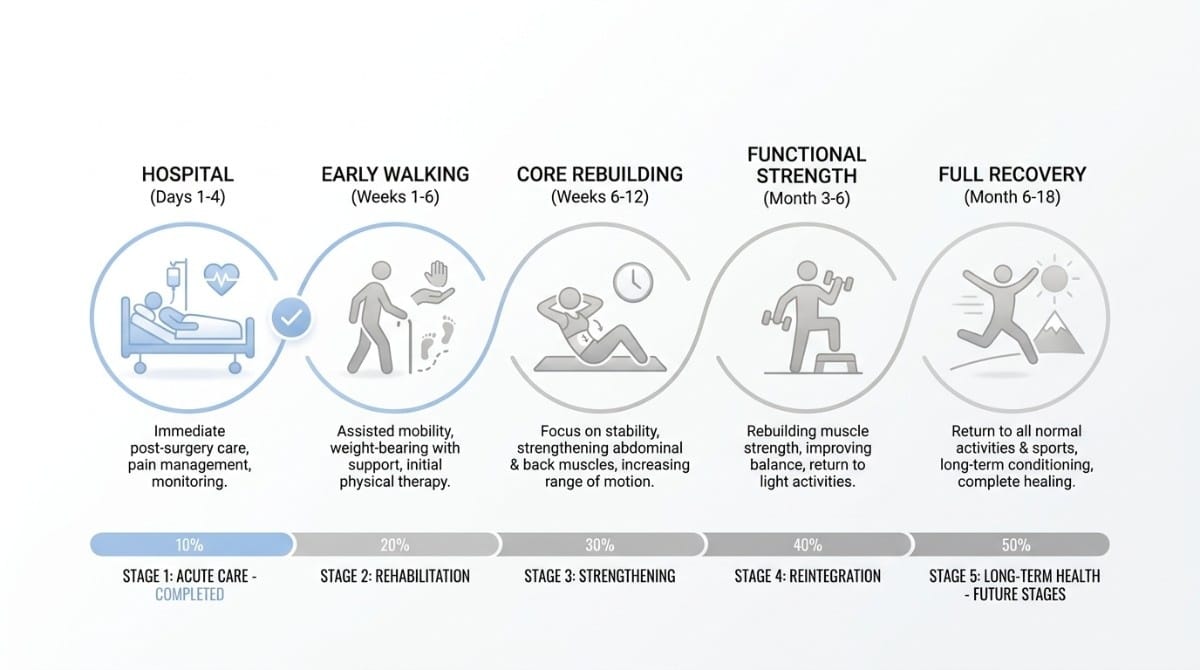
General recovery timeline:
The bone itself takes 3-12 months to fully fuse. During this window, the hardware (rods and screws) holds the segments in position while the bone grows.
This is why exercise timing is critical. Moving too aggressively too soon can interfere with the fusion process. Moving too little leads to muscle wasting, poor posture, and adjacent segment problems.
Why Does Recovery Take So Long?
Bone growth is a biological process - it cannot be rushed with willpower or extra exercise.
The fusion timeline is influenced by:
- Age - bone healing slows with age
- Smoking - significantly impairs bone fusion and is a contraindication for many surgeons
- Nutrition - calcium, vitamin D, and protein directly affect healing rate
- Number of levels fused - a single-level fusion heals faster than a three-level fusion
- Surgical approach - minimally invasive procedures generally mean faster soft tissue recovery
- Pre-surgical fitness - stronger muscles before surgery typically translate to better post-surgical outcomes
Posture specialists suggest that patients who maintain light, consistent movement throughout the healing period - rather than alternating between inactivity and overexertion - report better functional outcomes at the 12-month mark.
What Happens If You Skip Rehabilitation?
Skipping or rushing post-fusion rehab is one of the most common reasons patients experience ongoing pain after a successful surgery.
Without rehabilitation:
- The muscles surrounding the fused segment remain weak and atrophied
- Load transfers incorrectly to adjacent spinal segments
- This causes adjacent segment disease - degeneration of the vertebrae above or below the fusion
- Posture deteriorates, increasing mechanical strain across the entire spine
- Pain returns - often worse than before surgery
The fusion itself may be structurally successful while the patient remains in daily pain. This is almost always a rehabilitation failure, not a surgical one.
If you're already post-fusion and rebuilding, this phased guide to exercises after back fusion walks through exactly what to do at each stage of recovery.
How to Prepare Before Your Fusion Surgery
What you do before surgery directly affects how you recover.
Pre-surgery preparation checklist:
- Build core strength now - even moderate improvements in deep core stability before surgery lead to measurably faster post-surgical recovery
- Stop smoking - if you smoke, this is the single most impactful thing you can do. Nicotine impairs bone fusion directly
- Improve nutrition - increase protein, calcium, and vitamin D intake in the weeks before surgery
- Reduce excess body weight where possible - excess load on the spine slows healing and increases surgical risk
- Arrange your home - set up a recovery space on a single floor, remove trip hazards, raise your bed or chair height to reduce the need to bend deeply
- Mental preparation - research shows that patients with a clear recovery plan and realistic expectations have significantly better outcomes
Understanding your posture patterns before surgery also matters. Problems lik tight hip flexors contributing to lower back strain or weak glutes are often present before fusion and will need to be addressed during rehabilitation.
When This Approach Doesn't Work
Spinal fusion is not appropriate for all back pain. Surgeons typically recommend it only after extensive conservative treatment has failed.
It may not be the right solution if:
- The pain source has not been clearly identified through imaging and clinical assessment
- Psychological factors - including chronic stress, catastrophising, or depression - are a primary driver of pain experience (these require separate treatment)
- The patient is not willing or able to commit to post-surgical rehabilitation
- Smoking has not been stopped (most surgeons will not proceed)
- The patient has unrealistic expectations - fusion eliminates instability pain, but it does not restore a youthful spine
A second surgical opinion is always reasonable before proceeding with spinal fusion.
Research & Expert Insight
Research in musculoskeletal rehabilitation consistently shows that the long-term outcomes of spinal fusion surgery are closely tied to the quality of post-surgical rehabilitation - not just surgical technique.
Studies on lumbar fusion outcomes indicate that patients who complete a structured, phased rehabilitation programme report significantly higher satisfaction scores and functional outcomes at 12 and 24 months compared to those who had surgery alone.
Physiotherapists often recommend beginning a pre-habilitation programme 4-8 weeks before scheduled fusion to maximise recovery speed. This typically includes core activation exercises, breathing work, and hip mobility - all of which remain relevant throughout post-surgical recovery.
For desk workers recovering from fusion, addressing the sitting posture and lumbar support habits that may have contributed to the original degeneration is equally important. This guide to lower back pain for desk workers is a useful companion resource.
Step-by-Step Pre-Surgery Preparation Framework
6 weeks before surgery: Begin core activation exercises (with physiotherapist guidance). Address nutrition deficiencies.
4 weeks before: Stop smoking completely. Arrange home recovery setup. Confirm post-surgery support (person to assist for 2-4 weeks).
2 weeks before: Gentle daily walks. Reduce inflammatory foods. Increase protein and hydration.
1 week before: Rest, sleep optimisation, final logistical preparation.
Day of surgery: Follow fasting instructions exactly. Arrive calm and prepared.
Within 24 hours post-surgery: Begin short supervised walks as soon as medically cleared.
Final Takeaway
Spinal fusion is a significant but common surgery with well-established outcomes - when rehabilitation is taken seriously.
The fusion itself is only half of the equation. The other half is the deliberate, consistent rebuilding of the muscles, movement patterns, and postural habits that protect your spine for the long term.
Understanding the procedure, preparing properly, and committing to a phased recovery plan is what separates a successful outcome from a frustrating one.
Why Most People Struggle After Spinal Fusion
Surgery fixes the structural problem. It does not fix the habits, posture patterns, or muscle weaknesses that contributed to it - and in many cases, made it worse.
Most patients leave hospital with a discharge sheet and a return appointment. Between those two points, they're largely on their own.
Generic exercise videos don't account for post-surgical restrictions. One-size-fits-all rehab programs don't adapt as you progress. And without feedback, most people either do too much too soon - or stop exercising entirely.
Why Most Exercise Plans Fail
- No personalisation - your fusion level, fitness baseline, and pain patterns are unique
- No progression logic - generic programs don't adapt as you recover
- No form feedback - incorrect movement during early recovery can stress the fusion site
- No consistency mechanism - motivation fades during the long middle phase of recovery
A Smarter Way to Rebuild 📱
This is where Backed AI fits into your recovery journey.
Backed AI is an AI-powered posture correction and recovery app that uses your phone's camera to assess your posture and deliver personalised exercise routines - not a template.
- 📊 AI posture scanning: Identifies compensatory patterns and imbalances that develop during post-fusion recovery
- 🎯 Personalised programming: Routines tailored to your current condition, progressing as you improve
- 🔄 Daily habit reminders: Keeps you consistent during the hardest phase - months 3 through 6 - when commitment typically fades
Backed AI is not a replacement for your surgical team. It's the daily accountability layer that most post-fusion patients are missing.
Download Backed AI and start correcting your posture today.
FAQ
Q1: What is a spinal fusion and what does it do?
Spinal fusion is a surgical procedure that permanently joins two or more vertebrae together, eliminating painful movement between unstable or damaged spinal segments. It uses bone graft material and metal hardware to create a solid, stable union between the targeted vertebrae.
Q2: How long does it take to recover from spinal fusion surgery?
Basic bone fusion takes 3-12 months. Full functional recovery - including strength, mobility, and return to normal daily activity - typically takes 6-18 months. Recovery time depends on age, the number of levels fused, pre-surgical fitness, and the quality of post-surgical rehabilitation.
Q3: What conditions are treated with spinal fusion?
Spinal fusion is used to treat degenerative disc disease, spondylolisthesis, spinal stenosis, severe herniated discs, spinal fractures, scoliosis, and chronic spinal instability - typically after conservative treatments have failed to resolve the pain.
Q4: What should I do before spinal fusion surgery to improve recovery?
Stop smoking immediately, build core strength with physiotherapy guidance, optimise nutrition (protein, calcium, vitamin D), arrange your home for a single-floor recovery, and develop a clear rehabilitation plan. Pre-surgical fitness is one of the strongest predictors of post-surgical outcome.
Q5: Can I use a posture or exercise app during spinal fusion recovery?
From approximately month 3 onwards, AI posture apps like Backed AI can support recovery by identifying postural compensations and providing personalised exercise programming. They should always be used alongside - not instead of - guidance from your surgeon and physiotherapy team.