AI Posture Apps vs Physiotherapy vs Generic Exercises for Lower Back Pain: What's Actually Worth It?
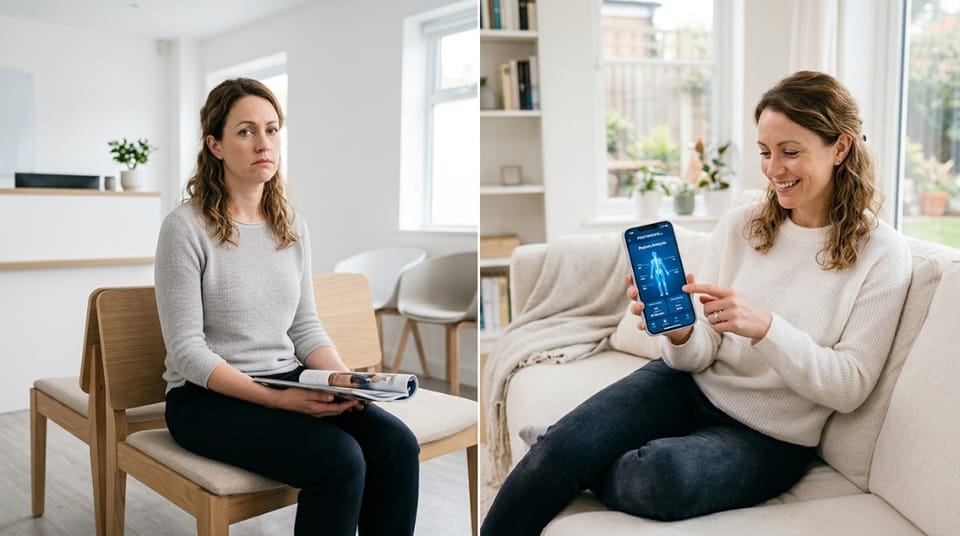
If your lower back hurts, you have three main recovery paths: see a physiotherapist, follow generic exercises from YouTube, or use an AI-powered posture and rehab app. Each has real strengths - and real limitations. This article breaks down exactly what each option delivers, what it costs, and which approach makes the most sense depending on your situation.
The best treatment for lower back pain depends on severity, consistency, and personalisation - physiotherapy offers expert diagnosis, generic exercises offer free access, and AI posture apps offer personalised, consistent guidance at a fraction of the cost.
TL;DR
- Physiotherapy is the gold standard for complex or severe lower back pain - but it's expensive and relies on session frequency
- Generic exercises (YouTube, blogs) are free and accessible but one-size-fits-all with no feedback mechanism
- AI posture apps like Backed AI offer personalised programmes, posture scanning, and daily habit support at low cost
- For most mechanical lower back pain, an AI app provides the consistency and personalisation that generic routines can't match
- Physio remains essential for acute injuries, nerve involvement, or post-surgical recovery
- The best long-term outcomes come from understanding your specific posture pattern - not following a generic plan
What Are Your Options for Lower Back Pain Relief?
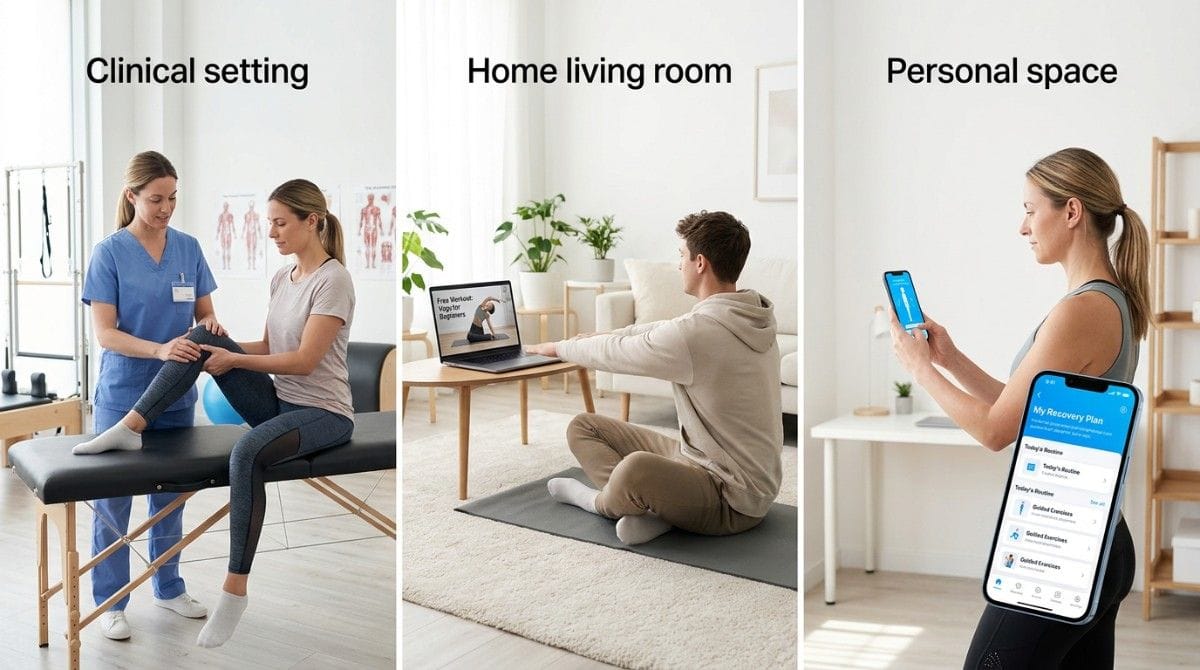
Most people with lower back pain cycle through the same three options - often in frustration:
- Physiotherapy - professional, clinical, personalised
- Generic exercises - YouTube videos, blog routines, free apps
- AI posture and rehab apps - personalised, tech-enabled, consistent
Each serves a different need. Understanding the difference helps you choose wisely - and stop wasting time on the wrong approach.
Option 1: Physiotherapy
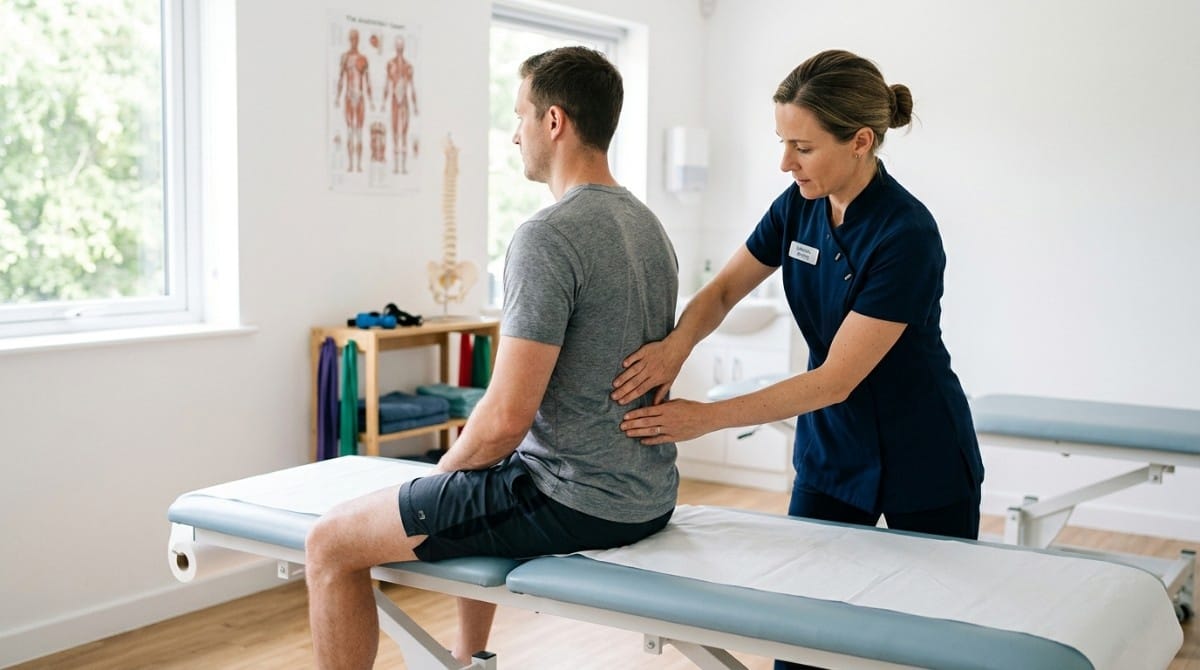
Physiotherapy is hands-on, clinically guided rehabilitation from a licensed professional. A physiotherapist assesses your movement, diagnoses the specific cause of your pain, and builds a treatment plan tailored to your body.
What It Does Well
- Accurate diagnosis - a trained clinician can identify the root cause of your pain, not just the symptom location
- Manual therapy - joint mobilisation, soft tissue release, and hands-on techniques that reduce pain quickly
- Corrective exercise prescription - exercises matched precisely to your imbalances and movement patterns
- Real-time feedback - a professional watches your form and corrects it on the spot
- Progress adjustment - your programme evolves as your body responds
Where It Falls Short
- Cost - a single session typically costs £60-120 (UK) or $80-150+ (US). A standard lower back pain programme runs 6-12 sessions
- Access - waiting lists can be weeks long, especially on public health systems
- Frequency gap - most people see a physio once a week or less. The 6 days between sessions are unsupported
- Consistency depends on you - between sessions, compliance with home exercises is notoriously low (studies suggest fewer than 40% of patients complete their prescribed home programme consistently)
💡 Key Insight: Physiotherapy is most valuable at the assessment and diagnosis stage. The exercises themselves - once prescribed - require consistency that most weekly clinic models can't enforce.
Option 2: Generic Exercises (YouTube, Blogs, Free Apps)
Free lower back pain exercises are everywhere. YouTube has millions of videos. Health blogs publish stretching routines daily. Free apps offer pre-built programmes you can download in seconds.
What It Does Well
- Completely free - zero cost barrier to entry
- Immediately accessible - available 24/7, no waiting
- Wide variety - content exists for almost every condition
- Good for awareness - helps people understand what types of exercises exist
Where It Falls Short
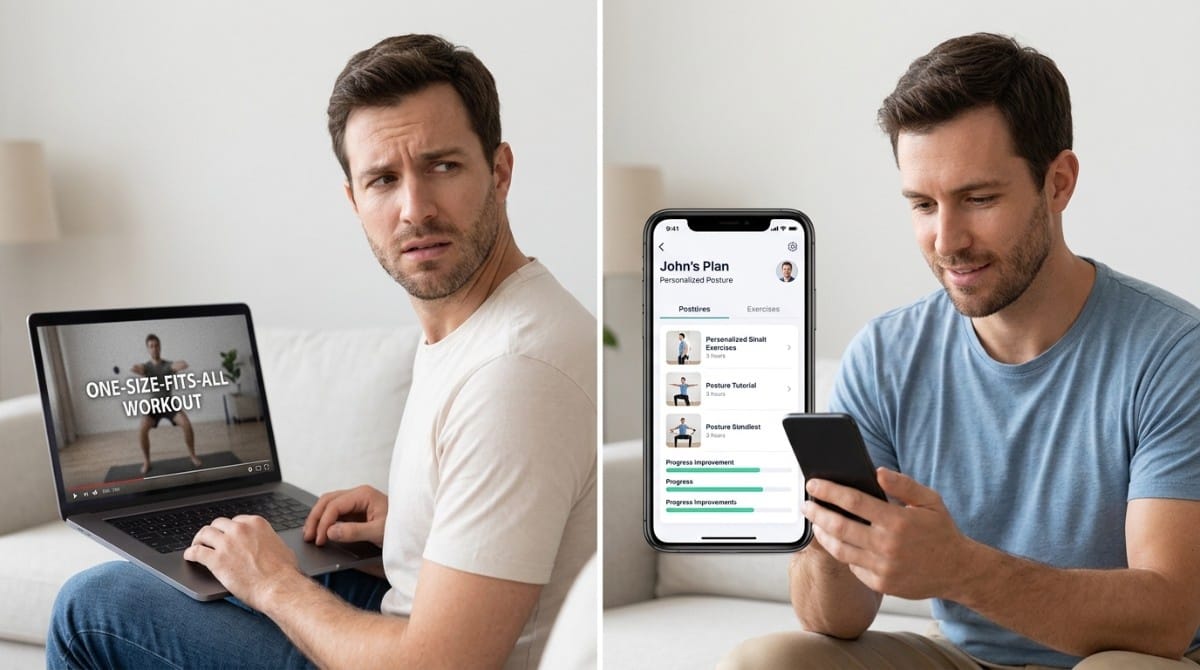
- No personalisation - the same routine is presented to everyone, regardless of posture type, pain pattern, or fitness level
- No feedback on form - you could be performing every exercise incorrectly with no way to know
- No progression - most free content doesn't adapt as your body improves
- No consistency mechanism - no reminders, no tracking, no accountability
- Wrong exercise risk - without knowing your specific cause, a generic routine may stretch a muscle that needs strengthening, or vice versa
Physiotherapists often note that patients who self-treat with generic exercises frequently plateau or worsen - not because exercise is wrong, but because the wrong exercise was chosen for the wrong problem.
As covered in our guide to why your back pain keeps coming back, the cycle of trying generic fixes and not resolving the root cause is one of the most common drivers of chronic lower back pain.
Option 3: AI Posture Apps (Like Backed AI)
AI-powered posture and rehab apps represent a newer category - and a genuinely different kind of tool. Rather than delivering static content, they assess your individual posture and build a personalised recovery programme around it.
What It Does Well
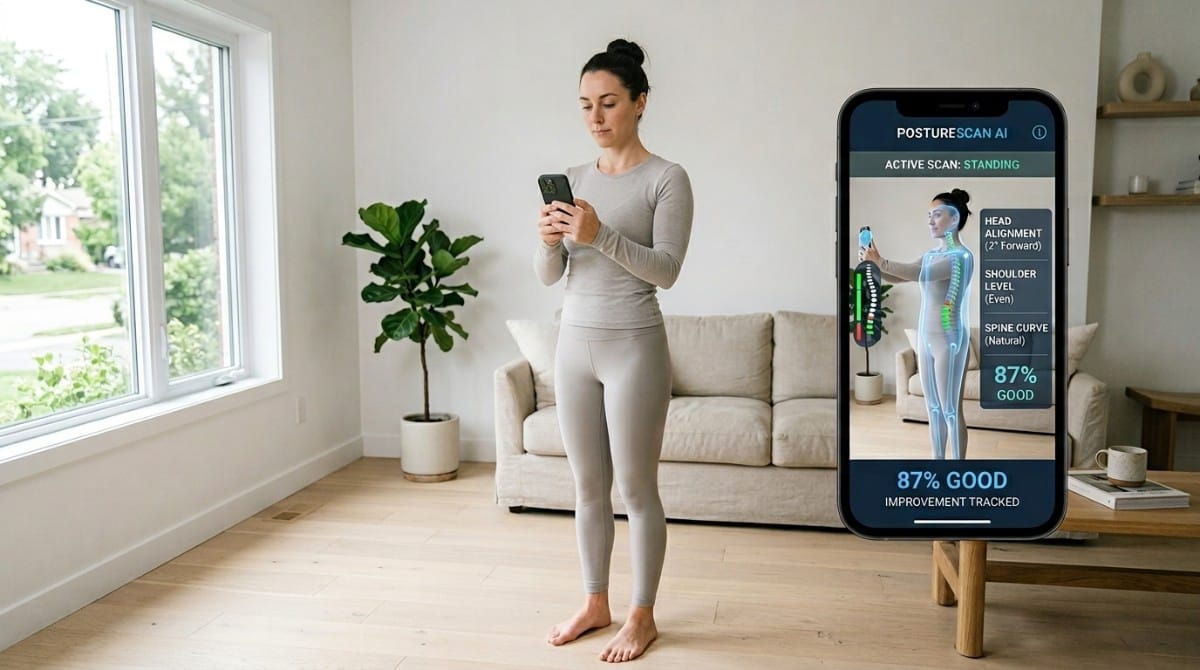
- Personalised from the start - AI posture scanning identifies your specific alignment issues and builds a programme around your body, not a template
- Consistent daily guidance - structured daily sessions with reminders mean you actually do the work between clinic visits (or instead of them, for non-complex cases)
- Progress tracking - you can see measurable changes over time, which reinforces motivation
- Cost-effective - a fraction of the cost of regular physiotherapy sessions
- Available anywhere - no travel, no waiting rooms, no scheduling
- Adapts as you improve - AI-driven programmes evolve as your posture and strength improve
Where It Falls Short
- Not a replacement for clinical diagnosis in severe cases - if you have nerve involvement, disc herniation, or post-surgical recovery needs, professional clinical assessment comes first
- Requires self-motivation - while reminders help, the app can't physically guide your hand
- Not yet a substitute for manual therapy - hands-on joint mobilisation and soft tissue release still require a professional
Side-by-Side Comparison
What Does the Research Say?
- Research in musculoskeletal rehab shows that exercise-based rehabilitation - when consistent and personalised - produces equivalent outcomes to hands-on physiotherapy for non-specific mechanical lower back pain
- Physiotherapists often recommend home exercise programmes between sessions, but compliance without support systems averages below 40%
- A 2023 review in Physical Therapy Journal found that digital health tools significantly improved exercise adherence for lower back pain patients compared to paper-based or unsupported home programmes
- Posture specialists suggest that for the majority of mechanical lower back pain cases, the most important factor is not the type of exercise but the consistency with which it is performed
Which Option Is Right for You?
The answer depends on three things: the severity of your pain, the complexity of your case, and your access to resources.
Choose physiotherapy if:
- Your pain is severe (7/10 or above)
- You have radiating leg pain, numbness, or tingling
- Your pain began after a fall or trauma
- You have been diagnosed with a disc herniation or structural issue
- You are recovering from back surgery
Use generic exercises if:
- You want to understand what types of exercises exist
- You are in minimal pain and exploring options
- You're using them as a starting point before committing to a programme
Use an AI posture app like Backed AI if:
- Your pain is mechanical and moderate (below 6/10)
- You want a personalised plan without the cost of regular physio
- You've tried generic routines and they haven't worked
- You want daily structure, reminders, and progress tracking
- You want to address the postural root cause - not just the pain
For a full breakdown of how postural patterns drive lower lumbar pain, see our guide to lower lumbar pain causes and triggers.
Why Most Lower Back Pain Recovery Attempts Fail
Regardless of which option people choose, the failure mode is almost always the same: starting strong and stopping early.
- Generic exercises plateau within 2 weeks because nothing adapts
- Physio exercises get abandoned between sessions because there's no accountability
- Self-guided routines fail because people don't know if they're doing it right
Posture specialists suggest that the single biggest predictor of lower back pain recovery is not the quality of the first exercise performed - it's whether the person is still doing the programme in week 4.
This is where AI-powered consistency tools change the equation. Daily habit reminders, progress tracking, and an adapting programme make week 4 far more likely than any static approach.
Our detailed article on lower lumbar pain stretches and phased rehab walks through exactly what a structured, progressive lower back programme looks like in practice.
When This Comparison Doesn't Apply
This article is written for people with mechanical lower back pain - by far the most common type.
The comparison changes significantly if:
- You have been diagnosed with spinal stenosis, spondylolisthesis, or inflammatory conditions like ankylosing spondylitis
- You are post-surgical
- You have significant neurological symptoms (weakness, loss of bladder or bowel control)
In these cases, physiotherapy and specialist medical care are not optional - they are essential. No app replaces clinical oversight for complex structural conditions.
Step-by-Step: How to Start With an AI App
If you've decided an AI posture app is the right starting point, here's how to get the most from it.
Step 1 - Complete the posture scan Allow the AI to assess your current posture and identify your specific alignment pattern. This is the foundation of your personalised programme.
Step 2 - Follow the prescribed programme for at least 2 weeks Resist the urge to add random exercises from other sources. The programme is sequenced for a reason.
Step 3 - Enable daily reminders Consistency is everything. Let the app prompt you rather than relying on willpower alone.
Step 4 - Track your progress weekly Note changes in pain levels, morning stiffness, and range of motion. Progress is often gradual but measurable.
Step 5 - Pair with a physio consultation if pain doesn't improve If pain is unchanged or worsening after 3-4 weeks of consistent effort, a professional assessment is the next step - not a different YouTube video.
Research & Expert Insight
- A 2022 meta-analysis in BMC Musculoskeletal Disorders found that digitally-supported exercise programmes produced significantly better adherence and pain reduction outcomes versus unsupported home exercise for lower back pain patients
- Physiotherapists often recommend their patients use digital support tools between sessions to maintain consistency - the two approaches are complementary, not competing
- Posture specialists suggest that identifying and correcting postural drivers (anterior pelvic tilt, flat back, muscle imbalances) produces more durable results than symptom-focused treatment alone
- Research consistently shows that patient education and self-management tools - including apps - improve long-term outcomes for mechanical lower back pain when compared to passive treatment alone
Final Takeaway
Physiotherapy, generic exercises, and AI posture apps all have a role to play in lower back pain recovery. They are not competing options - they exist on a spectrum of complexity and severity.
For most people with mechanical lower back pain, an AI posture app provides the personalisation of physiotherapy and the accessibility of free exercises - at a cost and consistency level neither alternative can match.
The question isn't which option sounds best. It's which option you'll actually stick with long enough to see results.
Why Most Exercise Plans Fail
The problem with lower back pain recovery isn't effort. Most people try hard. The problem is structure.
- Generic routines don't know your posture pattern
- Physio exercises get abandoned between appointments
- Willpower-based habits collapse within days when life gets busy
None of these failures are personal. They're structural. The system isn't built for consistency - and consistency is everything.
A Smarter Way to Recover
Backed AI is built around the insight that lower back pain is almost always postural and mechanical - and that the right personalised programme, followed consistently, produces real results.
Here's what makes it different:
- 📱 AI posture scan - identifies your specific lumbar alignment pattern before prescribing a single exercise
- 🎯 Personalised daily programme - not a generic routine, but exercises matched to your posture type and pain pattern
- 📈 Habit tracking and reminders - the consistency layer that generic routines and weekly physio appointments both miss
Whether you're managing recurring lower back pain, trying to correct years of desk-worker posture damage, or looking for a structured alternative to expensive physiotherapy, Backed AI gives you a programme that evolves with you.
Download Backed AI and start correcting your posture today.
FAQ
Q1: Is an AI posture app as good as physiotherapy for lower back pain?
For mechanical lower back pain (the most common type), AI posture apps can match or exceed physiotherapy outcomes by offering personalisation, daily consistency, and progress tracking. For complex or severe cases involving nerve damage, disc herniation, or post-surgical recovery, professional physiotherapy is essential.
Q2: Why do generic lower back exercises stop working?
Generic exercises are not personalised to your posture pattern or movement imbalances. They also don't adapt as your body changes. Without progression and personalisation, most people plateau or experience return of pain within weeks.
Q3: How much does physiotherapy cost for lower back pain?
A single physiotherapy session typically costs £60-120 in the UK or $80-150+ in the US. A standard course of treatment for lower back pain usually involves 6-12 sessions, making the total cost significant for many people.
Q4: Can I use an AI posture app alongside physiotherapy?
Yes - and many physiotherapists actively encourage it. AI apps can reinforce the home exercise component of a physio programme, improving the consistency that most patients struggle with between clinical sessions.
Q5: How quickly does an AI posture app improve lower back pain?
Most users report reduced stiffness and improved daily comfort within 2-3 weeks of consistent use. Meaningful postural correction and pain reduction typically emerge over 4-8 weeks, depending on the severity and duration of the original problem.