Best Exercises for Pain Between the Shoulder Blades

If your upper back aches between the shoulder blades, the fix is rarely more stretching. It is a short routine that opens the tight front of your body, frees the stiff mid-back, and strengthens the muscles that hold your shoulder blades in place. 💪
The best exercises for pain between the shoulder blades pair upper-back mobility with rhomboid and mid-trapezius strengthening, because the muscles between your shoulder blades are usually weak and overstretched, not tight.
TL;DR
- Pain between the shoulder blades is mostly a posture and strength problem, not a stretching problem. ✅
- Open the chest and upper traps first, then mobilize, then strengthen.
- The highest-value moves are wall angels, scapular rows, and prone Y-T-W raises.
- A few minutes daily beats one long weekly session. ⏱️
- Most people feel looser in days and stronger in 3 to 6 weeks.
- Stop and get checked for chest pain, numbness, or pain after an injury. 🚨
If you have not yet pinned down what's actually causing your pain between the shoulder blades, start there, then come back to train it with the routine below.
Why Do Exercises Help Pain Between the Shoulder Blades?
The muscles between your shoulder blades (rhomboids and middle trapezius) are meant to hold your shoulder blades back and down. Sitting and screen time stretch them out and lock the chest tight. The area gets sore from working all day in a lengthened, weak position.
Exercise reverses that. Mobility restores movement, and strengthening lets those muscles do their job again so the ache stops returning. This is the same logic behind fixing rounded shoulders and forward head posture, the root pattern behind most upper-back tension.

Best Exercises for Pain Between the Shoulder Blades (Quick List)
Do them in this order. Quality over speed. 🧘
- Doorway chest stretch. Forearms on the frame, step through gently. Opens the tight chest that pulls your shoulders forward. Hold 30 seconds, 2 rounds.
- Upper-trap stretch. Ease your ear toward your shoulder to release the neck-to-shoulder tension. 20 seconds each side.
- Cat-cow. Slow spinal waves to wake up a stiff mid-back. 8 to 10 reps.
- Thoracic extension over a chair. Drape your upper back over a chair edge and breathe. Restores the extension sitting takes away. 5 slow breaths.
- Wall angels. Slide arms up and down a wall, keeping contact. The single best reset for upper-back movement. 8 to 10 reps. Full how-to in the wall angels guide.
- Scapular squeezes. Draw shoulder blades together, hold 5 seconds. Switches on the rhomboids. 10 reps.
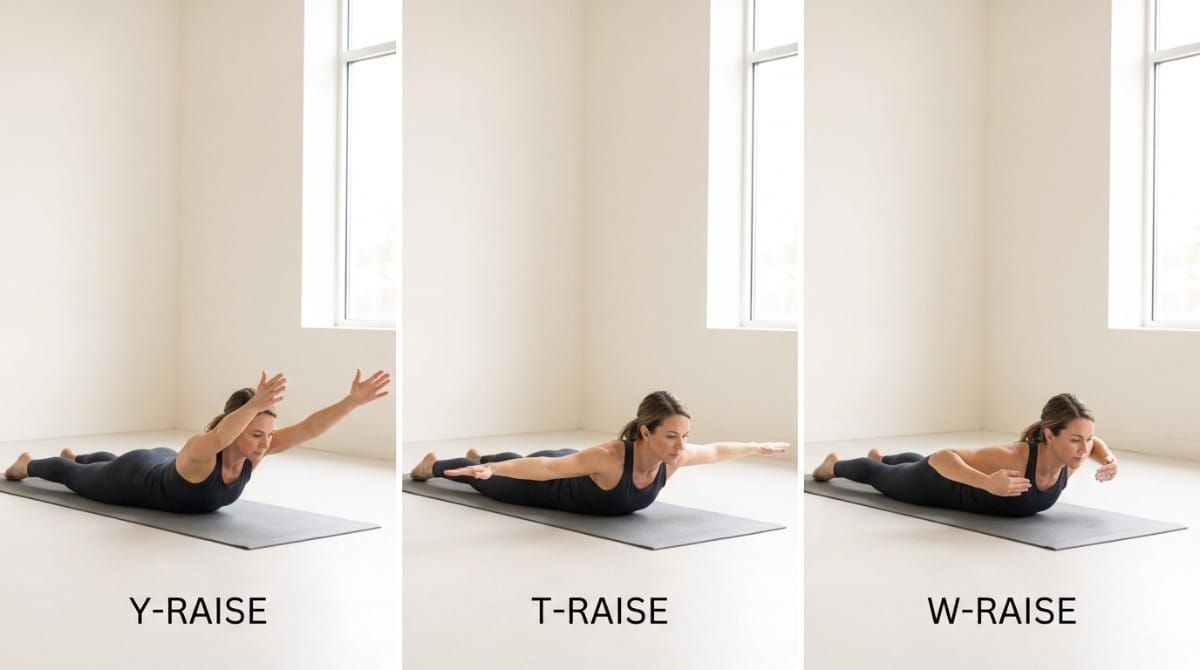
- Prone Y-T-W raises. Lie face down, lift arms in a Y, then T, then W shape. Builds the mid and lower traps. 6 to 8 of each.
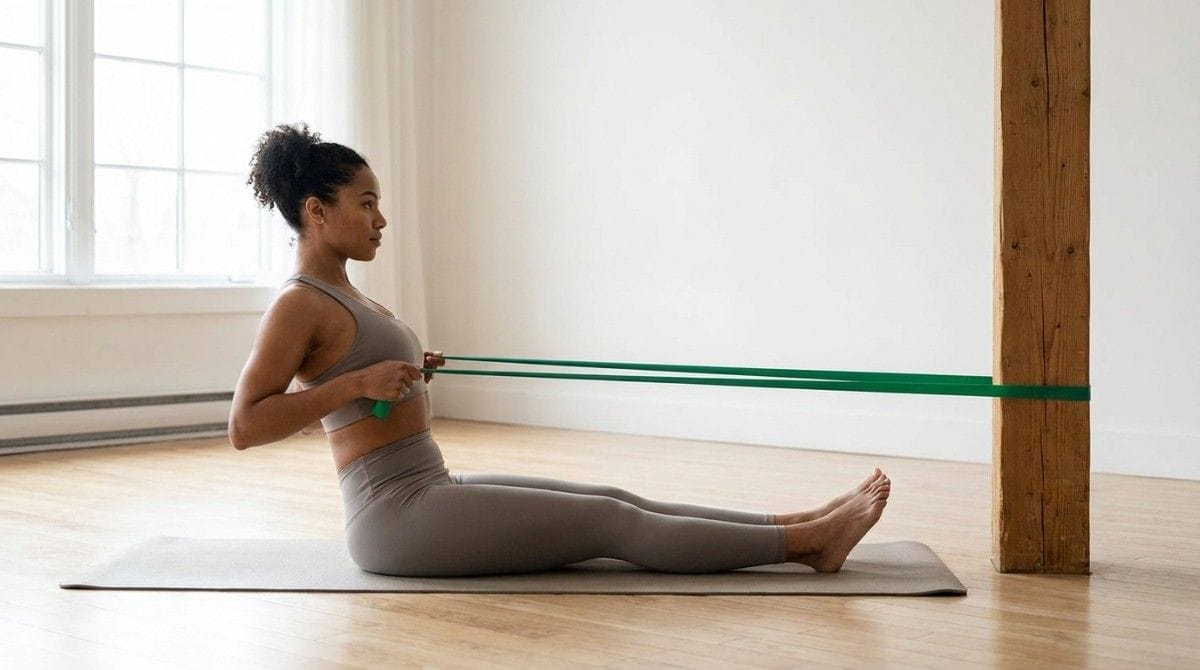
- Band rows. Pull a band to your ribs, squeezing the blades back. The core strengthener for this area. 12 to 15 reps.
- Chin tucks. Glide the head back over the shoulders to cut the forward-head load that refers pain down. 10 reps.
For the chest-opening portion, this routine on how to open your chest and improve posture pairs perfectly with the strengthening work.
💡 Not sure which of these your body actually needs first? Backed AI scans your posture and orders the routine for your exact pattern, so you stop guessing.
How Often Should You Do These Exercises?
Consistency beats intensity. Use this simple structure.
| Block | Exercises | Sets x Reps | Frequency |
|---|---|---|---|
| Release | Doorway chest, upper-trap stretch | 2 x 30 sec | Daily |
| Mobilize | Cat-cow, thoracic extension, wall angels | 1 to 2 x 8-10 | Daily |
| Activate | Scapular squeezes, chin tucks | 2 x 10 | Daily |
| Strengthen | Band rows, prone Y-T-W | 2 to 3 x 12-15 | 3 to 4 days/week |
Start with the release and mobility daily. Add strengthening every other day and build up. The full sequence takes about 10 minutes.
Step-by-Step Recovery Framework
A clear week-by-week path keeps you progressing instead of repeating beginner moves.
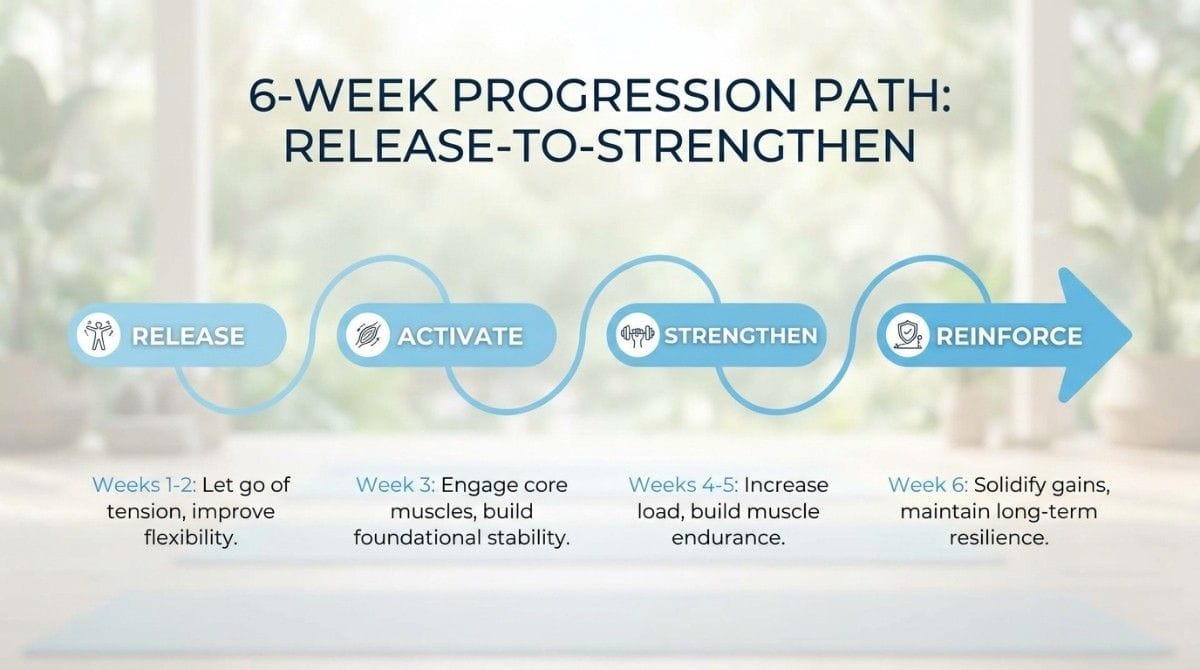
- Week 1: Release and move. Daily chest opening and mobility. Goal is looseness, not load.
- Week 2: Activate. Add scapular squeezes and chin tucks so the right muscles start firing.
- Weeks 3 to 4: Strengthen. Bring in band rows and Y-T-W raises, 3 days a week.
- Weeks 5 to 6: Progress. Add reps or light resistance, and hold posture longer through the day.
- Ongoing: Reinforce. Posture breaks every 30 minutes and a tidy desk setup to stop the pattern returning.
For a deeper strengthening progression once you are ready, the complete guide to bodyweight back exercises extends the posterior-chain work.
Stretching alone gives an hour of relief, but the pain between your shoulder blades stays until the strengthening muscles outpace the tight ones pulling you forward.
What Happens If You Only Stretch?
Stretching feels great, so it is tempting to stop there. The problem is that the muscles between the shoulder blades are already overstretched. More stretching without strengthening just resets you to the same weak position by the afternoon. 😬
The fix is balance: release the tight front, strengthen the weak back, and the area finally holds its position on its own.
Research & Expert Insight
Physiotherapists often recommend pairing scapular strengthening with thoracic mobility rather than stretching alone for interscapular pain. Posture specialists suggest that strengthening the rhomboids and mid-trapezius is the most reliable way to stop upper-back tension returning. Research in musculoskeletal rehab shows that desk workers doing targeted scapular and deep-neck-flexor work report meaningful upper-back and neck pain reductions within four to six weeks of consistent practice. 📚
When This Approach Doesn't Work
These exercises help most posture-related pain between the shoulder blades. Some signs mean you should pause and get assessed.
Seek prompt or urgent care if you have:
- Chest tightness, breathlessness, or pain spreading to the jaw or arm. 🚨
- Numbness, tingling, or weakness in the arms or hands.
- Fever, unexplained weight loss, or feeling unwell.
- Severe pain after a fall or accident.
- Pain that keeps worsening over two weeks despite consistent work.
When in doubt, get it checked before continuing.
Why Most Exercise Plans Fail
People grab a list of moves, do them for a week, and quit. It is rarely motivation. It is four gaps:
- Inconsistency. Momentum fades after a few good days.
- Wrong form. You cannot see your own posture errors from a video.
- No progression. The same beginner reps repeat for months.
- No personalization. Generic plans are built for nobody in particular.
That is why two people with the same pain between the shoulder blades often need different routines. The pain is generic. The cause is not.
A Smarter Way to Train It
Backed AI is an AI posture correction app built for this. It uses your phone camera to analyze your posture, then builds a corrective routine around your exact pattern.
- Personalized: orders mobility and strength work for your body, not a one-size list. 🎯
- Guided: clear video form so you train the right muscles safely.
- Consistent: reminders and progress tracking that keep you going. 📈
If random stretches have not worked, a structured, personalized plan changes the result.
Download Backed AI and start correcting your posture today.
Final Takeaway
The best exercises for pain between the shoulder blades are not about stretching harder. Open the chest, free the mid-back, and strengthen the muscles that hold your shoulder blades in place. Do it in order, stay consistent, and the ache stops coming back.
FAQ
What are the best exercises for pain between the shoulder blades? Wall angels, scapular squeezes, prone Y-T-W raises, and band rows, paired with a doorway chest stretch and thoracic extension.
Should I stretch or strengthen for pain between the shoulder blades? Both, but strengthening matters most. The muscles there are usually weak and overstretched, so stretching alone rarely fixes it.
How long until these exercises relieve the pain? Many people feel looser within days, with noticeable strength and posture gains in about three to six weeks of consistent work.
Can I exercise through pain between my shoulder blades? Gentle mobility is usually fine. Stop if a move causes sharp pain, numbness, or tingling, and get assessed if symptoms persist.
How often should I do shoulder-blade exercises? Do mobility daily and strengthening three to four days a week for the best results.