Best Tools to Improve Thoracic Mobility (Foam Roller vs Peanut vs Mobility Stick)
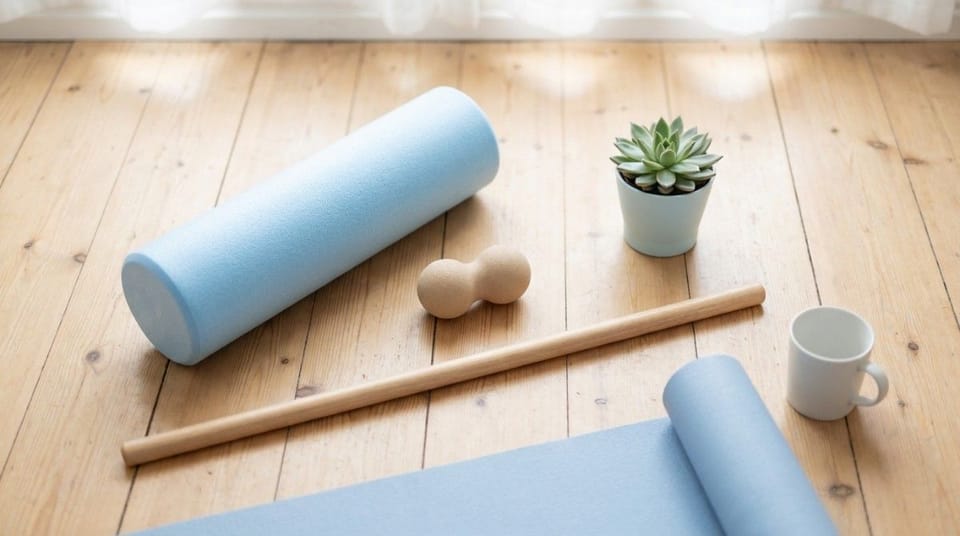
The best tools for thoracic mobility are a foam roller for general extension work, a peanut-shaped massage tool for targeted segments near the spine, and a mobility stick for rotation drills. Each solves a slightly different problem, and most people only need one to start. This guide compares them directly, so you can pick the right one instead of guessing in the fitness aisle.
TL;DR
- 🧰 A foam roller is the most versatile starting tool for thoracic extension work.
- 🥜 A peanut tool targets specific vertebrae while protecting the bony spinous processes a roller can't avoid.
- 🪵 A mobility stick (dowel or PVC pipe) is the cheapest option and best for rotation, not extension.
- 💰 None of these tools cost more than a coffee run per month, so budget rarely decides this.
- 🧠 The right tool depends on which movement you're restricted in, not which one looks best on Instagram.
- 📲 A tool only helps if you use it with correct form and consistency, which is where most people actually struggle.
What Are Thoracic Mobility Tools?
Thoracic mobility tools are simple, low-cost props, foam rollers, peanut-shaped massage tools, and mobility sticks, used to apply pressure or leverage to the mid-back so it can move through extension, rotation, and flexion more freely.
None of these tools "fix" your posture by themselves. They create the conditions for your thoracic mobility exercises to work better, either by adding a deeper stretch or by giving your body a stable surface to move against. 🧩
If you've already run through the self-tests in our guide to testing your thoracic mobility at home, the tool you need often depends on what that test revealed.
Why Does the Right Tool Matter?
Not every stiff upper back needs the same input. A restriction in extension responds best to a different tool than a restriction in rotation.
Using the wrong tool doesn't cause harm in most cases. It just wastes time:
- A mobility stick won't meaningfully improve extension, since it's built for rotation leverage.
- A foam roller placed too low can stress the lower back instead of the mid-back.
- A peanut tool used for broad, general mobility work is overkill when a roller would do the job faster.
Matching the tool to the restriction is what actually speeds up progress. 🎯
How To Choose Between a Foam Roller, Peanut, and Mobility Stick
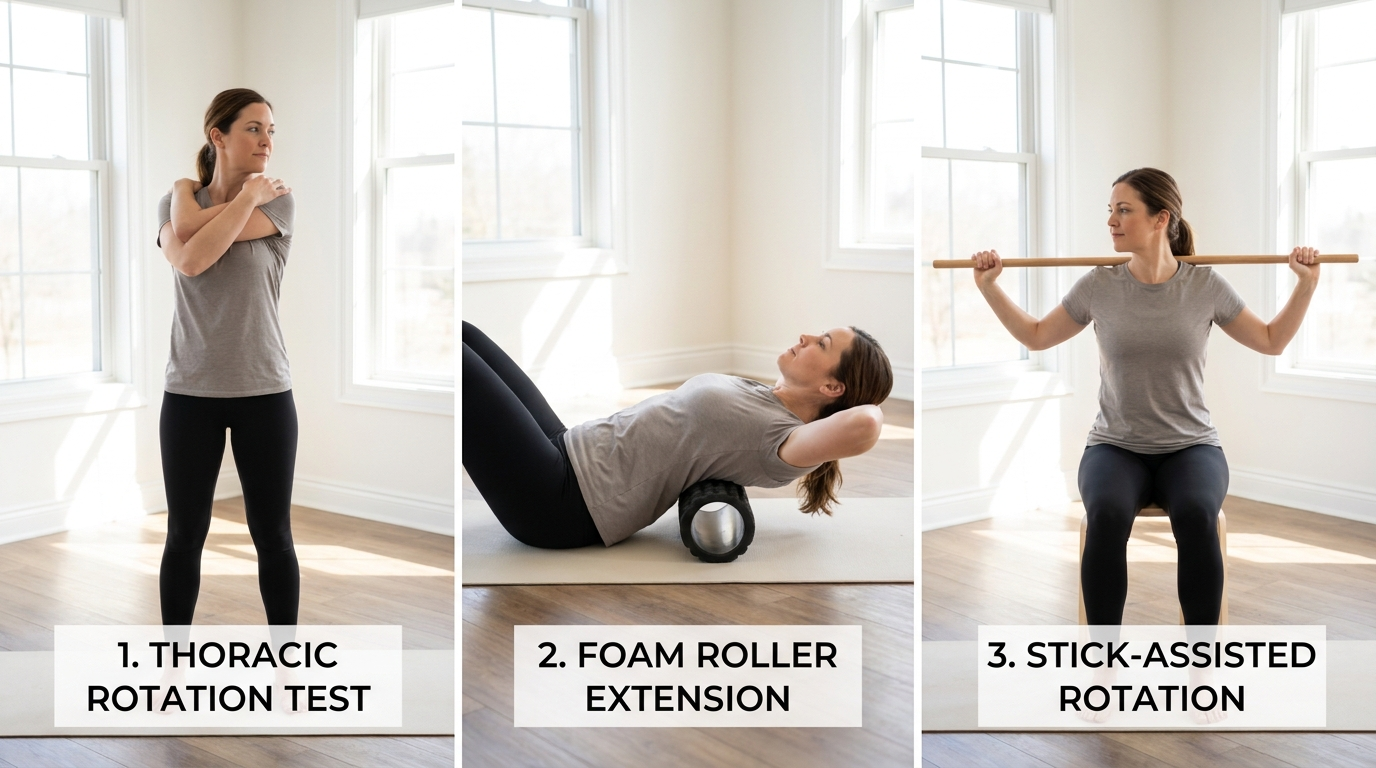
- If your main issue is a rounded, stiff upper back (extension restriction) – start with a foam roller. It's the simplest, most forgiving option for daily extension work.
- If you feel a specific tight spot between your shoulder blades – a peanut tool lets you target that segment directly without pressure on the spine itself.
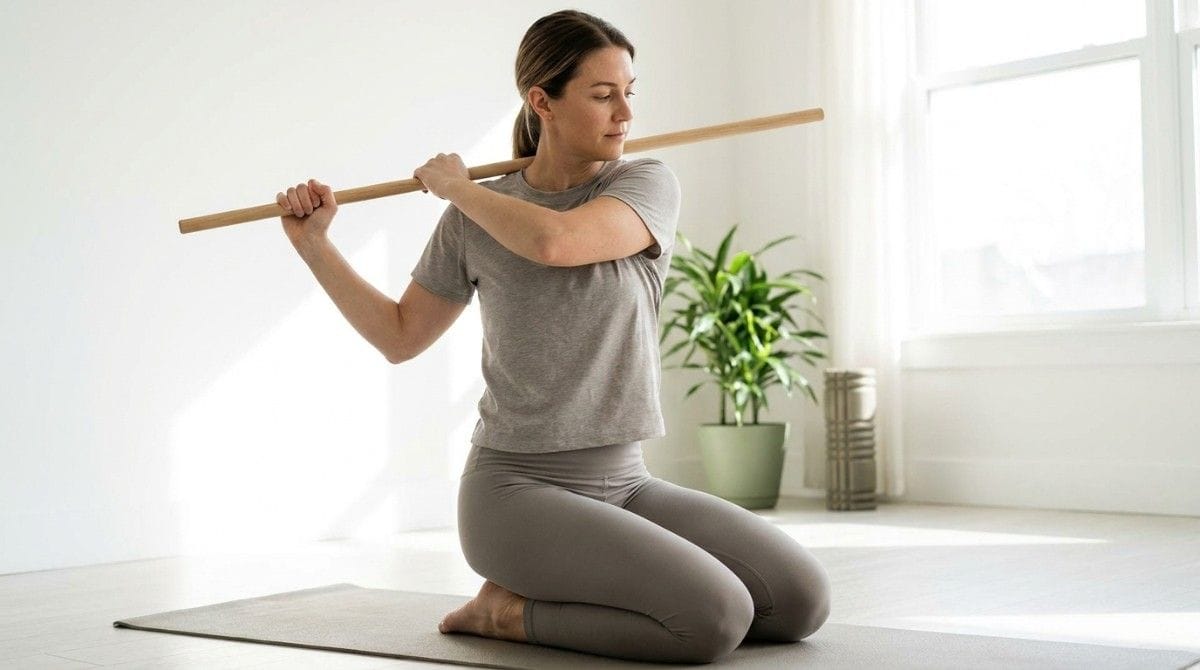
- If your seated rotation test showed asymmetry between sides – a mobility stick across your shoulders is the most direct way to train even rotation on both sides.
- If you're not sure – the foam roller is the safest general starting point for almost everyone.
What Happens If You Use the Wrong Tool for Your Body?
Using a mismatched tool rarely causes injury on its own, but it does create predictable friction. 📉
- Discomfort that isn't productive – rolling directly over bony landmarks (like the spine itself) instead of the muscle beside it just hurts, without adding range of motion.
- Slower progress – working rotation with a roller, or extension with a stick, means weeks pass without the improvement you're expecting.
- Giving up early – tools that feel wrong are the tools people stop using. Matching the tool to the need is what keeps a routine going long enough to matter.
Best Thoracic Mobility Tools (Quick List)
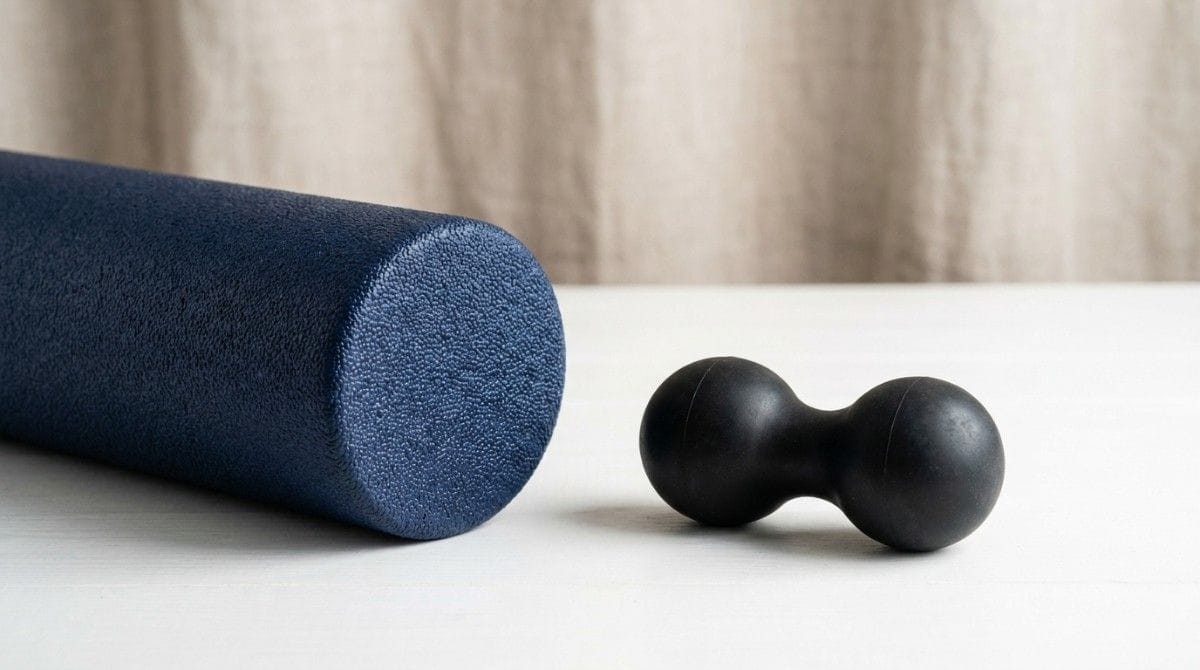
- Foam roller (medium-density, 36-inch) – Best all-around tool for daily thoracic extension. Affordable and forgiving for beginners.
- Peanut-shaped massage tool – Best for targeting specific segments beside the spine without direct bone contact.
- Mobility stick or PVC dowel – Best for rotation drills and the cheapest option on this list.
- Yoga wheel – Best for a deeper end-range extension stretch once a standard roller feels too easy.
- Resistance band – Best for adding strengthening work once mobility starts to improve.
- Lacrosse or massage ball – Best for pinpoint soft-tissue release around the shoulder blade, not the spine directly.
Thoracic Mobility Tool Comparison
| Tool | Best For | Intensity | Cost | Portability |
|---|---|---|---|---|
| Foam roller | General extension | Medium | Low | Medium (bulky) |
| Peanut tool | Targeted segments | Medium | Low | High |
| Mobility stick | Rotation | Low to medium | Very low | High |
| Yoga wheel | Deep extension | High | Medium | Medium |
| Resistance band | Strength after mobility | Low to medium | Very low | High |
For the full foam roller routine, including exact placement and timing, our 7-minute foam roller reset breaks it down step by step rather than repeating it here.
📲 If you'd rather skip buying a tool altogether, Backed AI's camera-guided routines are built around bodyweight and household-object alternatives, so you can start correcting your posture without ordering anything first.
Step-by-Step Tool Selection Framework
Step 1 – Confirm your restriction. Use the tests from our at-home thoracic mobility self-check to know whether extension, rotation, or both need work.
Step 2 – Start with one tool. Buying three tools at once rarely gets used. Pick the single tool that matches your primary restriction.
Step 3 – Use it daily for 2 to 3 weeks. Consistency with one tool beats occasional use of several.
Step 4 – Add a second tool only if needed. If rotation improves but extension lags, that's when a peanut or yoga wheel earns its place in the routine.
💡 Key Insight: More tools do not equal faster progress. A single well-matched tool, used daily, outperforms a drawer full of props used occasionally.
When This Approach Doesn't Work
Tools help most people accelerate a mobility routine, but they aren't a fix on their own in every situation.
- No exercise routine behind it – a foam roller without a structured plan is just a prop. Pair it with the moves in our thoracic mobility exercise guide.
- Osteoporosis or a known vertebral condition – deeper tools like yoga wheels apply more pressure than a standard roller and need clearance from a professional first.
- Sharp pain during use – any tool that produces sharp or radiating pain, rather than a stretch sensation, should be stopped immediately.
- Expecting the tool to replace consistency – the tool speeds up a routine you're already doing. It doesn't replace doing it.
Research & Expert Insight
Posture specialists often note that self-myofascial release tools, foam rollers included, work best as a warm-up to active mobility drills rather than a replacement for them. The tool loosens tissue; the movement is what actually retrains the joint.
Research in musculoskeletal rehab shows that combining a mobilization tool with active movement produces better short-term range-of-motion gains than either passive rolling or active stretching alone.
Final Takeaway
A foam roller, a peanut tool, and a mobility stick each solve a different piece of the thoracic mobility puzzle. Most people only need to start with one, matched to whichever movement their self-test flagged as restricted. The tool accelerates the work. It doesn't replace showing up for it daily.
Why Most Tool Purchases Don't Fix the Problem
Buying the right tool solves less of the problem than most people expect:
- No plan attached – a tool without a structured routine behind it gets used twice and then sits in a drawer.
- No form feedback – rolling or stretching with subtly wrong positioning can limit results, and there's no one there to correct it.
- No progression – sticking with the same tool and the same routine for months plateaus quickly.
- No personalization – a generic tool doesn't know if your restriction is extension, rotation, or both.
A Smarter Way to Build Thoracic Mobility, With or Without a Tool
Tools are optional. A structured, personalized routine isn't.
Backed AI uses your phone camera to scan your posture, identify your specific thoracic restriction, and build a corrective program around it, using bodyweight movements when no tool is needed and guiding you through tool-based work when it is.
- 📍 Personalized posture scan – identifies whether your restriction is extension, rotation, or asymmetry, so you're not guessing which tool to buy.
- 🔄 Progressive programming – sequences mobility and strength work correctly, whether or not a foam roller is involved.
- 🔔 Consistency system – daily reminders solve the "tool in a drawer" problem that ends most home routines.
You don't need three tools and a guess. You need a plan built around your actual restriction.
Download Backed AI and start correcting your posture today.
FAQ
1. Do I need a foam roller to improve thoracic mobility? No. Bodyweight exercises like cat-cow and thread the needle work without any tool. A foam roller simply adds a deeper extension stretch.
2. What's the difference between a peanut tool and a foam roller? A peanut tool has two connected lobes that straddle the spine, targeting muscle beside it without direct pressure on the bones. A foam roller applies broader, flatter pressure across the whole mid-back.
3. Is a yoga wheel too intense for beginners? It can be. Yoga wheels create a deeper stretch than a standard foam roller, so most beginners should start with a roller and progress to a wheel later.
4. How long should I use a mobility tool each day? 1 to 2 minutes per tool is usually enough. These are mobilization aids, not endurance exercises.
5. Can I use these tools if I have a herniated disc? Check with a physiotherapist first. Some tools and positions may not be appropriate depending on the location and severity of the herniation.