
Core Exercises vs Stretching for Back Pain: Which Actually Fixes It?
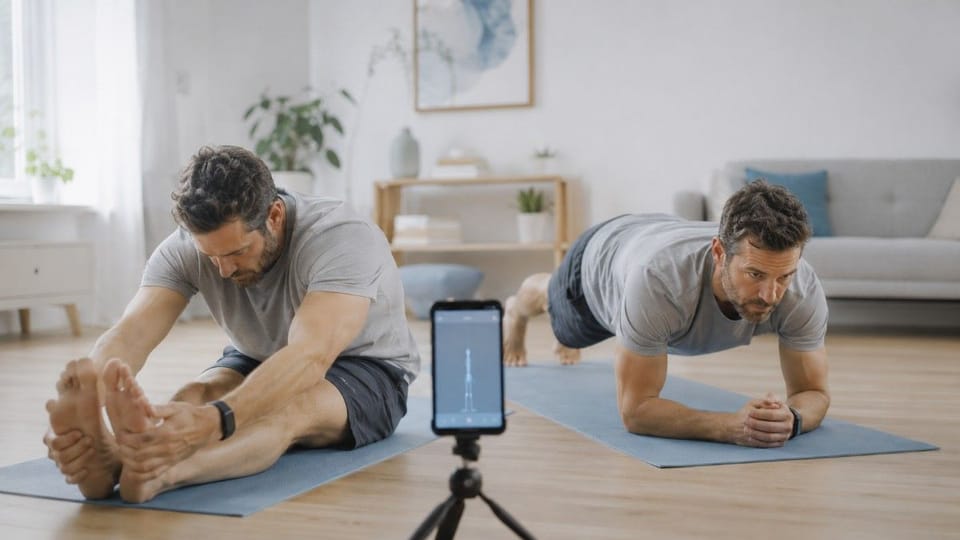
If your back hurts, you have probably been told to stretch it out. You have also probably been told to strengthen your core. So which one actually works? The short answer: stretching gives you fast relief, but core strengthening is what fixes the problem for good. 🎯
Stretching for back pain loosens tight muscles for short-term relief, while core strengthening builds the deep-muscle stability that produces lasting relief, which means the two solve different halves of the same problem.
TL;DR
- Stretching eases tension and improves mobility. It feels great fast, but the relief often fades within hours.
- Core strengthening builds spinal stability. It works slower, but it addresses the actual cause of most back pain.
- For most people the answer is not either/or. It is stretch to unlock, then strengthen to hold.
- If stretching alone keeps failing, your pain is likely a strength or stability problem, not a flexibility one.
- Order matters: mobilize first, then strengthen, so you build stability through a full range.
- Neither fixes nerve pain or red-flag symptoms. Those need a professional.
What Is the Real Difference Between Stretching and Strengthening?
Stretching lengthens tight, overactive muscles and restores range of motion. It calms the tension that makes your back feel stiff and sore.
Core strengthening trains the deep stabilizers (transverse abdominis, multifidus, obliques) to brace your spine. It builds the support system that keeps your back from getting overloaded in the first place.
Here is the key distinction: stretching manages symptoms, while strengthening addresses causes. That is why a quick stretch feels amazing but the ache returns, a pattern explained in depth in why your back pain keeps coming back.
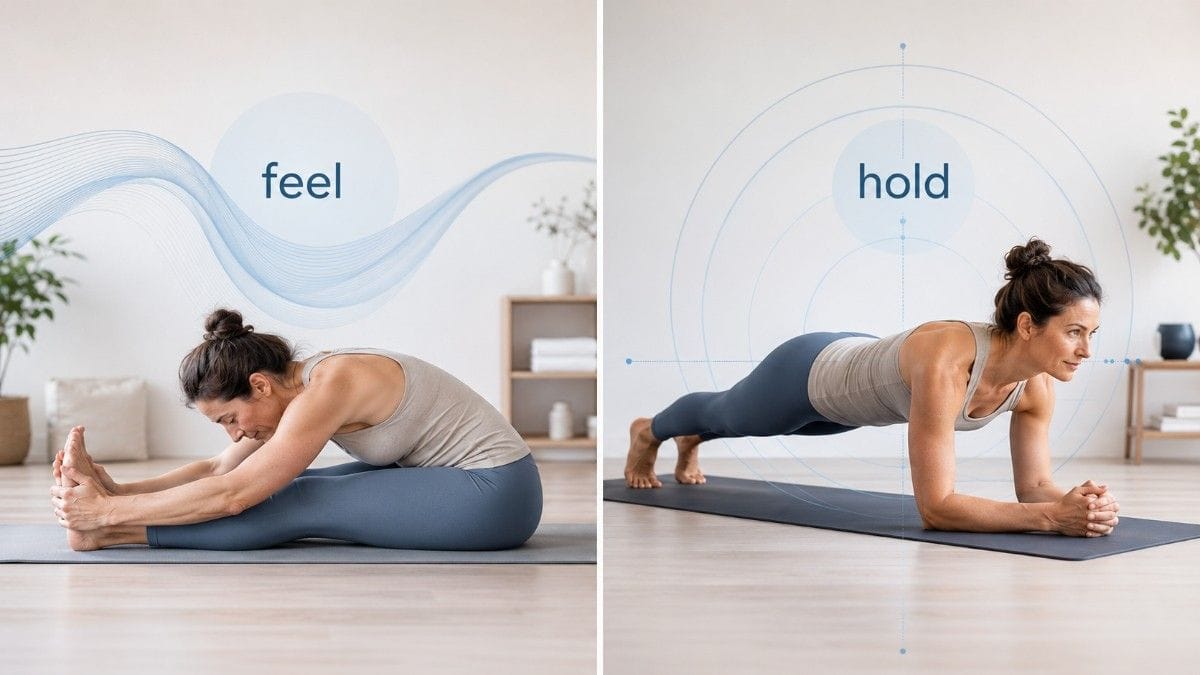
Core Exercises vs Stretching: The Head-to-Head
Here is how the two approaches compare across what actually matters.
| Factor | Stretching 🧘 | Core Strengthening 💪 |
|---|---|---|
| What it does | Loosens tight muscles, restores range | Builds deep-muscle spinal stability |
| Relief speed | Fast (minutes to hours) | Slower (weeks) |
| Lasting fix | Temporary on its own | Durable when consistent |
| Best for | Stiffness, tension, warm-ups | Recurring, load-related, weak-core pain |
| Main risk | Over-stretching an unstable joint | Poor form under fatigue |
| When to use | Daily, before and after activity | 3 to 4 focused sessions a week |
Neither wins outright. They win at different jobs. The mistake is treating one as the whole solution.
Why Doesn't Stretching Alone Fix Back Pain?
Because most everyday back pain is not really a flexibility problem. It is a stability problem wearing a flexibility costume.
When your deep core is weak, your lower back tightens up to compensate. Stretching releases that tightness, so you feel better for a while. But the underlying weakness is still there, so the muscles clench right back up.
Posture specialists suggest that if stretching keeps giving you only temporary relief, the tightness is being driven by something structural, such as weak glutes or tight hips pulling your lower back out of alignment. In that case, stretching without strengthening is like mopping the floor while the tap is still running.
🔑 Key Insight: Stretching removes the symptom. Strengthening removes the reason the symptom exists. This is why people who only stretch tend to relapse, while people who strengthen tend to stay better.
How Do You Know Which One You Need?
Use this quick self-check. It is not a diagnosis, just a useful signal.
Lean toward more stretching if:
- Your back feels stiff and tight, especially in the morning.
- Pain eases noticeably right after you move or stretch.
- You sit for long hours and feel locked up rather than weak.
Lean toward more strengthening if:
- Your pain keeps coming back no matter how much you stretch.
- It flares with load, like lifting, carrying, or standing long.
- You feel unstable or unsupported, like your back cannot hold you up.
Most people land somewhere in the middle, which is exactly why the combined approach wins.
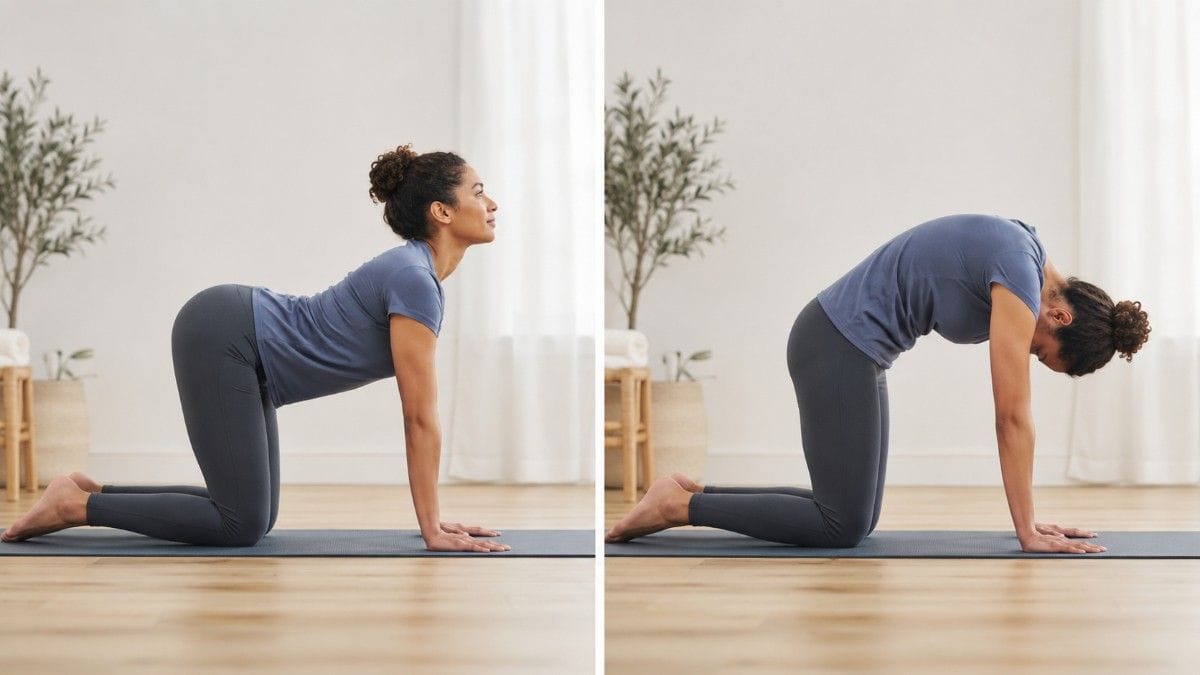
The Stretch-Then-Strengthen Routine (Quick List)
The highest-value approach is a short sequence that borrows from both camps. Mobilize first, then stabilize.
- Cat-Cow – Restores lumbar mobility and warms the spine. 8 to 10 slow reps.
- Knee-to-Chest Stretch – Releases the lower back and glutes. Hold 20 to 30 seconds per side.
- Kneeling Hip Flexor Stretch – Loosens the hip flexors that pull the pelvis forward. 30 seconds per side.
- Glute Bridge – Switches on the glutes so your back stops compensating. 2 sets of 12.
- Dead Bug – Builds deep-core control with a safe, flat spine. 8 to 10 per side.
- Bird Dog – Trains stability and coordination. 2 sets of 8 per side.
Steps 1 to 3 are your stretching layer. Steps 4 to 6 are your strengthening layer. For the full stretch menu, see these lower lumbar pain stretches, and for the complete strength progression, see the deep-core routine for back pain.

Not sure which side your back actually needs? 👇
This is the exact question most people guess wrong. Backed AI removes the guesswork. It scans your posture with your phone camera and tells you whether your pain is being driven more by tight, restricted areas or by weak, unstable ones, then builds the right stretch-to-strengthen balance for your body.
Step-by-Step Recovery Framework: Release, Reset, Reinforce, Retain
A simple order that gets the best of both.
Phase 1 – Release (Weeks 1 to 2). Prioritize gentle stretching and mobility daily. The goal is to reduce tension and restore range so you can move without guarding.
Phase 2 – Reset (Weeks 2 to 3). Add activation work like glute bridges and pelvic tilts. You are waking up the muscles that should be supporting your spine.
Phase 3 – Reinforce (Weeks 3 to 6). Shift the emphasis to core strengthening. Keep a short stretch warm-up, but let stability work become the main event.
Phase 4 – Retain (Week 6+). Maintain with 3 strength sessions a week and daily mobility snacks. This is where relief becomes lasting, and where the habits that stop back pain returning matter most.
What Happens If You Only Do One?
Stretch only: You will feel looser but keep relapsing, because nothing is holding the improvement in place.
Strengthen only: You may build strength through a restricted range, which can feel stiff and even reinforce bad patterns if tight areas are never released.
The combination is not a nice-to-have. It is the reason the plan actually sticks.
When This Approach Doesn't Work
Stretching and strengthening are powerful, but they are not the answer for everything.
They will not resolve nerve-driven pain on their own. If you feel pain, tingling, or numbness shooting down a leg, that points toward something like sciatica, not a tight or weak back.
They also will not fix pain that is purely structural or being masked. If your pain is actually driven by a specific posture pattern, the wrong exercises can even set you back.
🚩 See a professional for sharp or worsening pain, pain radiating down a leg, numbness, weakness, or any loss of bladder or bowel control. Neither stretching nor strengthening is the right tool for those signals.
Research & Expert Insight
Physiotherapists often recommend both, but with a clear hierarchy. Mobility work is used to reduce symptoms and prepare the body, while strengthening and stability work is used to produce durable change.
Research in musculoskeletal rehab consistently points the same direction: passive relief like stretching helps in the short term, but active strengthening drives better long-term outcomes for recurring back pain. Posture specialists suggest pairing the two, because flexibility without stability tends to regress.
The practical takeaway is simple. Stretch to feel better today. Strengthen to still feel better next month.
Final Takeaway
In the core exercises vs stretching debate, there is no single winner, but there is a clear answer to "which actually fixes it." Stretching relieves. Strengthening fixes. 💙
For most back pain, stretch to unlock your range, then strengthen to hold it there. Do them in that order, stay consistent for six weeks, and escalate to a professional if red-flag symptoms appear. That is the combination that finally makes the relief last. ✅
Why Most Exercise Plans Fail
Most people do not fail because they pick the wrong exercises. They fail because they pick the wrong balance for their body.
- Guessing wrong. Stretching when you needed strength, or the reverse, wastes weeks.
- Wrong form. Without feedback, strengthening under fatigue can reinforce the exact pattern causing pain.
- No progression. A static plan stops working once your body adapts.
- Inconsistency. A routine done once never rewires anything.
A Smarter Way to Balance the Two
Backed AI is an AI posture correction app built to answer the one question this article raises: does your back need more mobility or more stability?
- 🎯 AI posture analysis that identifies whether tightness or weakness is driving your pain, no guesswork.
- 📱 Personalized stretch-to-strengthen plans that shift the balance as your body changes.
- 🔔 Habit reminders that keep you consistent through all four recovery phases.
Generic routines hand everyone the same stretches and the same planks. Backed AI reads your actual posture and gets the balance right for you, which is the difference between temporary relief and a back that finally holds.
The longer an imbalance goes unaddressed, the deeper it locks in. Download Backed AI and start correcting your posture today. 💙
FAQ
1. Should I stretch or strengthen for back pain? Both, in the right order. Stretch first to ease tension and restore mobility, then strengthen your core to make the relief last. Strengthening is what fixes recurring pain.
2. Why does my back feel better after stretching but then hurt again? Because stretching relieves the symptom, not the cause. If your deep core is weak, your back tightens back up within hours. Strengthening breaks that cycle.
3. Which works faster, stretching or core exercises? Stretching works faster for immediate relief. Core strengthening takes weeks but produces more durable, lasting results.
4. Can I do stretching and strengthening on the same day? Yes, and you should. Use stretching as your warm-up and mobility layer, then move into core strengthening. Mobilize first, stabilize second.
5. When should I see a professional instead? See a professional for sharp or worsening pain, pain radiating down a leg, numbness, weakness, or any loss of bladder or bowel control. Those need proper assessment, not exercises.