Pain Between the Shoulder Blades: Causes, Relief & When to Worry

Most pain between the shoulder blades comes from tired, overstretched upper-back muscles, not from anything dangerous. It usually builds up slowly from posture, sitting, and screen time, and it usually responds well to movement. 🧍
Pain between the shoulder blades is discomfort in the upper-mid (thoracic) back between your scapulae, most often caused by muscle strain, rounded posture, or prolonged sitting rather than a serious medical problem.
TL;DR
- Pain between the shoulder blades is usually muscular, not spinal or sinister.
- The most common cause is rounded-shoulder, head-forward posture from desks and phones.
- It often feels like a dull ache, burning, or a "knot" between the blades.
- Gentle mobility, posterior strengthening, and posture breaks relieve most cases.
- Sudden, severe, or chest-related pain needs same-day medical attention.
- Lasting relief comes from fixing the posture pattern, not just stretching the sore spot.
This pattern is extremely common in desk workers, and it usually overlaps with rounded shoulders and forward head posture, which is the root posture behind most upper-back tension.
What Is Pain Between the Shoulder Blades?
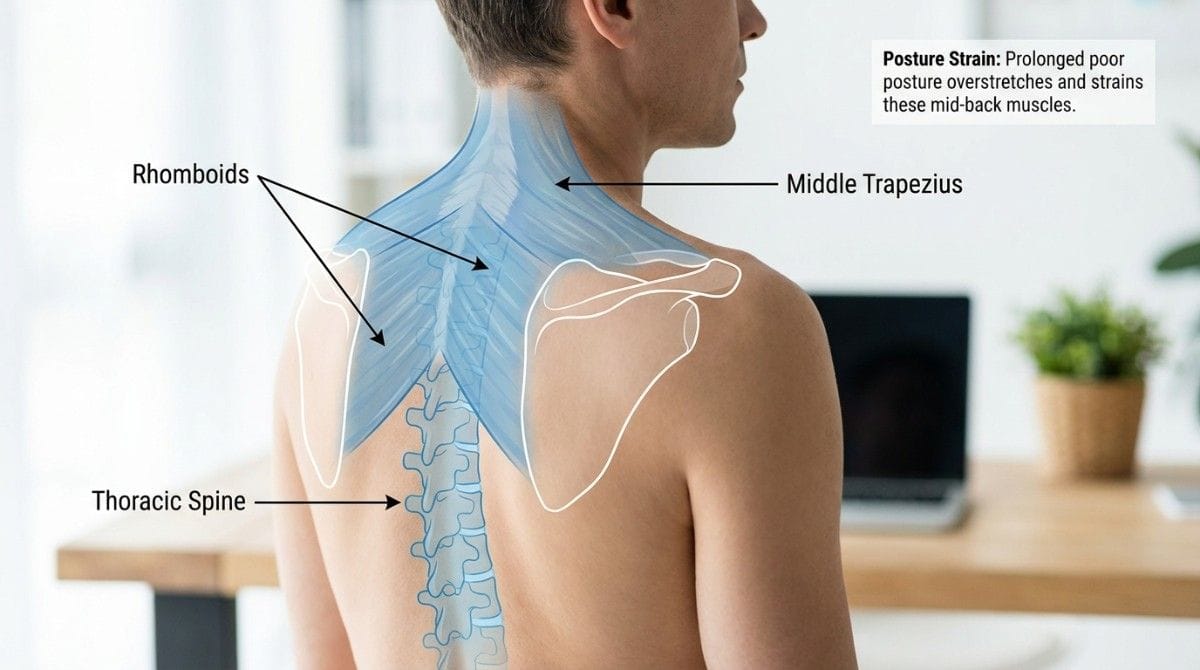
The area between your shoulder blades is the upper-mid back, where your spine, ribs, and several stabilizing muscles meet. The rhomboids and middle trapezius live here. Their job is to hold your shoulder blades back and down.
When you sit hunched for hours, these muscles get overstretched and overworked. The result is a sore, achy, or burning feeling between the shoulder blades, often described as "spinal pain between the shoulder blades" even when the spine itself is fine.
Why Does the Area Between My Shoulder Blades Hurt?
Most causes are mechanical and reversible. Here are the usual ones.
| Cause | What it feels like | Typical trigger |
|---|---|---|
| Postural muscle strain | Dull ache, "tired" feeling | Long sitting, slouching |
| Muscle knot / trigger point | Localized burning or tight spot | Repetitive movement, stress |
| Rounded shoulders / forward head | Tension that worsens by evening | Phones, low monitors |
| Rib or thoracic joint stiffness | Sharp twinge on deep breath or twist | Sudden movement, poor sleep position |
| Referred neck irritation | Aching that spreads from neck | Pinched cervical nerve |
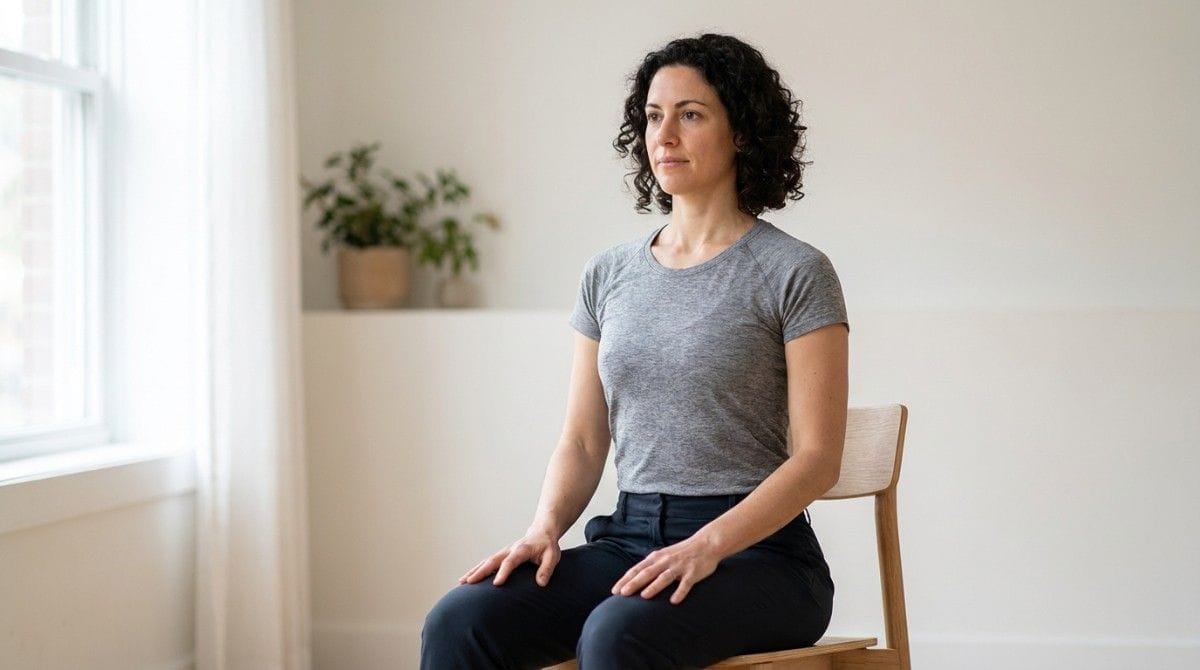
The biggest driver is everyday posture. Sitting collapses the upper back forward, and the muscles between the shoulder blades end up holding you up all day. For the same reason, prolonged sitting is one of the most common starting points for upper-back and lower-back pain alike.
💡 Not sure if posture is your real trigger? A 60-second posture scan in Backed AI can map your exact pattern before you waste weeks on the wrong stretches.
Left vs Right vs Center: What the Location Tells You
Location offers clues, but it is not a diagnosis.
- Center / spinal pain between the shoulder blades: usually muscular or thoracic joint stiffness.
- One-sided (left or right): often a trigger point or rib joint on that side.
- Pain that spreads to the neck or arm: may be referred from the cervical spine.
If you want to understand how these patterns fit into the bigger picture, this guide to the broader spectrum of posture types breaks down how upper-back rounding develops and why it keeps coming back.
What Happens If You Ignore It?
Short-term, the ache comes and goes. Over months, the muscles between the shoulder blades stay weak and overstretched, the chest tightens, and the pattern becomes your "default" posture. 😬
That is when occasional soreness turns into recurring upper-back pain, neck tension, and tension headaches. The good news: even long-standing cases usually improve once the posture pattern is corrected.
Best Exercises for Pain Between the Shoulder Blades (Quick List)
These target the muscles that actually hold your shoulder blades in place.
- Scapular squeezes. Gently pull your shoulder blades together, hold 5 seconds, release. Wakes up the rhomboids.
- Wall angels. Slide your arms up and down a wall to restore upper-back movement.
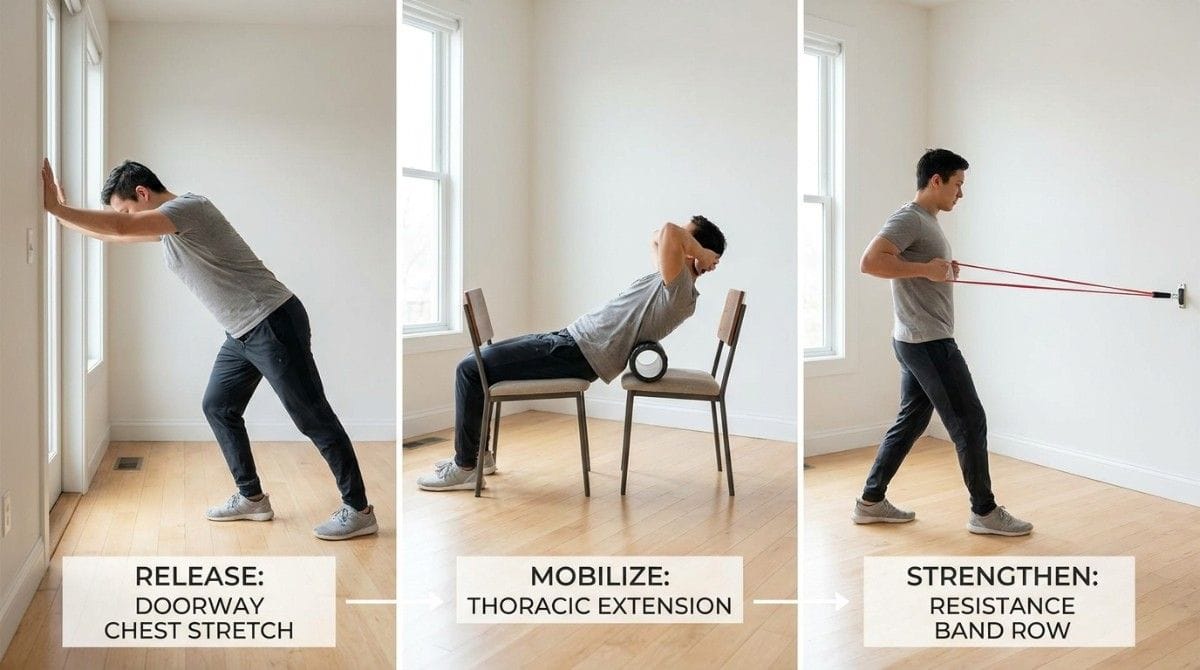
- Thoracic extension over a chair. Open the stiff mid-back the opposite way it slouches.
- Cat-cow. Mobilizes the whole spine and eases trapped tension.
- Doorway chest stretch. Loosens tight chest muscles that pull the shoulders forward.
- Chin tucks. Reduce forward-head load that refers pain down to the blades.
A few minutes daily beats one long session weekly. For a full routine, these bodyweight back exercises that strengthen the rhomboids build the posterior chain that keeps the pain from returning.
Step-by-Step Recovery Framework
A simple sequence that works for most postural cases.
- Release. Loosen tight chest and upper-trap muscles first.
- Restore movement. Add thoracic extension and rotation to free the stiff mid-back.
- Activate. Wake up the rhomboids and mid-trapezius with light squeezes.
- Strengthen. Progress to resisted rows and posterior-chain work.
- Reinforce. Take posture breaks and reset your desk so the pattern does not return.
Stretching the sore spot feels good for an hour, but the area between your shoulder blades stays painful until the weak posterior muscles get stronger than the tight front-of-body muscles pulling you forward.
Research & Expert Insight
Physiotherapists often recommend pairing thoracic mobility with scapular strengthening rather than stretching alone, because the muscles between the shoulder blades are usually weak and overstretched, not short. Posture specialists suggest that correcting forward head and rounded-shoulder positioning is the single most impactful change for upper-back relief. Research in musculoskeletal rehab consistently shows that desk workers who do targeted scapular and deep-neck-flexor work report meaningful reductions in upper-back and neck pain within several weeks of consistent practice. 📚
When This Approach Doesn't Work
Self-care fixes most muscular pain between the shoulder blades. Some signals mean you should stop and get checked.
Seek prompt or urgent care if you have:
- Chest tightness, shortness of breath, or pain spreading to the jaw or arm. 🚨
- Pain with fever, unexplained weight loss, or feeling generally unwell.
- Numbness, weakness, or tingling in the arms or hands.
- Severe pain after a fall or accident.
- Pain that steadily worsens over two weeks despite rest and movement.
These are uncommon, but they matter. When in doubt, get it assessed.

Why Most Exercise Plans Fail
Most people find a list of stretches, do them for a week, and quit. It is rarely a motivation problem. It is four predictable gaps:
- Inconsistency. The routine drifts after a few good days.
- Wrong form. You cannot see what you are doing wrong from a video.
- No progression. The same beginner moves repeat for months.
- No personalization. Generic plans are built for nobody in particular.
That is why two people with identical pain between the shoulder blades often need very different programs. The pain is generic. The cause is not.
A Smarter Way to Fix It
Backed AI is an AI posture correction app built for exactly this. Instead of guessing, it uses your phone camera to analyze your posture and builds a corrective plan around your specific pattern.
- Personalized: targets your rounded-shoulder or thoracic pattern, not a one-size routine. 🎯
- Guided: clear video form so you train the right muscles safely.
- Consistent: smart reminders and progress tracking that keep you on track. 📈
If you have tried random stretches with little progress, a structured plan changes the outcome. You can also follow a full posture correction routine to support the work.
Download Backed AI and start correcting your posture today.
Final Takeaway
Pain between the shoulder blades is usually a posture problem in disguise. Calm it with mobility, fix it with posterior strengthening, and protect it with better daily habits. Treat the cause, not just the sore spot, and the relief lasts.
FAQ
Why does the area between my shoulder blades hurt?
Most often it is muscle strain from rounded posture, sitting, or screen time, which overworks the rhomboids and mid-trapezius.
Is pain between the shoulder blades serious?
Usually no. It is typically muscular. But chest pain, breathlessness, fever, or arm numbness needs urgent medical care.
How do I get rid of pain between my shoulder blades fast?
Gentle mobility (cat-cow, thoracic extension), a chest stretch, and scapular squeezes ease it, plus regular posture breaks.
Can sitting cause pain between the shoulder blades?
Yes. Prolonged sitting collapses the upper back forward and overloads the muscles between the shoulder blades.
How long does pain between the shoulder blades take to heal?
Mild muscular cases often ease within days to two weeks with movement and posture changes; postural patterns take a few weeks to retrain.