Best Tools to Improve Neck Posture: From Pillows to Posture Trainers
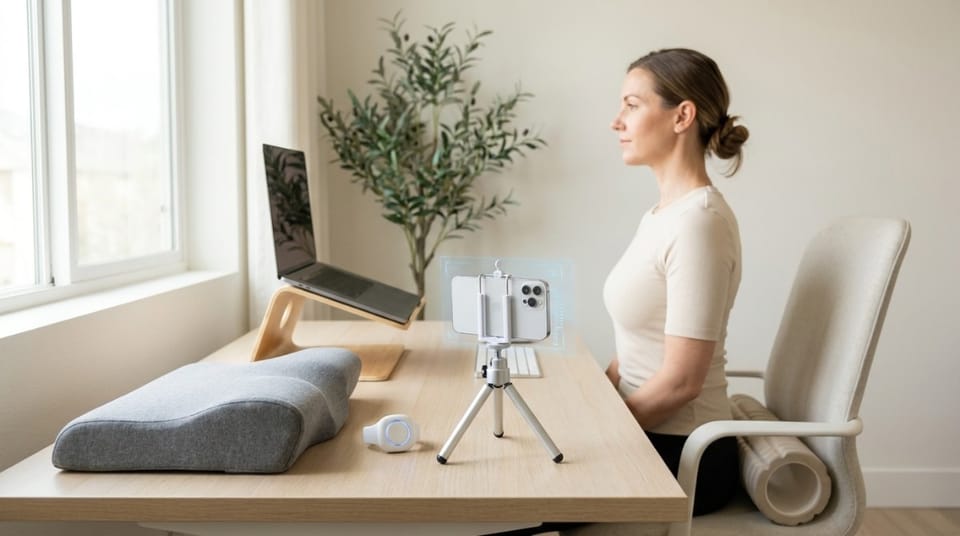
The best tools to improve neck posture are the ones that combine consistent feedback, structural support, and habit-building, not the ones with the loudest marketing. The most effective stack usually includes an ergonomic setup, a cervical pillow, a posture trainer or AI app for real-time correction, and a foam roller for daily release. Used together, they outperform any single gadget.
TL;DR
- No single tool fixes neck posture. The right combination does 🧰
- 8 tool categories matter: braces, posture trainers, pillows, chairs, monitor stands, foam rollers, resistance bands, AI apps
- Posture braces work short-term but weaken muscles long-term if overused
- Wearable trainers and AI apps offer the best feedback-to-cost ratio
- A good cervical pillow is one of the highest-impact, lowest-effort additions
- Ergonomic setup beats any gadget when the basics are wrong
What Makes a Neck Posture Tool Actually Work?
Most posture tools fail because they replace the work your muscles need to do. The effective ones do the opposite: they cue better movement, support better positioning, or measure progress so you stay consistent. Before reviewing the categories, it helps to understand what good neck posture actually means. The full definition of healthy cervical alignment is the baseline every tool should support.
A useful tool meets three criteria:
- It gives feedback (you know when posture drifts)
- It builds capacity (it improves the underlying muscles or habits)
- It fits real life (you'll actually use it daily)
Anything that only "holds" you upright without training the body fails the second test.
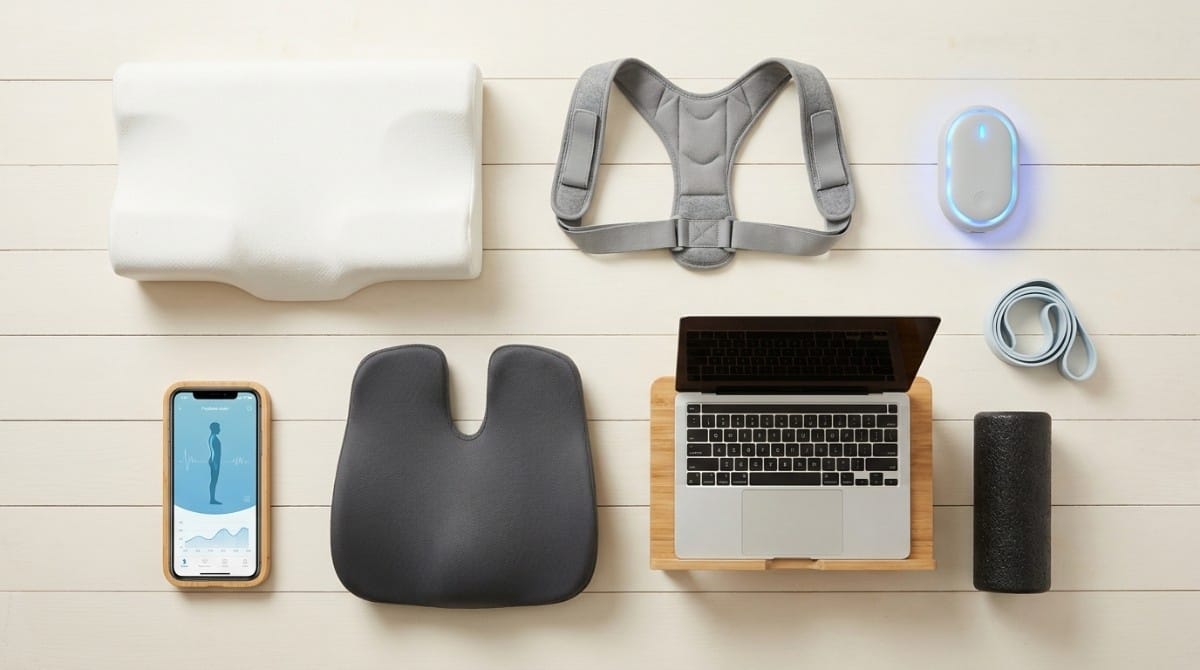
The 8 Best Tools to Improve Neck Posture
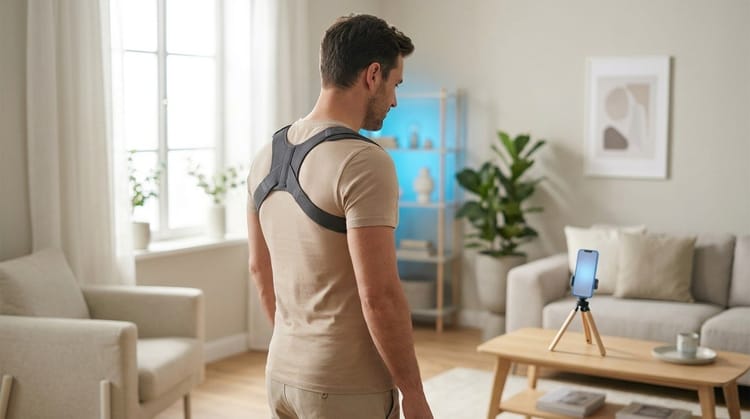
1. Posture Braces
What it is: A wearable strap that pulls your shoulders back, indirectly correcting head position.
Pros: Immediate physical reminder. Helpful for the first 1-2 weeks as a cue.
Cons: Over-reliance weakens the muscles meant to do the same job. Long-term wear can worsen posture.
Best for: Short-term cueing. Verdict: Useful as a temporary nudge, not a fix.
2. Wearable Posture Trainers
What it is: A small device worn on the upper back or collarbone that vibrates when you slouch.
Pros: Real-time feedback. Builds awareness fast. Doesn't replace muscle work.
Cons: Requires charging. Some models are bulky or visible under clothes.
Best for: Desk workers who can't self-monitor all day. Verdict: Strong tool, especially in the first 30 days.
3. Cervical Pillows
What it is: A contoured pillow that supports the natural cervical curve during sleep.
Pros: Works for 7-8 hours a day with zero effort. High impact on long-term alignment.
Cons: Takes 5-10 nights to adapt. Wrong height can make things worse.
Best for: Anyone with morning neck stiffness. Verdict: Quietly one of the most underrated tools. The deeper guide to pillow choice for posture breaks down what to look for.
4. Ergonomic Chairs
What it is: A chair with adjustable seat height, lumbar support, and ideally an adjustable headrest.
Pros: Removes the structural reason you slouch. Effects compound over months.
Cons: Expensive. Not portable.
Best for: Full-time desk workers. Verdict: Worth the investment if you sit 6+ hours daily.
5. Monitor Stands & Laptop Risers
What it is: A platform that raises your screen to eye level.
Pros: Eliminates the single biggest driver of forward head posture: looking down. Cheap. Easy.
Cons: None significant.
Best for: Everyone with a desk. Verdict: The highest ROI tool on this list.
6. Foam Rollers
What it is: A dense foam cylinder used for thoracic spine mobility work.
Pros: Restores upper-back extension. Releases the stiffness that forces the neck to compensate.
Cons: Requires daily 5-minute use to see effects.
Best for: Anyone with a stiff upper back. Verdict: Essential for sustained progress.
7. Resistance Bands
What it is: Elastic bands used to strengthen mid-back, rear delts, and deep neck flexors.
Pros: Cheap, portable, and the only tool that builds the muscle capacity needed for lasting change.
Cons: Requires knowing the right exercises.
Best for: Building long-term muscular support. Verdict: Non-negotiable for real correction.
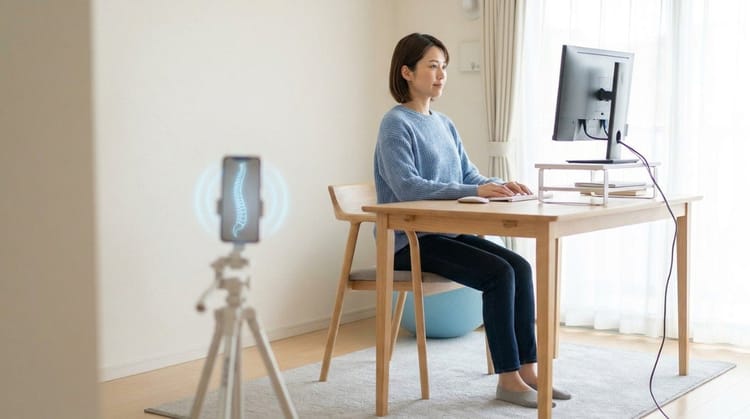
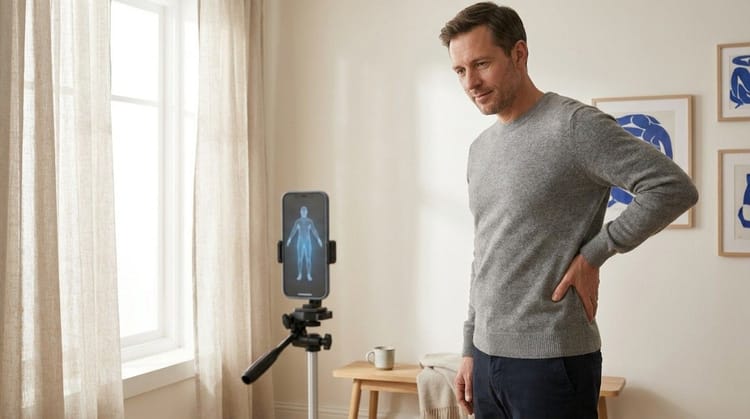
8. AI Posture Correction Apps
What it is: Smartphone apps that scan your posture, identify imbalances, and prescribe a personalized routine.
Pros: Measures actual change. Personalizes the plan. Tracks progress visually. No extra hardware needed.
Cons: Requires daily app engagement.
Best for: Anyone serious about a structured, measurable correction. Verdict: The modern integrated layer that makes the other tools work better.
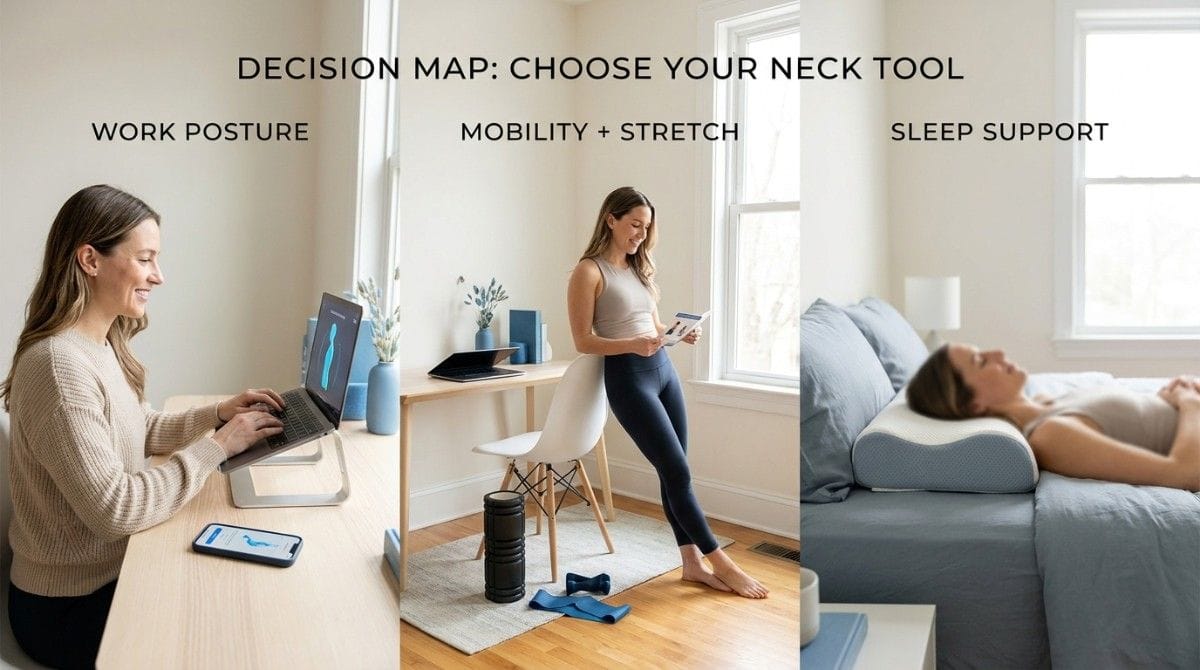
How To Choose the Right Tool for You
| If your main issue is... | Start with these tools |
|---|---|
| Forward head posture from screens | Monitor stand + AI posture app + foam roller |
| Morning neck stiffness | Cervical pillow + foam roller |
| Slouching at the desk | Wearable trainer + ergonomic chair |
| Weak upper back | Resistance bands + AI app routine |
| All of the above | Monitor stand + cervical pillow + AI app + resistance bands |
For the underlying corrective work that ties these tools together, the 7-step daily routine to improve neck posture is the practical companion to any product setup.
What Happens If You Rely on One Tool Alone?
Tools are leverage, not substitutes. A brace alone weakens the muscles you need. A pillow alone can't fix a desk setup that pulls your head forward 10 hours a day. An app alone can't replace the structural support of a monitor at eye level.
Posture specialists often describe correction as a "stack," meaning the right tools layered together do what no single product can. If you're already noticing visible upper-back changes, the full breakdown of tech neck vs forward head posture explains why a multi-tool approach matters even more.
💡 Key Insight: The most effective neck posture tool is the one you'll use every single day. A perfect product used twice a week loses to a "good enough" product used daily.
When These Tools Won't Work
Even the best tool stack has limits. Tools aren't the right starting point if you have:
- Acute neck injury or recent whiplash
- Diagnosed cervical disc herniation without clinical clearance
- Severe scoliosis or congenital spinal conditions
- Vertigo or nerve symptoms triggered by neck movement
In those cases, see a physician or physiotherapist first. Tools come after the diagnosis.
Research & Expert Insight
Research in musculoskeletal rehab consistently shows that posture correction works best when it combines feedback (so you know when you're drifting), capacity-building (so the muscles can actually hold the new position), and consistency (so the change becomes automatic). Physiotherapists often recommend pairing one feedback tool with one strengthening tool rather than stacking multiple gadgets. A wearable trainer plus a resistance band routine outperforms three different braces.
Step-by-Step Tool Selection Framework
| Step | What To Do | Why |
|---|---|---|
| 1 | Fix the biggest structural fault first (usually screen height) | Removes the daily driver of forward head posture |
| 2 | Add a feedback tool (wearable trainer or AI app) | Builds awareness without willpower |
| 3 | Upgrade your sleep setup (cervical pillow) | Compounds 7-8 hours of corrective time daily |
| 4 | Add daily mobility (foam roller, 5 min) | Frees the upper back to support the neck |
| 5 | Build capacity (resistance band routine) | Creates lasting muscular support |
| 6 | Track progress every 2 weeks (side-profile photo) | Keeps you honest about real change |
Final Takeaway
There is no single best tool for improving neck posture. There's the right combination for your situation, used consistently. A monitor stand, a cervical pillow, an AI app for feedback and progress tracking, and a resistance band for strength will outperform any standalone gadget on the market. Tools are leverage. Daily use is the actual fix.
Why Most Tool Stacks Still Fail
Even when people buy the right tools, two things go wrong:
- No measurement. Without a baseline, you can't tell if your stack is working or if you're wasting effort.
- No personalization. A generic routine doesn't match your specific drift pattern, so the wrong exercises stay in the program.
That's the gap a smart posture system has to fill.
How Backed AI Ties Your Tool Stack Together
Backed AI is the measurement and personalization layer that turns a pile of gadgets into a working system. Your phone camera becomes the diagnostic tool. The app builds a routine around your actual imbalances. Progress shows up in side-by-side photos, not guesses.
✅ AI posture scans that measure your alignment in degrees, not adjectives ✅ Personalized daily routines that adapt as your posture improves ✅ Visual progress tracking every 2 weeks so you see what's actually changing
If you've already invested in pillows, monitor stands, or wearable trainers and still aren't sure they're working, this is the missing piece. Download Backed AI and turn your tool stack into real measurable progress. 💙
FAQ
Q1: What is the single best tool to improve neck posture?
There isn't one. The most effective approach combines a monitor stand (to fix screen height), a cervical pillow (to support sleep posture), and an AI posture app or wearable trainer (for feedback and progress tracking). Combined, they outperform any single device.
Q2: Do posture braces actually work for neck posture?
Short-term, yes. As a physical reminder for 1 to 2 weeks they can help build awareness. Long-term, over-reliance weakens the same muscles you need to strengthen, so they shouldn't be worn for hours every day.
Q3: Are AI posture apps better than wearable posture trainers?
They do different jobs. Wearables give real-time vibration feedback when you slouch. AI apps measure your full posture, build personalized routines, and track progress visually. For most people, AI apps offer better long-term value because they target the cause, not just the symptom.
Q4: What's the most underrated tool for neck posture?
The cervical pillow. You spend 7 to 8 hours a night with your neck in one position. A pillow that supports the natural cervical curve does massive corrective work passively while you sleep.
Q5: How long until tools actually improve my neck posture?
Most people feel tension relief in 1 to 2 weeks. Visible alignment improvements appear in 4 to 8 weeks with consistent daily use. Skipping days resets the timeline.