What Is Good Neck Posture? A Simple Guide to Healthy Cervical Alignment
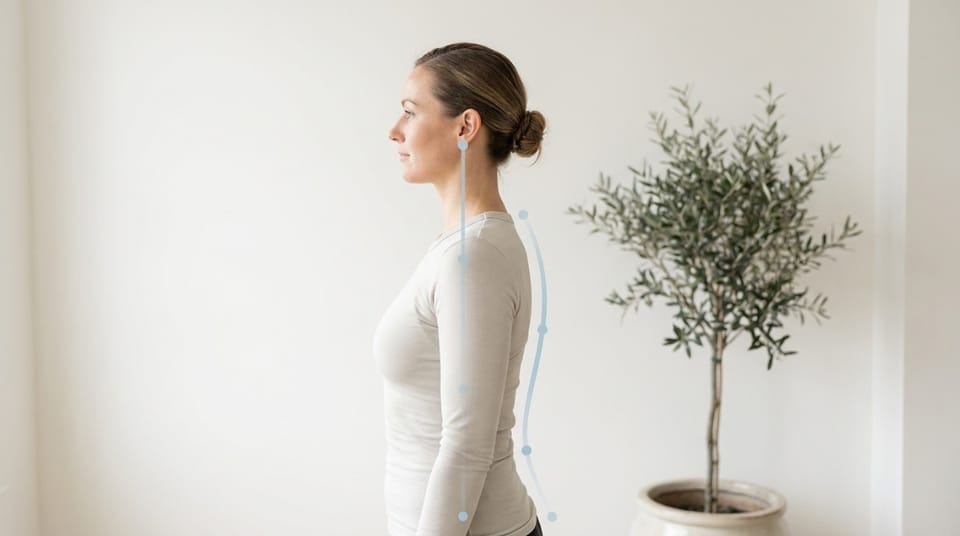
Good neck posture is the structural position where your ears sit directly over your shoulders, your chin stays level with the floor, and your cervical spine keeps its natural gentle inward curve without strain. It's a state your body holds quietly, not a pose you fight to maintain. Most modern adults have drifted from it without noticing.
TL;DR
- Good neck posture = ears stacked over shoulders + chin level + natural C-curve preserved 🧍
- It's structural, not effortful. You shouldn't have to "hold" it
- A few 10-second self-tests reveal your alignment instantly
- Most adults have drifted forward 1 to 3 inches without realizing
- Drift causes tension, headaches, breathing changes, and visible upper-back rounding
- Good news: cervical alignment is highly correctable at any age
What Is Good Neck Posture?
Good neck posture is a structural alignment where your ears stack vertically over your shoulders, your chin remains level, and the natural inward curve of your cervical spine (the "C-curve") is preserved without muscular strain.
In healthy alignment, the deep neck flexors quietly hold the head in place. The upper traps, levator scapulae, and suboccipital muscles stay relaxed. The cervical spine carries the weight of your head (around 10 to 12 pounds) along its natural curve, not against it.
When that alignment drifts, every system above the shoulders pays a price.
The Anatomy: What Makes Neck Posture "Good"?
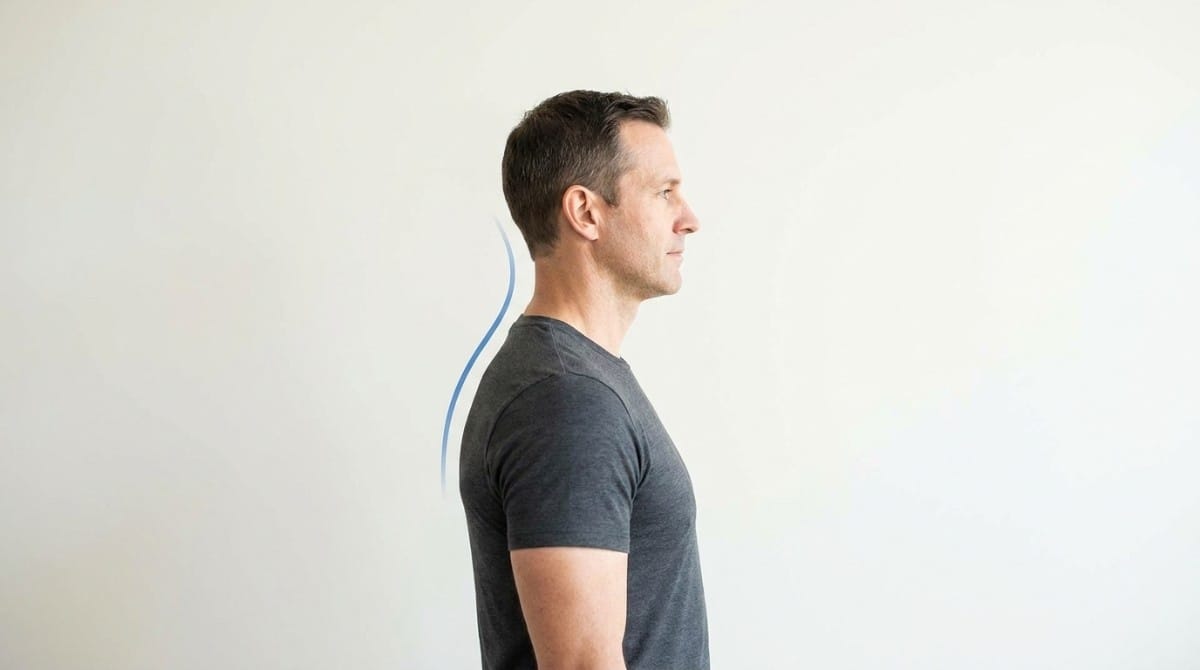
Three structural markers define healthy neck posture:
1. Ear-Shoulder Alignment When viewed from the side, your earlobe should drop a vertical line straight through the middle of your shoulder. Drift forward of that line is the most common posture fault in adults.
2. Level Chin Your chin should sit parallel to the floor. Tilted up means your suboccipital muscles are gripping. Tilted down means your front-neck muscles are shortened.
3. Preserved Cervical Curve The cervical spine has a natural gentle C-shape that curves inward. Lose that curve and your neck flattens, which transfers stress directly into the discs and joints.
You can see how all three drift together in the full breakdown of bad posture types.
How Do You Know If You Have Good Neck Posture?
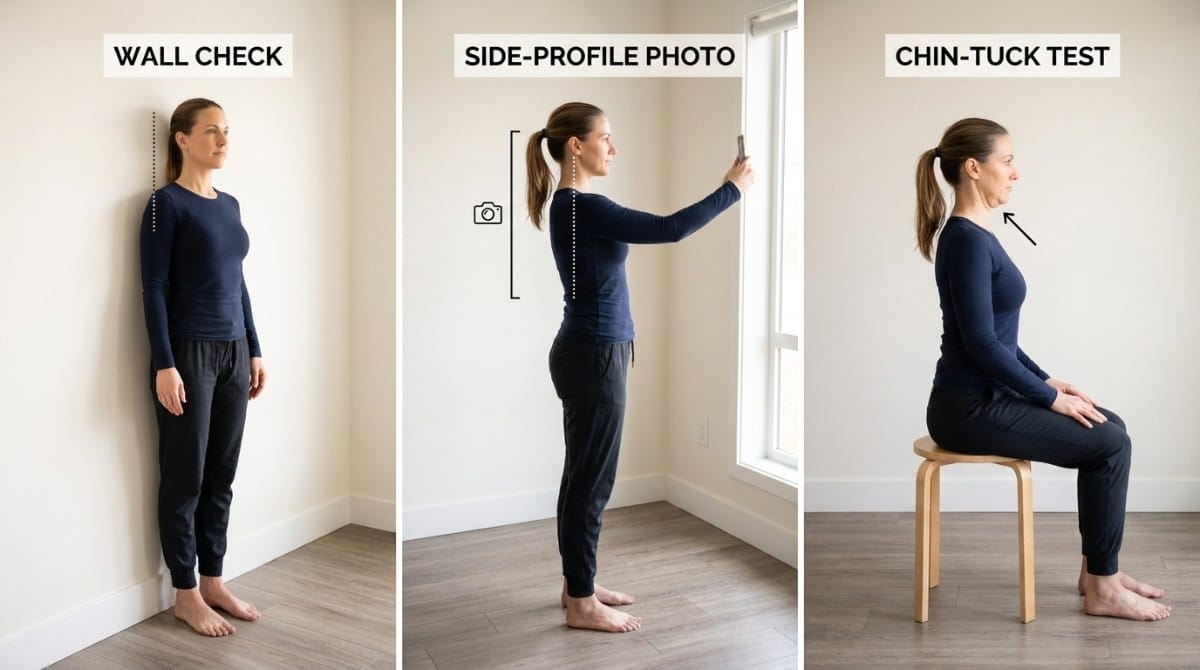
Most people assume their neck posture is fine because they can't see themselves from the side. The fastest way to find out is with three quick self-tests.
Self-Test 1: The Wall Check
Stand with your back, hips, and heels against a wall. Without forcing it, see if the back of your head naturally touches the wall.
- Touches easily: Good cervical alignment
- Touches only if you push: Mild forward drift
- Doesn't touch: Established forward head posture
Self-Test 2: The Side-Photo Test
Have someone take a side-profile photo of you in your natural standing posture. Draw an imaginary vertical line from your earlobe straight down. If it lands behind your shoulder, your head is shifted forward.
Self-Test 3: The Chin-Tuck Range
Sit tall and gently pull your chin straight back (not down). If you can create a clean double-chin without strain or pain, your deep neck flexors still function well. If it feels impossible or painful, those muscles have weakened.
What Does Bad Neck Posture Look Like?
Bad neck posture rarely arrives suddenly. It builds in layers, usually starting with forward head posture and progressing toward visible structural changes.
| Stage | What It Looks Like | Common Symptoms |
|---|---|---|
| Mild drift | Head 1 inch forward of shoulders | Occasional neck stiffness |
| Forward head posture | Head 1-2 inches forward, flattened cervical curve | Frequent tension, mild headaches |
| Advanced FHP | Visibly rounded upper back, chin protruding | Daily neck pain, restricted rotation |
| Neck hump territory | Soft bump forming at base of neck | Chronic discomfort, visible posture changes |
If you're already at the later stages, the tech neck vs forward head posture explainer clarifies what's happening and why.
Why Does Good Neck Posture Matter?
Posture specialists often describe the neck as the "control tower" of the upper body. When alignment is right, signals from the brainstem pass through cleanly, the diaphragm moves freely, and the muscles that protect the spine stay engaged.
When alignment drifts:
- Muscle load increases. For every inch the head moves forward, the effective load on the neck multiplies. A 2-inch forward shift roughly triples the strain.
- Breathing becomes shallower. Forward head posture compresses the rib cage and reduces diaphragm efficiency.
- Headaches become more frequent. Tight suboccipital muscles refer pain into the skull base and behind the eyes.
- The upper back rounds. The thoracic spine compensates for what the neck has lost.
💡 Key Insight: Good neck posture isn't about looking taller. It's about reducing the constant background load on muscles, joints, and discs that were never designed to work overtime. Long-term, that load is what causes structural change.
What Happens If Your Neck Posture Drifts?
Untreated neck posture drift compounds quietly. The early stage feels like nothing. The middle stage feels like occasional tension. The late stage feels like chronic discomfort and visible change.
The most common late-stage outcome is a soft bump at the base of the neck, often called a neck hump or dowager's hump. It's not a separate problem. It's the same problem, unaddressed for years. The full breakdown of what a dowager's hump actually is explains how the structure develops.
How To Check Your Neck Posture (Quick List)
- Side-profile mirror test - Stand sideways to a mirror, check ear-shoulder line.
- Wall check - Heels, hips, back, head against a wall. Head should touch easily.
- Photo audit - Take a side photo every 2 weeks to track drift.
- Chin-tuck test - Can you create a painless double-chin? Tests deep neck flexor function.
- Rotation test - Slowly turn your head left and right. Equal range on both sides suggests healthy alignment.
- Shoulder check - Drop arms naturally. If palms face backward, shoulders (and likely the head) are rolled forward.
- Headache pattern - Frequent tension headaches at the base of the skull are an early warning sign.
When This Approach Doesn't Work
Self-assessment is reliable for most adults, but it has limits. It's not the right starting point if you have:
- Recent neck trauma or whiplash
- Diagnosed cervical disc disease or stenosis
- Severe scoliosis or congenital spinal differences
- Vertigo or balance issues triggered by neck movement
- Active inflammatory conditions affecting the spine
In those cases, see a physician or physiotherapist for a clinical assessment before relying on at-home tests.
Research & Expert Insight
Research in musculoskeletal rehab consistently shows that ear-shoulder alignment is one of the strongest single predictors of long-term cervical health. Physiotherapists often use side-profile photo comparisons because the human eye reliably underestimates forward drift in the mirror. Posture specialists suggest that even 1 inch of consistent forward shift is enough to alter muscle activation patterns over months.
The encouraging finding: the deep cervical flexors remain trainable at any age, and visible alignment changes appear within 4 to 8 weeks of consistent retraining.
A Simple Framework to Assess and Maintain Good Neck Posture
| Phase | What You Do | How Often |
|---|---|---|
| Baseline | Side-profile photo + wall check | Once |
| Daily awareness | Quick mirror check at desk | 2-3 times/day |
| Weekly audit | Repeat self-tests | Once/week |
| Bi-weekly tracking | New side-profile photo | Every 2 weeks |
| Intervention | If drift detected, start corrective routine | As needed |
If your assessment reveals drift, the 7-step daily routine to improve neck posture is the natural next step. Pair it with the targeted forward head posture exercises for faster results.
Final Takeaway
Good neck posture isn't a look. It's a structural state defined by three simple markers: ears over shoulders, level chin, and a preserved cervical curve. Most adults have drifted from this baseline without noticing, and most don't realize the drift is reversible. A 30-second self-test today gives you the only data point that matters: where you are right now.
Why Self-Assessment Alone Often Falls Short
The wall test and mirror check are useful starting points, but they have real limits. You can't see your full side profile in real time. Your eyes adapt to your own posture and stop noticing the drift. And without a baseline measurement, "I think it's better" is just a guess.
That's where most people get stuck. They sense something is off, they try a few exercises, and within weeks they have no way to tell if anything has changed.
How Backed AI Removes the Guesswork
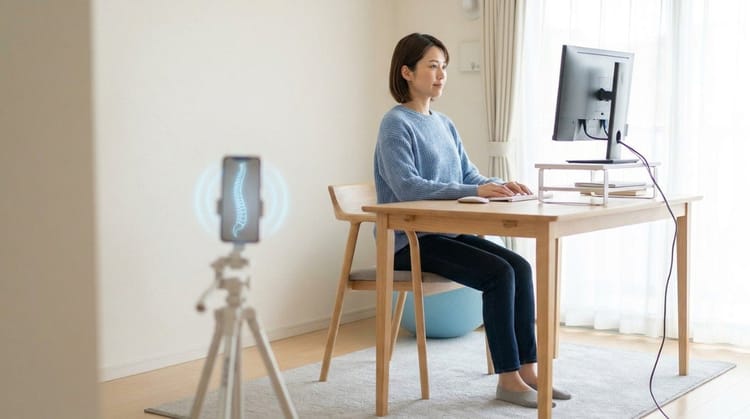
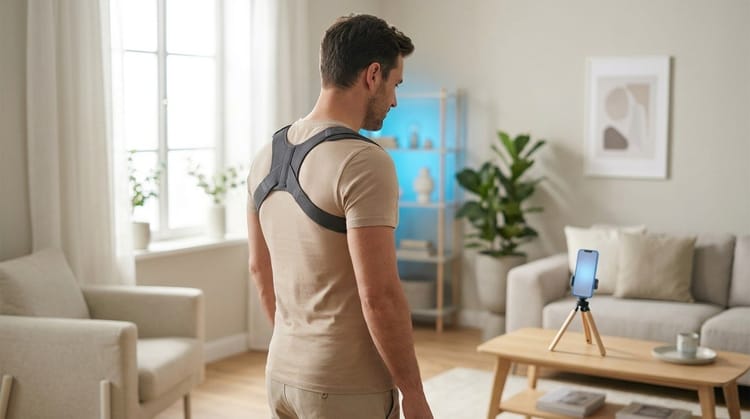
Backed AI uses your phone camera to scan your posture, measure your exact forward-head displacement in degrees, and build a personalized correction plan based on your actual baseline, not someone else's.
✅ AI posture scans that quantify your alignment, not just describe it
✅ Side-by-side visual progress tracking every 2 weeks, so improvement is visible
✅ Personalized exercise programs that target your specific drift pattern
For anyone serious about understanding and correcting their neck posture, this is the missing measurement layer. Download Backed AI and get your true posture baseline today. 💙
FAQ
Q1: What does good neck posture look like?
Good neck posture is when your ears stack vertically over your shoulders, your chin sits level with the floor, and the natural inward C-curve of your cervical spine is preserved without strain.
Q2: How do I know if my neck posture is good or bad?
The fastest check is the wall test. Stand with your back, hips, and heels against a wall. If the back of your head touches the wall naturally without pushing, your neck posture is in healthy range. If it doesn't, you likely have some degree of forward head posture.
Q3: Is good neck posture the same as having no neck pain?
Not exactly. You can have mild forward head posture without pain (yet), and you can have neck pain from causes unrelated to posture. But long-term, good posture is one of the strongest predictors of a pain-free neck.
Q4: Can good neck posture be regained after years of drift?
Yes. Research in musculoskeletal rehab consistently shows that cervical alignment is highly trainable at any age. Most adults see visible improvement within 4 to 8 weeks of consistent corrective work.
Q5: Should my neck be perfectly straight?
No. A healthy cervical spine has a gentle natural inward curve called the cervical lordosis. A perfectly straight neck (called "military neck" or "flat neck") is actually a sign of poor posture, not good posture.