7 Daily Habits That Quietly Wreck Your Neck Posture (And the Easy Fixes) 💙

Most neck posture problems don't come from one big mistake. They come from a handful of small daily habits, repeated thousands of times, that quietly drift your head forward year after year. The good news: each habit has an easy fix that costs nothing and takes seconds to adopt. You don't need new exercises to start, just better defaults.
TL;DR
- Bad neck posture is built by daily habits, not single events 📱
- Looking down at your phone is the #1 driver in modern adults
- Laptop-only setups, wrong pillows, and shoulder-cradled phone calls compound damage
- One-shoulder bag carrying and reclined driving seats are silent contributors
- Each habit has a 10-second fix you can apply today
- You don't need a new exercise routine to stop the drift
Why Daily Habits Matter More Than Exercises
A 10-minute exercise session moves your neck for 10 minutes. Your daily habits move it for the other 15+ waking hours. That math explains why most people who do "all the right exercises" still don't see results: the corrective work gets undone by what they do the rest of the day. Before fixing the habits, it helps to understand what healthy cervical alignment actually looks like so you can spot when you've drifted from it.
Posture specialists often describe daily habits as the "input layer" of posture. Exercises are the output. Fix the input first.
The 7 Daily Habits Quietly Wrecking Your Neck Posture
1. Looking Down at Your Phone (Text Neck)
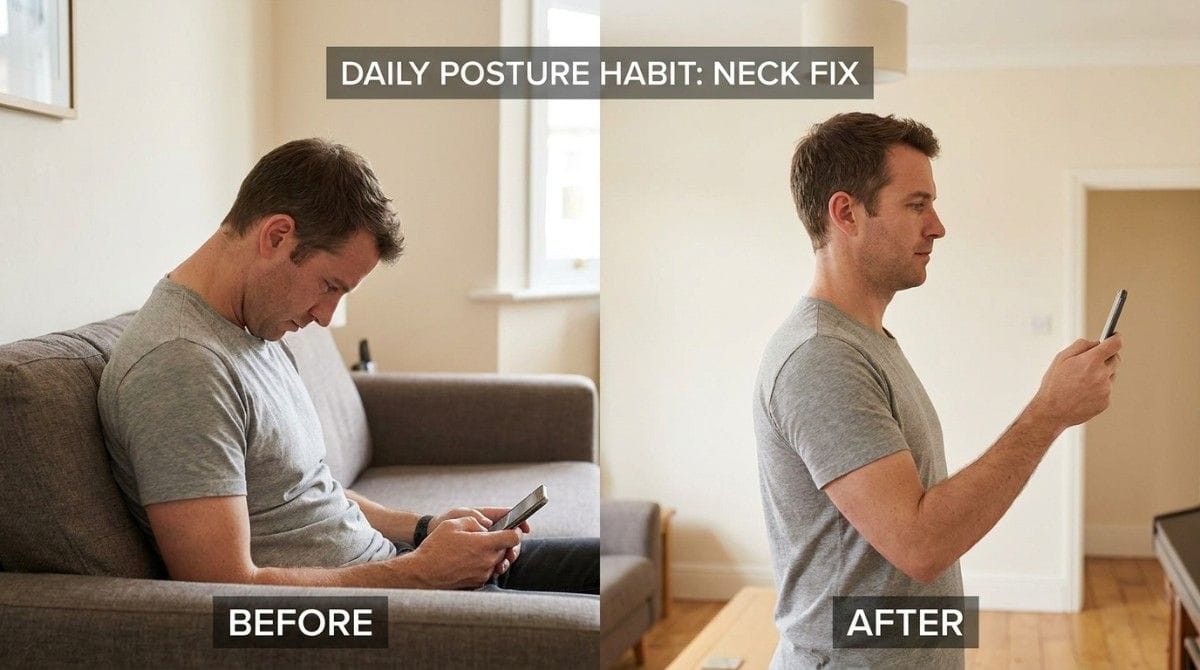
The average adult tilts their head forward 45 to 60 degrees while texting. That posture multiplies the effective weight on the cervical spine by 4 to 5 times. Done for several hours a day, it's the single biggest driver of forward head posture in modern adults.
Easy fix: Lift the phone to eye level. It feels awkward for 3 days, then it feels normal. The detailed breakdown of text neck and forward head posture explains exactly how this damage accumulates.
2. Working From a Laptop Without a Riser
Laptops force a choice: either the screen is too low (you look down) or the keyboard is too high (your shoulders shrug). Either way, your neck loses. Most desk-related neck pain traces back to this single setup error.
Easy fix: Place the laptop on a stand at eye level and use an external keyboard. A $20 riser eliminates the structural reason you slouch.
3. Sleeping With the Wrong Pillow
If your pillow is too high, your chin tucks toward your chest for 7-8 hours. Too low, and your head tilts back. Either way, you wake up with the same drift you spent all day trying to correct.
Easy fix: Choose a pillow that keeps your neck aligned with the rest of your spine when you're on your side or back. The full guide to pillow choice for posture breaks down exactly what to look for.
4. Cradling Your Phone Between Ear and Shoulder
A common multitasking habit during calls. It pulls one side of the neck into deep, prolonged side-bend, locking up the levator scapulae and upper traps. Done daily, it creates asymmetric neck tension that nothing on the gym floor will fix.
Easy fix: Use earbuds, AirPods, or speakerphone. Free both hands and keep the neck neutral.
5. Carrying a Heavy Bag on One Shoulder
A loaded tote, gym bag, or work bag on the same shoulder every day shifts your entire upper-body alignment. The opposite shoulder elevates to compensate, the head tilts to balance, and the cervical spine takes on a permanent micro-asymmetry.
Easy fix: Switch shoulders every 5 minutes, or upgrade to a backpack worn on both straps. Distribute the load.
6. Driving With the Seat Reclined Too Far Back
A reclined driver's seat looks comfortable, but it forces your head forward of your shoulders to see the road clearly. On a long commute, that's 1 to 2 hours daily of reinforced forward head posture.
Easy fix: Bring the seat back closer to upright (around 100-110 degrees) and adjust the headrest so it actually contacts the back of your head.
7. Watching TV in Bed Propped Up on Pillows
Stacking three pillows behind your back to watch a show buckles your spine into a C-shape. Your head juts forward, your upper back rounds, and you stay in that posture for an entire episode (or three).
Easy fix: Either sit on the couch with proper back support, or lie flat and watch with the screen positioned overhead. Don't recreate desk posture in bed.

The 7 Habits at a Glance
| Habit | Why It Wrecks Posture | Easy Fix |
|---|---|---|
| Phone looking down | Multiplies head weight 4-5x | Hold at eye level |
| Laptop without riser | Forces head down all day | Use a stand + external keyboard |
| Wrong pillow | 7-8 hrs of misalignment nightly | Keep neck aligned with spine |
| Shoulder-cradled calls | Locks one-sided neck tension | Use earbuds or speaker |
| One-shoulder bag | Creates asymmetric drift | Switch sides or use a backpack |
| Reclined driving seat | Forward head for entire commute | Sit upright, use headrest |
| Pillow-propped TV in bed | Locks in C-shape posture | Sit on couch or lie flat |
How To Build Awareness of Your Own Habits
Most people don't realize how often they're in a posture-wrecking position because nothing alerts them. The fix starts with awareness, not effort.
💡 Key Insight: You can't change a habit you don't notice. The first 7 days of any neck posture fix should focus on catching yourself in the act, not changing yourself. Awareness is the entire mechanism.
If you want to stack a structured routine on top of these habit fixes, the 7-step daily routine to improve neck posture is the practical companion. For tool-based support, the best tools to improve neck posture breakdown covers what's worth investing in.
What Happens If You Ignore These Habits?
Each habit alone seems harmless. Stacked daily for months, they compound into forward head posture. Stacked for years, they create visible upper-back rounding, neck humps, and chronic tension. The encouraging part: the damage is largely reversible if you change the inputs.
When This Approach Won't Work
Habit fixes alone aren't enough if:
- You already have established forward head posture or a visible neck hump (start with corrective exercises too)
- You have an acute neck injury (see a clinician first)
- Your pain is sharp, radiating, or accompanied by numbness (medical evaluation needed)
- You spend 10+ hours daily in fixed positions (you'll need ergonomic upgrades alongside habit changes)
Research & Expert Insight
Research in musculoskeletal rehab consistently shows that postural habits are the strongest predictor of long-term cervical health, more than exercise frequency. Physiotherapists often note that patients who change one or two daily habits see better outcomes than those who do exercises perfectly but ignore their default positions.
A Simple Framework to Replace Posture-Wrecking Habits
| Week | Focus | What To Change |
|---|---|---|
| 1 | Awareness | Catch yourself in each of the 7 habits (no changes yet) |
| 2 | Phone + laptop | Raise phone and laptop to eye level daily |
| 3 | Sleep + bag | Audit your pillow + switch to two-strap bag |
| 4 | Calls + driving | Use earbuds + fix seat angle |
| 5+ | Maintenance | Layer in exercises and tools on the new habit base |
Final Takeaway
Your neck posture is shaped less by what you do for 10 minutes a day and more by what you do for the other 15 hours. Seven small habits, fixed with seven small changes, will outperform any exercise program built on a broken foundation. Start with awareness. The fixes are easy once you can see what you're doing.
Why Habit Awareness Is Harder Than It Sounds
Knowing the habits is the easy part. Catching yourself doing them in real time is much harder. Your brain adapts to repeated positions and stops flagging them. Within minutes of opening your phone, your head is forward again and you don't feel it.
That's where a smart system makes the difference.
How Backed AI Catches the Drift You Stop Noticing
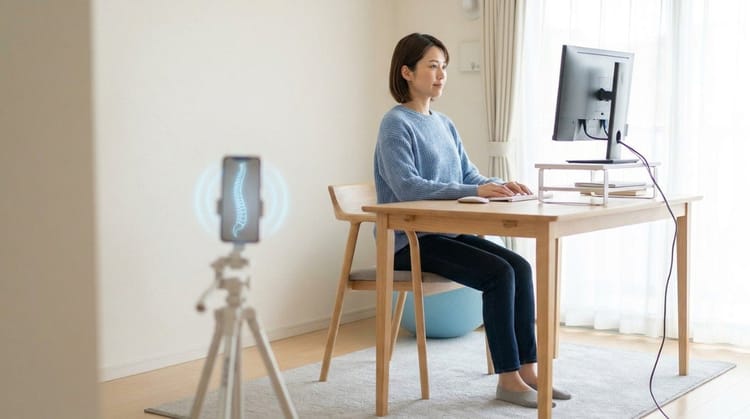
Backed AI uses your phone camera to measure your posture, identify the specific patterns driving your drift, and build a personalized correction plan around your real-life habits, not generic advice.
✅ AI posture scans that quantify exactly how far your head sits forward ✅ Personalized awareness cues built around the habits that affect your specific drift ✅ Visual progress tracking every 2 weeks so habit changes show up as measurable alignment improvements
If you've recognized yourself in any of these 7 habits, the next step is measuring where you actually are and tracking what changes when you fix them. Download Backed AI and turn habit awareness into real measurable progress. 💙
FAQ
Q1: What is the worst daily habit for neck posture?
Looking down at your phone is the single biggest driver in modern adults. The average person tilts their head forward 45 to 60 degrees while texting, which multiplies the effective load on the cervical spine by 4 to 5 times.
Q2: Can changing daily habits actually fix neck posture without exercises?
Habit changes alone can stop the drift from getting worse and reverse mild cases. For established forward head posture, you'll get faster results combining habit changes with targeted exercises.
Q3: How long does it take to break a posture-wrecking habit?
Most posture habits take 3 to 4 weeks of conscious awareness to replace. The first week is recognition, the second is intentional correction, and by weeks 3-4 the new pattern starts feeling automatic.
Q4: Is sleeping position a habit I can change?
Yes, partly. Pillow choice is the easiest fix. Side and back sleeping are both fine for neck posture if the pillow supports the natural cervical curve. Stomach sleeping is the hardest position to recover from posturally.
Q5: Do I need an app to track my posture habits?
Not strictly, but most people overestimate how often they hold good posture. A posture tracking app or phone-based AI scan gives you an objective baseline so you can see whether your habit changes are actually working.