Anterior pelvic tilt is a postural imbalance where the front of the pelvis rotates downward and forward, increasing the arch in the lower back and pushing the belly and glutes outward.
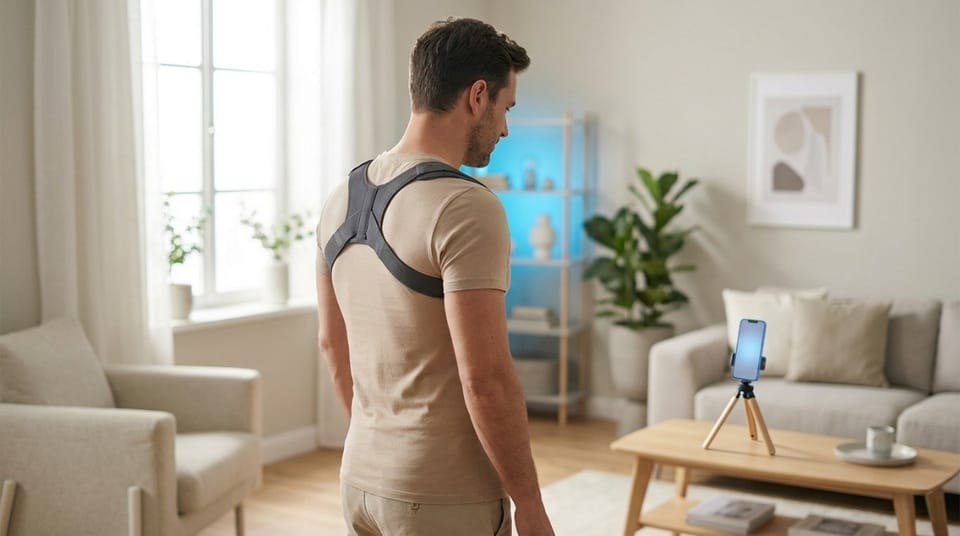
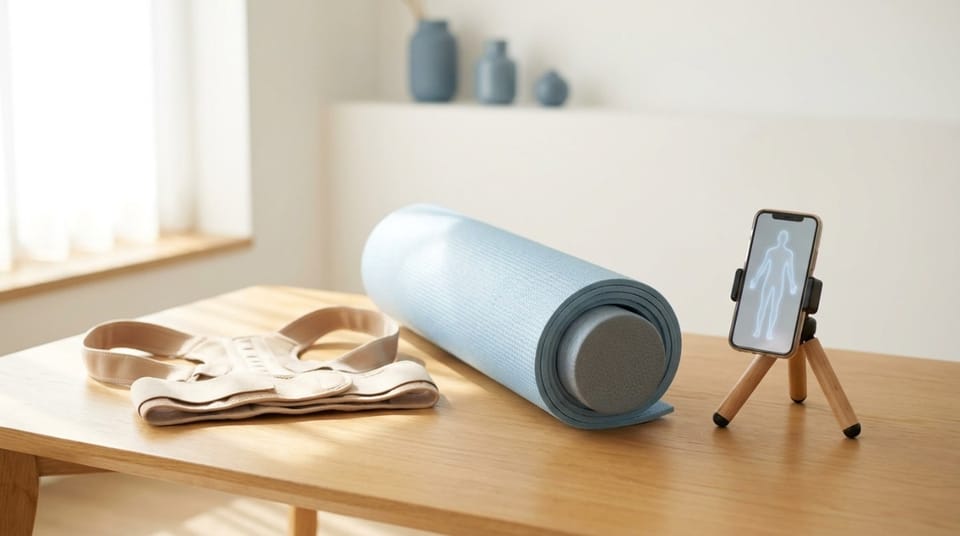
A posture corrector is a physical brace that manually pulls your shoulders into position, while an AI posture app is software that scans your posture through your phone camera and builds a personalized routine to correct it.
Kyphosis is the medical term for an excessive forward curve in the thoracic spine. Dowager's hump and neck hump are two informal names for a related but more specific symptom.