Thoracic mobility is your mid-back's active range of motion through extension, rotation, and flexion, while thoracic flexibility is simply how far the surrounding muscles can passively lengthen under a stretch.
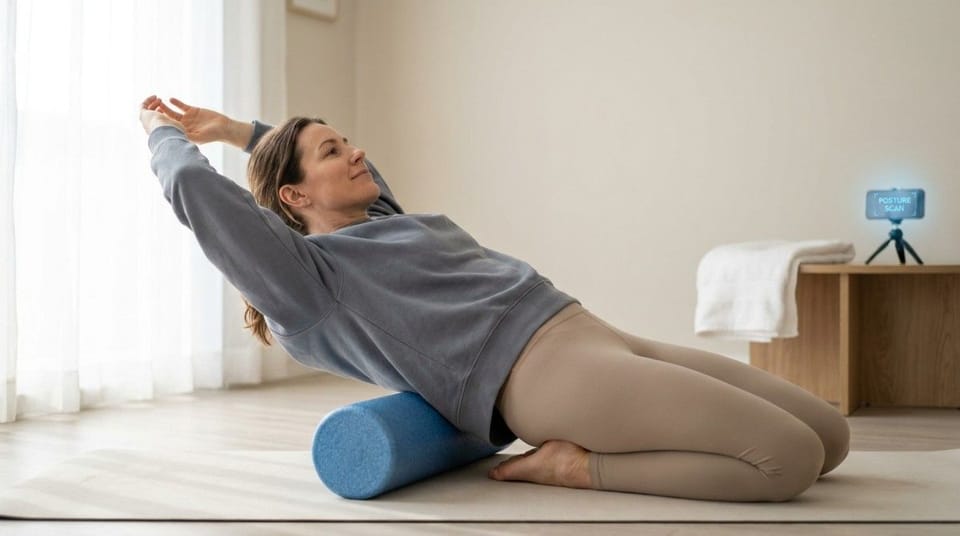
Thoracic mobility tools are simple, low-cost props, foam rollers, peanut-shaped massage tools, and mobility sticks, used to apply pressure or leverage to the mid-back so it can move through extension, rotation, and flexion more freely.
A thoracic mobility self-test is a set of simple, unweighted movements used to check how freely your mid-back extends, rotates, and flexes without your lower back or shoulders taking over the movement.
Thoracic mobility is the range of motion available in the mid-back (T1 to T12), specifically its ability to extend, rotate, and flex without the neck or lower back taking over the movement.
Sciatica in desk workers is irritation of the sciatic nerve caused by prolonged sitting, a tightened piriformis muscle, and weakened glutes, producing pain that travels from the buttock down the leg.