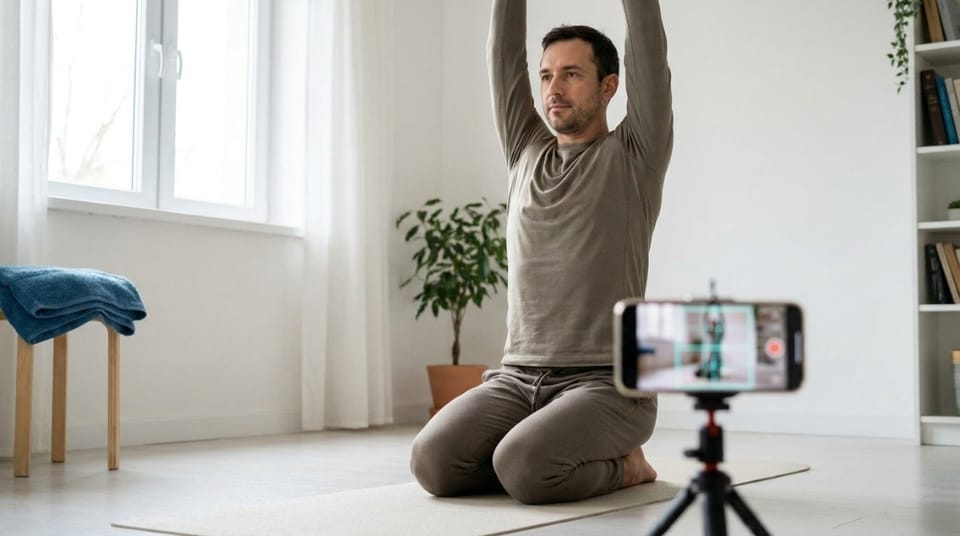
The safest way to correct a hunched back is a short daily routine that mobilizes the rib cage and thoracic spine, strengthens the muscles between the shoulder blades, and stretches the chest and hip flexors pulling you forward.
A neck reset is a short, targeted sequence of positional changes and muscle release techniques designed to interrupt the tension pattern behind a posture headache within minutes, instead of over days.
The best exercises for pain between the shoulder blades pair upper-back mobility with rhomboid and mid-trapezius strengthening, because the muscles between your shoulder blades are usually weak and overstretched, not tight.
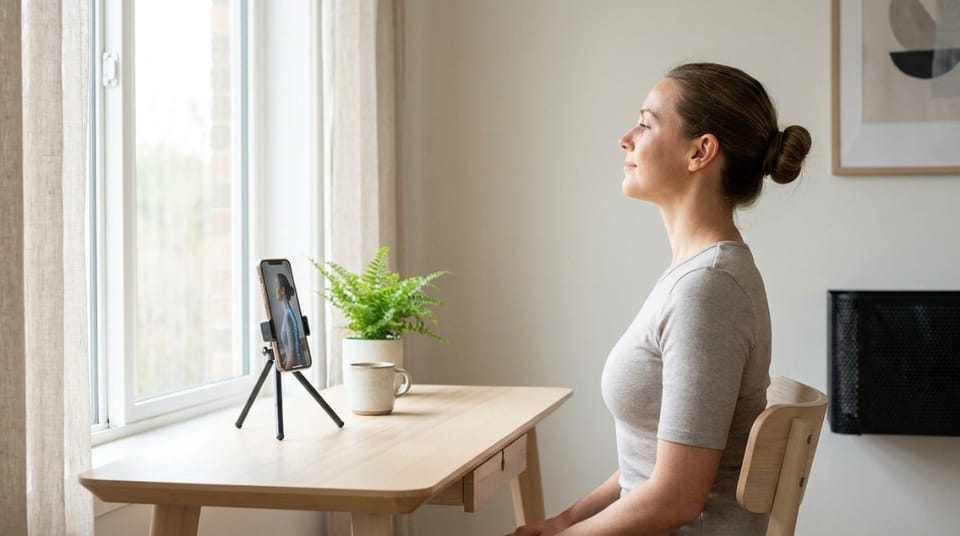
An AI posture correction app is a mobile tool that uses your phone camera to analyze your posture, identify imbalances, and deliver a personalized corrective exercise and habit plan.
To improve neck posture, you need to release tight front-neck and chest muscles, mobilize a stiff upper back, and strengthen the deep neck flexors that keep your head stacked over your shoulders. Most people see meaningful change within 4 to 8 weeks of consistent 10 to 15-minute daily practice.