Posture Headache Relief: The Neck Reset Routine That Actually Works 💙

The fastest way to relieve a posture headache is to interrupt the muscle tension pattern causing it right away, not wait for it to pass. A short, targeted reset that combines positional changes, muscle release, and breathing can ease the pain within minutes, and a brief daily version keeps it from coming back.
TL;DR
- ⏱️ A focused 5-minute reset can ease posture headache pain faster than resting or waiting it out.
- 🎯 Relief techniques target different muscles than prevention exercises, both matter.
- 🫁 Breathing changes actually reduce neck muscle guarding, not just stretching.
- 🧊 Tools like a tennis ball make trap release far more effective than fingers alone.
- 📅 A short daily version of this reset prevents most posture headaches from starting.
- 🚩 Relief that doesn't work after a few honest attempts is a sign to check for other causes.
- 📱 Guided reminders help you catch tension before it becomes a full headache.
What Is a Neck Reset?
A neck reset is a short, targeted sequence of positional changes and muscle release techniques designed to interrupt the tension pattern behind a posture headache within minutes, instead of over days.
It's different from a daily prevention routine. Prevention exercises like chin tucks and thoracic extension rebuild long-term postural strength. A reset is triage: it's what you do the moment you feel that familiar tightness starting at the base of your skull, before it fully builds into a headache.
If you're not sure a posture headache is what you're dealing with in the first place, here's how the neck-tension connection actually works before you try the reset below.
💡 Key Insight: Once neck muscles lock into a guarding pattern, stretching alone often isn't enough to release them. Combining a position change, direct muscle release, and slower breathing works faster because it addresses the muscle, the joint, and the nervous system response all at once.
Why Does a Quick Reset Work Faster Than Waiting It Out?
Waiting doesn't resolve a posture headache because the muscle guarding pattern doesn't switch off on its own, especially if you're still sitting in the same position that started it. A few things need to happen together to break the cycle:
- The tight muscle needs direct release. Guarded muscles like the upper trapezius and levator scapulae often need pressure or stretch, not just rest.
- The joint position needs to change. Staying still in the same forward head posture keeps reinforcing the exact load pattern that caused the tension.
- The nervous system needs to downshift. Shallow, stressed breathing keeps neck and shoulder muscles in a low-grade guarded state, so slowing your breathing is part of the fix, not a side note.
This is why a five-minute reset that hits all three usually outperforms twenty minutes of just sitting quietly.
How To Do the 5-Minute Neck Reset Routine
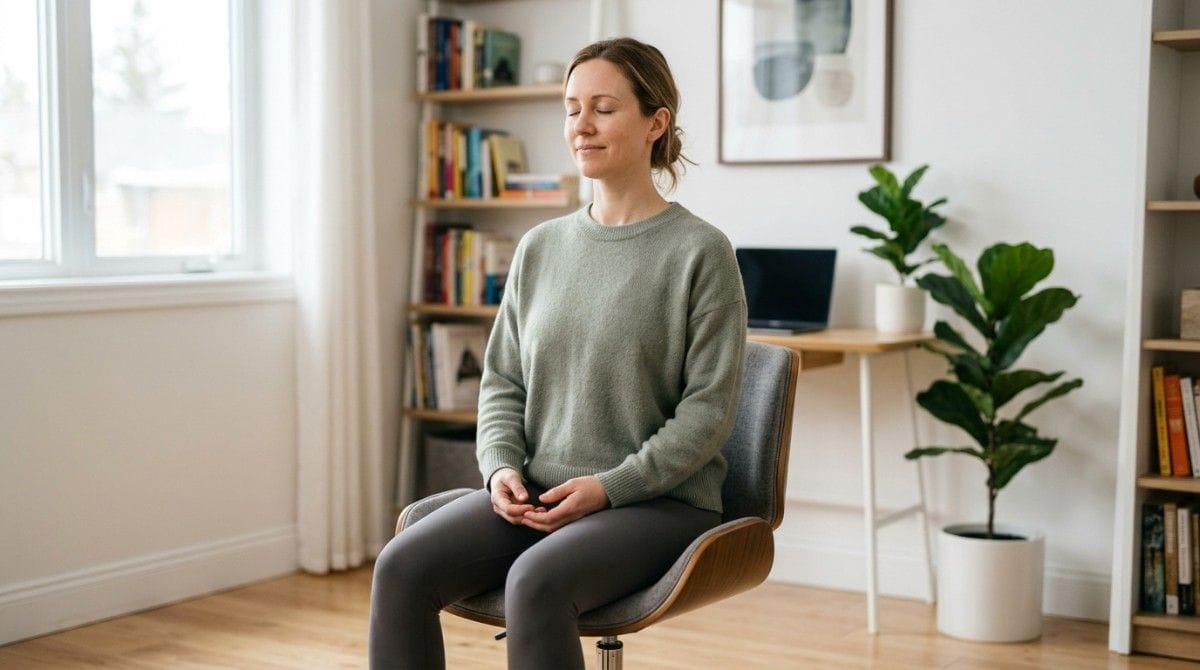
- Breathe first, stretch second. Sixty seconds of slow belly breathing lowers the guarding response before you even start moving.
- Move through multiple angles, not just one stretch. Neck half-rolls hit several tight spots at once instead of isolating a single muscle.
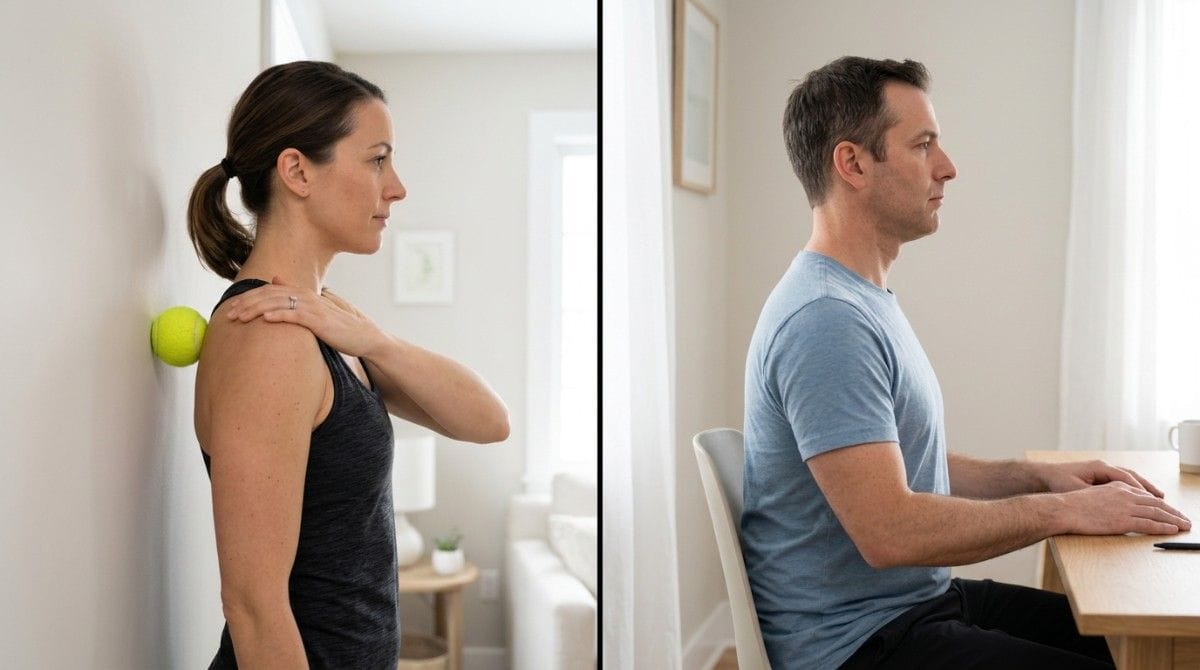
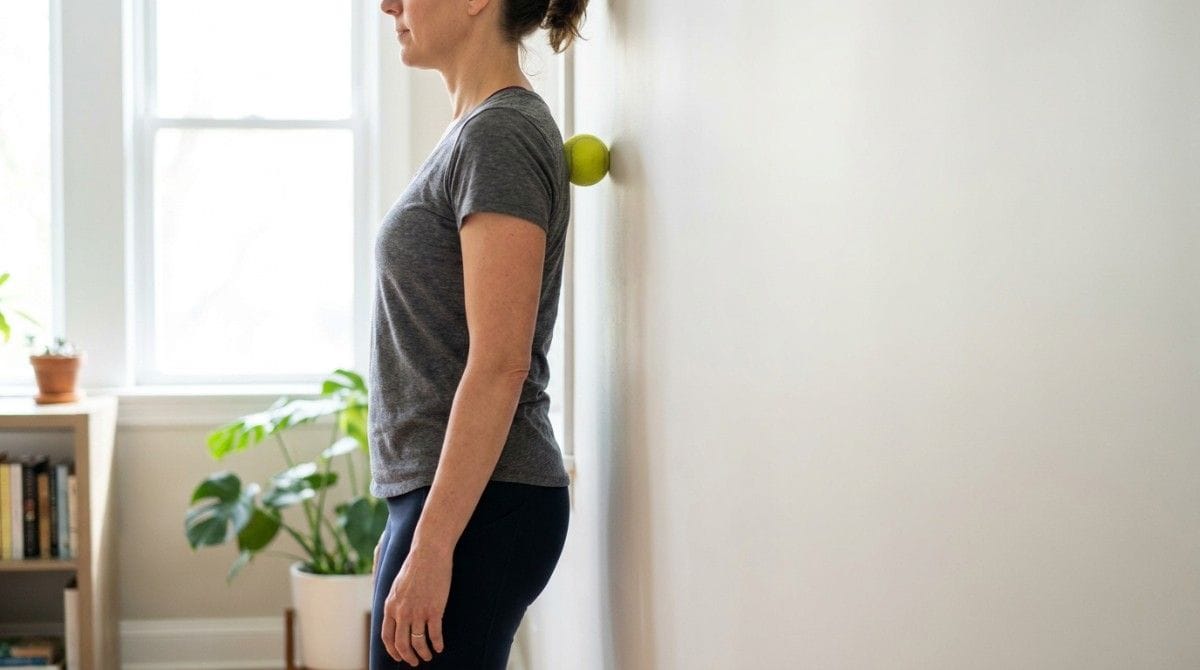
- Use pressure, not just stretch, on the worst spot. A tennis ball against a wall gets into the upper trapezius more effectively than a static stretch.
- Restore the joint position last. A brief press-up or cat-cow re-opens the thoracic spine so your neck isn't compensating for a stiff upper back.
- Reset your environment before you go back to work. Bring your screen back to eye level, or the tension simply rebuilds.
For the longer daily version of neck-specific work, this 7-step daily neck posture routine is the natural next step once the acute pain has eased.
| Do Right Now (Relief) | Do Daily (Prevention) |
|---|---|
| Diaphragmatic breathing reset | Chin tucks at your desk |
| Tennis-ball upper trap release | Doorway chest stretch |
| Levator scapulae stretch | Scapular squeezes |
| Neck half-rolls | Thoracic extension over a chair |
| Prone press-up or seated cat-cow | Screen and chair height check |
What Happens If You Skip the Reset and Just Push Through?
Pushing through a posture headache without addressing the muscle tension usually makes the next one worse. The guarded muscles stay short and irritated, the same forward head position keeps reloading them, and the headache tends to return sooner and last longer each time. Over weeks, this can turn an occasional afternoon headache into a near-daily one, which is often when people assume something more serious is going on when it's really an unaddressed mechanical pattern.
Best Relief Techniques for a Posture Headache (Quick List)
- Levator scapulae stretch – Reach one arm behind your back, tilt your head diagonally toward the opposite armpit, and hold 20 to 30 seconds each side. This releases a muscle that chin tucks alone don't reach.
- Tennis-ball upper trap release – Lean the ball between your shoulder and a wall, and roll slowly for 60 seconds to break up the tightest point.
- Prone press-up (mini cobra) – Lying face down, press your chest up while keeping your hips on the floor for 5 slow repetitions to restore thoracic extension quickly.
- Diaphragmatic breathing reset – Sixty seconds of slow belly breathing lowers the muscle guarding response that keeps the tension locked in.
- Neck half-rolls – Slow, controlled half circles from ear to chest and side to side loosen several angles at once. Skip full backward rolls, which load the neck joints unnecessarily.
- Seated cat-cow – Arch and round your upper back while seated to mobilize the spine your neck has likely been compensating for.
Step-by-Step Recovery Framework: The 5-Minute Timed Reset
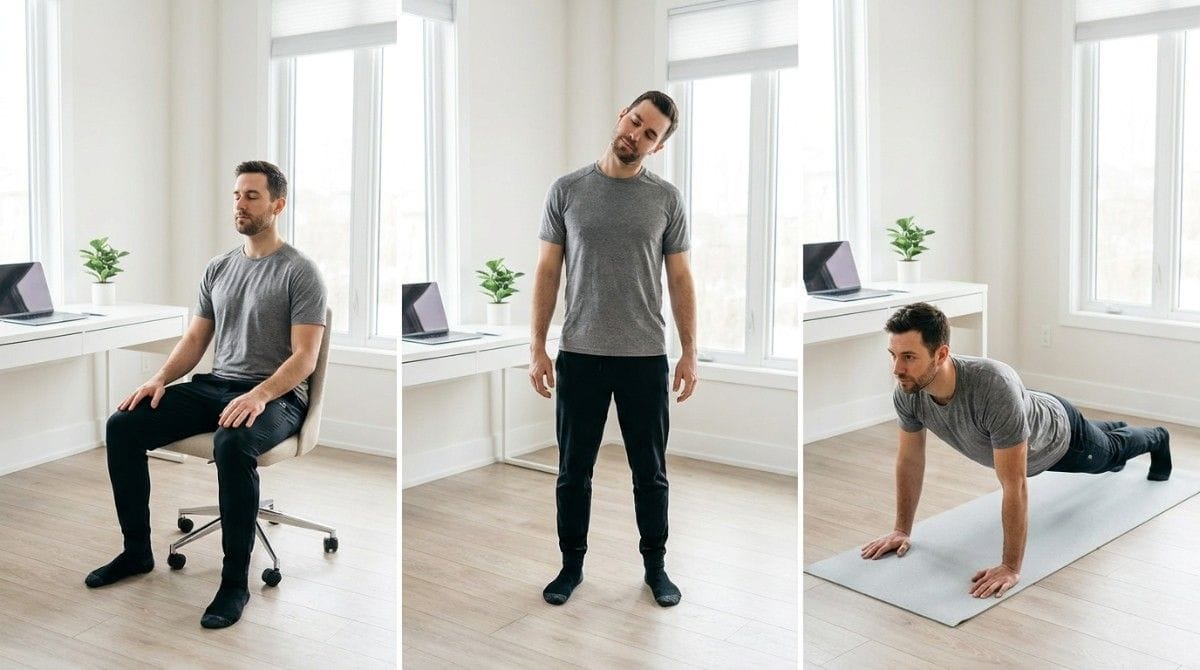
- Minute 0 to 1 – Breathe. Sit upright, close your eyes if you can, and take slow belly breaths to lower the guarding response.
- Minute 1 to 2 – Mobilize. Move through neck half-rolls, then the levator scapulae stretch on both sides.
- Minute 2 to 3 – Release. Use the tennis ball against a wall on the tightest side of your upper trapezius.
- Minute 3 to 4 – Restore. Do 5 prone press-ups or a round of seated cat-cow to reopen your upper back.
- Minute 4 to 5 – Reset your setup. Adjust your screen, chair, or phone height so you're not walking straight back into the same load.
💡 Catching the tension before it builds into a full headache is the hard part to do consistently on your own, which is exactly where Backed AI's reminders come in.
When This Approach Doesn't Work
A neck reset helps most tension-driven posture headaches, but it isn't the right tool for every headache. Skip the reset and see a doctor instead if you have:
- A sudden, severe headache unlike anything you've had before.
- A headache with fever, stiff neck, confusion, or a rash.
- A headache that started after a fall or head injury.
- Vision changes, slurred speech, or numbness alongside the headache.
- No improvement at all after several honest attempts at both the reset and the daily prevention routine over a few weeks.
That last point matters. If the reset genuinely isn't helping, it's worth ruling out a non-postural cause rather than repeating the same routine indefinitely.
Research & Expert Insight
Physiotherapists often recommend pairing direct muscle release with a joint position change rather than relying on stretching alone, since a guarded muscle frequently needs both to actually let go. Posture specialists suggest that breathing pattern changes are an underused part of neck tension relief, since shallow breathing keeps the accessory neck muscles working harder than they need to. Research in musculoskeletal rehab shows that combining self-myofascial release, like the tennis-ball technique above, with active mobility tends to outperform static stretching alone for short-term tension relief.
Not every posture-related pain shows up in the neck. Stress and tension between the shoulder blades often travels with the same guarding pattern described here, and the tools worth keeping nearby, like a pillow that supports neutral alignment or the right posture trainer for your setup, can make both easier to manage.
Why Most Quick Fixes Don't Last
A reset that works once but stops working is usually missing one of these:
- It only addresses the symptom. Releasing the muscle without fixing the desk setup or habit that caused it just resets the timer.
- It skips the breathing component. Stretching a muscle that's still under nervous system guarding rarely holds.
- It's inconsistent. A reset done once during a bad flare-up isn't the same as catching tension early and often.
- There's no feedback loop. Without noticing your own posture drifting, the same pattern rebuilds daily.
This is the same reason posture correction in general often doesn't stick, the fix works, but the habit of catching the problem early is the part that's hard to sustain alone.
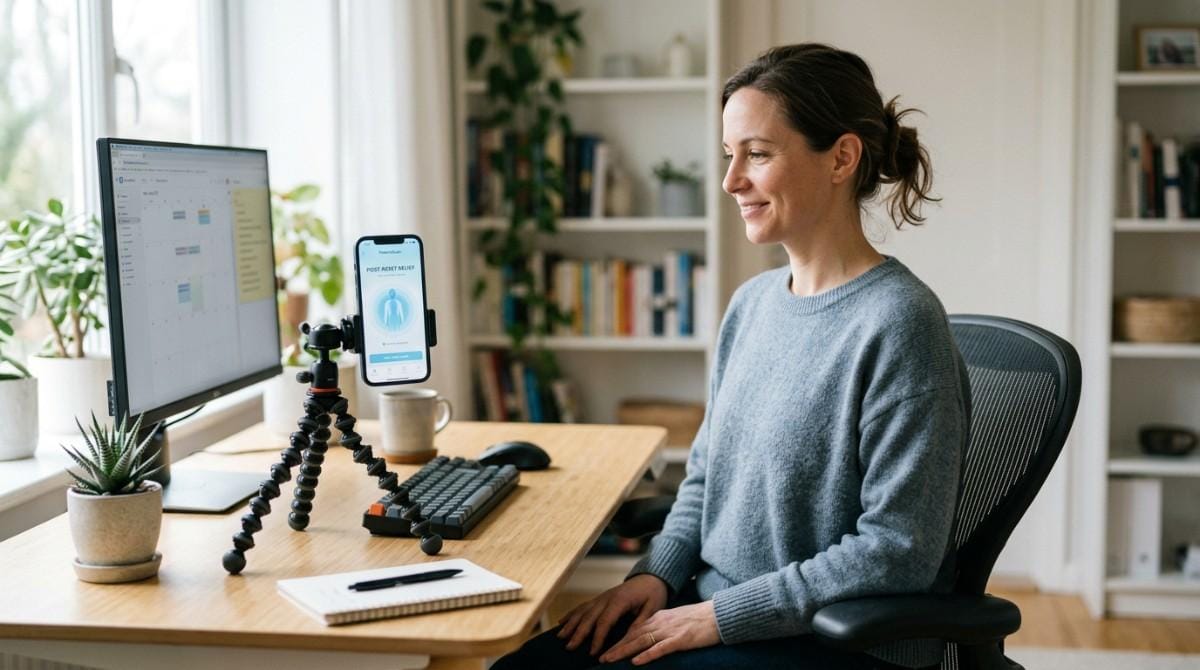
A reset works in the moment, but the habit of catching tension before it builds into a headache is genuinely hard to keep up on your own, especially on busy days when you don't notice your posture slipping until the ache is already there.
Backed AI closes that gap:
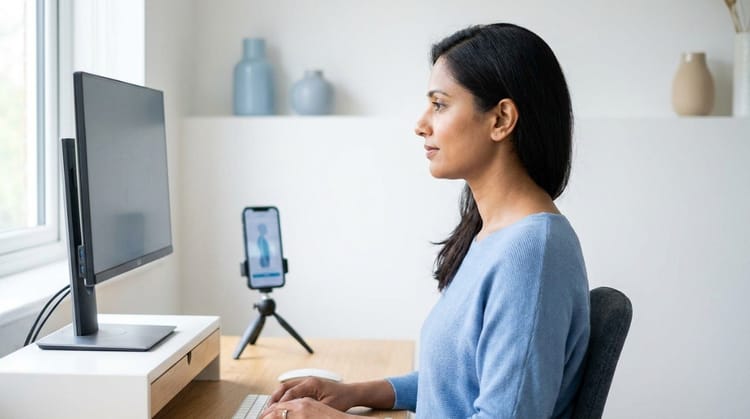
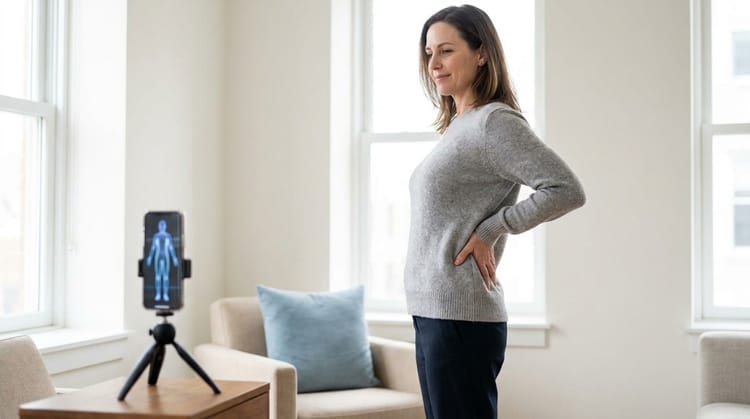
- Catches the drift early. Camera-based posture analysis flags forward head posture before it turns into a full headache, not after.
- Personalizes the routine. Instead of guessing which stretch you need, Backed AI builds a plan around your specific imbalance.
- Builds the habit, not just the knowledge. Reminders land at the moments you're most likely to need them, like after a long stretch at your desk.
If resets keep working but the headaches keep coming back, the missing piece is usually catching the pattern earlier, not doing more stretches.
Download Backed AI and start correcting your posture today.
Final Takeaway
A posture headache responds fastest to a focused reset, not waiting it out. Breathing, direct muscle release, and a joint position change together interrupt the tension pattern within minutes, and a short daily version of the same principles keeps it from building back up. Watch for red-flag symptoms that need a doctor instead of a stretch, and if consistency is the real obstacle, personalized tracking through something like Backed AI can help the habit hold.
FAQ
How fast can you relieve a posture headache? A focused 5-minute reset combining breathing, muscle release, and a position change often eases posture headache pain within minutes, though full relief can take longer for headaches that have built up over hours.
What's the fastest way to release neck tension causing a headache? Combining slow breathing with direct pressure on the tightest muscle, using a tennis ball against a wall, tends to work faster than stretching alone.
Is a neck reset the same as posture correction exercises? No. A neck reset is short-term relief for an active headache, while posture correction exercises like chin tucks build long-term postural strength to prevent headaches from starting.
Can breathing really affect a posture headache? Yes. Shallow, stressed breathing keeps neck and shoulder muscles in a guarded state, so slowing your breathing helps the muscles actually release instead of just stretching them.
What if the reset doesn't relieve my headache? If a genuine, consistent attempt at the reset and daily prevention routine isn't helping after a few weeks, it's worth seeing a doctor to rule out a non-postural cause.