Stress and Tension Between the Shoulder Blades: Why It Happens and How to Release It

When life gets stressful, your body holds it somewhere, and for many people that place is the upper back. The muscles between your shoulder blades clench, your shoulders creep up, and a dull, tight ache sets in. The good news is that this kind of tension responds quickly to the right resets. 🧘
Stress and tension between the shoulder blades is upper-back muscle tightness caused by the body's stress response, which makes you hunch, hold your breath, and clench the muscles around your neck and shoulders.
TL;DR
- Stress is a real and common cause of pain between the shoulder blades. ✅
- The stress response tightens the upper traps, neck, and mid-back muscles.
- Shallow breathing and hunching make the tension worse. 😮💨
- Breathing, movement, and release work loosen it fast.
- Daily micro-breaks stop it building up again. 🔄
- Persistent stress affecting your life is worth discussing with a professional.
Stress is one of several triggers. For the full picture of what causes pain between the shoulder blades, start with the main guide.
Why Does Stress Cause Pain Between the Shoulder Blades?
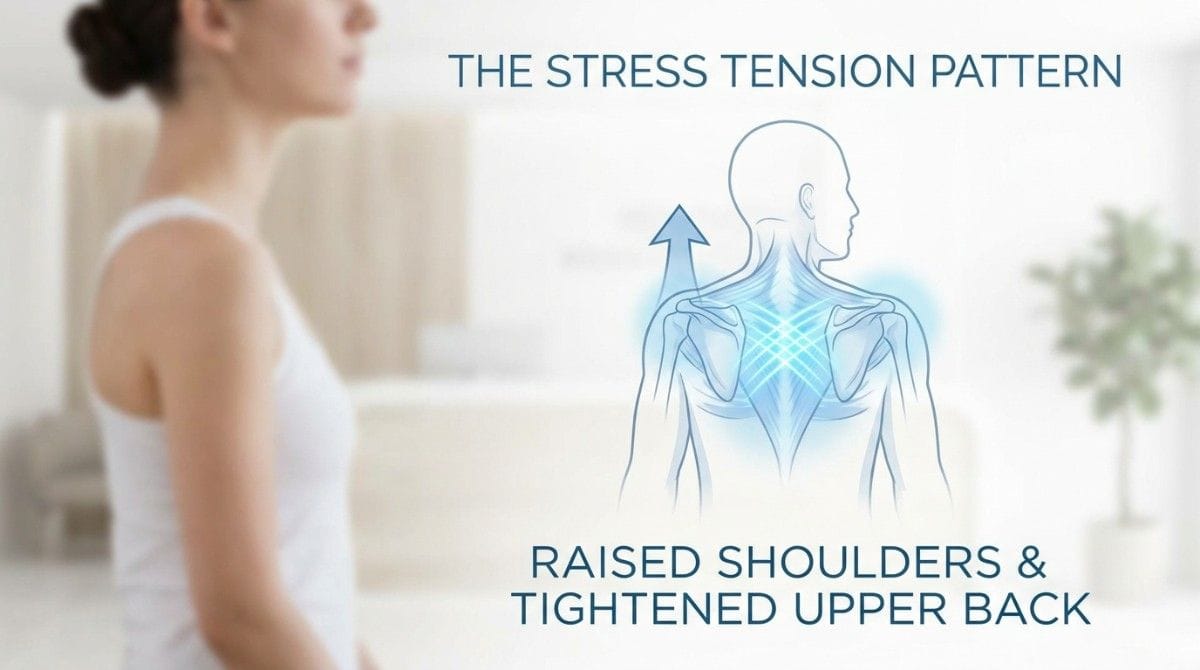
Under stress, your body braces. The muscles around your neck, shoulders, and upper back tighten as part of a protective response. Hold that bracing for hours and the muscles between your shoulder blades stay contracted and start to ache. 😬
Stress also changes how you breathe. Shallow chest breathing keeps the upper body tense and the shoulders raised. Add the natural tendency to hunch over a screen when you are focused or anxious, and the upper back takes the load all day.
This is why stress and posture feed each other. The same rounding from your desk setup gets amplified when you are tense.
How Stress Habits Affect Your Upper Back
Small daily patterns add up. Here is what to watch for.
| Stress habit | Effect on the upper back | Quick fix |
|---|---|---|
| Raised, clenched shoulders | Tight upper traps and ache | Shoulder rolls and drops |
| Shallow chest breathing | Constant upper-body tension | Slow belly breathing |
| Hunching when focused | Overloaded mid-back muscles | Posture reset every 30 min |
| Jaw and neck clenching | Tension spreading to the blades | Conscious relaxation |
| Sitting still for hours | Muscles locked in one position | Movement breaks |
The pattern is always the same: tension plus stillness plus shallow breathing. Break any one of those and the upper back starts to release. 💡
💡 Tense and not sure how much is posture versus stress? A quick scan in Backed AI shows your alignment so you know what to actually work on.
Best Ways to Release Stress Tension Between the Shoulder Blades (Quick List)
Simple resets you can do anywhere.
- Slow belly breathing. Breathe into your stomach, not your chest, for 5 slow breaths. Calms the whole system. 😮💨
- Shoulder rolls and drops. Roll the shoulders back, then let them fall away from your ears.
- Doorway chest stretch. Opens the tight chest that shallow breathing creates.
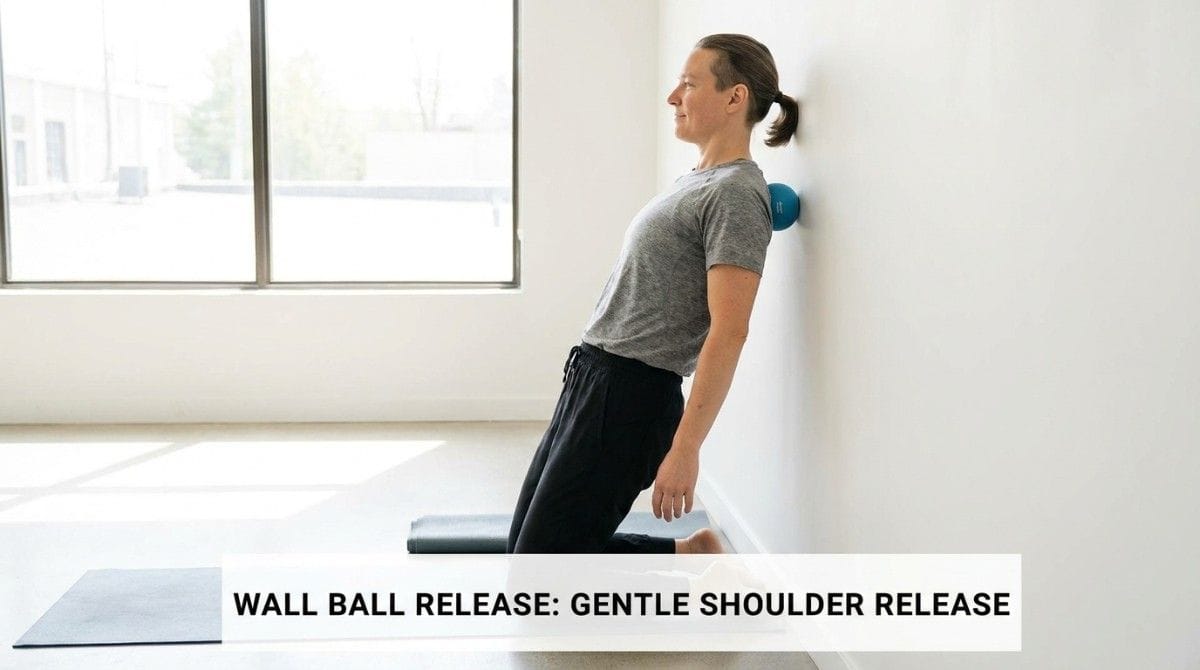
- Ball release on a wall. Press a soft ball between your shoulder blade and the wall, lean gently into tight spots.
- Neck-to-shoulder stretch. Ease your ear toward your shoulder to release the upper traps.
- A short walk. Movement discharges built-up tension better than sitting still. 🚶
Pair these with the chest-opening work in how to open your chest and breathe better for faster relief.

Step-by-Step Daily Release Framework
A routine that keeps stress from settling into your upper back.
- Notice the brace. Check in a few times a day. Are your shoulders up by your ears?
- Breathe and drop. Three slow belly breaths, shoulders down on each exhale.
- Move the area. Shoulder rolls, a chest stretch, or a short walk.
- Release the knots. Use a ball on tight spots for 30 to 60 seconds.
- Build resilience. Strengthen the upper back so it tenses less under load.
That last step matters most long-term. A structured upper-back strengthening routine makes the muscles more resistant to stress tension.
🔑 Key Insight: Relaxation gives quick relief, but the pain between your shoulder blades returns under stress until the upper-back muscles are strong enough to stay relaxed under load.
What Happens If You Ignore It?
Left unmanaged, stress tension becomes chronic. The muscles between the shoulder blades stay tight, knots form, and the area aches even on calm days. 😟
It often spreads, feeding neck stiffness and tension headaches. The same tension can also disrupt sleep, which then worsens the upper-back pain, much like the pattern behind pain between the shoulder blades from sleeping. Catching it early keeps the cycle from taking hold.
Research & Expert Insight
Physiotherapists often note that psychological stress raises resting muscle tension in the neck and upper back. Posture specialists suggest that slow breathing and regular movement breaks are among the most effective everyday tools for releasing it. Research in musculoskeletal and stress science shows a clear link between stress, shallow breathing, and increased upper-trapezius activity, which helps explain why tension settles between the shoulder blades. 📚
When This Approach Doesn't Work
Relaxation and movement help most stress tension, but not everything.
These resets are not enough if:
- The upper-back muscles are weak and need strengthening.
- Posture habits keep reloading the area all day.
Reach out for further support if:
- Stress is persistent and affecting your sleep, mood, or daily life. A doctor or mental health professional can help. 💙
- You have chest tightness, breathlessness, or pain spreading to the jaw or arm. 🚨
- You notice numbness, tingling, or weakness in the arms or hands.
- Pain keeps worsening over two weeks despite consistent self-care.
Why Most Exercise Plans Fail
You can breathe and stretch and still stay tense if the underlying posture is never trained. People usually stall for four reasons:
- Inconsistency. Relaxation breaks get skipped on stressful days, exactly when they matter most.
- Wrong form. You cannot see your own bracing and rounding from the inside.
- No progression. The same beginner moves repeat for months.
- No personalization. Generic plans ignore your specific pattern.
That is why two people with the same stress tension between the shoulder blades often need different routines.
A Smarter Way to Address It
Backed AI is an AI posture correction app that builds the resilience relaxation alone cannot. It uses your phone camera to analyze your posture, then builds a corrective routine around your exact pattern.
- Personalized: targets your rounding and bracing pattern, not a generic list. 🎯
- Guided: clear video form so you train the right muscles safely.
- Consistent: gentle reminders that prompt resets through a busy day. 📈
Manage the stress, then strengthen the upper back so it stops absorbing it.
Download Backed AI and start correcting your posture today. 💙
Final Takeaway
Stress and tension between the shoulder blades come from bracing, shallow breathing, and hunching. Breathe slowly, move often, release the knots, and strengthen the upper back so it holds less tension. Manage the stress and train the muscles, and the ache eases for good.
FAQ
Can stress cause pain between the shoulder blades?
Yes. The stress response tightens the neck and upper-back muscles, and shallow breathing and hunching add to the tension.
How do I release stress tension between my shoulder blades?
Slow belly breathing, shoulder rolls, a chest stretch, and gentle ball release on tight spots all help quickly.
Why do my shoulders rise when I am stressed?
It is part of the body's protective bracing response. Conscious breathing and dropping the shoulders reverses it.
Does breathing really help upper-back tension?
Yes. Slow diaphragmatic breathing lowers upper-body muscle tension and helps the shoulders relax down.
When should I see someone about stress tension?
If stress is persistent and affecting your sleep, mood, or daily life, or if pain comes with chest or nerve symptoms, seek professional help.