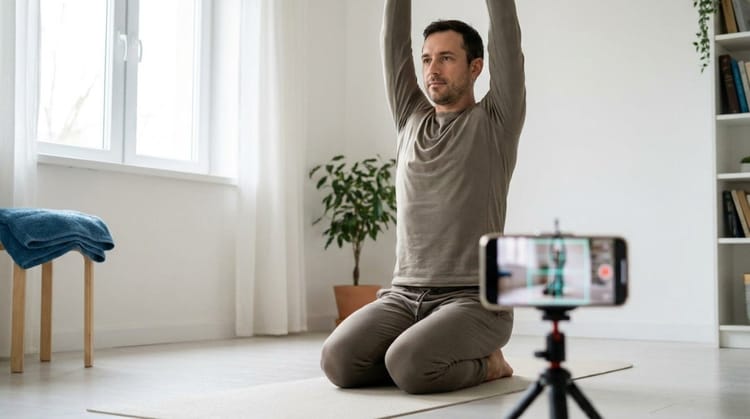
Neck Hump Brace vs Exercises vs AI Posture Apps: What Actually Works?

If you're trying to fix a neck hump, you've probably come across three main options: wearing a posture brace, doing corrective exercises, or using an AI posture app. They're all marketed as solutions - but they work very differently, and choosing the wrong one can waste months of effort.
A neck hump treatment comparison reveals that posture braces offer short-term symptom relief, corrective exercises address root causes, and AI posture apps combine personalised guidance with consistency - making them the most effective long-term solution for most people.
Here's the honest breakdown.
TL;DR
- Posture braces reduce strain temporarily but don't fix the underlying muscle imbalance
- Corrective exercises are the most evidence-supported long-term fix - but only when done correctly and consistently
- AI posture apps combine personalised programming with form feedback and habit tracking, closing the gap where most DIY exercise plans fail
- The best approach for most people: exercises guided by an AI posture tool
- Generic solutions (braces, random YouTube routines) rarely produce lasting neck hump correction
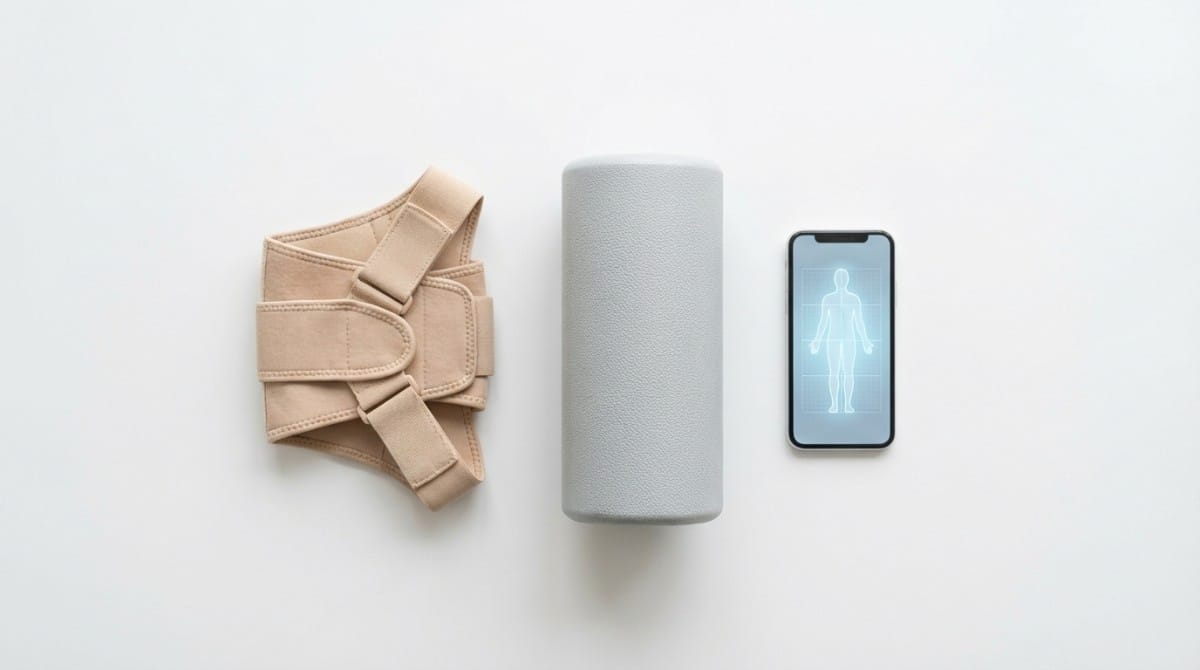
What Is a Neck Hump - and Why Does the Treatment Type Matter?
A neck hump forms at the base of the skull and upper back - typically at the C7/T1 vertebrae junction - as a result of chronic forward head posture, weakened deep neck flexors, and tightened chest and suboccipital muscles.
Because it's a structural and muscular problem, the treatment needs to address those root causes. A solution that only manages symptoms will provide temporary relief without fixing the underlying pattern.
This distinction is exactly why the three options produce such different results.
For a full breakdown of the mechanics behind neck hump formation, see how to fix a neck hump: exercises, root causes, and a recovery plan.
Option 1: Posture Braces
What They Do
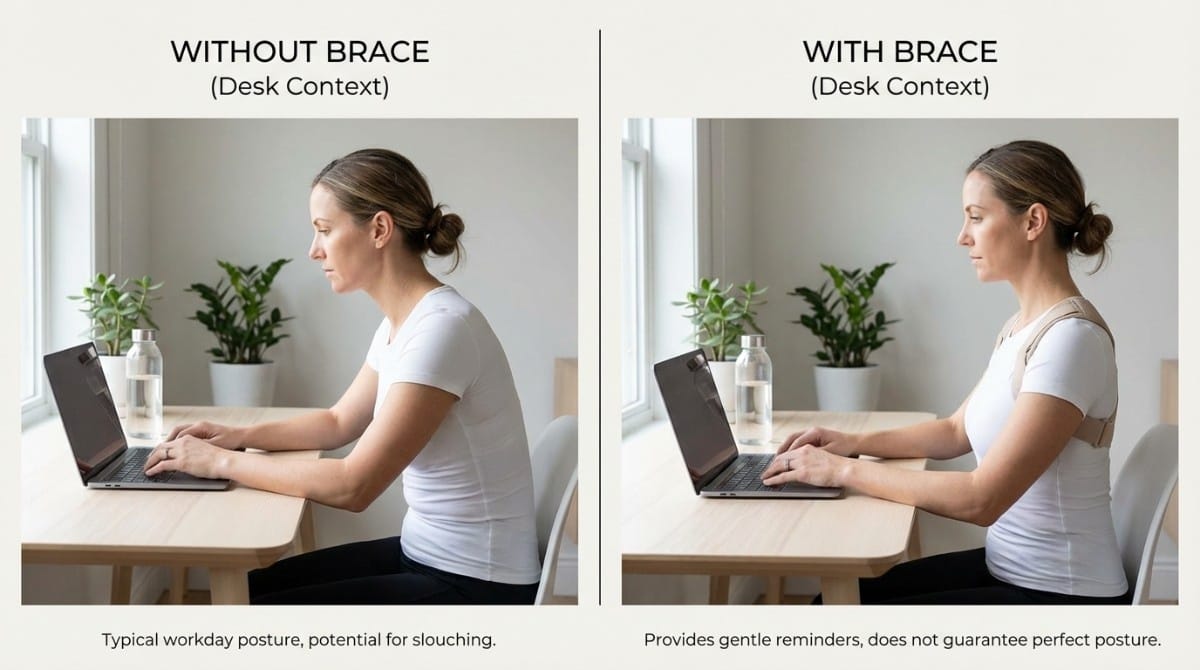
Posture braces work by physically pulling the shoulders back and cuing the spine into a more upright position. They provide external support - essentially holding your posture for you while you wear them.
Where They Help
- Useful as a short-term pain management tool during flare-ups
- Can reduce upper back and neck fatigue during long desk sessions
- Helpful as a postural awareness cue when first building new habits
Where They Fall Short
- They do not strengthen the muscles responsible for holding correct posture
- Extended use can actually weaken postural muscles further - the body offloads the work to the brace
- They cannot address the thoracic stiffness or deep neck flexor weakness driving the hump
- Most people find them uncomfortable and stop wearing them within 2-3 weeks
- Zero impact on the structural tissue accumulation at C7
Posture specialists often describe braces as "a reminder, not a remedy." They can be a useful short-term tool but should never be the primary strategy for fixing a neck hump.
Verdict: Useful as a short-term support tool. Not a standalone fix.
Option 2: Corrective Exercises
What They Do
Corrective exercises target the actual root causes of a neck hump: tight chest and suboccipital muscles, weak deep neck flexors, restricted thoracic mobility, and inhibited mid-back stabilisers.
The most effective exercises include:
- Chin tucks - retrain deep cervical flexors to pull the head back
- Thoracic extension on a foam roller - restore upper spine mobility
- Wall angels - reset scapular position and open the chest
- Prone Y-T-W raises - activate mid and lower trapezius
- Doorway chest stretches - lengthen shortened pectoral muscles
Research in musculoskeletal rehab consistently shows that structured exercise programmes addressing these muscle groups produce measurable improvements in cervical alignment and neck hump appearance within 8-12 weeks.
For desk workers specifically, combining these exercises with a daily posture routine built around office movement patterns significantly accelerates progress.
Where They Help
- Address the root cause, not just the symptom
- Build long-term structural correction
- Improve strength, mobility, and posture simultaneously
- No cost, no equipment required for most exercises
Where They Fall Short
- Form matters enormously - a chin tuck done incorrectly can reinforce the wrong pattern
- Sequencing matters - strengthening before restoring mobility leads to strain, not correction
- Progression is required - the same routine at the same intensity will plateau quickly
- Consistency is the biggest barrier - most people do well for 2 weeks, then fall off
Physiotherapists often note that the majority of patients who try self-directed exercise programmes for postural correction abandon them within 3-4 weeks - not because the exercises don't work, but because there's no feedback, no accountability, and no clear progression path.
Verdict: The most effective long-term approach - but only when executed correctly and consistently.

Option 3: AI Posture Apps
What They Do
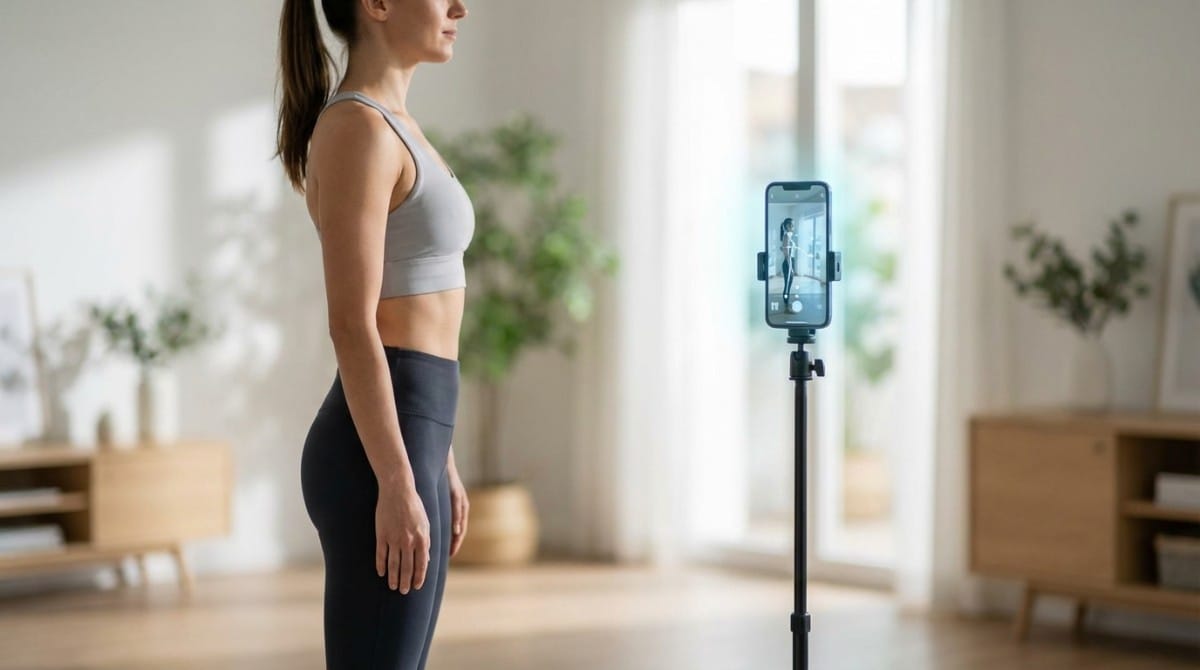
AI posture apps - like Backed AI - use your smartphone camera to scan your posture, identify your specific alignment pattern, and generate a personalised corrective exercise programme built around your actual postural profile.
This is a fundamentally different model from both braces and generic exercise lists.
Instead of guessing which exercises apply to you, or following a routine designed for a hypothetical average person, an AI posture tool analyses your actual posture - then tells you exactly what to work on, in what order, with what progression.
Where They Help
- Personalisation: exercises matched to your specific misalignment, not a generic template
- Form guidance: real-time or session-based feedback reduces the risk of reinforcing bad patterns
- Progression built in: the programme adapts as your posture improves - no plateaus
- Habit infrastructure: reminders, streaks, and check-ins solve the consistency problem that kills most DIY plans
- Accessible: replaces expensive physiotherapy appointments for the majority of postural cases
As noted in why bad posture keeps coming back, the core reason most people fail to fix postural issues isn't a lack of information - it's a lack of a system that keeps them doing the right things consistently. AI posture apps are designed to solve exactly that.
Where They Fall Short
- Not a substitute for medical evaluation if the neck hump has a non-postural cause (hormonal, structural)
- Requires initial setup and a brief learning curve
- Results still depend on user effort - it's a guide, not a passive fix
Verdict: The most complete solution for postural neck hump correction - combines the effectiveness of exercises with personalisation, progression, and consistency.
Side-by-Side Comparison
Which Option Is Right for You?
When None of These Work
If you've tried exercises consistently for 8-12 weeks and seen no improvement, or if your neck hump:
- Appeared suddenly without a clear postural cause
- Is accompanied by fatigue, weight gain, or hormonal symptoms
- Is painful to touch and growing rapidly
...then medical evaluation is the right first step. Some neck humps are driven by hormonal conditions (like Cushing's syndrome) or medication side effects that exercise cannot address.
For most people reading this, however, the neck hump is postural - and that means it's fixable with the right approach.
Generic exercise lists and posture braces leave the hardest part unsolved: knowing exactly what your posture needs, staying consistent, and progressing correctly over time.
Backed AI was built to solve all three.
- 📍 Camera-based posture scan - identifies your specific misalignment pattern, including forward head posture and neck hump drivers
- 🔄 Personalised programme - exercises sequenced and progressed based on your actual posture profile
- 🔔 Daily habit system - reminders and progress tracking keep you consistent when motivation dips
For people serious about fixing a neck hump - not just reading about it - Backed AI turns the most effective approach (corrective exercises) into something sustainable and personalised.
Download Backed AI and start correcting your posture today.
Final Takeaway
Posture braces offer temporary comfort but don't fix the root cause. Corrective exercises are the most evidence-supported solution - but they require correct form, smart sequencing, and consistent effort. AI posture apps bring all of those elements together in a format that works for real life.
If you're choosing between the three, the answer is clear: start with an AI-guided corrective programme, use a brace only for short-term relief during flare-ups, and skip the generic exercise lists that don't know anything about your specific posture.
FAQ
Q1: Do posture braces actually fix a neck hump? No - posture braces provide temporary support and pain relief but do not address the muscle weakness and thoracic stiffness driving the hump. Extended brace use can actually weaken postural muscles further by offloading the work.
Q2: How long do corrective exercises take to fix a neck hump? Most people see visible improvement within 8-12 weeks of consistent, correctly performed corrective exercises. Significant structural change can take 3-6 months depending on severity.
Q3: What is the best AI app for fixing a neck hump? Backed AI is designed specifically for posture correction and back pain relief. It uses a camera-based posture scan to identify your specific alignment issues and builds a personalised corrective programme around them.
Q4: Can I use a posture brace and do exercises at the same time? Yes - braces and exercises are not mutually exclusive. A brace can be used as a short-term postural cue during long desk sessions while you build the muscle strength to maintain correct posture independently.
Q5: Why do most people fail to fix their neck hump with exercises? The most common reasons are inconsistency, incorrect form, wrong exercise sequencing, and lack of progression. AI posture apps solve all four by providing personalised, progressive, feedback-guided programmes with built-in habit support.