Posture Headache vs Migraine: How to Tell the Difference 💙

A posture headache usually starts as a tight band at the base of the skull that builds gradually from sitting or screen time, while a migraine tends to throb on one side, often comes with nausea or light sensitivity, and can happen regardless of your posture that day. The clearest signal is what else shows up alongside the pain, not just where it hurts.
TL;DR
- 📍 Posture headaches start at the base of the skull and build gradually with sitting or screen time.
- 🌀 Migraines often throb on one side and can include nausea, light sensitivity, or visual changes.
- 🧍 Movement and posture correction usually ease a posture headache and can worsen a migraine.
- 🧬 Family history and hormonal patterns point toward migraine more than posture.
- 🔁 You can have both, and posture tension is a known migraine trigger for some people.
- 🚩 New, severe, or unusual headache patterns deserve a doctor's opinion, not just a self-check.
- 📱 Once you know which one you're dealing with, the next steps look very different.
What Is the Real Difference Between a Posture Headache and a Migraine?
A posture headache is muscle and joint-driven pain from neck strain, while a migraine is a neurological condition involving specific brain and nerve pathway changes, and the two respond to completely different things.
They can feel similar in the moment, especially early on, which is why so many people misidentify one as the other. If you haven't read the full breakdown of what causes a posture headache, it's worth a look alongside this comparison.
💡 Key Insight: The single most useful question to ask yourself isn't "where does it hurt," it's "what else is happening alongside the pain." Nausea, light sensitivity, and visual changes point toward migraine far more reliably than location alone.

Posture Headache vs Migraine: The Full Comparison
| Posture Headache | Migraine | |
|---|---|---|
| Where it starts | Base of skull, often spreads forward | Often one side, behind or around the eye |
| Onset | Builds gradually over hours of sitting or screen time | Can build over a day with warning signs, or arrive quickly |
| Duration | Hours, often eases after movement | 4 to 72 hours if untreated |
| Nausea or vomiting | Rare | Common |
| Light or sound sensitivity | Rare to mild | Common, often significant |
| Visual changes before pain (aura) | Not associated | Occurs in some people with migraine |
| Effect of movement | Often improves the pain | Can make it worse |
| Effect of pressing on neck muscles | Often reproduces or worsens the pain | Usually doesn't change it |
| Family history | Not typically relevant | Often runs in families |
| Response to posture correction | Improves within days to weeks | No meaningful change |
Why Does It Matter Which One You Have?
Getting this right changes what actually helps. Posture correction, the kind covered in the 5-minute neck reset routine, targets muscle tension and won't do much for a true migraine. Meanwhile, migraine-specific care won't resolve a headache that's really coming from forward head posture. Treating the wrong one means the pain keeps coming back no matter how consistent you are, simply because you're addressing the wrong mechanism.
How To Tell a Posture Headache From a Migraine
- Check what else is happening. Nausea, light sensitivity, or visual changes point strongly toward migraine.
- Notice the onset. A headache that builds slowly through a long desk session leans posture. One that arrives with a distinct warning phase leans migraine.
- Test movement. Gently rolling your shoulders or gently pressing the base of your skull often reproduces a posture headache. It usually doesn't change a migraine.
- Consider your history. A family history of migraine, or a pattern tied to your cycle, sleep changes, or specific foods, points away from posture as the sole cause.
- Notice what helps. If stretching and better posture reliably ease it, that's a strong posture signal. If lying down in a dark, quiet room is what helps most, that leans migraine.

5 Signs You're Dealing With a Migraine, Not a Posture Headache (Quick List)
- Nausea or vomiting alongside the head pain.
- Sensitivity to light or sound strong enough to want a dark, quiet room.
- Visual disturbances before the pain starts, like flashing lights or blind spots.
- A throbbing or pulsing quality, rather than a tight, constant band.
- Pain that worsens with movement or light activity, instead of easing with it.
If two or more of these sound familiar, it's worth treating this as a possible migraine and getting a professional opinion rather than relying on posture fixes alone.
Can You Have Both at Once?
Yes, and this is where it gets genuinely confusing. Posture-related neck tension is a recognized migraine trigger for some people, so a long day at a desk can bring on a real migraine, not just a tension headache. If you notice both patterns, a tight neck that builds through the day sometimes followed by a more severe, nauseating headache, it's worth tracking both separately. Fixing your posture may reduce how often migraines get triggered, even though it won't fully prevent them.

What Happens If You Treat a Migraine Like a Posture Headache?
If the real cause is migraine, stretching and posture correction alone won't resolve it, and the frustration of "doing everything right" without relief is common when the wrong mechanism is being addressed. Worse, relying only on posture fixes can delay getting a proper migraine diagnosis and management plan, which matters because migraines often respond well to specific treatment once identified correctly. This isn't a reason to worry, but it is a reason to reassess if a consistent posture routine genuinely isn't helping after a few weeks.
When This Approach Doesn't Work
Self-checking the pattern is useful, but it isn't a diagnosis. See a doctor rather than relying on this comparison alone if you have:
- A sudden, severe headache unlike anything you've had before.
- A headache with fever, stiff neck, confusion, or a rash.
- A headache that started after a fall or head injury.
- Any new visual changes, slurred speech, weakness, or numbness alongside the headache.
- Headaches that are increasing in frequency or severity, regardless of which type you suspect.
A doctor can confirm what pattern-matching alone can't, especially since posture headaches and migraines can coexist.
Research & Expert Insight
Posture specialists suggest that patients often assume neck-area pain is always postural, which can delay a migraine diagnosis when the symptoms actually point elsewhere. Neurologists commonly use symptom clusters like nausea, light sensitivity, and aura, rather than pain location alone, to distinguish migraine from tension or cervicogenic patterns. Research in headache medicine shows that posture-related neck tension is a documented trigger for migraine in a meaningful subset of patients, which is part of why addressing posture can reduce migraine frequency even without eliminating migraines entirely.
Once you know which type you're dealing with, comparing an AI posture app, a chiropractor, and painkillers is the natural next step if posture turns out to be the driver. If you're still not sure what your baseline posture even looks like, this guide to the different types of bad posture is a useful starting point.
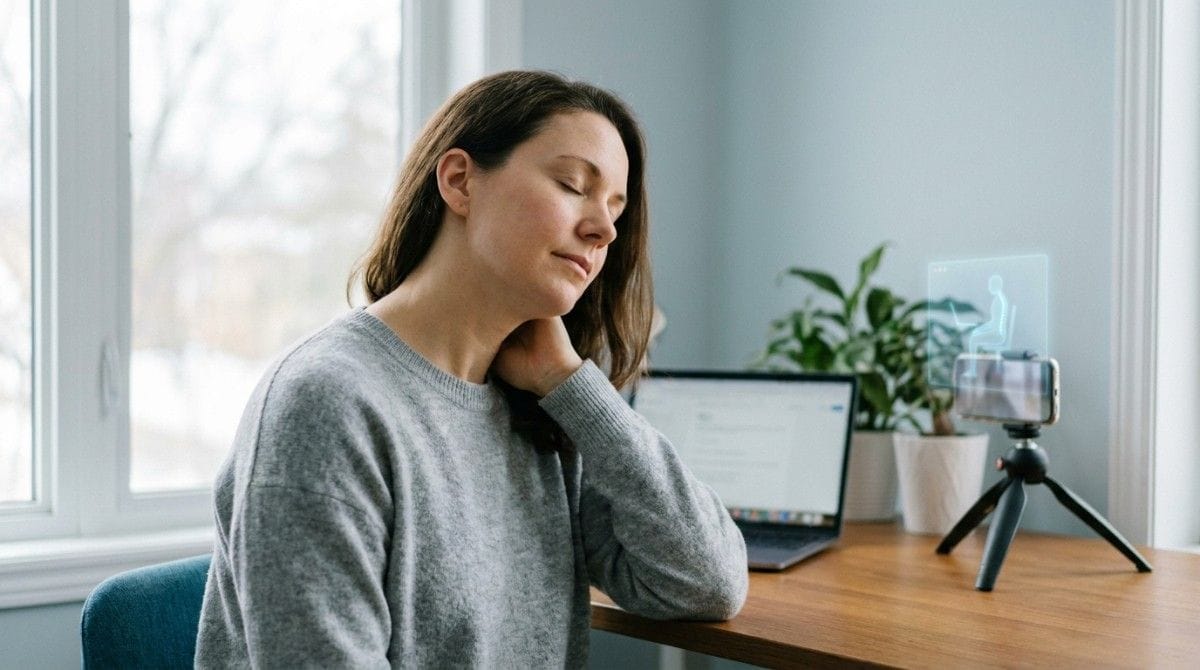
Once you've narrowed it down to a posture headache, the next challenge is usually consistency, not knowledge. Knowing that forward head posture is the cause doesn't automatically fix the daily habit that keeps recreating it.
Backed AI helps with exactly that part:
- Confirms the pattern over time. Camera-based posture analysis shows whether your forward head posture actually correlates with your headache days, adding real data to the self-check above.
- Builds a personalized correction plan. Once posture is confirmed as a driver, the app targets your specific imbalance instead of a generic routine.
- Keeps the habit consistent. Reminders catch the posture drift before it builds into another headache, which is the part most people struggle to sustain alone.
If it turns out to be migraine instead, or both, this isn't a substitute for medical care, but it can still reduce how often posture tension adds fuel to the pattern.
Download Backed AI and start correcting your posture today.
Final Takeaway
A posture headache and a migraine can feel similar at first, but they respond to completely different things, so telling them apart matters more than it might seem. Location is a weak signal on its own; nausea, light sensitivity, aura, and how the pain responds to movement are far more reliable. The two can also happen together, since posture tension is a known migraine trigger for some people. When in doubt, or when the pattern is severe, new, or worsening, a doctor's opinion beats any self-check, including this one.
FAQ
How can I tell if my headache is from posture or a migraine? Check what else is happening alongside the pain. Nausea, light sensitivity, or visual changes before the pain starts point toward migraine, while a headache that builds gradually with sitting and eases with movement points toward posture.
Can bad posture actually trigger a migraine? Yes. Posture-related neck tension is a recognized migraine trigger for some people, so improving posture may reduce how often migraines occur even though it won't eliminate them entirely.
Does pressing on my neck help tell the difference? Often, yes. Gently pressing the base of the skull tends to reproduce or worsen a posture headache, while it usually doesn't change a migraine.
Can I have a posture headache and a migraine at the same time? Yes. The two aren't mutually exclusive, and some people experience both a build-up of neck tension and a separate migraine triggered by that same tension.
When should I see a doctor instead of self-checking which headache I have? See a doctor if the headache is sudden and severe, comes with fever, confusion, or vision changes, follows a head injury, or is increasing in frequency or severity regardless of which type you suspect.