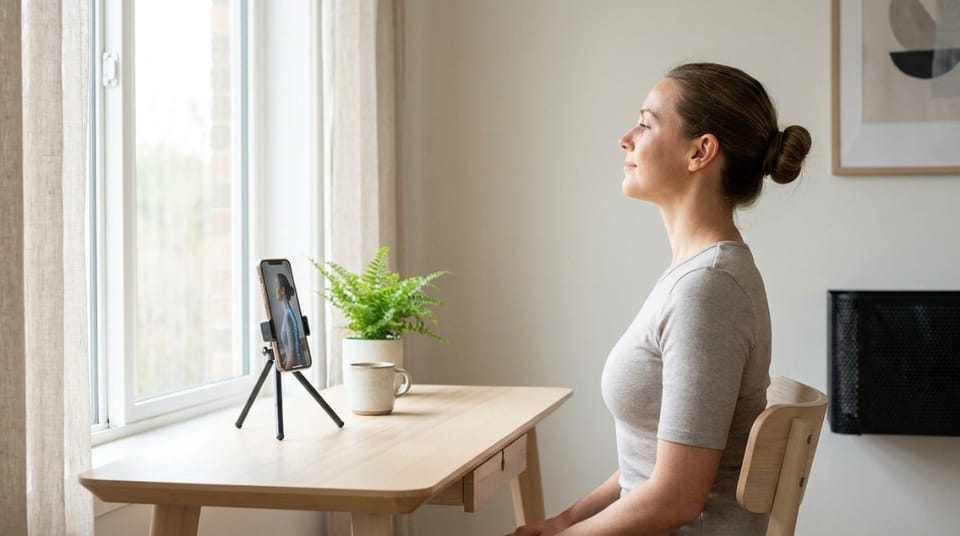
Good neck posture is a structural alignment where your ears stack vertically over your shoulders, your chin remains level, and the natural inward curve of your cervical spine (the "C-curve") is preserved without muscular strain.
To improve neck posture, you need to release tight front-neck and chest muscles, mobilize a stiff upper back, and strengthen the deep neck flexors that keep your head stacked over your shoulders. Most people see meaningful change within 4 to 8 weeks of consistent 10 to 15-minute daily practice.
Sequencing for a neck hump is the strategic ordering of mobility, stretching, activation, and strengthening exercises, both within a single session and across weeks of recovery, so that each step prepares the body for the next and lasting postural change becomes possible.
Bed-based stretching for dowager's hump is a low-mobility, lying-down routine that uses the mattress as a stable surface to gently open the chest, mobilize the thoracic spine, and reset cervical alignment, especially useful for morning stiffness or evening wind-down.