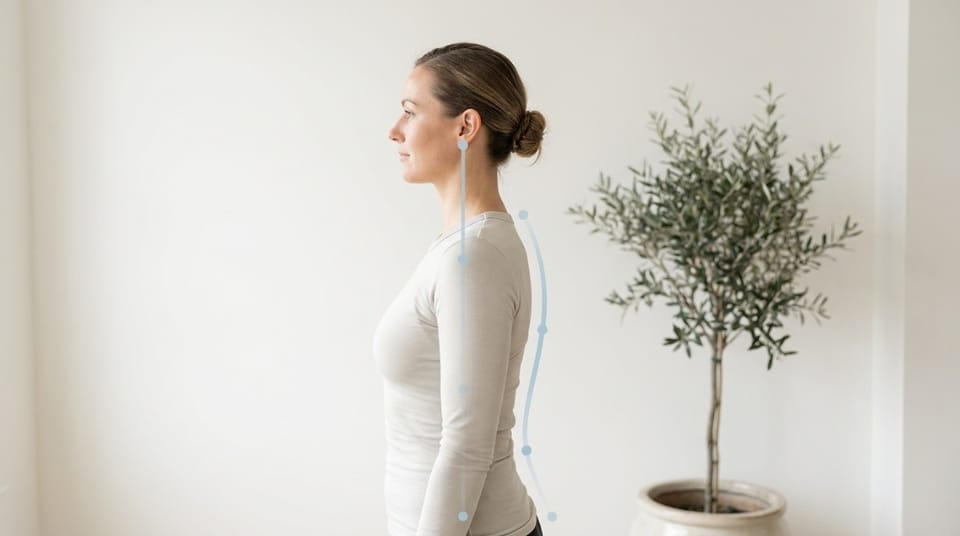
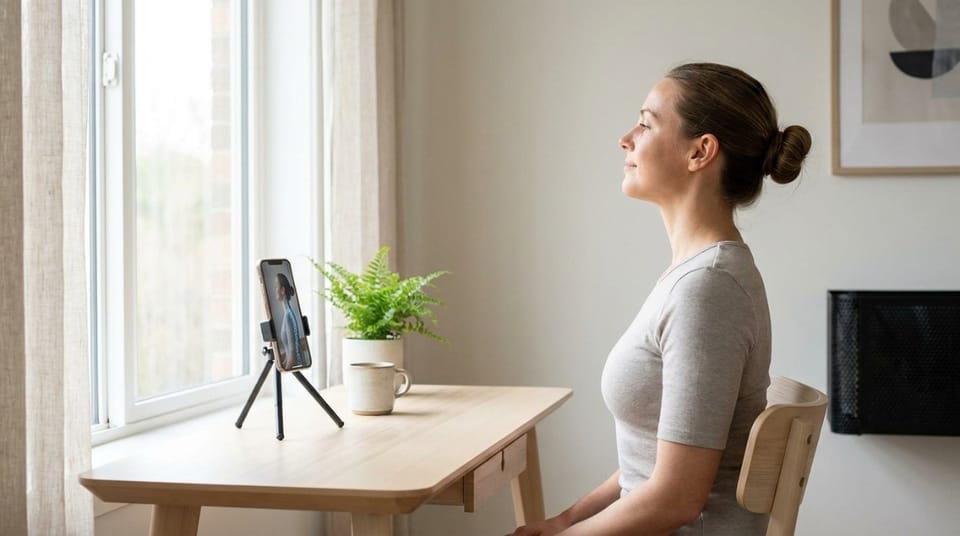
Good neck posture is a structural alignment where your ears stack vertically over your shoulders, your chin remains level, and the natural inward curve of your cervical spine (the "C-curve") is preserved without muscular strain.
To improve neck posture, you need to release tight front-neck and chest muscles, mobilize a stiff upper back, and strengthen the deep neck flexors that keep your head stacked over your shoulders. Most people see meaningful change within 4 to 8 weeks of consistent 10 to 15-minute daily practice.
Bed-based stretching for dowager's hump is a low-mobility, lying-down routine that uses the mattress as a stable surface to gently open the chest, mobilize the thoracic spine, and reset cervical alignment, especially useful for morning stiffness or evening wind-down.
Reversing a neck hump means progressively reducing the forward curvature at the base of the neck by mobilizing the thoracic spine, lengthening the chest, strengthening postural muscles, and retraining the head to sit over the shoulders rather than in front of them.