Weak Core and Back Pain: How to Tell If Your Core Is the Problem

Your back hurts, but you cannot point to an injury. No fall, no lift gone wrong, just a dull ache that will not quit. In a lot of cases, the real issue is not your back at all. It is a weak core failing to do its job. 🔍
A weak core is a lack of strength and endurance in the deep stabilizing muscles of the trunk, which forces the lower back to absorb load it was not built to carry, often showing up as recurring, non-specific back pain.
TL;DR
- Weak core back pain tends to feel like a dull, recurring ache rather than a sharp injury.
- It often gets worse with standing, sitting, or activity, and eases when lying down.
- A simple plank and bridge test can tell you a lot in under two minutes.
- Weak core pain responds to strengthening. Tight-muscle pain responds better to stretching first.
- This is not a formal diagnosis. It is a pattern check to point you toward the right fix.
- Red-flag symptoms like leg pain, numbness, or weakness are never a core issue. See a professional.
What Is a Weak Core, Exactly?
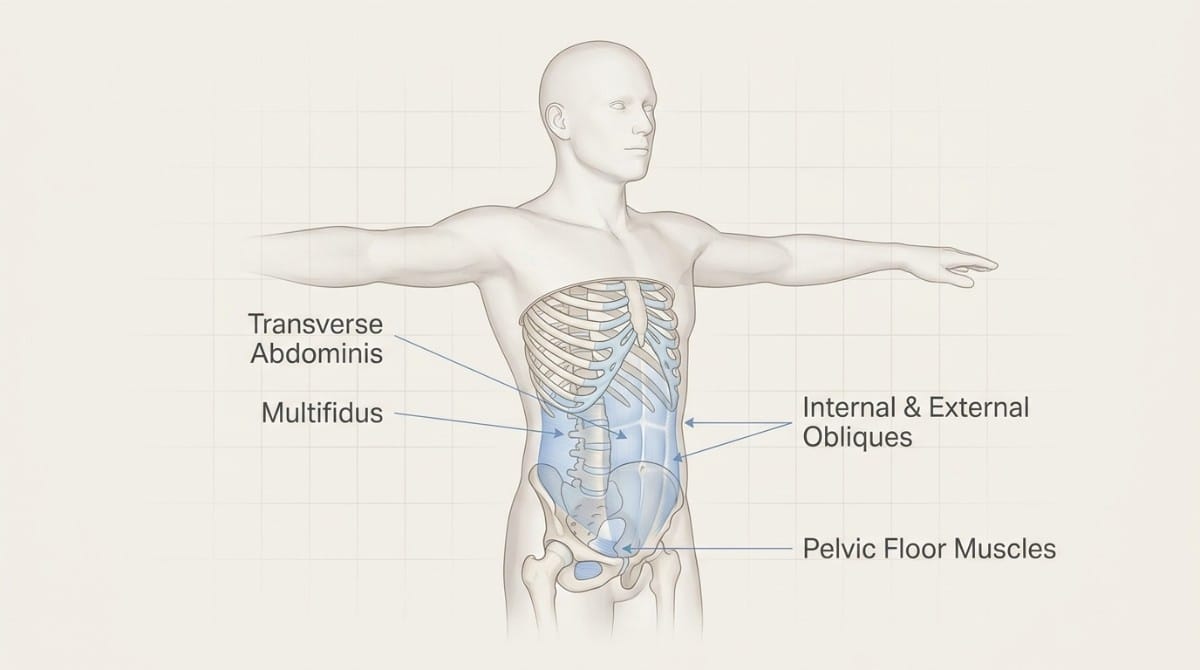
Your core is not just your abs. It is a deep muscular corset made up of the transverse abdominis, multifidus, obliques, and pelvic floor, working together to brace your spine.
When those muscles are weak or slow to activate, your spine loses its main support system. Everyday movements like bending, twisting, and even sitting shift extra load onto passive structures like discs and ligaments. Over time, that shows up as pain.
This is different from a tight muscle problem. Tightness is a mobility issue. A weak core is a stability issue, and the two need different fixes, a distinction covered in full in core exercises vs stretching for back pain.
Why Does a Weak Core Cause Back Pain?
Think of your core as internal scaffolding. When it is strong, it braces your spine before you even move, absorbing shock and controlling motion.
When it is weak, that bracing does not happen properly. Your lower back muscles tighten up to compensate, working overtime for a job that was never theirs. That overwork is what you feel as the ache.
Posture specialists suggest this is one of the most common, and most overlooked, drivers of everyday back pain, especially in people who sit for long stretches and rarely load their trunk muscles directly.
Key Insight: Weak core pain rarely announces itself as weakness. It disguises itself as tightness, because your lower back is working hard to hold you up. That is why stretching the "tight" muscle often gives only short relief. The muscle is not the real problem.
How Do You Know If Your Core Is the Problem? (Quick Signs)
These patterns do not confirm anything on their own, but together they are a strong signal.
- Pain builds with duration, not injury. It creeps in after standing or sitting a while, rather than appearing suddenly from a specific movement.
- You feel unsupported, not just tight. Some people describe it as their back "giving out" or needing to lean on something.
- Pain improves with movement, then returns with stillness. Your muscles brace better when active, then relax and complain at rest.
- Stretching helps briefly, then wears off fast. Relief lasts minutes to an hour, not the rest of the day.
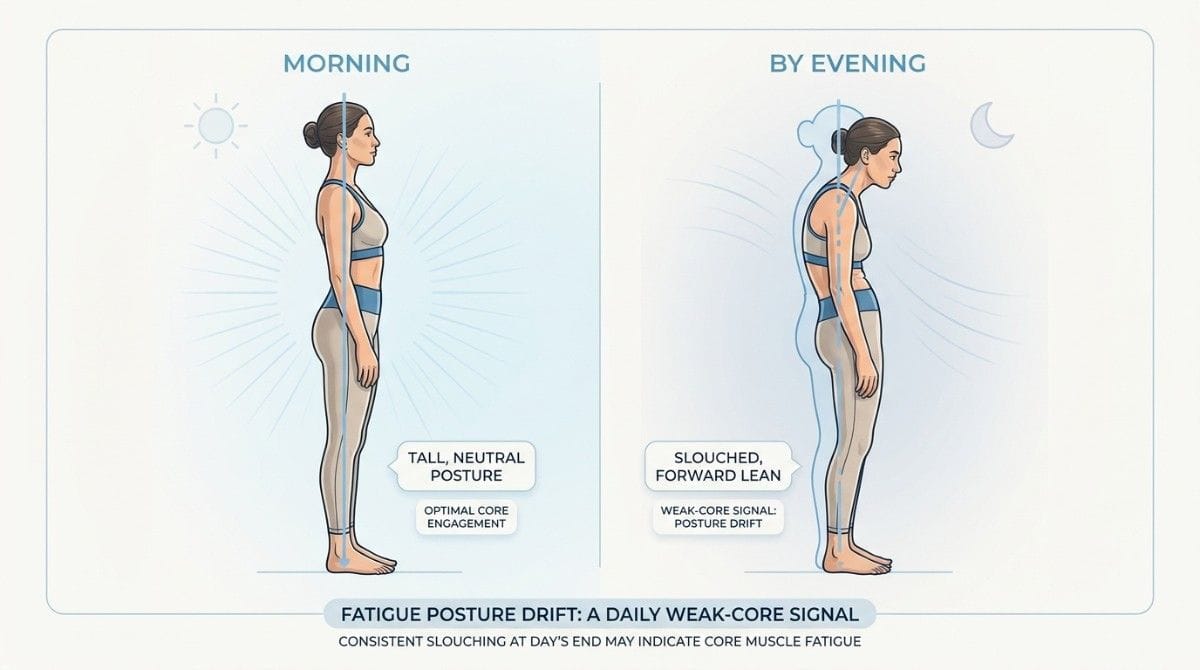
- Your posture drifts under fatigue. You notice yourself slouching or arching more as the day goes on.
- Simple stability moves feel surprisingly hard. A plank or bridge that "should" be easy is shaky or short-lived.
The Two-Minute Core Self-Check
This is not a diagnosis. It is a quick pattern check you can do in your living room.
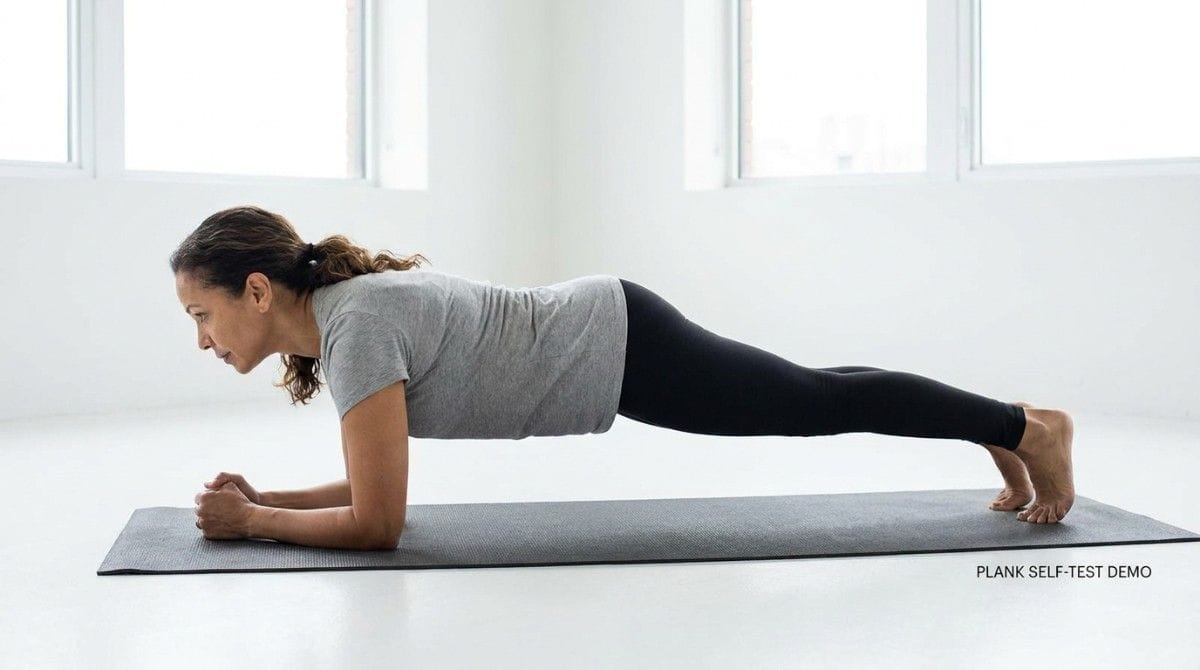
Test 1 – Plank Hold. Hold a forearm plank with a straight line from shoulders to heels. If your hips sag or shake noticeably before 20 to 30 seconds, your deep core is likely under-conditioned.
Test 2 – Glute Bridge Hold. Lie on your back, knees bent, lift your hips into a straight line. If you feel your lower back doing the work instead of your glutes, or you cramp quickly, that points to the same pattern.
Test 3 – Single-Leg Stand. Stand on one leg for 20 seconds. Noticeable wobbling or your hip dropping on one side suggests weak trunk and hip stabilizers.
Struggling with two or more of these tests lines up with a weak-core pattern. For the exercises that directly target this, see the deep-core routine for back pain.
Weak Core vs Tight Muscles: Quick Comparison
Both can cause a dull ache, but the pattern differs.
| Sign | Weak Core Pattern 💪 | Tight Muscle Pattern 🧘 |
|---|---|---|
| Onset | Builds gradually with duration | Often present on waking, or after inactivity |
| Feels like | Unsupported, fatigued, "giving out" | Stiff, restricted, hard to move through |
| Stretching helps? | Briefly, then fades fast | Noticeably, and lasts longer |
| Self-test | Struggles with plank / bridge holds | Limited range of motion, restricted stretch |
| Best first step | Stability and strengthening | Mobility and stretching |
Not sure which pattern is yours? 👇
Self-tests are a useful starting point, but they only capture a snapshot. Backed AI goes further by scanning your posture through your phone camera and tracking how your body holds up under real daily movement, not just a single 20-second test.
Why Does This Happen in the First Place?
A weak core rarely shows up out of nowhere. A few patterns build it over time.
Prolonged sitting. Long hours seated switch off your deep stabilizers, a pattern explored in lower back pain from sitting.
Sedentary lifestyle. Without regular loading, deep stabilizers lose endurance faster than surface muscles.
Compensation patterns. If your hips or hamstrings are tight, your core may already be working overtime to compensate, which is why tight hips and lower back pain often travels together with this pattern.
Past injury or pregnancy. Both can leave the deep core under-activated even after the original issue resolves.
What Happens If You Ignore a Weak Core?
Left unaddressed, the pattern tends to compound rather than stay the same.
Your lower back keeps absorbing load it was not designed for, which can turn an occasional ache into a chronic pattern. Research in musculoskeletal rehab shows this is one reason back pain often becomes recurring rather than a one-time event, a cycle detailed in why your back pain keeps coming back.
The good news is this pattern responds well to targeted strengthening once it is identified correctly.
When This Approach Doesn't Work
A weak core is a common contributor to back pain, but it is not the only one, and self-tests are not a substitute for a real evaluation.
This self-check will not tell you if your pain is coming from a disc, a nerve, or a joint issue. It also will not help if your pain is driven mainly by tight, restricted tissue rather than weakness.
🚩 See a professional if you have sharp or worsening pain, pain radiating down a leg, numbness, weakness, or any loss of bladder or bowel control. Those symptoms point past a simple core issue and need proper assessment.
Research & Expert Insight
Physiotherapists often flag core endurance, not just strength, as the more telling marker for back pain risk. Someone can be strong in a single effort but still fatigue quickly, which is exactly when the lower back starts compensating.
Posture specialists suggest that a self-test is most useful as a starting signal, not a final answer, since compensation patterns can mask the true source of pain. Research in musculoskeletal rehab consistently links poor deep-core endurance with a higher likelihood of recurring, non-specific low back pain.
The practical takeaway: if your self-check points to weakness, strengthening is very likely to help, even if something else is contributing too.
Final Takeaway
If your back pain builds gradually, feels like a lack of support rather than sharp injury, and only half-responds to stretching, a weak core is a strong suspect. The plank, bridge, and single-leg tests above are a fast way to check.
This is a signal to act on, not a diagnosis to fear. If the pattern fits, the fix is straightforward: build the deep stabilizers with a consistent, targeted routine. ✅
Why Most Exercise Plans Fail
Even people who correctly identify a weak core often stall out. The reasons are familiar.
- No real baseline. Without an objective check, it's hard to know where your imbalance actually is.
- Wrong form. Under fatigue, weak-core strengthening often reinforces the exact compensation pattern causing the pain.
- No progression. A static plan stops working once your body adapts to it.
- Inconsistency. Sporadic effort never builds the endurance that actually protects your spine.
A Smarter Way to Confirm and Fix It
Backed AI is an AI posture correction app built to take this self-check further. Instead of a one-time test, it scans your posture and movement patterns to confirm whether a weak core is really driving your pain, and where specifically.
- 🎯 AI posture analysis that identifies your real compensation pattern, not just a 20-second guess.
- 📱 Personalized core-stability programs that progress as your endurance builds.
- 🔔 Habit reminders that keep you consistent long enough for the deep muscles to actually adapt.
A quick self-test gives you a hint. Backed AI gives you a plan built around your actual pattern, so the fix targets the real cause instead of a guess.
The longer a weak-core pattern goes unaddressed, the more it locks in. Download Backed AI and start correcting your posture today. 💙
FAQ
1. How do I know if my back pain is from a weak core? Look for a dull ache that builds gradually, feels like a lack of support rather than sharp pain, and only briefly improves with stretching. A plank or bridge that feels unusually hard is another strong sign.
2. Can a weak core cause lower back pain even without an injury? Yes. A weak core forces your lower back muscles to compensate for stability they were not built to provide, which can create pain with no specific injury behind it.
3. What is the fastest way to test my core strength at home? Try a forearm plank hold, a glute bridge hold, and a single-leg stand. Struggling with two or more suggests a weak-core pattern worth addressing.
4. Does stretching help if my core is the real problem? It can help briefly by easing tension, but the relief usually fades quickly. If a weak core is the underlying cause, strengthening is what produces lasting change.
5. When should I stop self-testing and see a professional? See a professional if you have sharp or worsening pain, pain radiating down a leg, numbness, weakness, or any loss of bladder or bowel control. Self-tests are not a substitute for a real evaluation.