AI Posture App vs Physiotherapy vs Generic Exercises for Pain Between the Shoulder Blades

When your upper back keeps aching, you have three real options: follow free generic exercises, book physiotherapy, or use an AI posture app. Each can help, but they suit very different situations, budgets, and pain levels. 🤔
For most posture-driven pain between the shoulder blades, an AI posture app or physiotherapy outperforms generic exercises, because both add the personalization and feedback that random routines lack.
TL;DR
- Generic exercises are free but unguided, so progress often stalls. ✅
- Physiotherapy is the gold standard for complex or red-flag cases.
- An AI posture app offers personalization and consistency at low cost. 📱
- Most posture-driven pain between the shoulder blades responds well to an app.
- Choose physiotherapy first if you have pain after injury or any warning signs. 🚨
- The best results usually come from combining a method with a good desk setup.
Before choosing, it helps to understand what's causing your pain between the shoulder blades, since the cause shapes which option fits best.
What Are Your Options for Pain Between the Shoulder Blades?
All three target the same goal: release the tight chest, mobilize the stiff mid-back, and strengthen the muscles between the shoulder blades. They differ in guidance, cost, and how personal the plan is.
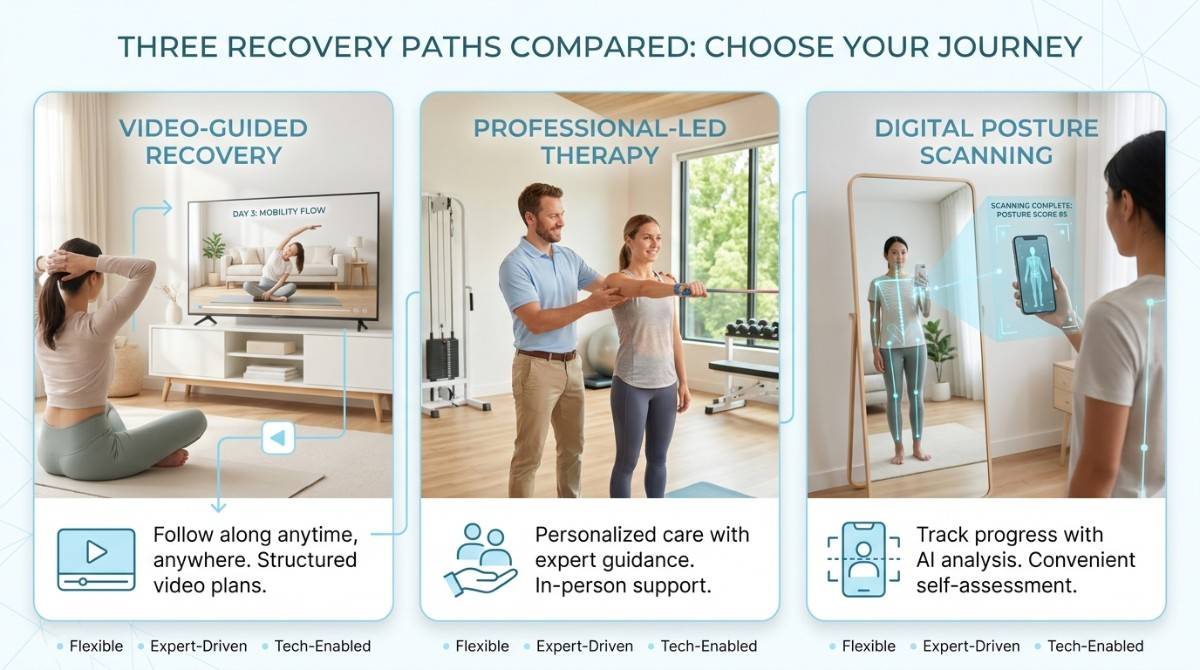
- Generic exercises: free YouTube or blog routines you follow alone.
- Physiotherapy: one-to-one assessment and a tailored hands-on plan.
- AI posture app: camera-based analysis that builds and tracks a personal routine.
Why Compare These Three?
Because the wrong choice wastes time or money. Generic exercises cost nothing but give no feedback, so many people do them with poor form and quit. Physiotherapy is excellent but can be expensive and hard to schedule. An AI app sits in the middle, offering structure and tracking without the cost or wait.
Here is how they line up.
| Factor | Generic Exercises | Physiotherapy | AI Posture App |
|---|---|---|---|
| Cost | Free | High per session | Low monthly |
| Personalization | None | Very high | High |
| Form feedback | None | In person | Camera-guided |
| Convenience | Anytime | By appointment | Anytime |
| Consistency support | Low | Moderate | High (reminders) |
| Best for | Mild, motivated users | Complex or injury cases | Posture-driven cases |
Not sure which camp your pain falls into? A quick scan in Backed AI shows whether your case is a simple posture pattern or something worth taking to a professional.
How Do You Choose? (Quick List)
Match the option to your situation.
- Mild, recent, and you are disciplined? Start with a structured exercise routine and a better workstation.
- Pain after a fall, or any warning signs? Go to physiotherapy or a doctor first.
- Recurring, desk-driven, and consistency is your weak spot? An AI posture app fits best.
- Tried random stretches with no progress? You likely need the personalization an app or physio adds.
- Budget is tight but you still want structure? An AI app gives guided progression at a fraction of clinic cost. 💸
Most everyday pain between the shoulder blades is posture-driven, which is why option 3 suits the majority of desk workers.
How to Choose Your Path (Step-by-Step)
A simple framework to decide with confidence.
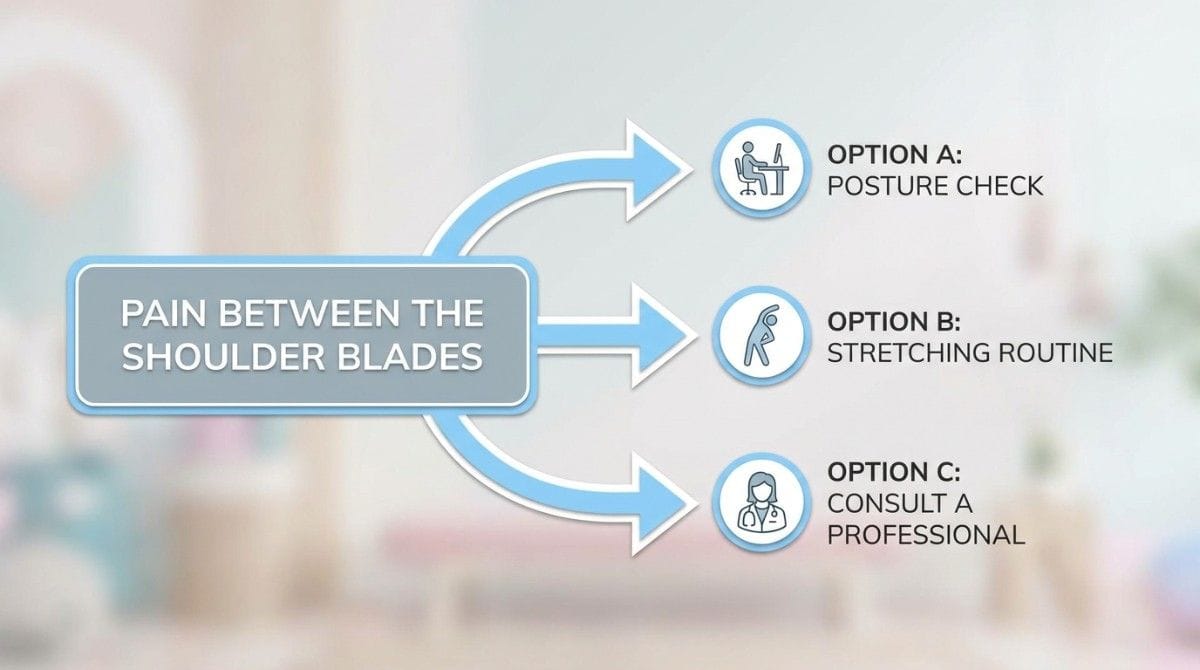
- Screen for red flags. Chest, breathing, or nerve symptoms mean see a professional first.
- Judge the cause. Posture and desk habits point to self-managed options.
- Be honest about consistency. If follow-through is hard, pick a method with reminders and tracking.
- Match your budget. Free exercises, low-cost app, or higher-cost physiotherapy.
- Fix the environment too. Whatever you choose, also fix your desk setup so the strain stops returning.
The method matters less than whether you actually stick to it. The biggest reason people fail is not the wrong exercises, but inconsistency, which is exactly why posture fixes don't stick.
What Happens If You Pick Wrong?
Choosing generic exercises for a complex or injury-related case can delay proper care. Choosing physiotherapy for simple posture strain can cost far more than needed. And ignoring consistency means any option fails. 😬
The fix is honest self-assessment: red flags go to professionals, posture-driven cases suit an app or guided routine.
Research & Expert Insight
Physiotherapists often recommend professional assessment first when pain follows an injury or comes with nerve symptoms. Posture specialists suggest that for everyday postural pain between the shoulder blades, consistency and feedback drive results more than the specific exercises chosen. Research in musculoskeletal rehab shows that guided, progressive programs outperform unstructured self-directed exercise, which helps explain why personalized tools tend to deliver better adherence and outcomes. 📚
When This Approach Doesn't Work
No single option fits everyone.
- Generic exercises fail when form is poor or motivation fades.
- An AI app or generic exercises are not the answer for injury, fracture, or nerve involvement.
- Even physiotherapy stalls if you stop doing the home program.
Seek medical care first if you have:
- Chest tightness, breathlessness, or pain spreading to the jaw or arm. 🚨
- Numbness, tingling, or weakness in the arms or hands.
- Severe pain after an accident, or pain that keeps worsening over two weeks.
Why Most Exercise Plans Fail
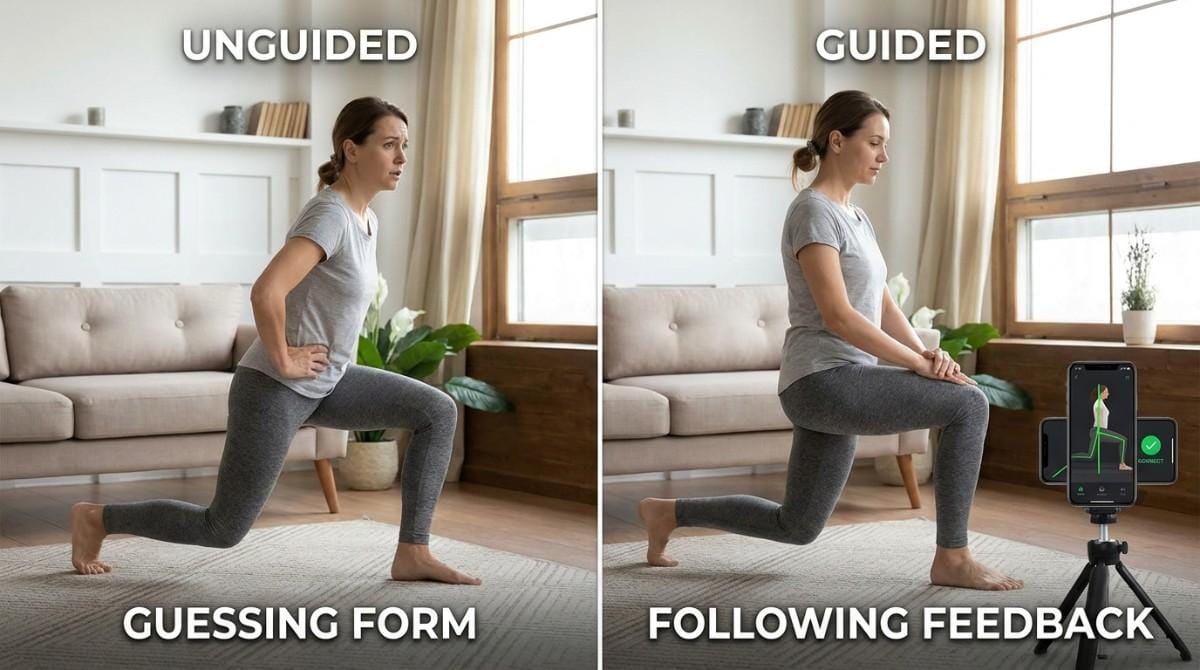
Generic routines look fine on paper, then quietly stall. The reasons are consistent:
- Inconsistency. Motivation fades after a few good days.
- Wrong form. You cannot see your own mistakes from the inside.
- No progression. The same beginner moves repeat for months.
- No personalization. Generic plans are built for nobody in particular.
That is why two people with identical pain between the shoulder blades often need very different plans. The pain is generic. The cause is not.
Where an AI Posture App Fits
Backed AI is an AI posture correction app built to solve exactly those gaps. It uses your phone camera to analyze your posture, then builds and tracks a corrective routine around your specific pattern.
- Personalized: targets your forward-rounding pattern, not a generic list. 🎯
- Guided: clear video form so you train the right muscles safely.
- Consistent: reminders and progress tracking that keep you going. 📈
It will not replace physiotherapy for serious or injury-related cases. But for the common, posture-driven pain between the shoulder blades, it offers most of the personalization of physio at a fraction of the cost.
Download Backed AI and start correcting your posture today. 💙
Final Takeaway
There is no single best option for pain between the shoulder blades, only the best fit for your case. Red flags go to professionals, mild cases suit guided exercises, and recurring posture-driven pain usually responds best to an AI posture app. Whatever you pick, stay consistent and fix your desk, and the ache finally fades.
FAQ
What is the best way to treat pain between the shoulder blades?
For posture-driven cases, a personalized routine through an AI posture app or physiotherapy beats generic exercises. Injury or nerve symptoms need a professional first.
Is an AI posture app as good as physiotherapy?
For simple postural pain, it offers similar personalization at lower cost. For complex, injury-related, or nerve cases, physiotherapy is the better choice.
Are free generic exercises enough to fix it?
Sometimes, if your pain is mild and you stay consistent with good form. Many people stall without feedback or progression.
How much does each option cost?
Generic exercises are free, AI posture apps are a low monthly cost, and physiotherapy is the most expensive per session.
Which should I choose first?
Rule out red flags, then match the option to your case: app or exercises for posture-driven pain, physiotherapy for anything complex.