Posture Corrector vs AI Posture App: Which Actually Fixes Your Posture? 💙
A posture corrector gives passive, temporary support you strap onto your body. An AI posture app actively scans your specific posture pattern and builds a routine to correct it. For most people chasing a lasting fix, the app wins because it targets the cause instead of just holding the symptom in place, though the two can work well together for a short stretch.
TL;DR
- A posture corrector passively pulls your shoulders back while worn. An AI posture app analyzes your posture and builds an active correction plan. 📱
- Correctors offer instant relief but little lasting muscle change once removed.
- AI apps use your phone camera to spot your specific pattern, like rounded shoulders or forward head posture, instead of guessing.
- Apps typically cost less over time than premium smart wearables and adjust your routine as you improve.
- A corrector can still help as a short-term awareness cue during long drives, flights, or single high-slouch days.
- The strongest approach often combines both: brief corrector use for awareness, AI-guided exercise for the actual fix.
What Is the Difference Between a Posture Corrector and an AI Posture App?
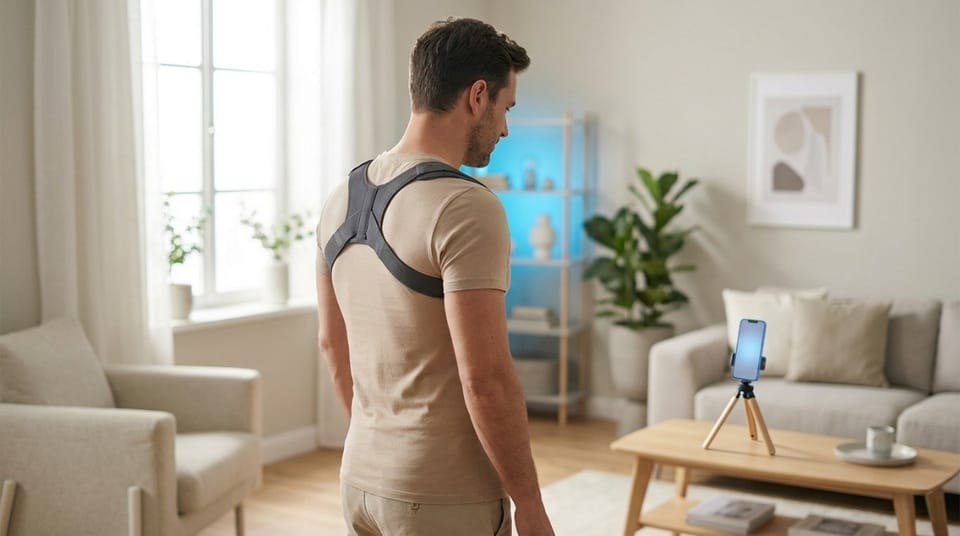
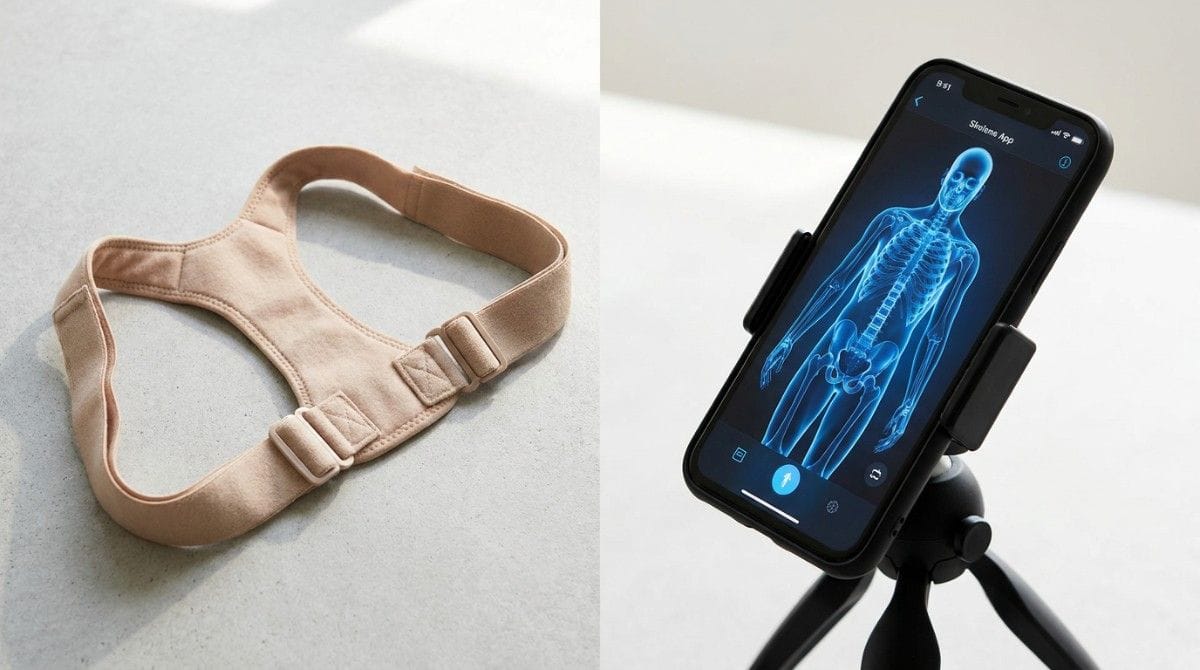
A posture corrector is a physical brace that manually pulls your shoulders into position, while an AI posture app is software that scans your posture through your phone camera and builds a personalized routine to correct it. One is a support device. The other is a guidance system.
If you're still deciding whether a brace is worth buying at all, do posture correctors actually work covers the research on that question in detail. This article picks up from there and compares the brace directly against the app-based alternative.
How Does an AI Posture App Actually Work?
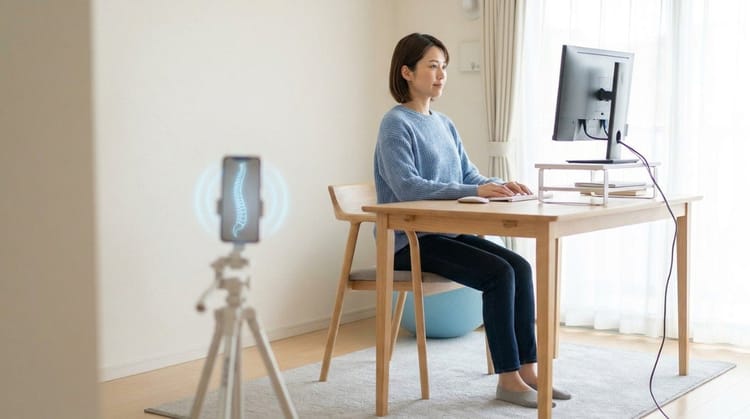
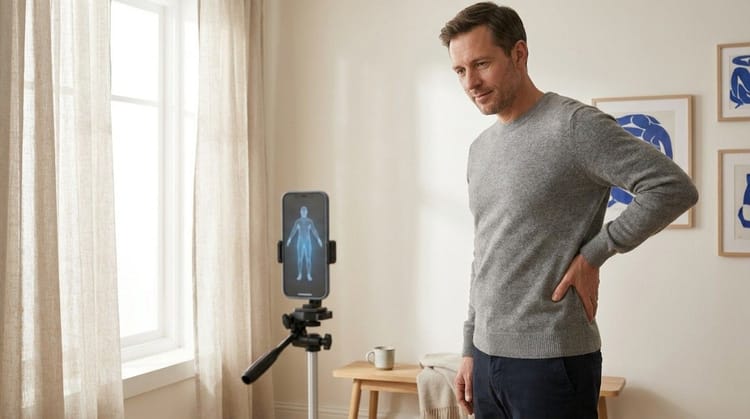
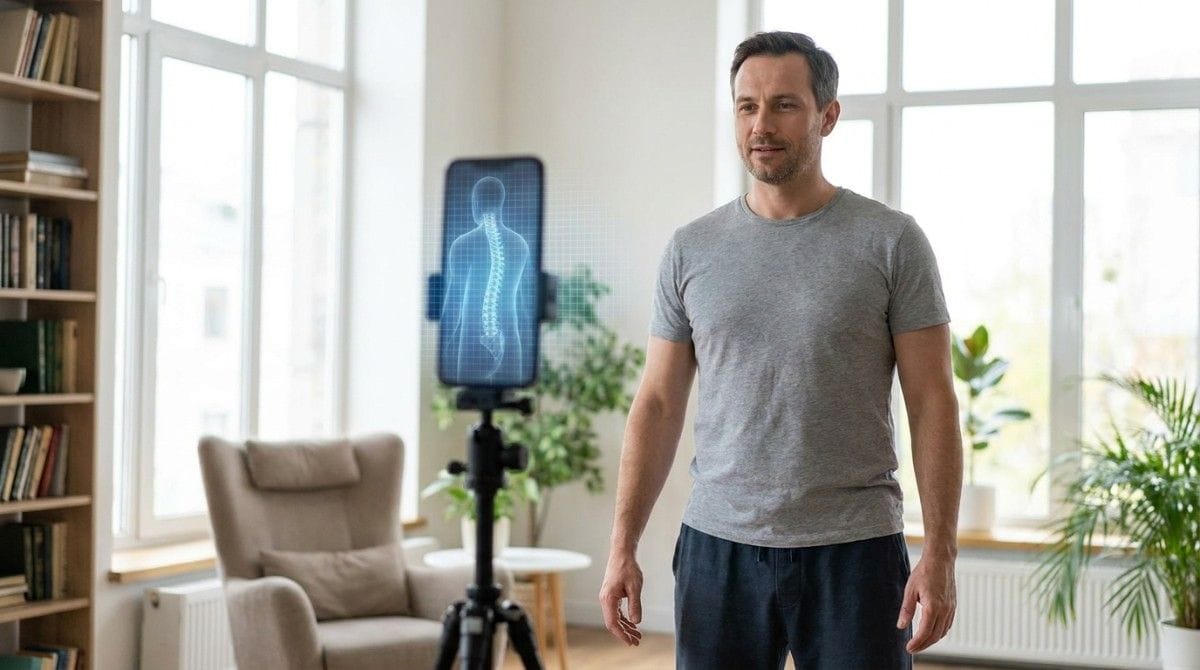
Most AI posture apps use your phone's camera to scan your body from the front or side. Computer vision software then maps key points like your ears, shoulders, hips, and spine curve, comparing them against a healthy alignment baseline.
From there, the app identifies your dominant pattern. Rounded shoulders, forward head posture, and flat back all get slightly different corrective exercises, not one generic routine.
💡 Key Insight: A brace corrects your posture for you. An AI app teaches your body to correct itself. That difference is why one produces short-term comfort and the other produces long-term change.
Why Do AI Posture Apps Personalize Better Than a Brace?
A strap can't tell the difference between someone with rounded shoulders and someone with a flat back. It just pulls the shoulders back, regardless of what's actually causing the problem.
An app-based scan removes that guesswork. This is the same logic behind condition-specific comparisons like AI posture apps vs physiotherapy vs generic exercises for lower back pain and AI posture app vs physiotherapy vs generic exercises for pain between the shoulder blades, where personalized guidance consistently outperforms one-size-fits-all approaches.
Progress tracking adds a second layer. As your posture improves, a good app adjusts the difficulty and focus of your routine. A brace does the exact same thing on day one as it does on day ninety.
| Factor | Posture Corrector | AI Posture App |
|---|---|---|
| How it works | Physically pulls shoulders back | Scans posture, builds a personalized plan |
| Personalization | None, one design fits all | High, adapts to your specific pattern |
| Cost over time | One-time device cost | Subscription, often cheaper long-term |
| Long-term results | Fades once removed | Builds lasting strength and habits |
| Best for | Short-term awareness, single events | Ongoing correction and habit building |
| Main limitation | Doesn't strengthen muscles | Requires consistent use to see results |
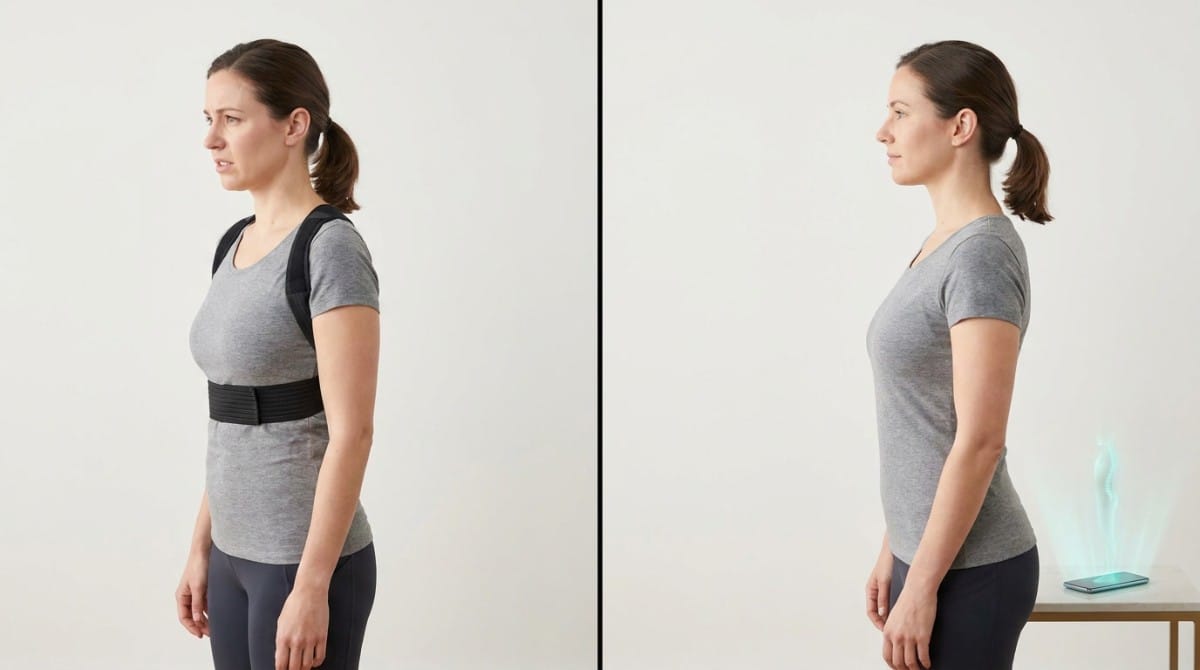
What Happens If You Rely on a Posture Corrector Alone?
A few predictable problems show up over time:
- Muscle dependency. The brace holds the position, so your postural muscles never learn to do it themselves.
- Plateaus fast. Since the device doesn't adapt, your progress stalls after the first few weeks.
- No feedback loop. A strap can't tell you if your posture is actually improving. An app can show you the data.
- Root cause stays untouched. You feel better while wearing it, but the pattern causing your rounded shoulders or forward head posture is still there.
When This Approach Doesn't Work
Neither option is right in every situation:
- If you have a diagnosed structural condition like scoliosis or advanced kyphosis, a professional diagnosis comes first. Self-guided tools, app or brace, aren't a substitute.
- If you're recovering from surgery and a doctor has prescribed a specific brace, follow that guidance over any app recommendation.
- If you feel numbness, tingling, or sharp shooting pain, that's a signal to see a doctor, not to pick a product.
- If you're not willing to do a few minutes of active work most days, neither tool will fix your posture. Passive tools need active effort behind them to matter.
Best Uses for Each Option (Quick List)
- Choose a posture corrector if you need short-term support for a single event, like a long flight or a big presentation day.
- Choose an AI posture app if you want an actual, lasting fix built around your specific posture pattern.
- Combine both if you're in the first two weeks of building awareness and want an extra physical cue alongside your routine.
- Skip both and see a professional if you have pain that's sharp, spreading, or getting worse week over week.
- Reassess your choice monthly. What you need in week one often isn't what you need in month two.
Research & Expert Insight
Physiotherapists often recommend addressing the underlying movement pattern rather than relying on external support alone. Posture specialists suggest that camera-based feedback tools build long-term body awareness more effectively than static bracing, simply because they show you what's actually changing. Research in musculoskeletal rehab consistently points the same direction: active, guided correction outperforms passive support once you look past the first few weeks.
For a deeper look at realistic timelines either option should be judged against, how long does posture correction take is worth reading before you commit to either tool.
Step-by-Step: How to Decide Which Option Is Right for You
- Define your goal. Are you managing one tough day, or fixing a long-term pattern?
- Check your baseline. A quick side-profile photo shows whether you lean toward rounded shoulders, forward head posture, or flat back.
- Match the tool to the goal. Short-term event, corrector. Long-term change, app-guided routine.
- Add real exercise regardless of which tool you pick. 15 best posture exercises is a solid place to start building that base.
- Track weekly progress, not daily fluctuations, since posture change is gradual.
- Reassess in four weeks and adjust your approach based on what's actually working.

A brace can get you through a flight or a big meeting. It was never designed to be the thing you rely on every single day for the next year. That's usually the point where people start looking for something that actually adapts with them.
Why Most Exercise Plans and Devices Fail
Whether it's a brace, a generic workout video, or a stack of forgotten stretches, the failure pattern is almost always the same:
- Inconsistency. No tracking means no accountability, and most routines quietly fade after a week or two.
- Wrong form. A corrective exercise done sloppily can reinforce the exact imbalance it's meant to fix.
- No progression. Static tools and routines stop challenging your muscles once your body adapts to them.
- No personalization. A one-size-fits-all brace or plan treats every posture pattern the same way, when they're not.
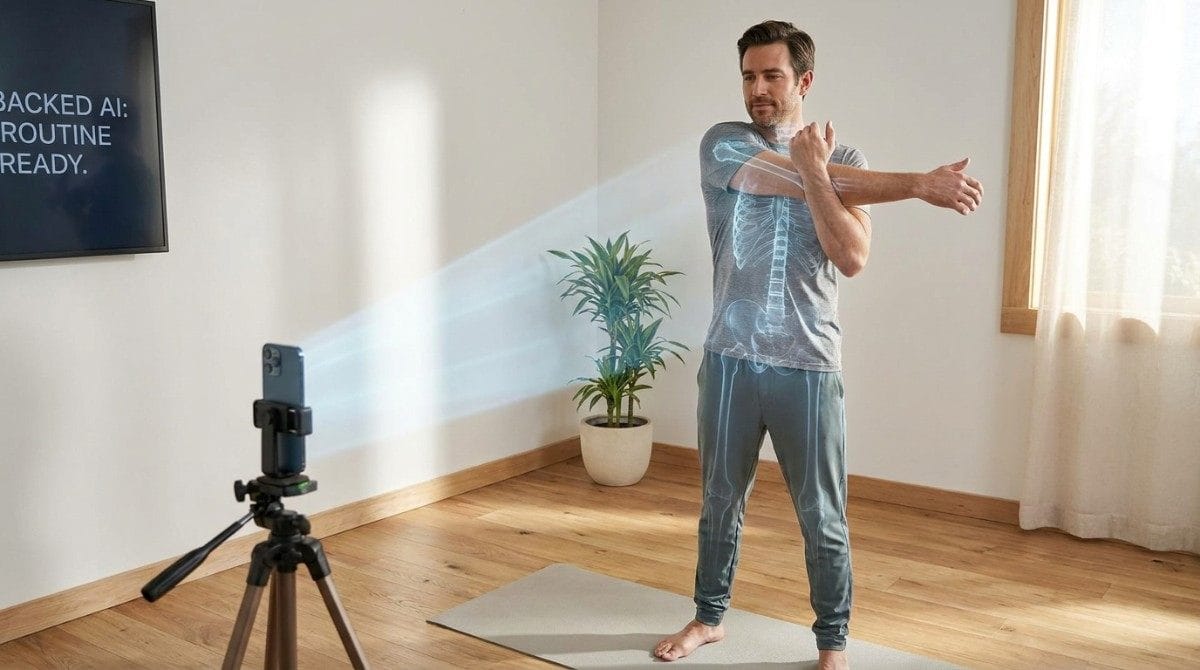
A posture corrector is a short-term prop. An AI posture app is a long-term coach. If you just need to get through one long day, a strap works fine. If you want your posture to actually change, you need something that scans your specific pattern, builds a plan around it, and adjusts as you improve. That's the gap between wearing a fix and building one.
A posture corrector can hold your shoulders back for an afternoon. It can't tell you whether your forward head posture is improving, adjust your routine as you get stronger, or remind you to actually do the work on a Tuesday when motivation is low. That's the difference between a device and a system.
Backed AI scans your posture through your phone camera, identifies your specific pattern, whether that's rounded shoulders, forward head posture, or something else, and builds a routine around it instead of a generic one-size-fits-all plan. Three things set that apart from strapping on a brace and hoping:
- Personalized to your actual scan, not a guess based on average shoulder width.
- Progress tracking that adapts your routine as your posture genuinely improves.
- Built-in consistency, with reminders and habit tracking that outlast the motivation a new gadget gives you in week one.
If you've tried a brace, felt the quick relief, and watched it fade a few hours later, that's not a discipline issue. It's a tool mismatch. Download Backed AI and start correcting your posture today.
FAQ
Is an AI posture app better than a posture corrector? For lasting results, yes. An AI app personalizes your routine and adapts over time, while a corrector only holds your position temporarily.
Can I use a posture corrector and an AI app together? Yes. Many people use a brace briefly during high-slouch moments while following an app-guided routine for long-term correction.
How much does an AI posture app cost compared to a posture corrector? Correctors are usually a one-time purchase, while apps are typically subscription-based. Over months of use, apps often work out cheaper per result since they keep adapting instead of sitting unused in a drawer.
Do AI posture apps actually track posture accurately? Camera-based scans can reliably detect major patterns like rounded shoulders and forward head posture, which is generally accurate enough to guide a personalized corrective routine.
Which is better for rounded shoulders, a brace or an app? A brace gives temporary relief, but an app-guided routine targeting the specific muscles behind rounded shoulders tends to produce more lasting change.