What Is Sciatica? Causes, Symptoms, and How to Find Relief

Sciatica is pain that radiates along the sciatic nerve, running from the lower back through the hip and down one leg. It's usually caused by irritation or compression of the nerve where it exits the spine, often from a disc issue, tight muscles, or prolonged sitting. Most cases improve within a few weeks with gentle movement and targeted stretching, though ongoing or worsening symptoms need a proper evaluation.
TL;DR
- Sciatica is nerve pain that radiates from your lower back through your hip and down one leg, not just general back soreness. 🦵
- It's usually caused by a compressed or irritated sciatic nerve, often from a disc issue, tight muscles, or prolonged sitting.
- The pain often feels sharp, burning, or electric, and can come with numbness or tingling.
- Most cases improve within 4 to 6 weeks with gentle movement, stretching, and posture changes.
- Certain symptoms, like leg weakness or loss of bladder control, need immediate medical attention.
- Long-term relief usually comes from addressing the root cause, not just easing the pain in the moment.
What Is Sciatica?
Sciatica is pain that radiates along the sciatic nerve, running from the lower back through the hip and buttock and down one leg, caused by irritation or compression of the nerve. The sciatic nerve is the longest and widest nerve in the body, so when it's compressed, the pain can travel far from where the actual problem starts.
Sciatica itself isn't a diagnosis. It's a symptom with several possible underlying causes, and one of the most common everyday triggers is simply sitting too long, which we've covered in can you get sciatica from sitting too much.
Why Does Sciatica Happen?
A few common triggers cause most cases:
- Herniated or bulging disc. When a spinal disc pushes on a nearby nerve root, it can send pain down the sciatic pathway.
- Spinal stenosis. A narrowing of the space around the spinal nerves, more common with age.
- Piriformis tightness. A small muscle deep in the glutes that can compress the sciatic nerve when it's overly tight.
- Prolonged sitting. Hours in a chair compress the nerve pathway and often tighten the hip and glute muscles around it.
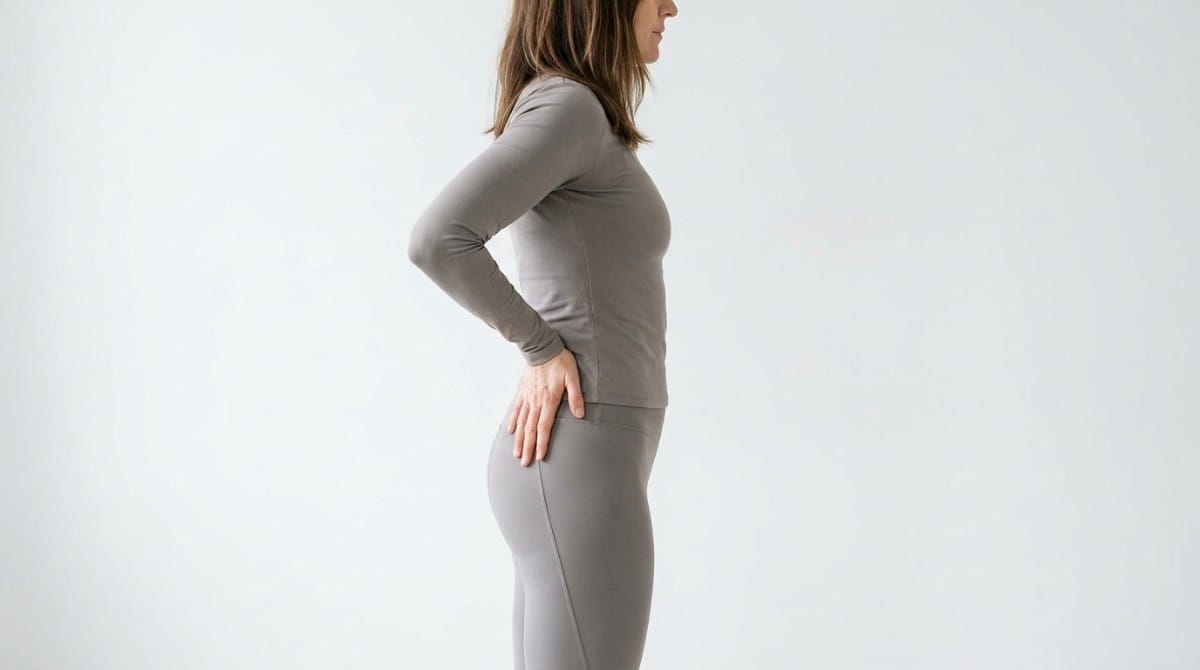
- Pelvic and hip imbalances. Patterns like anterior pelvic tilt can change how pressure sits across your lower back and hips, indirectly aggravating the nerve.
💡 Key Insight: Sciatica is rarely about the leg itself. The pain shows up in your leg, but the actual problem almost always starts in your lower back, hips, or the muscles surrounding them.
How Do You Know If It's Sciatica and Not Just Back Pain?
The two can feel similar at first, but there are a few clear differences.
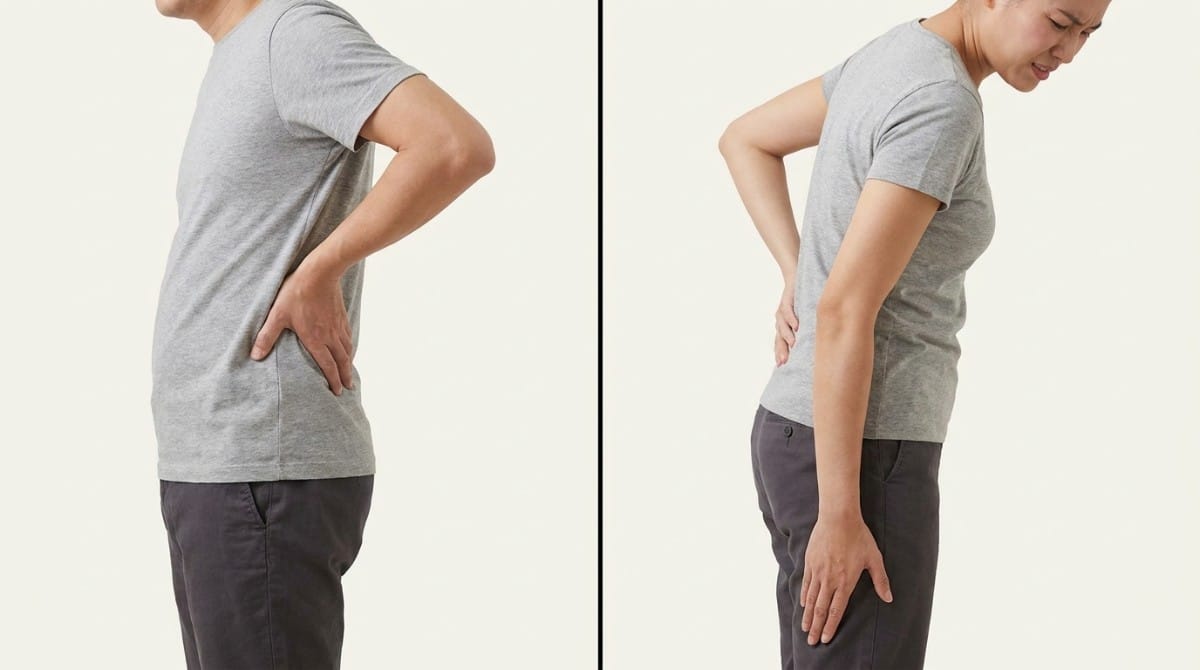
Sciatica typically radiates below the knee, follows a specific nerve pathway, and usually affects one side at a time. It often comes with numbness, tingling, or a burning sensation, not just soreness. General lower back pain, by comparison, tends to stay localized and rarely travels past the hip.
| Symptom Pattern | Sciatica | General Lower Back Pain |
|---|---|---|
| Location | Radiates down one leg, often past the knee | Stays in the lower back |
| Sensation | Sharp, burning, or electric, often with numbness | Dull ache or stiffness |
| Common trigger | Nerve compression, disc issues, tight piriformis | Muscle strain, poor posture, overuse |
| One-sided vs both | Usually one side | Can be either |
This isn't a substitute for a proper diagnosis, but it's a useful starting point for understanding what you're dealing with. sitting vs standing with sciatica goes deeper into how position affects symptoms once you've confirmed the pattern.
What Happens If Sciatica Goes Untreated?
Left unaddressed, sciatica can gradually get worse rather than resolve on its own:
- Chronic nerve sensitization, where the nerve stays irritated even after the original trigger improves.
- Muscle weakness, particularly in the lower leg or foot, from prolonged nerve compression.
- Compensatory posture patterns, where you unconsciously shift your weight to avoid pain, often creating new discomfort elsewhere.
⚠️ When to seek immediate care: Sudden leg weakness, numbness in the inner thighs or groin, or loss of bladder or bowel control are signs of a medical emergency. Seek care right away rather than trying to stretch through these symptoms.
When This Approach Doesn't Work
Self-guided relief isn't the right fit for every case:
- If you have any of the emergency symptoms listed above, see a doctor immediately.
- If your pain started after a specific injury or accident, get it evaluated before starting any stretching routine.
- If symptoms haven't improved after two to three weeks of consistent self-care, it's time for a professional assessment rather than continuing to guess.
- Pregnancy-related sciatica often needs a modified approach, since some common stretches aren't appropriate during pregnancy.
Best Exercises for Sciatica Relief (Quick List)
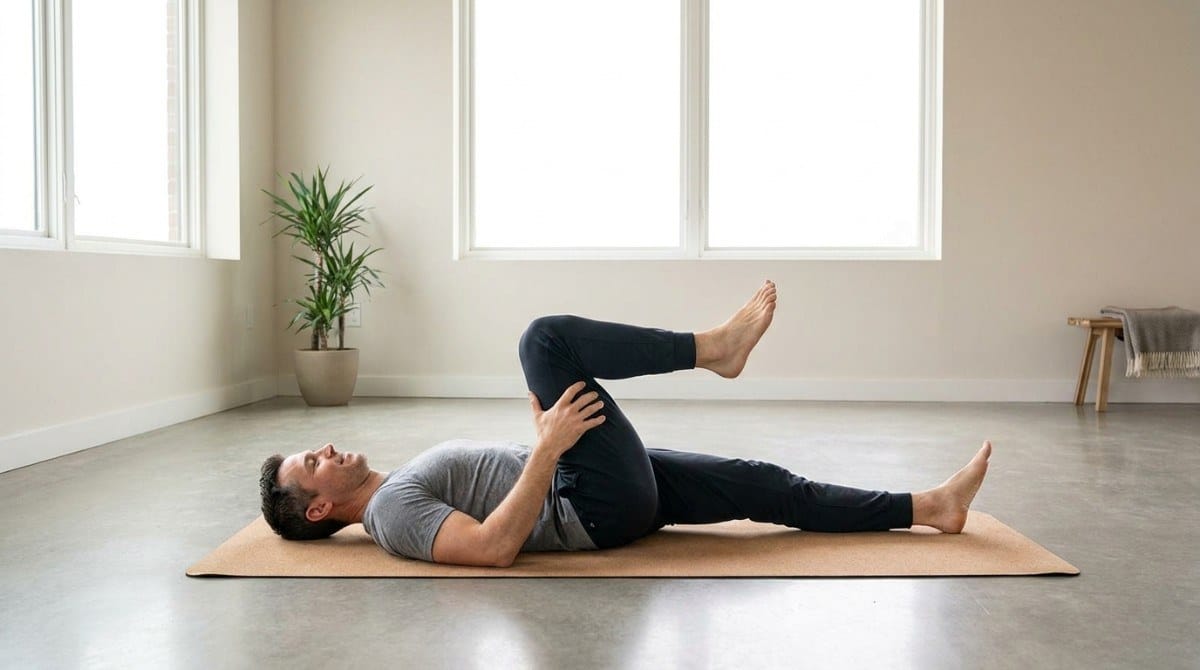
- Knee-to-chest stretch. Gently pulls the lower back into a position that can relieve nerve pressure.
- Piriformis stretch (figure-4). Loosens the muscle most commonly linked to nerve compression.
- Seated spinal twist. Improves mobility through the lower back and hips without aggressive movement.
- Gentle walking. Short, regular walks keep the area mobile without the strain of high-impact activity.
- Glute activation. Underused glutes often let the piriformis overwork, so glute activation exercises can help take pressure off the nerve indirectly.
For a full desk-friendly routine built around these movements, best sciatica stretches for desk workers walks through each one step by step.
Research & Expert Insight
Physiotherapists often recommend gentle movement over strict bed rest for most sciatica cases, since prolonged stillness can slow recovery rather than speed it up. Posture specialists suggest addressing hip and pelvic alignment alongside direct stretching, since sciatic nerve irritation is frequently tied to surrounding muscle imbalances. Research in musculoskeletal rehab shows that most sciatica cases linked to muscular or postural causes improve significantly within four to six weeks of consistent, low-impact self-care.
Step-by-Step Recovery Framework: How to Manage Sciatica Day to Day
- Identify your likely trigger. Prolonged sitting, a specific injury, and gradual onset all point toward different causes.
- Start gentle movement early. Short walks and light stretching, rather than complete rest, tend to help more.
- Add targeted stretches daily. Consistency matters more than intensity here.
- Adjust your sitting habits. can sitting too long make sciatica worse covers practical ways to sit without flaring symptoms.
- Track your symptoms weekly. Note whether pain is improving, staying flat, or spreading, since that pattern guides your next step.
- Escalate to a professional if there's no real improvement after two to three weeks, or sooner if any emergency symptoms appear.

Most sciatica cases don't need dramatic intervention. They need consistent, correctly targeted movement, and a way to actually tell whether that movement is helping.
Final Takeaway
Sciatica is nerve pain, not just back pain, and treating it like ordinary soreness usually doesn't work. The fastest path to relief is identifying what's actually compressing the nerve, whether that's a tight piriformis, a pelvic imbalance, or hours of sitting, and addressing that root cause with gentle, consistent movement. Most cases improve within weeks. The ones that don't are exactly the cases worth getting properly evaluated.
A generic YouTube sciatica routine doesn't know whether your pain is coming from tight hips, a pelvic imbalance, or hours of sitting. It just runs through the same five stretches regardless of what's actually happening in your body, which is exactly why so many people stretch for weeks without real improvement.
Backed AI scans your posture through your phone camera, flags contributing patterns like anterior pelvic tilt or postural imbalances that put extra pressure on the sciatic nerve, and builds a routine around what it actually finds. Three things make that different from a generic stretching video:
- Personalized to your actual posture pattern, not a one-size-fits-all list of stretches.
- Progress tracking that adapts as your symptoms and mobility genuinely change.
- Built-in consistency, with reminders that keep gentle daily movement from quietly turning into another abandoned routine.
If stretching alone hasn't moved the needle, the missing piece is usually knowing exactly which pattern is driving your symptoms, and adjusting your routine as that changes. Download Backed AI and start correcting your posture today.
FAQ
What does sciatica pain feel like? It often feels sharp, burning, or electric, radiating from the lower back through the hip and down one leg, sometimes with numbness or tingling.
What causes sciatica? Common causes include a herniated or bulging disc, spinal stenosis, a tight piriformis muscle, prolonged sitting, and pelvic or hip imbalances.
How long does sciatica usually last? Most cases linked to posture or muscle tightness improve within 4 to 6 weeks of consistent gentle movement and stretching.
Can sitting make sciatica worse? Yes. Prolonged sitting compresses the nerve pathway and can tighten the surrounding hip and glute muscles, often worsening symptoms.
When should I see a doctor for sciatica? See a doctor right away for leg weakness, numbness in the groin or inner thighs, or loss of bladder or bowel control. Otherwise, seek an evaluation if symptoms haven't improved after two to three weeks.